Romanian Ia Blouse 2026: Ethical Sourcing & Modern Styling Guide
The 2026 Landscape of the Romanian Ia Revival
The traditional Romanian ie (pronounced 'yeh') has firmly cemented its place in the global fashion consciousness by 2026. Moving far beyond the cultural appropriation controversies and fast-fashion knock-offs that plagued the industry in the late 2010s, today's landscape is defined by deep respect, artisanal collaboration, and the 'heritage craft' movement. Since its historic inscription on the UNESCO Intangible Cultural Heritage list in late 2022, the traditional techniques of making the blouse with shoulder embroidery (altiță) have seen a massive resurgence. In 2026, contemporary fashion weeks in Paris and Milan have pivoted toward 'artisanal quiet luxury,' placing hand-loomed textiles and natural dyes at the forefront of modern wardrobes.
For the modern consumer, wearing an ie is no longer just about donning a folk costume for a summer festival; it is an intentional sartorial choice that bridges centuries of Eastern European history with contemporary urban aesthetics. However, as demand has surged, so has the market for machine-made imitations. Understanding how to ethically source authentic pieces and integrate them into a modern 2026 wardrobe is essential for the culturally conscious fashion enthusiast.
The Anatomy of the Authentic Ia
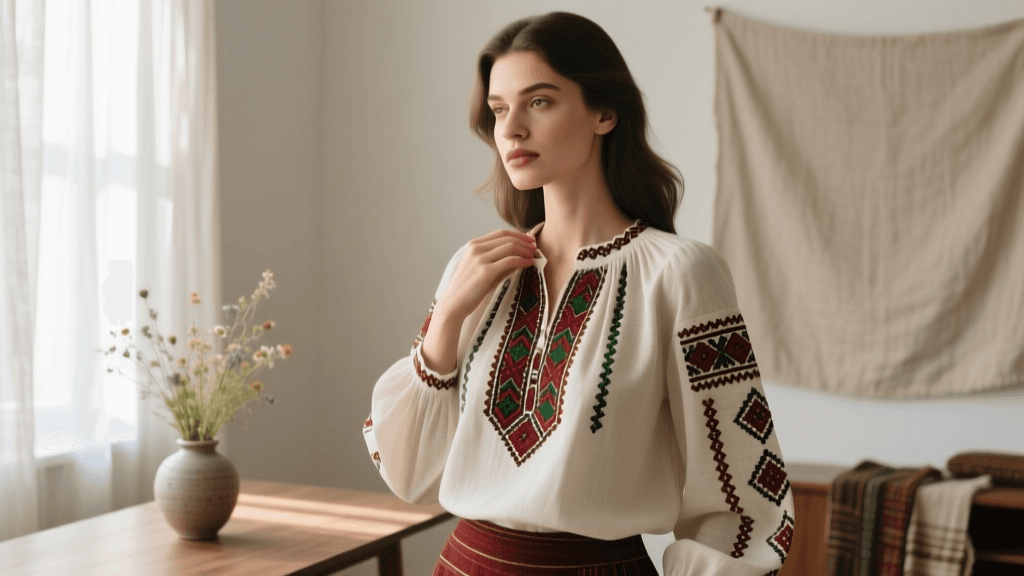
Before purchasing or styling an ie, it is crucial to understand its structural and symbolic anatomy. Authentic blouses from regions like Vrancea, Argeș, and Olt are not merely garments; they are coded texts that historically communicated the wearer's age, marital status, and village of origin. According to the Romanian Peasant Museum, a traditional blouse is constructed from hand-woven linen, hemp, or cotton, and features distinct structural elements:
- Altița (The Shoulder Band): The most ornate and culturally significant part of the blouse. Located on the upper shoulder, this wide, densely embroidered band is the hallmark of the authentic ie and the specific element protected by UNESCO.
- Încrețul (The Gather): Situated just below the altiță, this is a narrower, often geometrically patterned band that transitions the dense shoulder embroidery into the vertical stripes of the sleeve.
- Râurile (The Rivers): The vertical or diagonal bands of embroidery that flow down the sleeves and the body of the blouse, symbolizing the flowing rivers of the Carpathian landscape.
- Brâul (The Waistband): While technically a separate woven belt, the brâu is essential to the silhouette, gathering the voluminous fabric of the blouse and anchoring the garment to the body.
Ethical Sourcing in 2026: Supporting Artisan Cooperatives
The global revival has empowered rural artisan cooperatives across Romania and the Republic of Moldova. In 2026, the most ethical way to acquire an ie is through direct-to-artisan platforms and verified heritage NGOs, such as the semne cusute (stitched signs) community movement, which connects global buyers directly with village embroiderers. Authentic hand-embroidered blouses require anywhere from 80 to 150 hours of meticulous needlework. Consequently, the 2026 pricing for authentic, newly commissioned pieces reflects fair living wages for these artisans.
'When you wear an authentic ia, you are not just wearing a garment; you are wearing the time, the eyesight, and the ancestral memory of the woman who stitched it.' — Heritage Textile Advocate, 2026 Bucharest Craft Symposium.
Buyers should expect to pay between €250 and €600 for a newly made, hand-embroidered linen blouse. Vintage pieces from the early-to-mid 20th century, sourced from verified antique textile dealers, often range from €400 to over €1,200, depending on the rarity of the natural dyes used, such as fermented woad for deep blues or madder root for vibrant reds.
Comparison: Fast-Fashion Imitations vs. Authentic 2026 Cooperatives
To help you navigate the market, we have compiled a comparison chart detailing the differences between mass-produced imitations and authentic artisan pieces available in 2026.
| Feature | Fast-Fashion Imitation | Authentic Artisan Cooperative |
|---|---|---|
| Material | Synthetic blends, mass-produced polyester-cotton | Hand-woven linen, hemp, or organic cotton |
| Embroidery Technique | Machine-embroidered, flat, lacking reverse-side finishing | Hand-stitched, complex counting techniques, clean reverse side |
| Altiță Presence | Often omitted or simplified into generic floral patterns | Dense, structurally accurate, region-specific geometric motifs |
| Dyes Used | Synthetic, chemical azo dyes | Natural botanical dyes (walnut husk, woad, madder, weld) |
| 2026 Price Range | €35 - €85 | €250 - €600+ |
| Cultural Impact | Exploitative; dilutes cultural heritage | Preserves intangible heritage; provides rural economic support |
Contemporary Styling: Integrating the Ia into a 2026 Wardrobe
The beauty of the ie lies in its voluminous silhouette and intricate textural contrast, making it a versatile statement piece for modern styling. The 2026 approach to folk-chic avoids wearing the blouse as a literal costume; instead, it juxtaposes the historical garment with sharp, contemporary tailoring.
Look 1: The Urban Minimalist
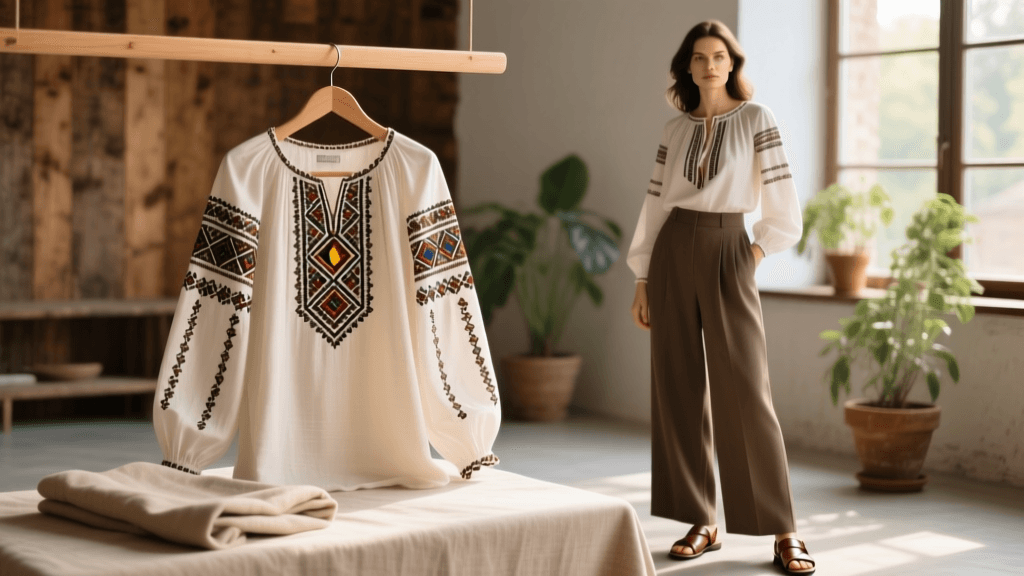
For a sophisticated city look, pair a crisp, white linen ie featuring subtle black or navy geometric râuri with high-waisted, wide-leg tailored trousers in charcoal wool. Tuck the blouse in loosely to maintain its natural volume while defining the waist. Finish the look with sleek, square-toed leather loafers and minimalist gold hoop earrings. This outfit perfectly balances the romanticism of the folk blouse with the sharp, architectural lines of modern corporate wear.
Look 2: Dark Academia Folk
Embrace the moody, intellectual aesthetic of the Dark Academia trend by sourcing an ie dyed with natural walnut husks or indigo. Pair a dark, heavily embroidered blouse with a pleated midi skirt in a heavy tweed or corduroy fabric. Layer a structured, oversized blazer over the shoulders. Complete the ensemble with knee-high leather riding boots and a vintage leather satchel. The rich, natural dyes of the blouse will harmonize beautifully with the autumnal tones of the skirt and outerwear.
Look 3: Summer Riviera Heritage
For warm-weather styling, opt for a lightweight, short-sleeved cotton ie from the Argeș region, known for its delicate, intricate floral and solar motifs. Wear it unbuttoned at the neckline over a high-quality ribbed tank top and tailored denim cut-offs or wide-leg linen palazzo pants. Accessorize with a hand-woven rattan bag, leather sandals, and delicate layered necklaces. The breathable natural fibers of the blouse make it an ideal, sun-protective layer for coastal vacations.
Fabric and Embroidery Care in the Modern Home
Owning an authentic, hand-embroidered ie requires a commitment to proper textile conservation. The natural fibers and botanical dyes are highly sensitive to modern laundering techniques. To preserve your garment for decades, adhere to the following 2026 best practices for heritage textile care:
- Washing: Never machine wash an authentic ie. Hand wash the garment in cold water using a pH-neutral, specialized wool and silk detergent. Do not soak for more than 10 minutes to prevent natural dyes from bleeding.
- Drying: Never wring or twist the fabric, as this will distort the hand-woven weave and damage the tension of the embroidery. Gently press the water out between two clean, dry towels, and lay the blouse flat to dry in the shade. Direct sunlight will rapidly fade botanical dyes.
- Ironing: Iron the blouse while it is still slightly damp. Always iron on the reverse side using a low-to-medium heat setting. Place a clean cotton pressing cloth between the iron and the embroidery to prevent crushing the three-dimensional texture of the altiță stitches.
- Storage: Store the blouse flat in a breathable cotton garment bag. Avoid wire hangers, which will stretch the delicate hand-woven shoulder seams. Include natural cedar blocks or dried lavender sachets to deter moths without introducing harsh chemical odors into the natural fibers.
Conclusion
The 2026 revival of the Romanian ie represents a triumph of cultural preservation over fast-fashion exploitation. By understanding the profound symbolism of the altiță, committing to ethical sourcing through artisan cooperatives, and styling the blouse with contemporary intentionality, you participate in a global movement that honors Eastern European heritage. Whether paired with tailored wool trousers for the office or flowing linen for a summer retreat, the authentic ie remains a timeless, powerful testament to the enduring beauty of European folk dress.