Alpine and Nordic Folk Dress: Dirndl vs Bunad 2026 Guide
The 2026 Renaissance of European Regional Dress
In 2026, the landscape of European folk dress has experienced a profound renaissance. Moving far beyond the commercialized, mass-produced costumes found in tourist traps, a new generation of textile enthusiasts, historians, and local communities are reclaiming their regional garments with a fierce dedication to authenticity. Two of the most iconic and highly regulated traditional garments in Europe are the Alpine Dirndl (and its male counterpart, Lederhosen) and the Nordic Bunad. While both serve as powerful symbols of regional identity, their construction, cultural rules, and modern revivals differ vastly.
Whether you are looking to invest in your first authentic heritage garment or simply wish to understand the intricate textile history of these regions, this comprehensive guide breaks down the anatomy, sourcing, and preservation of Alpine and Nordic folk dress in 2026.
The Bavarian and Austrian Dirndl: Anatomy and Evolution
The Dirndl originated as the working dress of Alpine peasants in the 18th and 19th centuries before being adopted by the upper classes as a fashionable summer resort garment. Today, the authentic Dirndl—referred to as Tracht—is a highly structured, multi-piece ensemble that requires precise tailoring.
Anatomy of an Authentic Dirndl
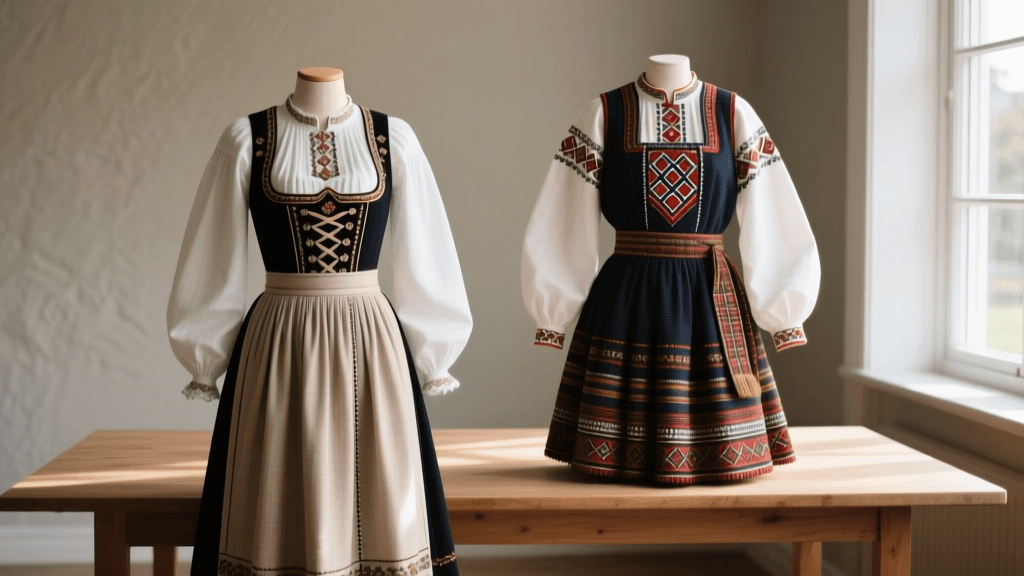
A true Dirndl is never a single-piece dress. In 2026, traditional tailors strictly adhere to a four-piece construction:
- Mieder (Bodice): The foundation of the garment. It is heavily boned and structured to provide support, often featuring a front lacing, hook-and-eye closures, or a concealed zipper. High-quality bodices are lined with cotton or linen to absorb moisture and protect the outer wool or silk.
- Rock (Skirt): A wide, gathered or knife-pleated skirt attached to the bodice. The hem should fall to the mid-calf or ankle, depending on the specific regional variation and the formality of the event.
- Schürze (Apron): An absolute necessity. The apron is tied at the front, and the placement of the bow communicates the wearer's relationship status—a tradition that remains widely observed in 2026. A bow on the left indicates the wearer is single; on the right, she is married or taken; in the center, historically signifies virginity (though today often means undecided); and tied at the back indicates widowhood or that the wearer is a working waitress.
- Bluse (Blouse): Worn beneath the bodice, typically crafted from white cotton batiste or linen, featuring puffed or straight sleeves that end above the elbow.
Regional Variations and 2026 Textile Trends
Not all Dirndls are created equal. The Miesbacher Dirndl from Upper Bavaria is known for its practical, heavy wool skirts and silk aprons, designed for the cooler Alpine climate. In contrast, the Ausseer Dirndl from the Styrian Salzkammergut region is famous for its vibrant, floral-printed silk and lightweight cotton, often featuring a distinctive pink, green, and black color palette.
According to the Bavarian Tracht Culture Center, the major trend for 2026 is a return to sustainable, locally sourced textiles. Weavers in the Alpine regions are utilizing undyed, naturally pigmented sheep's wool and eco-friendly loden, moving away from the synthetic blends that dominated the fast-fashion Tracht market of the early 2020s.
The Norwegian Bunad: Woven Identity and Strict Heritage
While the Dirndl has evolved with fashion trends, the Norwegian Bunad is treated as a sacred historical artifact. The Bunad movement began in the early 20th century as a romantic nationalist effort to revive rural folk costumes (folkedrakt). Today, the Bunad is worn for Constitution Day (May 17th), weddings, and major life milestones.
The Role of the Bunad Council
Unlike the Dirndl, which can be adapted by modern designers, the Bunad is strictly regulated. The Bunad- og folkedraktrådet (The National Council for Bunad and Folk Costume) ensures that every stitch, fabric choice, and silver accessory adheres to historical documentation. If a garment deviates from the approved historical patterns of a specific valley or fjord, it cannot legally or culturally be marketed as a true Bunad.
Anatomy and Embroidery Techniques
The construction of a Bunad is heavily reliant on regional embroidery and metalwork:
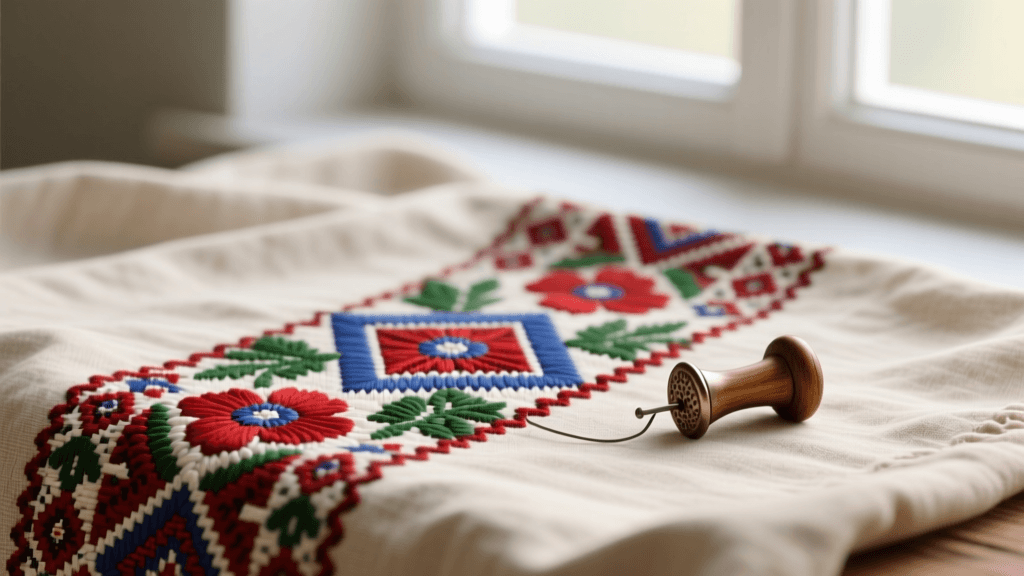
- The Stakk (Skirt) and Liv (Bodice): Typically made from heavy, tightly woven worsted wool. The Hardangerbunad features striking cross-stitch embroidery in red, black, and white on linen, while the Telemarksbunad is renowned for its rosesaum (rose embroidery), a complex, shaded wool thread technique that mimics painted folk art.
- Bunadsølv (Silver Jewelry): A Bunad is incomplete without its specific regional silver. This includes the sølje (a large, intricate neck brooch), silver crown pins for the hair, and elaborate silver belts. In 2026, Norwegian silversmiths have pioneered the use of 100% recycled sterling silver to meet modern sustainability mandates without compromising historical accuracy.
- The Skjorte (Shift): A white linen undergarment, often featuring hvitsaum (whitework embroidery) on the collar and cuffs, requiring hundreds of hours of hand-stitching.
Comparative Analysis: Alpine vs. Nordic Construction
To understand the practical differences between these two iconic garments, review the 2026 market and construction comparison below:
| Feature | Bavarian / Austrian Dirndl | Norwegian Bunad |
|---|---|---|
| Regulatory Body | None (Market and tradition driven) | Bunad- og folkedraktrådet (Strict) |
| Primary Materials | Wool loden, silk, cotton batiste, linen | Heavy worsted wool, linen, silk |
| Custom Tailoring Time | 4 to 8 weeks | 12 to 24 months (due to hand-embroidery) |
| 2026 Avg. Entry Cost | €800 - €1,500 (Authentic) | 45,000 NOK - 65,000 NOK (Approx. €4,000+) |
| Jewelry Requirement | Optional (Charivari chains, silver pins) | Mandatory (Specific regional silver sets) |
Sourcing Authentic Garments in 2026
The market is flooded with cheap, mass-produced 'costumes' that disrespect the heritage of these garments. If you are investing in authentic European folk dress in 2026, you must know where to look.
Where to Buy an Authentic Dirndl
For genuine Alpine Tracht, avoid general fashion retailers. Instead, seek out heritage houses in Munich, Salzburg, and Vienna. Lodenfrey in Munich offers exceptional, historically accurate Miesbacher and Salzburger styles. For bespoke, high-society Dirndls, ateliers like Angermaier provide hand-stitched bodices and custom-dyed silk aprons. Expect to pay a minimum of €900 for a garment that utilizes proper boning and natural fibers.
Where to Commission a Bunad
Purchasing a Bunad is a deeply personal and lengthy process. The Norwegian Museum of Cultural History frequently hosts exhibitions detailing the provenance of these garments, emphasizing that a Bunad is typically commissioned from authorized local Husflid (craft) boutiques. You must prove a familial or residential connection to the specific region the Bunad represents. Because the embroidery is often done by hand by certified local artisans, waitlists in 2026 frequently exceed 18 months.
Care and Preservation of Heritage Textiles
Both the Dirndl and the Bunad require meticulous care to ensure they last for generations.
- Airing vs. Washing: The heavy wool skirts of both garments should rarely, if ever, be washed. In 2026, textile conservators recommend airing the garments outside on a crisp, dry, and shaded day to naturally eliminate odors and bacteria.
- Moth Prevention: Wool is highly susceptible to moth damage. Store your Dirndl or Bunad in breathable cotton garment bags—never plastic, which traps moisture and causes mildew. Use natural cedar blocks and dried lavender sachets rather than chemical mothballs, which can degrade the natural dyes used in modern eco-friendly Tracht.
- Silver Maintenance: Bunad silver should be polished gently with a specialized silver cloth. Avoid liquid dips, as they can strip the intentional oxidization (darkening) that gives historical sølje its three-dimensional contrast.
Conclusion
Whether you are drawn to the structured elegance of the Bavarian Dirndl or the heavily embroidered, historically guarded Norwegian Bunad, both garments represent a vital, living connection to Europe's rural past. By understanding the strict construction rules, supporting authentic artisans, and respecting the regional nuances, we ensure that these magnificent textile traditions continue to thrive well beyond 2026.