Sardinian Orbace Wool & Pibiones Weaving: 2026 Heritage Guide
The Enduring Legacy of the Costume Sardo
When discussing European folk dress, few regions boast a textile heritage as fiercely preserved and visually striking as Sardinia. The costume sardo (traditional Sardinian dress) is not merely a historical artifact; it is a living, breathing expression of identity that varies dramatically from village to village. In 2026, as the global fashion industry pivots hard toward regenerative materials and slow fashion, Sardinia’s ancient weaving techniques and indigenous wools are experiencing a massive renaissance. For collectors, cultural historians, and sustainable fashion enthusiasts, understanding the nuances of Sardinian textiles—specifically Orbace wool and Pibiones weaving—is essential.
According to the regional archives documented by Sardegna Cultura, the island's historical isolation allowed its indigenous garments to evolve without the rapid homogenization seen on the mainland. Today, heritage brands and artisan cooperatives are bridging the gap between ancient shepherd gear and contemporary luxury, ensuring these techniques survive the 21st century.
The Anatomy of Traditional Sardinian Dress
Before diving into the textiles, it is crucial to understand the garments these fabrics were born to create. The traditional male and female wardrobes of Sardinia are defined by utility, climate adaptation, and profound symbolism.
- The Berritta: The iconic Sardinian hat, typically a knitted woolen tube worn folded or draped. Its color and drape often indicated the wearer's specific village and marital status.
- The Gabbano: A heavy, hooded cloak made from Orbace wool, designed to protect shepherds from the harsh, wet winters of the Gennargentu mountains.
- Ragas or Cartzones: Pleated linen or wool kilts worn by men over white linen trousers, offering mobility while riding horses or navigating rugged terrain.
- The Corpetto: Women's bodices, often heavily embroidered with silk and metallic threads, varying wildly in color palette from the deep crimsons of Nuoro to the stark whites and blacks of Ovodda.
Orbace: The Water-Resistant Wool of the Shepherds
Orbace (pronounced or-BAH-cheh) is the backbone of traditional Sardinian outerwear. It is a coarse, hand-woven fabric made from the indigenous Sarda sheep breed. Unlike the ultra-fine merino wools favored by modern suiting brands, Orbace is prized for its ruggedness and high lanolin content. When woven tightly on traditional wooden looms and subsequently fulled (beaten and shrunk in water), the fabric becomes virtually windproof and highly water-resistant.
In 2026, the demand for Orbace has surged among eco-conscious outerwear designers. The Sarda sheep is a low-impact, grazing animal that helps maintain the island's Mediterranean scrubland. Heritage brands are now marketing Orbace gabbani (cloaks) and modern overcoats as the ultimate sustainable alternative to synthetic, petroleum-based waterproof jackets. The natural dyes used in authentic Orbace production remain a point of pride: walnut hulls for deep browns, madder root for rust reds, and wild saffron for vibrant yellows.
Pibiones: The 'Raised Grain' Weaving Technique
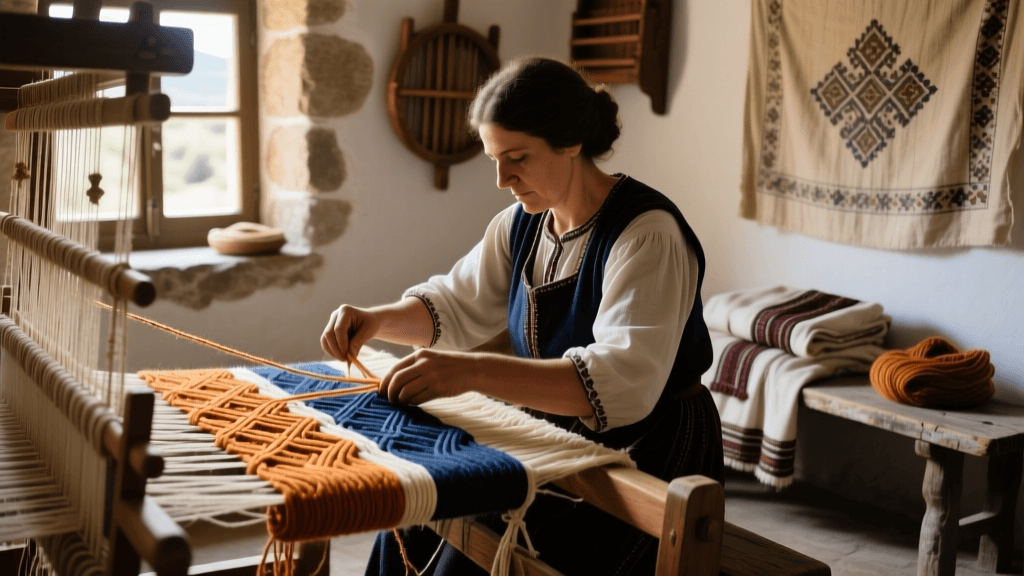
If Orbace is the shield of the Sardinian shepherd, Pibiones is the jewel of the Sardinian home and ceremonial wardrobe. Originating primarily in the village of Samugheo, Pibiones translates roughly to 'grains' or 'seeds' in the local dialect. This technique involves weaving a supplementary weft thread over a smooth rod to create raised, three-dimensional bumps (the 'grains') on the surface of the fabric.
The process is painstakingly slow. An artisan working on a traditional floor loom can produce only a few centimeters of high-quality Pibiones per day. The resulting textile is thick, heavily textured, and incredibly durable. Historically used for bedspreads, saddlebags, and ceremonial shawls, Pibiones is now being adapted by 2026 heritage brands for luxury upholstery, high-end winter scarves, and bespoke runway pieces. The geometric motifs woven into the grains often feature ancient apotropaic symbols designed to ward off the evil eye, alongside stylized flora and fauna.
2026 Heritage Brands and Artisan Cooperatives
The survival of these techniques relies on a new generation of weavers and heritage brands that respect the past while innovating for the modern market. In 2026, several key players are leading the charge:
Mariantonia Urru Studio
Based in Samugheo, this historic atelier has been instrumental in elevating Pibiones from rural craft to high-end design. In 2026, the studio continues to collaborate with international interior designers while maintaining its strict adherence to local, hand-spun wools and natural dyes.
ISOLA Mark Cooperatives
The ISOLA (Istituto Sardo Organizzazione Lavoro Artigiano) mark remains the gold standard for authenticity. Garments and textiles bearing this mark in 2026 guarantee that the item was handcrafted in Sardinia using traditional methods, protecting buyers from mass-produced, overseas imitations that flood the tourist markets.
Regenerative Wool Initiatives
Several shepherd cooperatives in the Barbagia region have partnered directly with textile mills to create a 'farm-to-cloak' supply chain. By tracing the Orbace wool back to specific flocks, these brands offer consumers unprecedented transparency, a major selling point in the 2026 sustainable fashion landscape.
Comparison of Sardinian Textile Traditions
To help collectors and enthusiasts distinguish between the island's primary textile exports, refer to the comparison table below:
| Textile / Technique | Primary Material | Visual Characteristics | Traditional Use | 2026 Market Application |
|---|---|---|---|---|
| Orbace | Coarse Sarda Sheep Wool | Matte, tightly woven, fulled, earthy natural tones | Shepherd cloaks (gabbano), blankets | Sustainable outerwear, luxury winter coats |
| Pibiones | Wool, Cotton, Linen blends | Raised 3D 'grains', complex geometric patterns | Ceremonial shawls, bedspreads, saddlebags | High-end upholstery, artisanal scarves |
| Bosa Lace (Filet) | Linen or Cotton thread | Intricate knotted netting with embroidered motifs | Veils, household linens, religious garments | Bridal couture, luxury table linens |
| Cambusciu | Raw Silk and Cotton | Lightweight, striped, slightly sheer | Summer shawls, lightweight headcovers | Resort wear, lightweight summer wraps |
Sourcing Authentic Sardinian Garments in 2026
As the appreciation for European folk dress grows, so does the market for counterfeit 'artisanal' goods. If you are traveling to Sardinia or shopping online in 2026, use these actionable guidelines to ensure authenticity:
- Look for the ISOLA Tag: As mentioned, this regional certification is your best defense against factory-made replicas.
- Examine the Reverse Side: Authentic Pibiones weaving will show a distinct, albeit slightly less pronounced, raised texture on the reverse side. If the back is completely flat, it is likely a machine-embroidered imitation.
- Smell the Orbace: Genuine, traditionally processed Orbace retains a faint, earthy scent of raw lanolin and natural dyes. It should feel slightly oily to the touch, not dry and brittle like commercial, chemically stripped wools.
- Understand 2026 Pricing: True artisanal work commands a premium. In 2026, expect to pay upwards of €350 for a hand-woven Pibiones scarf, and €800 to €1,500 for a fully tailored, authentic Orbace overcoat. If a vendor offers a 'handmade' cloak for €100, walk away.
For travelers planning a textile-focused itinerary, Sardegna Turismo provides excellent, up-to-date resources on visiting open ateliers in Samugheo, Nuoro, and Bosa, allowing you to watch the artisans at work on their century-old wooden looms.
Caring for Heritage Wool and Woven Textiles
Investing in Sardinian folk garments requires proper maintenance to ensure they last for generations. Orbace and Pibiones are incredibly durable, but their natural fibers demand specific care routines.
- Airing Out: Never store Orbace in plastic. The wool needs to breathe. Hang cloaks in a well-ventilated, cedar-lined closet to naturally repel moths.
- Spot Cleaning: Because of the high lanolin content, Orbace is naturally stain-resistant. Most spills will bead up on the surface. Simply blot with a clean, dry cloth. Avoid harsh chemical stain removers, which will strip the wool of its natural waterproofing.
- Professional Care: For deep cleaning, seek out a dry cleaner who specializes in heritage textiles and uses eco-friendly, non-toxic solvents. Standard commercial dry cleaning can cause the fulled wool to shrink or lose its structural integrity.
- Pibiones Storage: When storing Pibiones textiles, roll them rather than folding them. Folding can permanently crush the raised 'grains' over time, destroying the three-dimensional effect that defines the craft.
Conclusion
The traditional garments of Sardinia are a testament to human ingenuity in the face of rugged environments. In 2026, the revival of Orbace wool and Pibiones weaving is not just a nostalgic nod to the past; it is a forward-looking embrace of sustainability, traceability, and true craftsmanship. By supporting heritage brands and understanding the profound history woven into every thread, collectors and fashion enthusiasts alike can help ensure that the costume sardo remains a vibrant, living tradition for centuries to come.