Regional European Folk Costumes 2026: Bunad, Ie & Dirndl Guide
The landscape of European traditional garments has undergone a massive cultural reclamation movement as we navigate 2026. Moving far beyond the realm of mass-produced festival wear and theatrical costumes, modern enthusiasts, diaspora communities, and cultural historians are investing heavily in authentic, regionally accurate folk dress. According to Britannica's comprehensive guide to dress and folk costumes, regional variations in European attire are deeply tied to local agriculture, climate, and historical trade routes, making each garment a wearable archive of history.
For those looking to participate in European cultural festivals, national holidays, or heritage weddings in 2026, understanding the distinct differences between regional garments is essential. In this guide, we break down three of the most iconic and strictly regulated traditional European folk costumes by country and region: the Norwegian Bunad, the Romanian Ie, and the Bavarian Dirndl. We will explore their construction, regional variations, current 2026 pricing, and practical advice for sourcing authentic pieces.
The Norwegian Bunad: Nordic Heritage and Strict Authenticity
The Norwegian bunad is arguably the most rigorously regulated folk costume in Europe. Unlike generic national costumes, a bunad is strictly tied to a specific geographic region or valley, representing the wearer's ancestral homeland or current residence. As of 2026, there are over 450 distinct bunad variations recognized by the national councils, with the Hardanger, Telemark, and Nordland bunads remaining the most highly sought after.
Construction and Regional Variations
A genuine bunad is a masterclass in textile construction. The base is typically a heavy, locally sourced wool skirt or dress, dyed using traditional methods. In 2026, there has been a massive push by Norwegian artisan guilds to return to 100% domestically spun Norwegian wool, moving away from imported blends to support local agriculture. The bodice features intricate, region-specific embroidery—often featuring floral motifs in the Hardanger region or more geometric, medieval-inspired designs in Telemark.
The accompanying linen shirt, or handarbeidsskjorte, features elaborate white-on-white embroidery and requires dozens of hours of hand-stitching. No bunad is complete without its sølje (traditional silver jewelry), which includes cascading brooches, cufflinks, and crown pins that historically served to ward off evil spirits and display family wealth.
2026 Pricing and Sourcing
Authenticity comes at a premium. In 2026, a complete, custom-tailored bunad from a certified Norwegian atelier costs between €3,800 and €6,500, depending on the complexity of the silver and embroidery. Wait times for bespoke tailoring currently average 8 to 14 months. Buyers must be prepared to undergo a rigorous measuring process, often requiring over 15 distinct body measurements to ensure the garment fits perfectly without the use of modern stretch fabrics.
The Romanian Ie: Balkan Embroidery and Symbolic Motifs
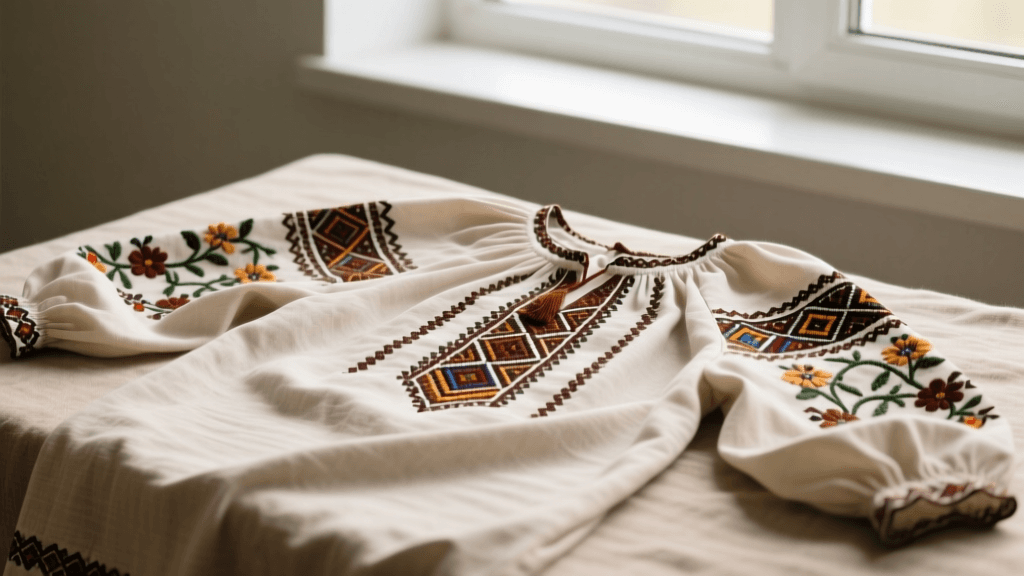
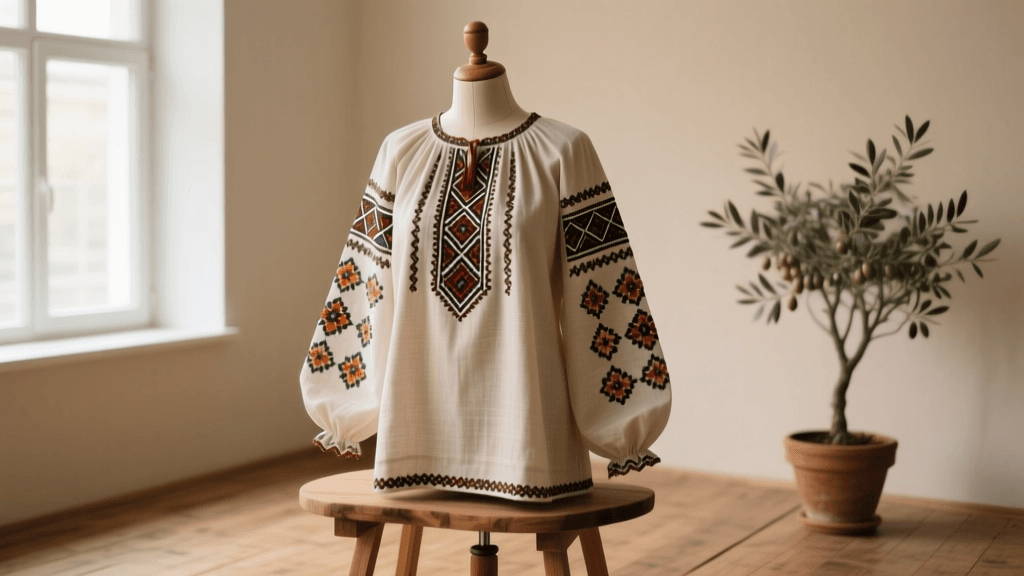
The Romanian ie (pronounced 'yeh') is the traditional embroidered blouse that forms the centerpiece of the Romanian folk costume. Recognized globally and protected under frameworks similar to UNESCO's framework for Intangible Cultural Heritage, the ie is a garment of profound symbolic weight. Every stitch, color, and motif on the blouse communicates the wearer's age, marital status, and specific village of origin.
Anatomy of the Ie
The traditional ie is constructed from hand-woven hemp, cotton, or a blend of both, featuring three primary embroidered zones: the altiță (a dense, highly decorative band on the shoulder), the increț (the gathered neckline), and the brâuri (vertical bands running down the sleeves).
Regional variations are stark. In the southern region of Muntenia, the embroidery heavily features geometric patterns and bold reds and blacks. In contrast, the Transylvanian regions often utilize more floral motifs and incorporate metallic gold or silver threads. In 2026, artisan cooperatives in regions like Vâlcea and Argeș have seen a surge in demand for natural dyes, utilizing walnut husks, onion skins, and woad to achieve historically accurate, eco-friendly color palettes.
Sourcing Authentic Pieces in 2026
The market is currently flooded with fast-fashion knockoffs that appropriate the ie's patterns without respecting its cultural significance. To source an authentic, hand-embroidered ie in 2026, buyers should connect directly with certified Romanian artisan cooperatives or specialized heritage boutiques in Bucharest and Cluj-Napoca. A genuine, hand-loomed, and hand-embroidered ie takes between 40 and 100 hours to complete, resulting in a 2026 retail price ranging from €250 for simpler, everyday blouses to over €900 for intricate, festival-grade masterpieces.
The Bavarian Dirndl: Alpine Traditions and Modern Rules
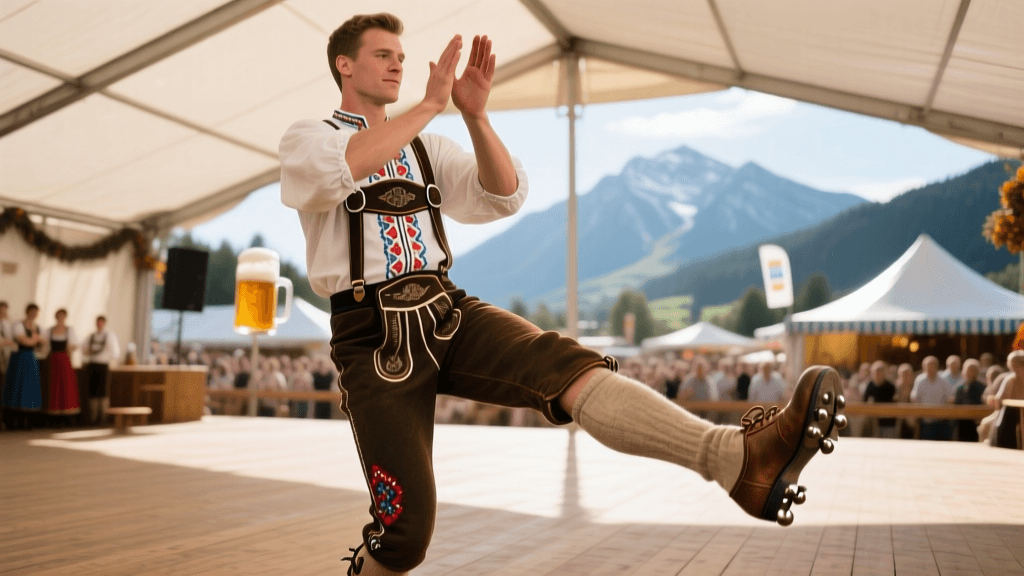
The Dirndl, originating from the Alpine regions of Bavaria (Germany) and Austria, has evolved from 19th-century peasant workwear into a highly structured and codified garment. While the global market is saturated with cheap, polyester 'Oktoberfest costumes,' the true Trachtenmode (traditional fashion) of 2026 adheres to strict historical and sartorial rules.
Anatomy and the Apron Code
A proper Dirndl consists of four distinct pieces: the Mieder (a tightly fitted, structured bodice), the Rock (a full, pleated skirt), the Schürze (the apron), and the Bluse (the underlying blouse). The length of the skirt is a major indicator of authenticity; traditional rules dictate that the hem must fall at or below the knee, a standard that high-end 2026 designers strictly enforce to differentiate true Tracht from party wear.
The most famous aspect of the Dirndl is the apron bow code, which signals the wearer's relationship status. Tied on the left indicates the wearer is single; tied on the right means married or in a committed relationship; tied in the center front traditionally signifies virginity (though less commonly enforced today); and tied in the center back indicates the wearer is widowed or working as a waitress at the festival.
2026 Trends in Sustainable Tracht
The 2026 Alpine festival season is defined by sustainability. High-end Dirndl manufacturers are prioritizing upcycled vintage fabrics, organic Bavarian linen, and ethically sourced loden wool. Textile archives like The Victoria and Albert Museum's fashion and textile collections show that historical Dirndls were built to last generations, and modern 2026 buyers are returning to this ethos, investing in modular pieces where the bodice and skirt can be mixed and matched. A high-quality, authentic Dirndl in 2026 costs between €450 and €1,800.
Comparative Breakdown: Cost, Sourcing, and Festival Use
To help you decide which regional garment aligns with your heritage or festival plans, here is a structured comparison of the three costumes based on 2026 market data.
| Feature | Norwegian Bunad | Romanian Ie | Bavarian Dirndl |
|---|---|---|---|
| Primary Region | Norway (Specific Valleys) | Romania (Moldova, Muntenia, Transylvania) | Bavaria (Germany) & Austria |
| Base Cost (2026) | €3,800 - €6,500 | €250 - €900 | €450 - €1,800 |
| Lead Time | 8 - 14 Months | 2 - 6 Months | 1 - 4 Months |
| Key Accessory | Sølje (Silver Jewelry) | Băsmăluță (Headscarf) & Beaded Belt | Schürze (Apron) & Trachtenhut |
| Primary Festival | Syttende Mai (Constitution Day) | Hora Unirii & Village Hram | Oktoberfest & Almabtrieb |
| Regulation Level | Extremely Strict | Moderate (Artisan Guilds) | Moderate (Tracht Associations) |
Practical Advice for Sourcing Authentic Garments in 2026
If you are planning to commission or purchase any of these traditional garments this year, follow these actionable steps to ensure authenticity and proper fit:
- Verify the Artisan Guild: For a Bunad, ensure your tailor is approved by the Bunad- og folkedraktrådet (National Council for Bunad and Folk Costumes). For a Dirndl, look for members of the Bundesverband Tracht. This guarantees the materials and patterns meet historical standards.
- Master the Measurements: Do not rely on standard clothing sizes. A Bunad requires precise measurements of the torso, waist, and bust taken while wearing the specific undergarments you plan to use. For a Dirndl, the bodice must be fitted to allow for a deep breath while maintaining structural support.
- Beware of 'Costume' Fabrics: In 2026, authentic folk dress strictly avoids polyester, spandex, and synthetic lace. Check the garment tags or ask the artisan for material certificates. True Romanian Ie blouses will feel slightly coarse if made of pure hemp, and Bavarian Dirndl skirts should have the heavy, structured drape of pure cotton or wool.
- Plan for Alterations: Traditional garments are designed to be passed down through generations. Bunads, in particular, are sewn with extra fabric hidden in the seams (often up to 5 inches) to allow for future alterations as the wearer's body changes over the decades.
Conclusion
The revival of regional European folk dress in 2026 is a testament to the enduring power of cultural heritage. Whether you are donning the heavy silver and wool of a Norwegian Bunad, the intricate, symbolic embroidery of a Romanian Ie, or the structured elegance of a Bavarian Dirndl, you are participating in a living history. By prioritizing authentic sourcing, respecting regional variations, and investing in quality craftsmanship, you ensure that these magnificent textile traditions continue to thrive for generations to come.