Bavarian Tracht for Schuhplattler Dance: Oktoberfest 2026 Guide
The Resurgence of Authentic Tracht in 2026
As Oktoberfest 2026 approaches, the line between authentic Bavarian Tracht (traditional dress) and mass-produced party costumes has never been more distinct. For members of the Trachtenvereine (traditional costume associations) and serious folk dance enthusiasts, the festival season is not merely about drinking beer in Munich; it is a rigorous celebration of Alpine heritage, textile craftsmanship, and kinetic folk dance. The Bavarian Folk Costume Association has reported a massive surge in 2026 for historically accurate, region-specific garments designed specifically to withstand the physical demands of traditional folk dancing. This guide explores the intricate relationship between the iconic Schuhplattler dance and the specialized garments required to perform it authentically.
The Mechanics of the Schuhplattler Folk Dance
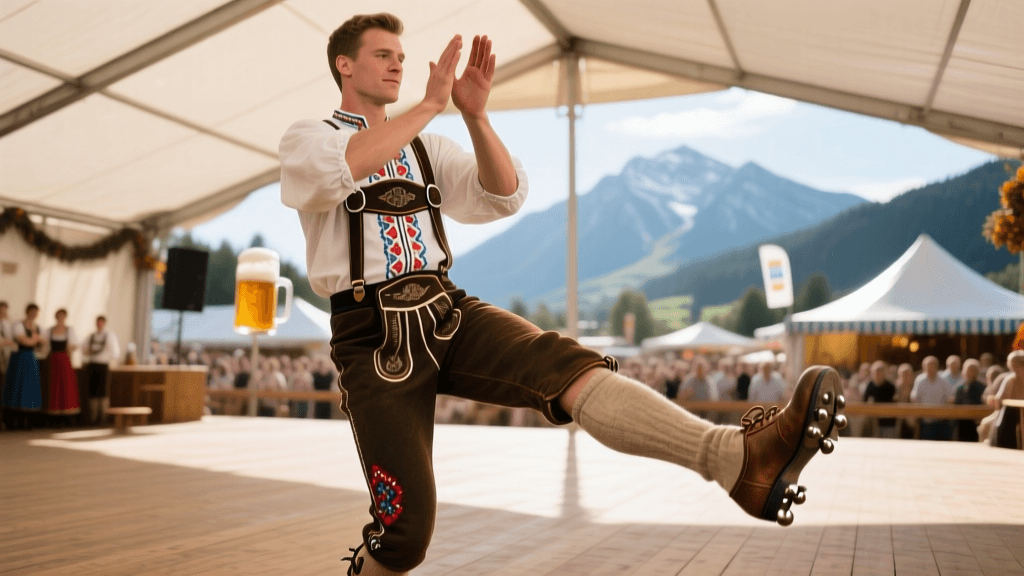
The Schuhplattler is arguably the most recognizable European folk dance, originating from the Alpine regions of Upper Bavaria, Tyrol, and Salzburg. Historically derived from the mating dance of the capercaillie (a large forest grouse), the dance is characterized by its vigorous stomping, clapping, and striking. Male dancers perform the Plattln—rhythmically striking their thighs, knees, and calves with their hands—while female dancers execute the Dreher, a continuous, rapid spinning motion under the male dancer's arm. This intense choreography demands that the traditional costumes are not just visually stunning, but structurally engineered for extreme mobility, durability, and acoustic resonance. According to cultural archives maintained by the official Oktoberfest portal, preserving the authentic acoustic and visual elements of this dance is a primary focus for 2026 festival committees.
Men's Plattler Tracht: Built for the Schlag (Strike)
Hirschleder Lederhosen and the Art of the Slap
For the male dancer, the centerpiece of the Tracht is the Lederhosen (leather breeches). However, not just any leather will suffice for the Schuhplattler. Authentic dance Tracht requires Hirschleder (deer leather), specifically sourced from Alpine red deer. In 2026, sustainable and eco-tanned Hirschleder utilizing olive-leaf extracts has become the gold standard among master saddlers and Tracht tailors. Deer leather is uniquely supple yet incredibly resilient. When the dancer strikes his thigh during the Schlag (the slap), cheap cowhide or synthetic costume materials produce a dull thud and can cause severe bruising. Genuine Hirschleder, however, produces a sharp, resonant crack that cuts through the sound of the brass band, while the natural elasticity of the leather protects the dancer's skin and muscle tissue. The breeches are traditionally cut just below the knee and fastened with a Latzerl (front drop flap) adorned with intricate, region-specific hand-embroidery, such as the Miesbacher or Werdenfelser patterns.
Footwear: Haferlschuhe and the Watscheln
The footwork of the Schuhplattler involves heavy stomping and the Watscheln (a rhythmic, duck-like waddle). To execute these moves safely on the wooden floors of a Festzelt (beer tent) or an outdoor stage, dancers wear traditional Haferlschuhe. These robust shoes feature a distinctive side-lacing system and a heavily nailed, thick leather sole. The nails in the sole are not merely decorative; they act as percussive instruments, adding a metallic click to the dancer's stomps. In 2026, bespoke cobblers are utilizing modern shock-absorbing cork footbeds hidden beneath the traditional leather uppers to protect the joints of aging dancers during multi-hour festival performances.
Women's Tracht: Engineering the Dirndl for the Dreher
The Tellerrock and Centrifugal Force
While the male dancer provides the percussive rhythm, the female dancer provides the visual spectacle through the Dreher (spinning dance). As she spins rapidly, centrifugal force takes over her skirt. A fashion Dirndl, often made of lightweight cotton and cut in a simple A-line, will fly up unpredictably and collapse awkwardly. A true dance Dirndl features a Tellerrock (circular skirt) or a heavily cartridge-pleated skirt made from medium-weight wool or structured linen blend. In 2026, Tracht designers are incorporating subtle, weighted hemlines using eco-friendly copper threading to ensure the skirt flares out into a perfect, modest bell shape at high velocities without lifting above the knee. The hem is also reinforced with a Besenlitze (a durable braided trim) to protect the fabric from the friction of the dancer's shoes and the floor.
Bodice Reinforcement and Blouse Dynamics
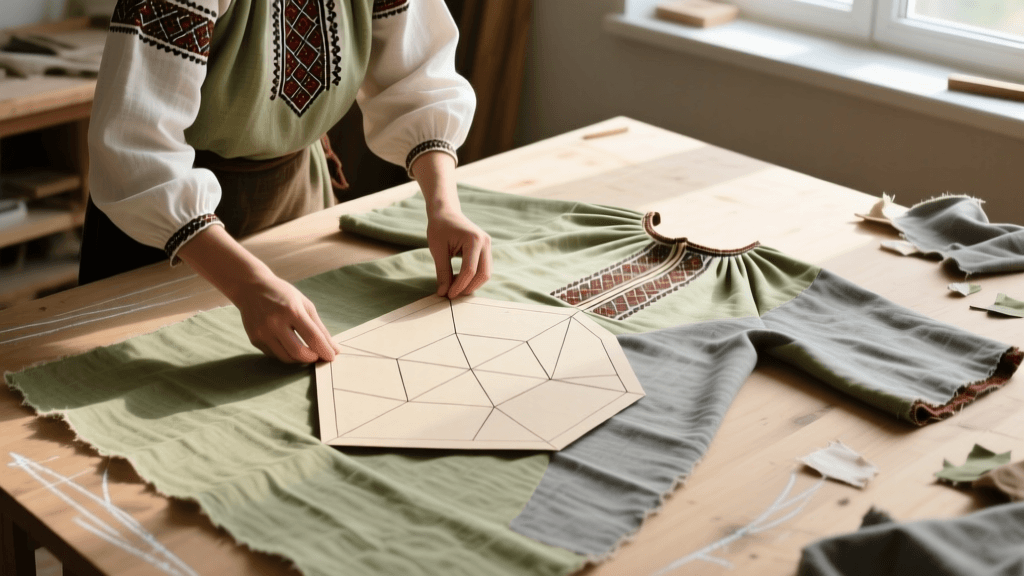
The bodice (Mieder) of a dance Dirndl is heavily structured, often featuring internal boning or stiffened linen canvassing. This structure is vital because the male dancer frequently grips the female dancer's bodice to guide her spins and execute complex underarm turns. A flimsy, commercially produced bodice would tear or offer no support. The accompanying blouse (Dirndlbluse) is typically made of high-thread-count organic cotton or fine linen, featuring ruched or pleated sleeves that allow for a full range of overhead arm movement without restricting the dancer or pulling the bodice out of alignment.
Essential Accessories for the Trachtenverein Dancer
Accessories in folk dance are never an afterthought; they are deeply symbolic and functional components of the ensemble.
- Charivari: Worn by men across the front of the Lederhosen drop flap, this silver chain adorned with hunting trophies (boar tusks, badger claws) and silver coins acts as a status symbol and a talisman for good luck. For dancers, it is securely fastened to prevent it from swinging wildly and causing injury during the Plattln.
- Tirolerhut and Gamsbart: The traditional felt hat features a Gamsbart (a brush made from the hair of a chamois). During the most vigorous dance sequences, men may remove their hats and use them as percussive props, striking the hat against their knees.
- Seidenschürze (Silk Apron): While fashion Dirndls use the apron knot to signal marital status, official Trachtenverein dancers tie their silk or fine damask aprons strictly in the front center or according to specific historical regional codes, prioritizing uniformity and historical accuracy over modern myths.
- Wadenstulpen (Calf Warmers): Men wear thick, ribbed wool calf warmers that bridge the gap between the Haferlschuhe and the Lederhosen. These provide essential muscle support and prevent chafing during the repetitive knee-bending motions of the dance.
2026 Sourcing Guide and Pricing Table
Investing in authentic dance Tracht is a significant financial commitment, but it is an investment in heritage and durability. Mass-produced costumes will disintegrate under the stress of folk dance. Below is a comparative pricing guide for 2026, illustrating the cost difference between authentic, dance-ready garments and commercial festival wear.
| Garment Component | Commercial 'Costume' Grade (2026) | Authentic Trachtenverein Dance Grade (2026) | Key Material Differences |
|---|---|---|---|
| Men's Lederhosen | €80 - €150 | €650 - €1,200+ | Synthetic/Cowhide vs. Eco-tanned Alpine Hirschleder |
| Women's Dirndl Set | €100 - €200 | €800 - €1,500+ | Polyester blends vs. Structured Wool, Linen, and Silk |
| Haferlschuhe (Men) | €60 - €90 | €250 - €400 | Glued rubber soles vs. Hand-nailed leather and cork |
| Trachtenhemd / Bluse | €30 - €50 | €120 - €250 | Thin synthetics vs. Heavyweight organic cotton/linen |
For those seeking authentic pieces in 2026, it is highly recommended to bypass the tourist shops on Munich's Neuhauser Straße. Instead, seek out master tailors (Trachtenschneidermeister) in the Alpine foothills, such as those located in Garmisch-Partenkirchen, Miesbach, or Berchtesgaden. Many of these artisans now offer virtual consultations and 3D body scanning to ensure a perfect, bespoke fit for international dancers who cannot travel to Bavaria for multiple fittings.
Preserving the Heritage on the Dance Floor
The Schuhplattler is more than a performance; it is a living, breathing archive of European folk culture. When a dancer dons a bespoke Hirschleder Lederhosen or a perfectly weighted Tellerrock, they are participating in a continuous thread of history that stretches back centuries. The rigorous standards enforced by the Bavarian Folk Costume Association ensure that as trends come and go, the foundational integrity of the dance and its textiles remains uncorrupted. Whether you are a seasoned member of a Trachtenverein preparing for the grand parade, or a cultural enthusiast attending Oktoberfest 2026 with a deep respect for Alpine traditions, understanding the mechanics and materials of authentic Tracht transforms the festival experience from a mere party into a profound celebration of European heritage.