Sardinian Orbace Coats and Pibiones Weaving: 2026 Guide
The Enduring Legacy of Sardinian Folk Dress
Sardinia, an island defined by its rugged interior and fierce independence, boasts one of the most complex and varied traditional dress repertoires in Europe. Unlike the homogenized national costumes found in some European regions, the Sardinian costume sardo changes drastically from village to village. Historically, the specific cut of a bodice, the color of a headscarf, or the weave of a wool coat could immediately identify a wearer’s exact town of origin, marital status, and social standing. As we move through 2026, the global slow fashion movement has sparked a profound renaissance in these regional garments. Contemporary heritage brands and artisanal cooperatives are working tirelessly to preserve ancient textile techniques, bringing Sardinian folk dress out of the museum and into the modern wardrobe.
At the heart of this revival are two distinct textile traditions: the robust, weather-resistant Orbace wool used for outerwear, and the intricate, raised-loop Pibiones weaving technique used for decorative shawls and accessories. Understanding these materials is essential for anyone looking to invest in authentic European folk garments today.
Orbace Wool: The Backbone of the Shepherd's Coat
Orbace is a coarse, hand-woven wool fabric that has been produced in Sardinia for centuries. Spun from the fleece of local sheep breeds, the yarn is woven on traditional wooden looms and then subjected to a rigorous fulling process. The fabric is soaked in water and beaten, causing the wool fibers to shrink, mat together, and become virtually windproof and water-resistant. This dense, felt-like textile was the ultimate survival gear for the Sardinian shepherds navigating the harsh, mountainous terrain of the Barbagia region.
The most iconic garment crafted from this material is su cappottu, the traditional hooded shepherd's coat. Characterized by its dark, natural wool color (ranging from deep charcoal to rich brown), a prominent hood, and a flared skirt that allowed for ease of movement while riding or herding, the Orbace coat is a masterpiece of functional folk design. In 2026, authentic handmade Orbace coats are highly sought after by collectors and enthusiasts of heritage workwear. Because the fulling process requires specialized artisanal knowledge, genuine Orbace is produced in very limited batches, primarily in the provinces of Nuoro and Oristano.
Pibiones Weaving: The 'Grain' of Sardinian Textiles
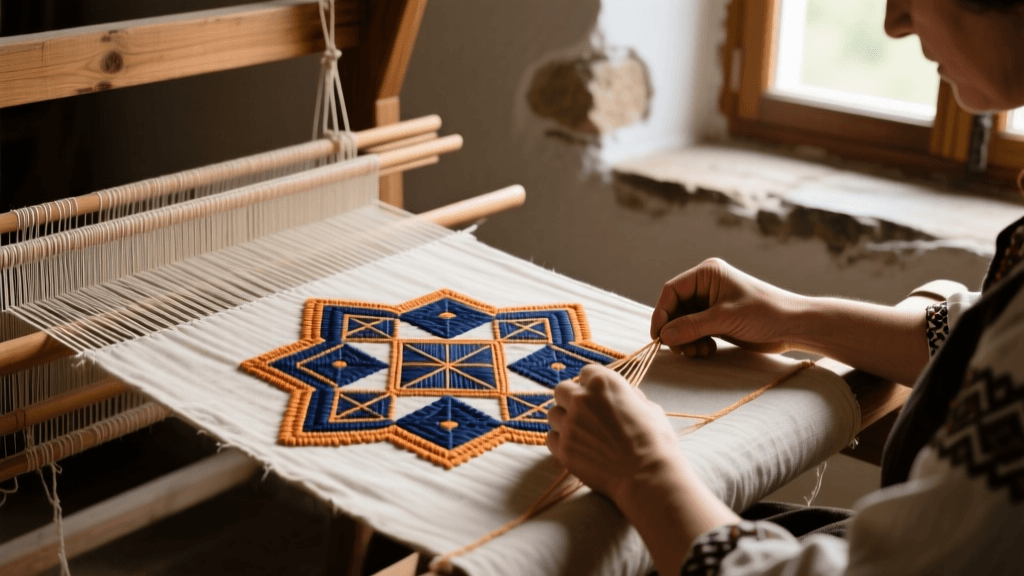
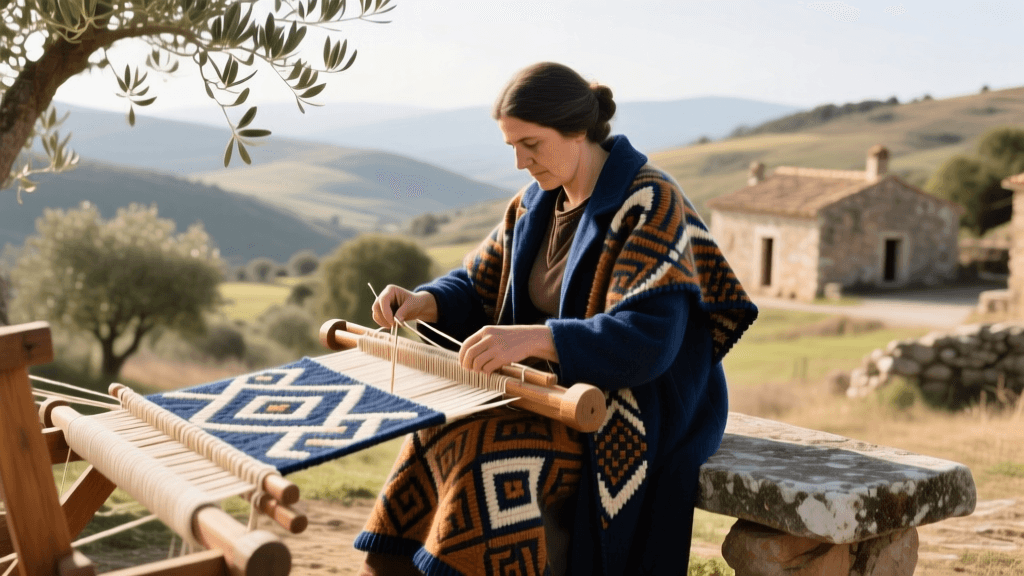
While Orbace dominates Sardinian outerwear, the intricate Pibiones weaving technique defines the island's decorative textiles. The word pibiones translates to 'grapes' or 'seeds' in the Sardinian dialect, a fitting name for the distinctive raised bumps that characterize this fabric. This ancient technique involves the weaver manually placing a smooth rod under the warp threads to create a raised loop, or 'grain,' before passing the weft thread through. The result is a heavily textured, three-dimensional fabric that is both visually striking and incredibly durable.
Pibiones weaving is most famously associated with the village of Samugheo, widely considered the weaving capital of Sardinia. Traditionally, this technique was used to create elaborate bedspreads for a bride's trousseau, but today it is most commonly applied to scialli (shawls), wall hangings, and luxury tote bags. The geometric patterns woven into the Pibiones textiles are not merely decorative; they are ancient apotropaic symbols designed to ward off the evil eye and bring fertility and prosperity to the wearer. According to the archives maintained by Sardegna Cultura, these motifs date back to Nuragic and Byzantine influences, representing a continuous thread of Mediterranean history.
2026 Sourcing and Pricing Guide
Investing in authentic Sardinian folk garments requires an understanding of the artisanal market. Mass-produced imitations are common in tourist hubs, so buyers must seek out certified cooperatives and master weavers. Below is a 2026 market guide for authentic, hand-loomed Sardinian garments.
| Garment / Item | Primary Material | 2026 Artisan Price Range | Typical Lead Time |
|---|---|---|---|
| Su Cappottu (Hooded Coat) | 100% Fulled Orbace Wool | €650 - €1,200 | 3 - 6 Months |
| Scialle (Pibiones Shawl) | Cotton warp, Linen/Wool weft | €300 - €550 | 1 - 3 Months |
| Berritta (Traditional Cap) | Black Orbace or Fine Wool | €90 - €180 | In Stock / 2 Weeks |
| Pibiones Tote Bag | Hand-loomed Cotton, Leather trim | €150 - €250 | In Stock / 4 Weeks |
Heritage Hubs and Artisanal Cooperatives
To source genuine garments in 2026, travelers and buyers should look toward the island's artisanal cooperatives. The Cooperativa Artigianale di Samugheo remains the gold standard for Pibiones textiles. Founded by local women in the mid-20th century to preserve their craft, the cooperative still operates traditional wooden looms and offers bespoke shawl commissions. Visitors can watch the weavers at work and purchase directly from the source, ensuring fair compensation for the artisans.
For Orbace wool and the broader context of the Sardinian costume, the Istituto Superiore Regionale Etnografico (ISRE) in Nuoro is an indispensable resource. While primarily a museum and research institute, the ISRE frequently hosts exhibitions and pop-up markets featuring vetted master artisans from the Barbagia region. Their rigorous documentation of regional dress variations ensures that contemporary weavers and tailors have access to historically accurate patterns and natural dyeing formulas.
Experiencing the Garments: 2026 Festivals
The best way to see these garments in their natural context is to attend one of Sardinia's major religious and cultural festivals. The Cavalcata Sarda, held annually in Sassari on the second-to-last Sunday of May, is a spectacular showcase where thousands of participants don the specific folk dress of their home villages. In 2026, the festival is expected to draw record crowds, highlighting the renewed pride younger generations are taking in their ancestral wardrobes.
Similarly, the Feast of Sant'Efisio in Cagliari on May 1st features a massive procession where traditional garments are paired with intricate gold and silver filigree jewelry. Observing the drape of an Orbace coat in motion or the way the sunlight catches the raised loops of a Pibiones shawl provides invaluable context for textile collectors and fashion historians alike. Information on these events and regional artisan trails can be found via Sardegna Turismo, which actively promotes sustainable, culture-focused travel itineraries.
Caring for Orbace and Hand-Loomed Textiles
Owning a piece of Sardinian heritage requires specialized care. Orbace wool retains much of its natural lanolin, which contributes to its water-resistant properties. Therefore, it should never be dry-cleaned with harsh chemicals or washed in hot water, as this will strip the lanolin and cause the garment to stiffen. Instead, spot clean with cold water and a mild, lanolin-based wool soap. Store Orbace coats on wide, padded wooden hangers in a breathable cotton garment bag to maintain the structural integrity of the heavy shoulders.
Pibiones shawls, often made from a mix of cotton and linen, should be hand-washed in cool water and laid flat to dry. Because the raised 'grains' can be crushed by heavy ironing, always use a steamer to remove wrinkles, hovering over the fabric rather than pressing down directly on the loops. With proper care, these garments are designed to last for generations, serving as a tangible link to the rich, enduring legacy of European folk dress.