2026 Traje de Flamenca Guide: Feria de Abril Dance Costumes
The Living Folk Costume: Traje de Flamenca in 2026
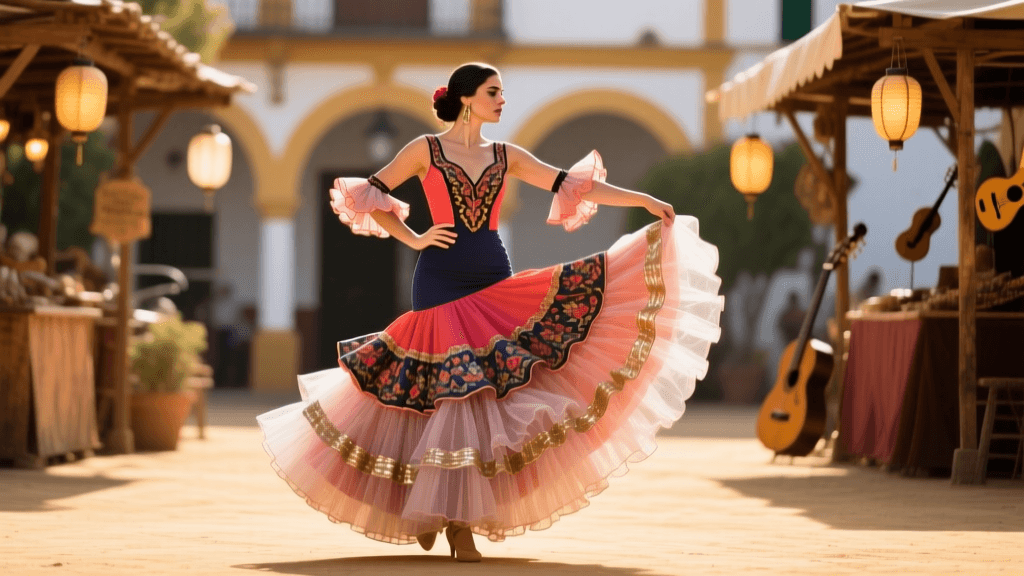
When discussing European folk dress, few garments are as dynamically intertwined with movement and celebration as the Traje de Flamenca. Unlike many traditional costumes that are preserved strictly in museums or worn only for static parades, the Flamenco dress is a living, breathing entity. It evolves annually, heavily influenced by the demands of folk dance and the vibrant atmosphere of Andalusian festivals. As we approach the Feria de Abril in Seville this April 2026, the intersection of haute couture, traditional craftsmanship, and the rigorous physical demands of the Sevillanas dance has never been more apparent.
The official Seville Tourism Board notes that the Feria de Abril attracts over a million visitors and locals to its sprawling fairgrounds, where dancing in the casetas (marquees) is a round-the-clock activity. For the modern dancer, the dress must be a marvel of textile engineering: heavy enough to create dramatic, sweeping silhouettes during turns, yet light enough to endure twelve hours of dancing in the spring heat. In 2026, the focus has shifted decisively toward sustainable, breathable fabrics and ergonomic tailoring that supports the biomechanics of traditional Andalusian folk dance.
2026 SIMOF Trends: Sustainability Meets Sevillanas
The Salón Internacional de la Moda Flamenca (SIMOF) sets the stage for what dancers and festival-goers will wear each year. The 2026 collections have showcased a dramatic departure from the stiff, heavy synthetic brocades of the early 2020s. Today, top designers are prioritizing eco-conscious textiles that offer superior drape and kinetic response.
- Tencel and Bamboo-Silk Blends: These sustainable fibers are dominating the 2026 Feria season. They offer the luxurious sheen of traditional silk but with enhanced moisture-wicking properties, crucial for dancers performing intense zapateado (footwork) in crowded, warm tents.
- Streamlined Volantes (Ruffles): While the dramatic, multi-tiered tulle ruffles of the past decade were visually striking, they often acted as a parachute, catching the air and exhausting the dancer. The 2026 trend favors single-tier, bias-cut cotton poplin or lightweight crepe ruffles that whip around the legs with precision during the rapid turns of the Sevillanas.
- Corsetry with Flexibility: The traditional tight bodice (cuerpo) has been re-engineered. Designers are now incorporating hidden stretch panels and flexible boning, allowing for the deep lateral bends and expansive braceo (arm movements) required in folk dance without restricting the dancer's ribcage or lats.
Anatomy of a Dance-Ready Flamenco Dress
To understand why the Traje de Flamenca is a masterpiece of functional folk dress, one must break down its anatomy. A dress intended for the Feria de Abril is not merely a garment; it is a dance partner.
The Cuerpo (Bodice)
The bodice must fit like a second skin but allow for the specific posture of Flamenco dance, where the chest is lifted and the shoulders are rolled back. In 2026, many ateliers are utilizing four-way stretch linings beneath structured jacquard exteriors. This ensures that when a dancer raises her arms above her head for floreos (wrist rotations), the hem of the bodice does not ride up.
The Falda (Skirt) and Godets
The true magic of the dress lies in the skirt. A dance-ready falda is typically cut with a circular base or incorporates numerous triangular godes (godets) inserted into the seams. This construction allows the skirt to remain narrow at the knees—essential for the close-footed steps of the Sevillanas—but flare out explosively when the dancer kicks or pivots. The hem is often weighted with a specialized cotton tape or horsehair braid to ensure the skirt falls back into place instantly after a spin.
Fabric Selection for Optimal Dance Mobility
Choosing the right fabric is the most critical decision for a Feria dancer. The wrong material can lead to overheating, restricted movement, or a lack of visual impact during the dance. Below is a comparison of the most popular fabrics for the 2026 season, evaluated specifically for folk dance mobility.
| Fabric Type | Weight Profile | Dance Mobility Score | Best Use Case |
|---|---|---|---|
| Cotton Poplin | Lightweight | 5/5 (Excellent) | Daytime dancing, high-mobility Sevillanas, hot weather. |
| Crepe Satin | Medium | 4/5 (Very Good) | Evening events, elegant drape, moderate footwork. |
| Tulle / Organza | Ultra-Light | 2/5 (Poor for kinetic control) | Static parades, carriage riding; catches too much wind during spins. |
| Bamboo-Silk Blend | Medium-Light | 5/5 (Excellent) | All-day wear, sustainable choice, superb moisture control. |
| Heavy Brocade | Heavy | 1/5 (Restrictive) | Concert stage performances, static photography; too heavy for Feria. |
The Art of Faldeo: Dancing with the Skirt
The faldeo is the technique of manipulating the skirt with the hands during the dance. A dancer uses her hands to gather, lift, and snap the ruffles in time with the guitar and palmas (handclaps). For this technique, the dress must have strategic gathering points. In 2026, many custom dresses feature subtle, reinforced grip zones hidden within the folds of the ruffles, allowing the dancer to catch the fabric securely even when sweating. Furthermore, the length of the dress is a subject of strict functional debate. While street-length dresses that cover the ankle are fashionable for walking the fairgrounds, serious dancers prefer a hemline that sits exactly two inches above the floor to prevent tripping during rapid backward steps (pasos atrás).
Footwear: The Engine of the Zapateado
No discussion of Flamenco folk dance is complete without addressing the footwear. The zapato de flamenca is a specialized instrument of percussion. For the 2026 Feria season, the standard remains a robust leather shoe with a 5-centimeter tacón de carrete (spool heel) or a standard block heel, designed to distribute weight evenly across the foot during hours of stamping.
Critical to the shoe's function are the clavos (steel nails) driven into the toe and heel blocks. These nails strike the wooden floors of the casetas, creating the rhythmic counterpoint to the music. In 2026, ergonomic advancements have been integrated into traditional shoemaking; leading brands are now incorporating memory foam insoles and shock-absorbing heel pads to protect the dancer's joints from the repetitive impact of dancing on hard surfaces.
Essential Accessories for the 2026 Feria
The accessories are not mere afterthoughts; they are integral to the visual vocabulary of the dance.
- Mantón de Manila: The heavily embroidered silk shawl. For dance, the mantón must be made of heavy, natural silk with long, weighted fringes. The weight is necessary to generate centrifugal force when the dancer wraps and throws the shawl around her body during turns.
- Peineta and Flores: A tall tortoiseshell comb holds the hair tightly in place, ensuring it does not obscure the dancer's face or neck posture. Fresh or high-quality silk flowers are pinned securely to withstand vigorous head movements (movimientos de cabeza).
- Pendientes (Earrings): Long, dangling coral or gold earrings are worn to accentuate the sharp, rhythmic isolations of the neck and chin.
Sourcing and Tailoring Your Costume in 2026
Acquiring a true, dance-ready Traje de Flamenca requires planning. For the 2026 Feria, the rental market in Seville has become highly sophisticated, offering pristine, hygienically cleaned designer dresses ranging from €80 to €150 for the week. However, for dancers who attend multiple festivals or perform professionally, bespoke tailoring is the standard.
Custom ateliers in neighborhoods like Triana and Nervión begin taking appointments in late autumn. A bespoke, dance-optimized dress in 2026 typically costs between €450 and €1,200, depending on the complexity of the ruffles and the origin of the lace. As recognized by the UNESCO Intangible Cultural Heritage registry, the preservation of Flamenco relies heavily on the artisans who craft its material culture. By investing in locally tailored, sustainable garments, festival-goers actively participate in the continuation of this profound European folk tradition.
Conclusion
The Traje de Flamenca remains one of Europe's most vibrant and functional folk costumes. As we celebrate the Feria de Abril in 2026, the emphasis on sustainable fabrics, ergonomic construction, and kinetic design ensures that this iconic garment continues to serve its primary purpose: to elevate the human body in the joyous, rhythmic expression of traditional Andalusian dance.