Romanian Ie Altiță Smocking & Embroidery Patterns 2026
The Resurgence of Heritage Construction in 2026
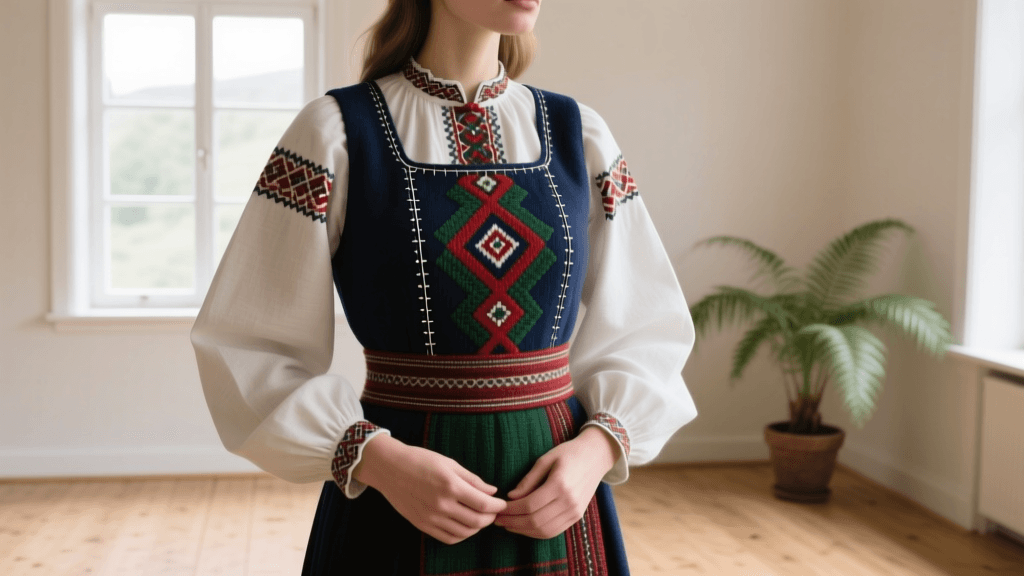
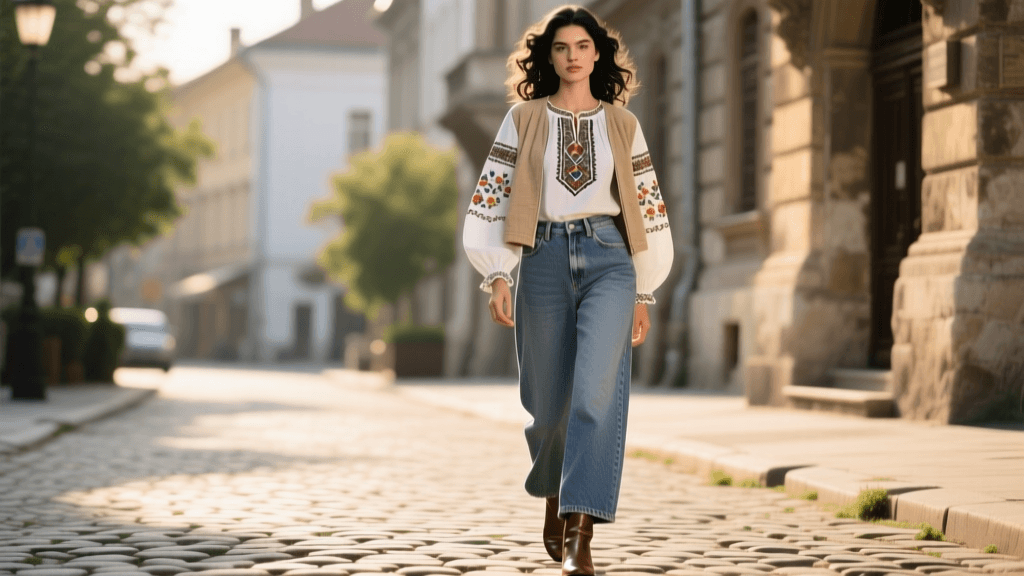
As we navigate the slow fashion and heritage crafting renaissance of 2026, the construction of traditional European folk dress has moved from museum archives to the cutting tables of dedicated artisans. Among the most technically demanding and visually striking of these garments is the Romanian Ie cu altiță (blouse with shoulder embroidery). This garment is a masterclass in geometric precision, mathematical smocking, and regional storytelling through thread. Recognized globally and inscribed on the UNESCO Intangible Cultural Heritage list, the traditional blouse remains a vital element of cultural identity in Romania and the Republic of Moldova. In 2026, modern makers are combining historical drafting techniques with newly available heritage textiles to recreate these garments with unprecedented accuracy.
Anatomy of the Ie cu Altiță
Before cutting into expensive linen, a maker must understand the distinct architectural zones of the blouse. Unlike modern tailored garments that rely on darts and curved seams, the Ie is constructed entirely from rectangular and gusseted panels, shaped to the body through intricate smocking and drawstrings.
- Altiță: The heavily embroidered horizontal band that sits directly on the shoulder. This is the focal point of the garment, featuring dense geometric motifs that historically indicated the wearer's region, marital status, and social standing.
- Încreț: The smocked collar and neckline. This technique gathers the wide, rectangular neck panels into a comfortable, ruffled collar using complex honeycomb smocking stitches.
- Râuri (Rivers): The vertical bands of embroidery that flow down the sleeves and the front/back panels of the blouse, originating from the bottom edge of the altiță.
- Pavă (Gusset): Diamond-shaped underarm inserts that provide mobility without the need for modern armhole scythes.
Sourcing Authentic Linen in the 2026 Market
The foundation of any authentic Ie is 100% flax linen. Cotton, while common in mid-20th-century commercial reproductions, lacks the structural integrity and historical accuracy required for heavy smocking. As of 2026, heritage mills in Maramureș and specialized European weavers like Zweigart have released new runs of historically accurate, uneven-weave linens specifically for folk dress reproduction.
Current 2026 pricing for authentic, hand-loomed or high-quality mill-woven evenweave linen averages between €45 and €70 per linear meter. When selecting your fabric, look for a thread count between 18 and 24 threads per inch (TPI). According to archival conservation research from the Textile Research Centre in Leiden, historical garments often utilized slightly irregular, hand-spun yarns that gave the fabric a distinct slub and texture. Modern 22-count linen with a slight slub effect is the gold standard for 2026 reproductions, providing enough space for thick wool or silk embroidery threads while maintaining the structural tension required for the încreț.
Mastering the Încreț (Neckline Smocking)
The încreț is where the structural engineering of the blouse truly shines. Because the garment lacks curved shoulder seams or tailored necklines, the massive circumference of the neck panel (often 120 to 150 centimeters of raw fabric) must be reduced to fit the wearer's neck and shoulders (typically 40 to 50 centimeters). This requires a 3:1 or even 4:1 gathering ratio, achieved through a specialized form of honeycomb smocking.
Step-by-Step Smocking Construction
- Grid Marking: Using a water-soluble fabric pen, mark a precise grid on the wrong side of the linen. For a standard Ie, dots are placed exactly 1 cm apart horizontally and 1 cm apart vertically. This grid must be perfectly aligned with the warp and weft threads of the linen to prevent skewing.
- The Gathering Threads: Using a strong, waxed linen thread, sew horizontal running stitches through each row of dots. Do not pull these threads tight yet; they act as the scaffolding for your smocking.
- The Honeycomb Stitch: Once all rows are threaded, gently pull the gathering threads to compress the fabric. Secure the ends by wrapping them around a pin in a figure-eight pattern. Using a contrasting or matching silk thread, begin the honeycomb smocking stitch from the top row, catching the folds of the fabric to create a flexible, elasticated mesh. This mesh must stretch over the head but snap back to form the ruffled collar.
- Stabilization: In 2026, many artisans apply a thin, historically accurate layer of natural beeswax to the smocking threads to prevent friction wear over decades of use.
Drafting the Altiță Shoulder Panel
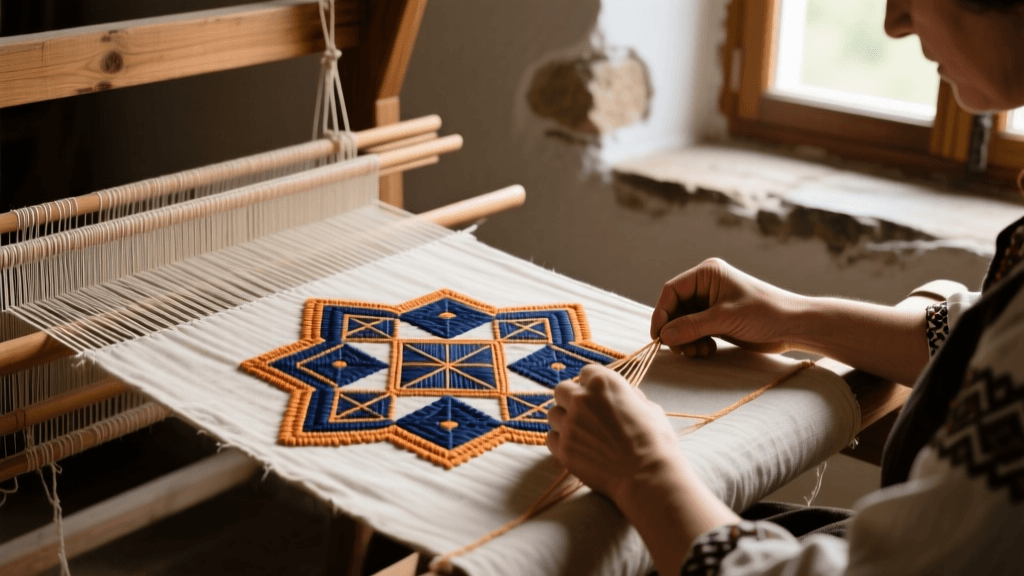
The altiță is traditionally worked in cross-stitch, Romanian hemstitch, and chain stitch. The patterns are not random; they are based on strict mathematical grids and modular geometric shapes. The most common motifs include the cârlig (hook), the romb (rhombus), and the coarne (horns). To draft an authentic 2026 pattern, artisans use digital graphing software mapped to the exact thread count of their chosen linen, ensuring that a motif spanning 40 threads horizontally will perfectly mirror across the shoulder seam.
Color theory in contemporary heritage crafting has shifted heavily toward natural, botanical dyes. Madder root (for deep terracotta reds), weld (for vibrant yellows), and woad (for muted blues) are the standard palette. For makers who prefer the convenience of modern mercerized cotton or silk floss, brands like DMC and Anchor have released 2026 heritage color cards specifically mapped to historical European natural dye equivalents.
2026 Material & Thread Sizing Chart
Selecting the correct needle and thread weight is critical to prevent puckering or fabric distortion. The following chart outlines the standard pairings recommended by historical costumers and the Embroiderers' Guild for traditional European linen work in 2026.
| Fabric Count (TPI) | Thread Type (2026 Standard) | Needle Size & Type | Best Application |
|---|---|---|---|
| 18-Count Linen | 2-strand DMC Mouliné / Silk | Tapestry 24 | Altiță Cross-Stitch & Râuri |
| 22-Count Linen | 1-strand Silk or Fine Wool | Tapestry 26 | Intricate Geometric Motifs |
| Any Count | Waxed Linen Thread (40/2) | Sharp 8 or 9 | Încreț Smocking & Seams |
| Any Count | Heavy Linen (16/2) | Chenille 20 | Romanian Hemstitch Borders |
Finishing Techniques and Hemstitching
The edges of the Ie are rarely finished with modern rolled hems. Instead, the garment relies on drawn-thread work and Romanian hemstitch (cheiță) to join panels and finish cuffs. The cheiță is a decorative lace-like seam that joins two finished edges of linen together while leaving a deliberate, beautiful gap between the panels. To execute this in 2026, makers baste the two finished edges to a strip of water-soluble stabilizer, work the interlocking buttonhole and wrapping stitches across the gap, and then dissolve the stabilizer in warm water, leaving a freestanding lace seam.
"The true mastery of the European folk dress lies not in the complexity of the cut, but in the manipulation of the flat textile through thread tension, smocking, and geometric embroidery. The garment is sculpted by the stitch, not the shears."
Conclusion
Constructing a Romanian Ie cu altiță in 2026 is a profound exercise in patience, mathematics, and cultural preservation. By sourcing high-quality heritage linens, respecting the mathematical ratios of the încreț smocking, and utilizing historically accurate natural dye palettes, modern makers are ensuring that these breathtaking construction techniques survive for another century. Whether you are drafting your first rhombus motif or mastering the tension of the honeycomb collar, the Ie remains one of Europe's most rewarding and structurally fascinating folk garments to bring to life.