Romanian Ie Blouse Revival: 2026 Contemporary Styling Guide
The Renaissance of the Ie Alta in 2026
The year 2026 marks a definitive turning point for European folk dress, as the global fashion industry pivots away from fleeting micro-trends and embraces 'heritage luxury.' At the forefront of this movement is the Romanian Ie—specifically the Ie Alta, a traditional blouse characterized by its intricate shoulder embroidery and voluminous silhouette. Once relegated to museum archives and rural festivals, the Ie has been reclaimed by contemporary designers, urban professionals, and sustainable fashion advocates alike. Following its vital recognition on the UNESCO Intangible Cultural Heritage list, the garment has seen a massive surge in authentic revival, protected from the cultural appropriation and fast-fashion knockoffs that plagued the industry in the early 2020s.
Today, styling the Ie Alta is no longer about wearing a costume; it is about integrating centuries-old textile artistry into a modern, functional wardrobe. In 2026, the focus is on juxtaposition—pairing the delicate, hand-loomed linen and geometric embroidery of the Ie with structured, contemporary tailoring and avant-garde streetwear. This guide explores the anatomy of the garment, regional variations, and actionable styling techniques to seamlessly incorporate this masterpiece of European folk dress into your everyday rotation.
Deconstructing the Garment: Anatomy of the Alta
To style the Ie Alta effectively, one must first understand its architectural brilliance. Unlike standard gathered blouses, the Alta is defined by three distinct structural zones, each carrying deep cultural and aesthetic significance:
- The Altiță (Shoulder): The crown jewel of the blouse. This is a wide, densely embroidered band that sits squarely on the shoulder. In 2026, contemporary artisans are experimenting with metallic threads and subtle tonal embroidery, moving beyond the traditional high-contrast red and black.
- The Increț (Gathering): Located just below the altiță, this section features intricate smocking or gathering techniques that create volume and texture, allowing the blouse to drape elegantly over the body without adding bulk to the waist.
- The Râuri (Rivers): These are the vertical or diagonal stripes of embroidery that flow down the sleeves, mimicking the rivers of the Carpathian landscape. They guide the eye and elongate the arm, making the garment surprisingly flattering for modern silhouettes.
Understanding these elements is crucial when selecting pieces for your wardrobe, as the placement of the embroidery dictates how the blouse interacts with modern outerwear and layering pieces.
Regional Color Palettes and 2026 Trend Integration
Historically, the color palette of an Ie indicated the wearer's specific region, age, and marital status. In 2026, these regional palettes align perfectly with contemporary seasonal color forecasting, allowing for highly intentional styling.
Olt and Argeș: The Monochromatic Masters
Originating from southern Romania, blouses from the Olt and Argeș regions traditionally feature black or deep indigo embroidery on pristine white linen. This high-contrast, monochromatic scheme is a staple of the 2026 'quiet luxury' aesthetic. An Olt-region Ie pairs effortlessly with charcoal wool tailoring, black leather trousers, and minimalist silver jewelry, making it an ideal choice for the modern urban professional.
Vrancea and Muscel: Earth Tones and Botanical Dyes
The mountainous regions of Vrancea and Muscel are famous for their use of natural, botanical dyes, resulting in rich ochres, muted forest greens, and deep rust reds. As the 2026 fashion landscape heavily favors sustainable, nature-derived colorways, a Muscel Ie serves as the perfect anchor piece for an earth-toned capsule wardrobe. Pair these warmer, organic hues with raw selvedge denim, olive-drab utility jackets, and cognac leather boots.
Contemporary Styling: Integrating Heritage into the 2026 Wardrobe
The key to wearing folk dress in a modern context is contrast. The voluminous, romantic nature of the Ie Alta requires grounding with structured, contemporary, or even industrial pieces. Here are three distinct styling formulas dominating the European street-style scene this year.
Look 1: The Boardroom Heritage (Smart Tailoring)
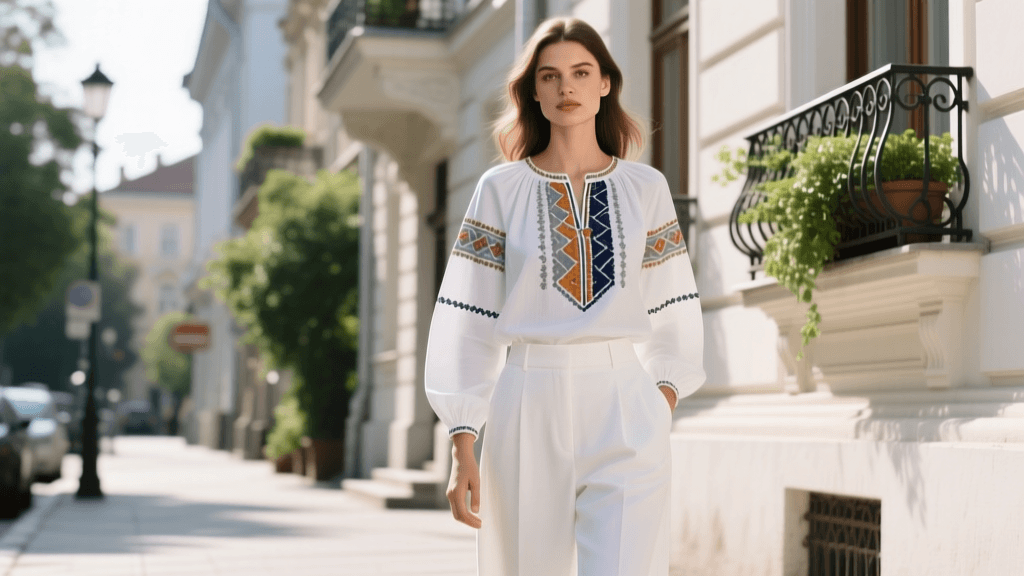
Transform the Ie into a powerful statement piece for the workplace by treating it as a high-end silk blouse alternative. Select an Ie with a subtle, tonal altiță (such as white-on-white or cream-on-cream embroidery) to maintain a professional demeanor. Tuck the blouse into high-waisted, wide-leg trousers crafted from heavy crepe or flannel wool. Cinch the waist with a structured, architectural leather belt to counteract the blouse's natural volume. Finish the look with pointed-toe ankle boots and a structured top-handle bag. The result is a sophisticated, authoritative silhouette that honors heritage while commanding the modern boardroom.
Look 2: The Weekend Artisan (Elevated Streetwear)
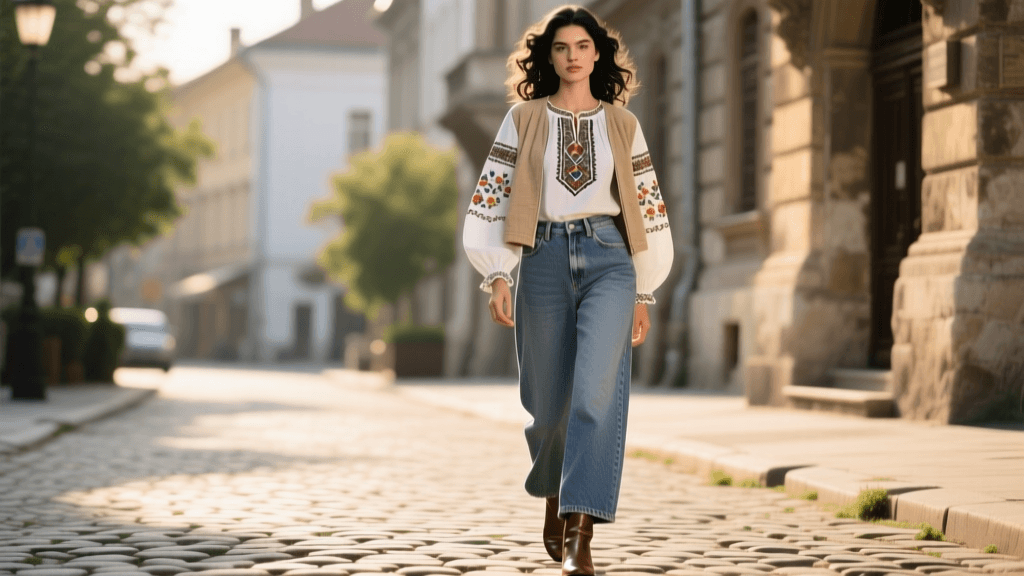
For off-duty days, lean into the textural contrast between delicate hand-loomed linen and rugged workwear. A vibrantly embroidered Ie from the Muscel region looks striking when paired with vintage-wash, straight-leg denim and a cropped, boxy leather jacket. The rigid structure of the leather grounds the flowing sleeves of the blouse. Footwear should remain utilitarian—think chunky lug-sole boots or retro-inspired sneakers. This look bridges the gap between historical craftsmanship and contemporary urban utility, perfect for gallery visits or weekend markets.
Look 3: Evening Avant-Garde (Slip Skirts and Layering)
The Ie Alta’s voluminous sleeves and intricate neckline make it an unexpected but brilliant candidate for evening wear. In 2026, the trend of 'historical grunge' has popularized pairing folk blouses with bias-cut silk slip skirts. Choose a midi-length slip skirt in a jewel tone that matches one of the accent colors in the blouse’s râuri (rivers). Allow the blouse to blouse slightly over the waistband of the skirt, and layer with an oversized, tailored tuxedo blazer draped over the shoulders. This styling technique highlights the exquisite shoulder embroidery while maintaining a sleek, modern lower half.
Sourcing Authentic Textiles: The 2026 Market Landscape
As the demand for authentic European folk dress has surged, so has the market for ethical sourcing. The 2026 consumer is highly educated, actively avoiding mass-produced, machine-embroidered imitations that exploit traditional patterns. Supporting rural artisan cooperatives and certified heritage brands is now the industry standard. According to guidelines on protecting traditional cultural expressions outlined by the World Intellectual Property Organization, ensuring fair compensation for rural artisans is vital to the survival of these textile traditions.
Below is a comparison of the primary sourcing channels available to buyers in 2026:
| Sourcing Channel | Price Range (2026) | Authenticity Level | Best For |
|---|---|---|---|
| Rural Artisan Cooperatives | €280 - €550 | 100% Handmade / Heritage Looms | Purists, Collectors, and Heirloom Investments |
| Contemporary Heritage Brands | €140 - €250 | Semi-Handmade / Ethical Factories | Daily Urban Wear and Frequent Laundering |
| Curated Vintage Archives | €200 - €800+ | Historical / Antique (Pre-1980) | Sustainable Fashion Lovers and Stylists |
When purchasing, always look for the 'Authentic Ie' certification mark, which guarantees that the garment was constructed using traditional geometric counting techniques rather than digital machine embroidery.
Accessorizing: Bridging Centuries with Modern Minimalism
Historically, the Ie was worn with heavy coin necklaces, layered beaded necklaces, and floral headscarves. While beautiful in a folkloric context, this approach can easily tip into costume territory in a modern urban environment. The 2026 styling ethos dictates that the embroidery itself is the jewelry.
Opt for modern, minimalist accessories that complement rather than compete with the blouse. A single, sculptural silver cuff or a pair of geometric drop earrings in brushed gold provides a contemporary frame for the face without obscuring the altiță. When it comes to bags, avoid woven or embroidered textiles; instead, choose sleek, structured leather goods in solid, neutral tones to provide a visual resting place against the busy patterns of the blouse.
Preservation and Care for Hand-Spun Linens
Authentic Ie blouses are often crafted from hand-spun hemp or linen, fibers that require specific care to maintain their structural integrity and colorfastness. The Victoria and Albert Museum's textile conservation guidelines emphasize the importance of gentle handling for historical and artisanal fibers.
- Washing: Never machine wash an authentic, hand-embroidered Ie. Hand wash in cool water using a pH-neutral, specialized textile detergent. Avoid wringing or twisting the fabric, as this can distort the intricate smocking of the increț.
- Drying: Lay the garment flat on a clean, dry towel away from direct sunlight to prevent the botanical dyes from fading. Reshape the sleeves and shoulder bands while damp.
- Ironing: Iron the blouse while it is still slightly damp, using a medium heat setting. Always iron on the reverse side, placing a clean cotton pressing cloth between the iron and the embroidery to prevent crushing the three-dimensional texture of the altiță.
- Storage: Store the Ie flat in a breathable cotton garment bag. Avoid wire hangers, which can stretch the delicate shoulder seams and distort the garment's architectural silhouette over time.
Conclusion
The revival of the Romanian Ie Alta in 2026 is a testament to the enduring power of European folk dress. By understanding its rich anatomy, respecting its regional origins, and applying contemporary styling principles, we can elevate this traditional garment from a historical artifact to a vital, living component of the modern wardrobe. Whether paired with sharp tailoring for the office or rugged denim for the weekend, the Ie Alta proves that true heritage luxury is not just about wearing the past—it is about thoughtfully weaving it into the fabric of our future.