15th-Century Burgundian Gown Construction & Fabric Guide 2026
The Resurgence of Late Medieval Accuracy in 2026
The 2026 historical reenactment and living history season is in full swing, and the demand for late medieval sartorial accuracy has never been higher. Among the most striking, elegant, and highly requested garments in the European folk dress and historical costuming community is the 15th-century Burgundian gown. Characterized by its deep V-neckline, contrasting collar, high waistline, and voluminous skirt, this garment represents the pinnacle of Northern European Renaissance fashion. Whether you are preparing for a major summer heritage festival or upgrading your wardrobe for historical European martial arts (HEMA) events, constructing an authentic Burgundian gown requires a deep understanding of period tailoring, textile behavior, and historical silhouettes.
In this comprehensive guide, we will break down the anatomy of the Burgundian V-neck gown, provide actionable advice on sourcing period-accurate textiles in the current 2026 market, and offer a step-by-step construction methodology to ensure your garment drapes and moves exactly as it would have in the courts of Philip the Good.
The Anatomy of the Burgundian V-Neck Gown
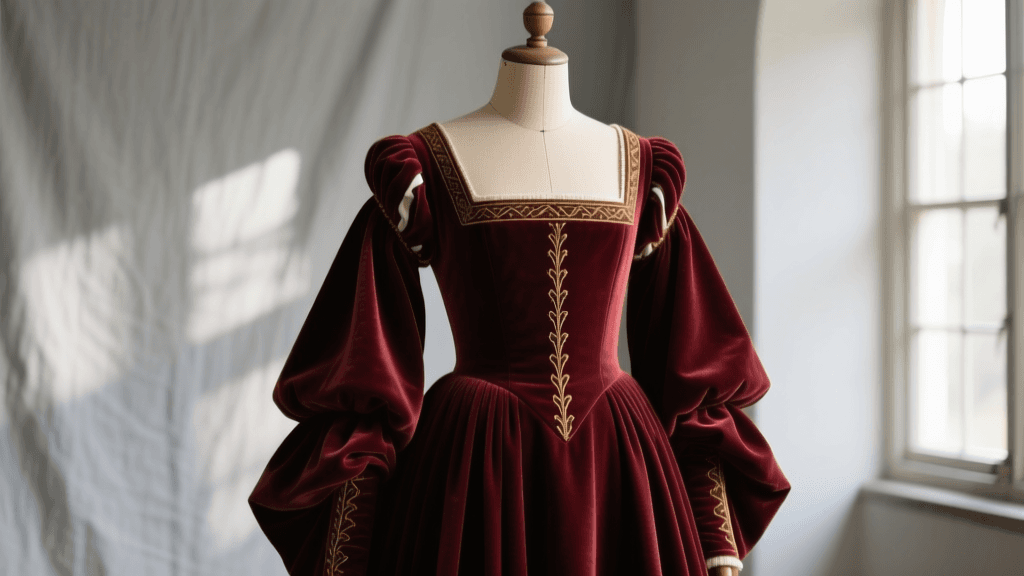
Evolving from the voluminous, unstructured houppelande of the early 15th century, the Burgundian gown of the 1450s–1480s introduced a highly structured, fitted bodice that flared dramatically from a high waistline just beneath the bust. The defining features of this gown include:
- The Deep V-Neckline: Plunging from the shoulders to the high waist, often revealing a contrasting kirtle or stomacher beneath.
- The Contrasting Collar: A wide band of fabric, typically black silk velvet or faux fur, that frames the V-neck and extends slightly over the shoulders.
- The High-Waisted Belt: A wide, ornate leather or woven textile belt worn directly under the bust, cinching the fullness of the skirt and creating the iconic elongated torso silhouette.
- The Trained Skirt: Often constructed with multiple gores or cartridge-pleated panels to provide immense volume at the hem, sometimes featuring a decorative train.
- Bag Sleeves or Fitted Sleeves: While fitted sleeves were common, the dramatic 'bag' sleeve with a pendulous cuff and a slit for the arm to pass through remains a favorite for high-status portrayals.
Sourcing Period-Accurate Textiles in 2026
The global textile market has shifted significantly over the last few years. In 2026, finding 100% natural fibers woven on traditional shuttle looms requires knowing the right European mills and specialized reenactment vendors. Synthetic blends, while cheaper, will ruin the drape and historical accuracy of a Burgundian gown.
According to the Victoria and Albert Museum's medieval fashion archives, the visual weight and structural integrity of late medieval garments relied heavily on the fulled and sheared finish of wool broadcloth, contrasted with the light-catching pile of silk velvet. When sourcing materials this year, prioritize the following:
Wool Broadcloth and Melton
For the main body and skirt of the gown, you need a heavy, tightly woven wool that has been fulled (washed and agitated to shrink and felt the fibers slightly). In 2026, specialized historical textile weavers in the UK and Eastern Europe are producing excellent mid-weight to heavy-weight wool broadcloths specifically for the reenactment market. Look for a fabric weight of at least 350–450 grams per square meter (GSM) to ensure the skirt holds its cartridge pleats and drapes heavily to the floor.
Silk Velvet for the Collar and Cuffs
The contrasting collar was almost invariably black, serving as a visual frame for the face and the linen chemise beneath. While pure silk velvet with a cotton or silk backing is the gold standard, it is notoriously expensive and difficult to sew. The Textile Research Centre in Leiden notes that historical velvets had a much denser, shorter pile than many modern upholstery velvets. If pure silk velvet is outside your budget, look for high-quality rayon-silk blends with a short, dense pile, avoiding modern stretch velvets entirely.
Heavy Linen for Lining and Interlining
A 15th-century gown was rarely unlined. The bodice requires a sturdy interlining to support the bust and maintain the rigid, conical shape of the era. Use a heavy, opaque linen (often referred to as 'canvas weight' or 'heavyweight' linen) for the bodice lining, and a medium-weight linen for the skirt lining if your budget and climate allow.
Essential Measurements and Patterning
Drafting a Burgundian gown requires a different approach than modern dressmaking. The bodice must be fitted over the ribs and bust, while the skirt is attached at a high waistline. Before cutting into your expensive 2026 wool yardage, take the following measurements while wearing your historical undergarments (chemise and supportive kirtle):
- High Bust / Upper Ribcage: Measured directly under the bust, where the historical belt will sit.
- Full Bust: Measured across the fullest part of the bust.
- Shoulder to Underbust: The vertical drop from the shoulder seam to the high waistline.
- Back Width: Across the shoulder blades, crucial for ensuring the V-neck doesn't gape in the back.
- Armhole Depth and Bicep: Essential for drafting the sleeve cap, which was set further back on the shoulder in the 15th century than modern sleeves.
- Floor Length from Underbust: Measure from the high waistline down to the floor, adding 2–4 inches if you intend to create a slight train or want the hem to pool slightly over the toes.
2026 Fabric Requirements and Cost Comparison
Budgeting for a historically accurate gown is a significant undertaking. Below is a comparison table detailing the estimated yardage and average 2026 market costs for a standard floor-length Burgundian gown with a contrasting collar and lined bodice.
| Fabric Type | Garment Part | Yardage Needed | 2026 Avg Cost/Yard | Total Est. Cost |
|---|---|---|---|---|
| Wool Broadcloth (Heavy) | Main Bodice & Skirt | 6.5 - 8 yards | $38.00 | $247 - $304 |
| Silk Velvet (or high-end blend) | Collar & Sleeve Cuffs | 1.5 - 2 yards | $65.00 | $97 - $130 |
| Heavyweight Linen | Bodice Lining & Interlining | 2.5 yards | $22.00 | $55.00 |
| Medium Linen | Skirt Lining (Optional) | 6 yards | $18.00 | $108.00 |
| Wool Felt / Canvas | Additional Bodice Stiffening | 1 yard | $15.00 | $15.00 |
Note: Prices reflect average 2026 retail costs from specialized historical textile vendors and do not include shipping, notions, or the wide leather belt.
Step-by-Step Construction Techniques
The Costume Society frequently notes that proper under-structure and internal finishing are what separate amateur costumes from accurate historical dress. Follow these period-inspired construction methods for the best results.
Step 1: Interlining and Pad Stitching the Bodice
Unlike modern garments that rely on plastic boning, the 15th-century bodice achieved its stiffness through layers of heavy linen and wool, secured with pad stitching. Cut your bodice interlining from heavy linen or light wool canvas. Using a strong linen thread, sew diagonal rows of running stitches (pad stitching) across the interlining pieces. This technique forces the fabric to hold a curved, three-dimensional shape that will support the bust and prevent the V-neckline from buckling or gaping when you move.
Step 2: Assembling and Attaching the V-Neck Collar
The contrasting collar is essentially a wide bias band or shaped facing that wraps around the V-neck. Cut your velvet or fur collar with a slight curve to accommodate the slope of the shoulders. When attaching the collar to the wool bodice, use a prick stitch (a nearly invisible hand-sewn stitch) on the right side of the garment to secure the velvet edge. This prevents the thick pile of the velvet from rolling over the seam allowance and ensures a crisp, sharp V-point at the center front.
Step 3: Cartridge Pleating the Skirt
To achieve the massive volume at the hem without adding bulk to the high waistline, cartridge pleating is essential. Run three to four parallel rows of heavy gathering stitches along the top edge of your skirt panels. Pull the threads tightly to create dense, tubular pleats that stand out perpendicular to the fabric. Whip-stitch the top edge of each individual pleat directly to the finished bottom edge of the bodice. This method allows the heavy wool skirt to flare out dramatically from the underbust belt line, creating the iconic late medieval silhouette.
Step 4: Setting the Sleeves
15th-century sleeves were set differently than modern sleeves. The armhole was often cut smaller and placed slightly further back on the body to allow for better forward arm movement. Ease the sleeve cap into the armhole, and finish the seam allowance by flat-felling it toward the bodice for maximum durability and a clean interior finish.
Accessories: The Wide Belt and the Hennin
No Burgundian gown is complete without its defining accessories. The wide belt, worn directly over the cartridge pleats at the underbust, was often made of tooled leather, velvet, or woven silk, and featured ornate brass or silver-gilt buckles and end-pieces. In 2026, several specialized leatherworkers in the historical community offer custom-tooled wide belts that perfectly replicate the extant examples found in European museum collections.
For headwear, the steeple hennin or the padded roll (bourrelet) with a sheer linen veil remains the most recognizable accompaniment to the V-neck gown. Constructing a hennin requires a lightweight wire or buckram frame, covered in silk or velvet, with a transparent linen veil pinned to the peak. Ensure the veil is hemmed by hand with a micro-roll hem to maintain the delicate, floating aesthetic required for high-status portrayals.
Conclusion
Constructing a 15th-century Burgundian V-neck gown is a rewarding endeavor that bridges the gap between historical research and tangible craftsmanship. By prioritizing period-accurate textiles like heavy wool broadcloth and silk velvet, utilizing structural techniques like pad stitching and cartridge pleating, and paying close attention to the unique high-waisted silhouette, you can create a garment that is not only visually stunning but historically defensible. As the 2026 reenactment season unfolds, your dedication to these medieval tailoring traditions will ensure your presence in the living history community is both respected and admired.