Viking Smokkr Apron Dress Guide 2026: Patterns, Fabrics & Sourcing
The Enduring Legacy of the Viking Smokkr in 2026
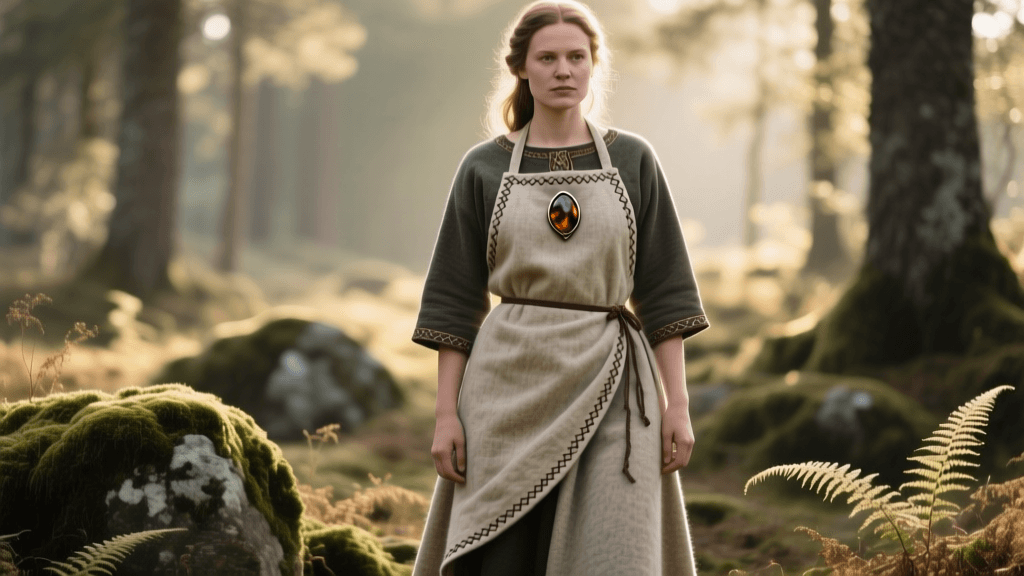
As the 2026 historical reenactment season approaches, the demand for meticulous, archaeologically accurate Nordic and Viking garments has reached an all-time high. At the center of the female Viking Age wardrobe is the smokkr, commonly referred to as the apron dress. Worn over a linen or wool under-tunic (the serk), the smokkr was a symbol of status, craftsmanship, and regional identity across Scandinavia, from the bustling trade hub of Hedeby to the coastal settlements of Birka. For modern textile enthusiasts and reenactors, recreating this iconic garment requires moving beyond the simplistic, modern 'Viking costume' tropes and embracing the complex weaving, dyeing, and tailoring techniques of the 9th and 10th centuries.
According to extensive research curated by the National Museum of Denmark, Viking Age clothing was highly stratified. The quality of the wool, the vibrancy of the natural dyes, and the intricacy of the tablet-woven trims immediately communicated the wearer's social standing. In this comprehensive 2026 guide, we will break down the anatomy of the smokkr, explore the best historical textiles available on the market today, and provide a step-by-step drafting guide for your next Nordic folk dress project.
The Great Silhouette Debate: Tube vs. Wrapped
Before cutting into your expensive handwoven wool, it is vital to understand the archaeological debate surrounding the smokkr's construction. Because textiles degrade rapidly in Scandinavian soil, archaeologists rely on fragments preserved beneath metal oval brooches. This has led to two primary reconstruction theories:
1. The Closed Tube Model
Championed by researchers like Agnes Geijer and later Inga Hägg, this model suggests the smokkr was a closed, tubular garment gathered at the top and held up by shoulder straps. This design is heavily supported by the textile fragments found in the Birka graves, which show a distinct gathering of fabric at the brooch pins.
2. The Wrapped or Open Model
Proposed by Flemming Bau and supported by later finds in Køge and Pskov, this theory suggests the dress was an open, wrapped garment that overlapped at the front or side. The 2026 consensus among advanced reenactors often leans toward a hybrid approach: a closed back with overlapping front panels, allowing for ease of movement and a beautiful drape that accommodates the iconic tortoise brooches.
Sourcing Historical Textiles for the 2026 Season
The foundation of any authentic Nordic garment is the fabric. Modern commercial wools are often too tightly spun, heavily fulled, or dyed with synthetic aniline colors that ruin the historical silhouette. To achieve the correct drape and texture, you must source wool that mimics the vaðmál (historical Scandinavian wadmal) or fine diamond twills of the era.
The Viking Ship Museum in Roskilde emphasizes that Viking Age weavers utilized specific thread counts and weave structures to create water-resistant yet breathable garments. When sourcing fabric in 2026, look for the following specifications:
| Weave Structure | Thread Count (per cm) | Historical Use | 2026 Avg. Cost (per meter) |
|---|---|---|---|
| Wool Tabby (Plain Weave) | 10-14 x 10-14 | Everyday smokkr, under-tunics | 35 - 50 EUR |
| Diamond Twill | 16-20 x 12-16 | High-status apron dresses, cloaks | 65 - 95 EUR |
| Herringbone Twill | 14-18 x 14-18 | Winter garments, outer layers | 55 - 80 EUR |
| Broken Diamond Twill | 18-22 x 14-18 | Elite Birka-style dresses | 90 - 130 EUR |
For the 2026 season, specialized historical weavers in Sweden, Norway, and the Baltic states are offering custom-run diamond twills dyed with authentic madder (red), woad (blue), and weld (yellow). Expect to pay a premium for these artisanal textiles, but the investment guarantees a garment that behaves exactly like a 10th-century find.
Drafting Your Smokkr: Measurements and Cutting
Drafting a smokkr does not require modern commercial paper patterns. Viking Age tailoring was based on geometric shapes—rectangles, triangles, and gussets—designed to minimize fabric waste on the narrow warp-weighted looms of the era. Here is how to measure and cut your fabric for a standard wrapped-front smokkr:
- The Back Panel: Measure from the top of your shoulder (where the brooch will sit) down to your mid-calf. Add 10 cm for hem and seam allowances. The width should cover your back comfortably, usually around 50-60 cm.
- The Side Panels: Cut two rectangles that match the length of your back panel. These will wrap around your sides to the front of your body.
- The Front Overlap Panels: Cut two narrower rectangles (about 30-40 cm wide) that will overlap at the center of your chest, providing warmth and modesty.
- The Gore Inserts: To achieve the iconic flared hem without adding bulk to the waist, insert triangular gores into the side seams starting from the waistline down.
- The Shoulder Straps: Cut two long strips of fabric (approx. 8 cm wide and 40-50 cm long). These will be folded, sewn into tubes, and attached to the front and back panels.
Historical Sewing Techniques
Do not use a modern sewing machine if you are aiming for competition-level authenticity in 2026. Hand-sewing your smokkr using a waxed linen or wool thread elevates the garment immensely. Use a simple running stitch for the primary seams, and finish the raw edges using a flat-felled seam or by folding the edges inward and securing them with a whip stitch. The armholes and neckline should be reinforced with a narrow strip of tablet-woven trim or a simple rolled hem to prevent the wool from fraying over years of wear at festivals and markets.
Essential Accessories: Brooches, Beads, and Serks
A smokkr is incomplete without its supporting cast of accessories. The garment was suspended by a pair of oval brooches, often colloquially called 'tortoise brooches' due to their domed, textured shape. In 2026, the market for historically accurate bronze and silver-cast brooches is robust. Look for artisans who use the lost-wax casting method based directly on grave goods from Birka or Gotland. Avoid cheap, mass-produced zinc alloys that lack the intricate interlacing beast motifs of the Urnes or Borre art styles.
Between the brooches, Viking women often wore strands of glass, amber, and carnelian beads. The color palettes of these beads were highly specific; opaque yellow, deep blue, and mosaic-patterned glass beads are incredibly accurate for the 9th and 10th centuries. Finally, the smokkr must be worn over a serk (underdress). While linen was common, recent archaeological analyses suggest that fine, lightweight wool was also frequently used for undergarments in colder Nordic climates, offering better moisture-wicking properties during long outdoor reenactment events.
Conclusion: Perfecting Your Nordic Wardrobe
Creating an authentic Viking smokkr is a rewarding journey into the heart of European folk dress and textile history. By respecting the archaeological record, sourcing proper diamond twills, and employing historical geometric tailoring, you bridge the gap between the ancient looms of Scandinavia and the modern reenactment field. As you prepare your kit for the 2026 season, remember that the beauty of the smokkr lies not just in its historical accuracy, but in its brilliant, functional design—a testament to the ingenuity of Nordic women over a millennium ago.