Sardinian Pibiones Weaving & Orbace Wool Heritage Brands 2026
The Enduring Legacy of Sardinian Folk Textiles
Sardinia’s rugged topography and historical isolation have served as a natural fortress for its unique cultural heritage, preserving some of the most intricate and resilient textile traditions in Europe. While mainland Italian fashion often pivots toward the ephemeral trends of Milan and Florence, the island of Sardinia remains deeply anchored in its ancestral sartorial practices. As we navigate the European folk dress landscape in 2026, there is a profound resurgence of interest in authentic, hand-loomed regional garments. This movement is not merely nostalgic; it is driven by a contemporary demand for sustainability, traceability, and the preservation of intangible cultural heritage. At the heart of this revival are two quintessential Sardinian textile traditions: the raised-grain weaving technique known as pibiones and the rugged, water-resistant shepherd’s wool known as orbace.
For collectors, historians, and slow-fashion enthusiasts, understanding the nuances of these textiles is essential. The Istituto Superiore Regionale Etnografico (ISRE) in Nuoro continues to document and safeguard these practices, noting that 2026 has seen a record number of young artisans returning to traditional looms, supported by new European Union grants for non-agricultural heritage crafts.
Understanding Pibiones and Orbace: A Technical Breakdown
The Pibiones Technique
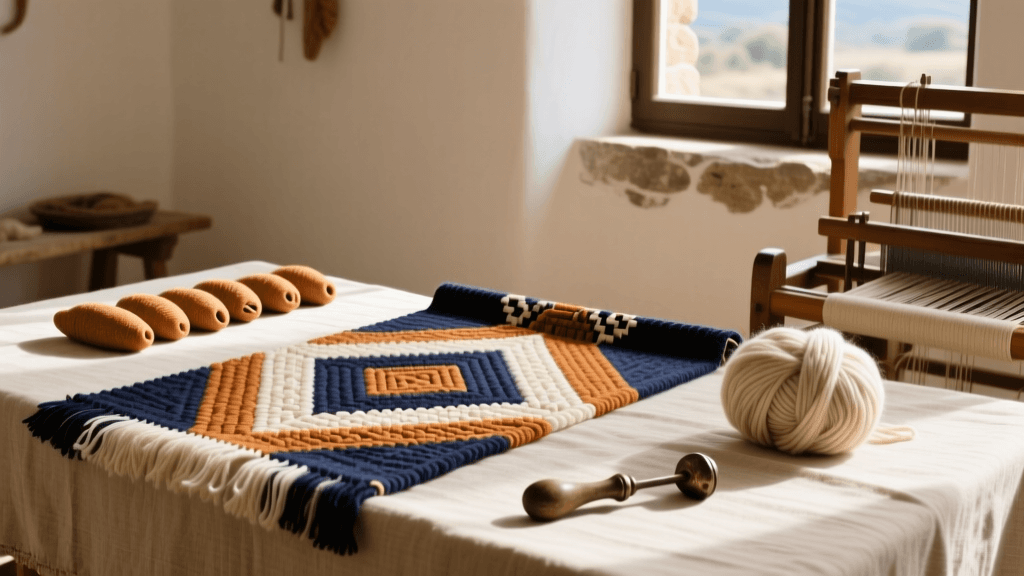
The term pibiones translates roughly to 'grapes' or 'seeds' in the Sardinian dialect, a fitting description for the distinctive raised, textured nodes that characterize this weaving style. Originating primarily in the central-western village of Samugheo, the pibiones technique requires a specialized manual loom and immense dexterity. The weaver uses a long, smooth rod—often made of wood or metal—placed across the warp threads. As the weft is passed through, the artisan loops the yarn over the rod, creating a raised bump. Once the row is secured, the rod is removed, leaving a uniform, three-dimensional 'grain' on the fabric's surface.
In 2026, authentic pibiones textiles are highly prized for their tactile quality and structural integrity. While historically used for bedspreads, trousseau linens, and decorative towels, contemporary heritage cooperatives have adapted the technique for upholstery, heavy-duty outerwear accents, and ceremonial folk garments. The geometric patterns, often featuring stylized flora, fauna, and protective amulets, are passed down through generations, with each village maintaining its own distinct visual vocabulary.
Orbace Wool: The Shepherd’s Armor
If pibiones represents the decorative soul of Sardinian textiles, orbace represents its resilient backbone. Orbace is a coarse, tightly woven wool fabric traditionally spun from the fleece of native Sardinian sheep breeds. The raw wool is spun, woven on heavy wooden looms, and then subjected to a rigorous fulling process known as gualcatura. Historically, this involved beating the wet fabric in stone troughs with wooden mallets, or stomping on it in flowing streams, to mat the fibers together.
The result is a dense, virtually windproof, and naturally water-resistant fabric. Orbace was the primary material for the mastruca (a sleeveless shepherd's vest) and the gabbano (a heavy, hooded cloak). According to the Sardegna Cultura portal, the natural lanolin retained in minimally processed orbace enhances its weather-beating properties, making it a marvel of functional, pre-industrial outdoor gear that outperforms many modern synthetic alternatives in breathability and thermal regulation.
Leading Heritage Cooperatives and Brands in 2026
The commercial landscape of Sardinian folk dress in 2026 is dominated by artisanal cooperatives rather than mass-market brands. This structure ensures that profits remain within the local communities and that the integrity of the craft is maintained. The Italian Ministry of Culture has recently expanded its geographical indication protections to include specific weaving hubs, severely penalizing the import and mislabeling of industrial imitations.
- Tessitura Artigiana di Samugheo: This cooperative remains the gold standard for pibiones weaving. In 2026, they introduced a limited line of contemporary winter coats that integrate pibiones panels with tailored orbace, bridging the gap between traditional folk dress and modern winter outerwear.
- Artigianato Sardo (ISOLA Affiliates): The ISOLA network connects dozens of independent weavers across the island. Purchasing through their certified 2026 digital catalog guarantees that the wool is locally sourced and the dyes are derived from native Mediterranean botanicals, such as rubia peregrina (wild madder) for deep reds and isatis tinctoria (woad) for indigo blues.
- Murena Heritage Textiles: Based in the interior highlands, Murena specializes in the heavy fulling of orbace. They are one of the few remaining ateliers producing the traditional gabbano cloak using 100% unblended, undyed native sheep wool, catering to both cultural preservationists and high-end sustainable fashion buyers.
2026 Buyer’s Guide: Pricing and Authentication Table
Navigating the market for European folk garments requires a keen eye, as industrial looms in overseas markets have begun producing superficial imitations of the pibiones texture. Below is a comparative guide to help buyers understand the true cost and characteristics of authentic Sardinian heritage pieces in the 2026 market.
| Garment / Textile Type | 2026 Avg Price (EUR) | Primary Material | Artisanal Lead Time | Authentication Marker |
|---|---|---|---|---|
| Hand-Loomed Pibiones Runner | €450 - €900 | Cotton warp / Wool weft | 4 - 8 Weeks | ISOLA NFC Tag & Weaver Signature |
| Traditional Orbace Mastruca (Vest) | €600 - €1,200 | 100% Fulled Native Wool | 6 - 10 Weeks | Regional GI Hologram & Lanolin Scent |
| Contemporary Pibiones Winter Coat | €1,800 - €3,500 | Orbace shell / Pibiones lining | 12+ Weeks (Bespoke) | Blockchain Traceability QR Code |
| Industrial Imitation (Avoid) | €80 - €150 | Synthetic Poly-Blend | Immediate (In-Stock) | None / Generic 'Made in EU' tag |
Authentication and the 2026 NFC Traceability Standard
One of the most significant advancements in the European folk dress market this year is the integration of NFC (Near Field Communication) threads into high-value artisanal textiles. Pioneered by Sardinian weaving cooperatives in late 2025 and fully adopted in 2026, these microscopic, washable NFC chips are woven directly into the selvedge of pibiones runners and the inner seams of orbace cloaks.
By tapping a smartphone to the garment's hem, buyers can instantly access a decentralized ledger detailing the exact village of origin, the name of the master weaver, the date of completion, and the specific flock that provided the wool. This technology has effectively eradicated the market for counterfeit 'Sardinian-style' textiles, ensuring that the financial premiums paid by collectors go directly to the rural artisans keeping the tradition alive.
Integrating Heritage Pieces into Modern 2026 Wardrobes
While full traditional Sardinian folk costumes are typically reserved for regional festivals like the Sagra di Sant'Efisio or the Cavalcata Sarda, individual heritage pieces are increasingly being integrated into contemporary, slow-fashion wardrobes. The mastruca, with its rugged, sleeveless silhouette, layers beautifully over modern heavyweight knitwear and tailored denim, providing a striking textural contrast. Similarly, a narrow pibiones runner can be repurposed as a dramatic, structured scarf or a decorative sash for winter outerwear.
When styling orbace, it is important to respect the fabric's volume and drape. The gabbano cloak is inherently oversized and designed to be worn as a protective shell against harsh elements. Pairing it with minimalist, monochromatic base layers allows the natural, undyed tones of the wool and the intricate hand-stitched seams to take center stage without overwhelming the wearer's silhouette.
Garment Care and Maintenance
Proper maintenance is crucial for preserving the structural integrity and historical value of these garments. Orbace should never be dry-cleaned using harsh modern solvents, as this strips the natural lanolin that provides its water-resistant qualities. Instead, spot clean with cold water and a mild, pH-neutral wool soap. After exposure to rain or heavy moisture, the garment should be air-dried flat in a shaded, well-ventilated area, followed by gentle brushing with a natural bristle brush to restore the nap of the wool.
Pibiones textiles, particularly those with high cotton content in the warp, are susceptible to tension distortion. They should be stored flat or rolled around acid-free cardboard tubes rather than hung, which can cause the heavy, raised grains to stretch and warp the foundational weave over time. By adhering to these meticulous care standards, collectors ensure that these masterpieces of European folk dress remain vibrant and functional for generations to come.