Hardanger Bunad Bodice Construction: 2026 Pattern Guide
The Resurgence of Heritage Tailoring in 2026
The landscape of heritage garment construction has evolved significantly by 2026, driven by a global slow fashion movement that prioritizes historical accuracy, sustainability, and meticulous hand-finishing. Among the most revered traditions in European folk dress is the Norwegian bunad, with the Hardanger bunad standing out for its striking geometric embroidery and structured tailoring. While modern sewing enthusiasts often rely on commercial patterns and sergers, authentic bunad construction demands a return to 19th-century techniques. In this comprehensive guide, we explore the precise construction patterns, flat-felled seam techniques, and structural interlining methods required to craft an authentic Hardanger bodice (liv) in 2026.
Anatomy of the Hardanger Liv (Bodice)
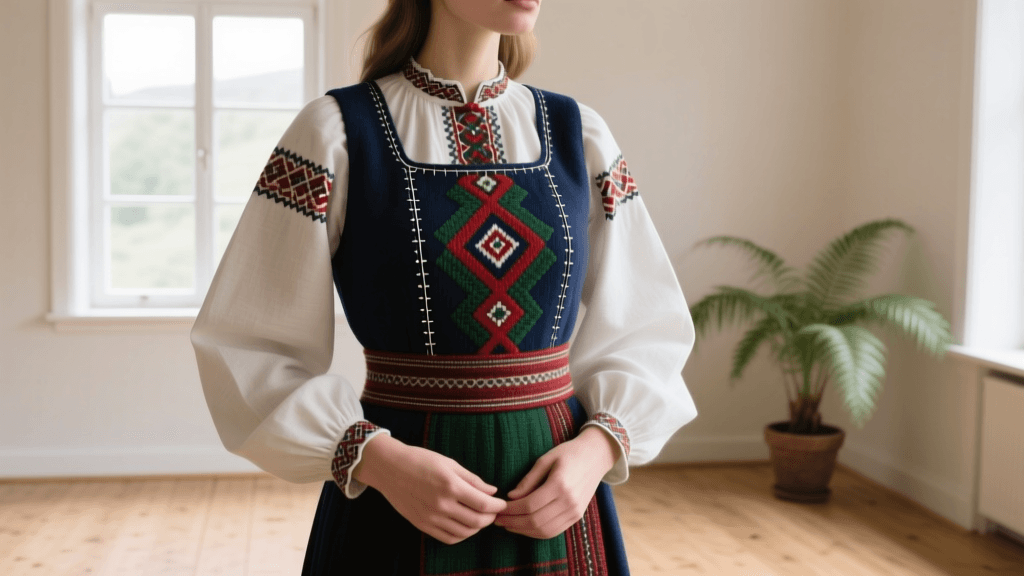
The Hardanger bodice is a masterclass in structural tailoring. Unlike the softer, gathered bodices of some Eastern European folk costumes, the Hardanger liv is heavily boned or stiffened, designed to create a smooth, conical silhouette that supports the heavy wool skirt and intricate silver jewelry (sølje). The bodice typically features a deep V-neckline, a front lacing closure, and a flared peplum (skjøt) at the waist. The outer shell is traditionally made of black or deep blue wool, while the lining and interlining provide the necessary rigidity. Understanding the interaction between these layers is critical for any maker attempting this garment today.
Drafting the 8-Panel Bodice Pattern
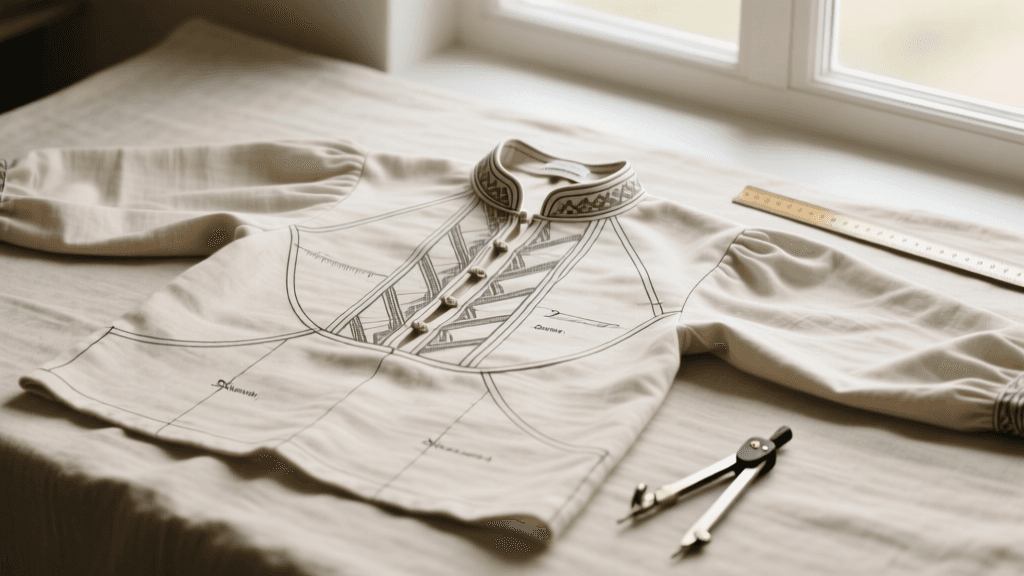
Authentic bunad drafting in 2026 still heavily relies on traditional proportional scaling rather than purely digital CAD blocks, though modern makers often use hybrid approaches. The Hardanger bodice is typically drafted using an 8-panel construction: two center front panels, two side front panels, two side back panels, and two center back panels. This multi-panel design allows the garment to contour closely to the body without the need for modern darts.
When drafting your pattern, it is crucial to add a 2 cm seam allowance specifically for flat-felling. The armholes and neckline should be left with a 1 cm allowance for binding. The peplum is drafted separately, usually in four or six flared panels, and attached to the bodice waistline with a piped seam to reinforce the horizontal stress point.
Interlining and Structural Support
Before cutting the precious outer wool, you must prepare the interlining. In 2026, sustainably sourced, heavyweight organic linen (minimum 300 GSM) or cotton drill is the preferred choice for the interlining layer. The interlining is cut exactly to the seam lines of your pattern, without seam allowances. You will pad-stitch the interlining to a secondary layer of lighter linen to create a firm foundation. This historical technique, known as mounting, ensures that the tension from the front lacing does not distort the delicate wool exterior or the intricate embroidery.
Mastering the Traditional Flat-Felled Seam (Franske Sømmer)
The hallmark of high-quality European folk dress construction is the flat-felled seam. This technique encloses all raw edges, providing immense durability and a clean interior finish without the use of modern overlocking machines. For the thick wool used in bunads, a modified flat-felled seam is often employed to reduce bulk.
Step-by-Step Flat-Felled Seam Construction
- Step 1: Offset Stitching. Place your wool panels right sides together, but offset the edges by exactly 6 mm. Stitch along the standard seam line (usually 1.5 cm from the shorter edge). This offset is the secret to managing thick wool bulk.
- Step 2: Trimming and Pressing. Trim the shorter seam allowance down to 3 mm. Press both allowances to one side, laying the longer allowance over the trimmed one.
- Step 3: Folding and Enclosing. Fold the longer allowance over the trimmed edge, completely encasing the raw edge. Pin or baste heavily. Wool has a natural memory, so using a wooden clapper and steam in 2026 tailoring rooms remains the best way to set this fold.
- Step 4: Topstitching. Edge-stitch the folded seam allowance to the interlining layer using a heavy-duty linen or silk thread. Ensure you are only catching the interlining and the folded wool, keeping the right side of the garment free of visible stitching lines.
Hand-Bound Eyelets and Lacing Tension
The front closure of the Hardanger bodice relies on lacing, which places significant stress on the center front edges. Modern metal grommets are strictly forbidden in authentic bunad construction. Instead, eyelets must be hand-bound. Using a heavy linen thread (such as Bockens 35/2), you will punch a hole using a tapered awl, pushing the warp and weft threads aside rather than cutting them. The hole is then bound using a continuous buttonhole stitch or a whipstitch, pulling tightly to create a raised, durable ring. In 2026, makers often use a beeswax blend to coat the linen thread, increasing its resistance to friction from the silver lacing hooks and woven wool cords.
Hardangersøm: Geometric Embroidery Integration
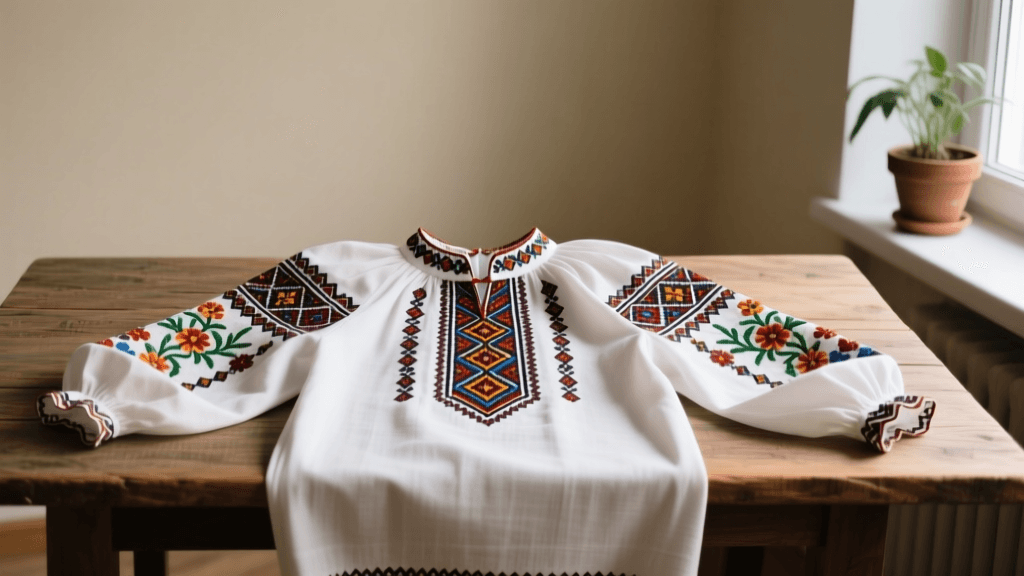
While the bodice construction provides the structure, the Hardangersøm (Hardanger embroidery) provides the soul. This counted-thread technique relies on geometric Kloster blocks and satin stitches. When constructing the bodice, the embroidery must be executed on the flat wool panels before the garment is assembled. According to the Norwegian Museum of Cultural History, historical Hardanger motifs were deeply symbolic, often representing local flora and protective geometry. In 2026, makers are returning to plant-dyed threads, utilizing madder root for authentic reds and woad for subtle blues, moving away from the synthetic aniline dyes that dominated the late 20th century.
2026 Material Sourcing and Specifications
Sourcing authentic materials is paramount. The Norwegian Handicraft Association (Norges Husflidslag) emphasizes that using the correct weave density is just as important as the tailoring technique. Below is a comprehensive guide to the materials required for a Hardanger bodice in 2026, including current market estimates.
| Material Component | Specification / Weave | 2026 Average Cost | Primary Construction Use |
|---|---|---|---|
| Outer Wool (Vadmel) | 2/2 Twill, 350-400 GSM | €55 - €70 / meter | Bodice shell and peplum |
| Interlining Linen | Plain weave, 320 GSM | €25 - €35 / meter | Structural foundation mounting |
| Lining Silk/Cotton | Habotai silk or fine cotton | €30 - €45 / meter | Interior comfort layer |
| Embroidery Thread | 2-ply worsted wool (plant-dyed) | €12 - €18 / skein | Hardangersøm geometric motifs |
| Seam Thread | 3-ply silk or heavy linen | €8 - €12 / spool | Flat-felling and eyelet binding |
Final Fitting and Historical Accuracy
Constructing a Hardanger bunad bodice is an exercise in patience and historical reverence. As you finalize the lacing edges and attach the peplum, remember that the garment is meant to be worn over a traditional linen shift (serk) and blouse (bluse). The final fitting in 2026 should always be done with the complete undergarments and the heavy silver sølje in place, as the weight of the jewelry will affect the drape and tension of the V-neckline. By adhering to these time-tested flat-felled seam patterns and structural techniques, modern makers ensure that the legacy of European folk dress continues to thrive with uncompromising authenticity.