Viking Smokkr Apron Dress: 2026 Reconstruction Guide
The Evolution of the Smokkr in Modern Reenactment
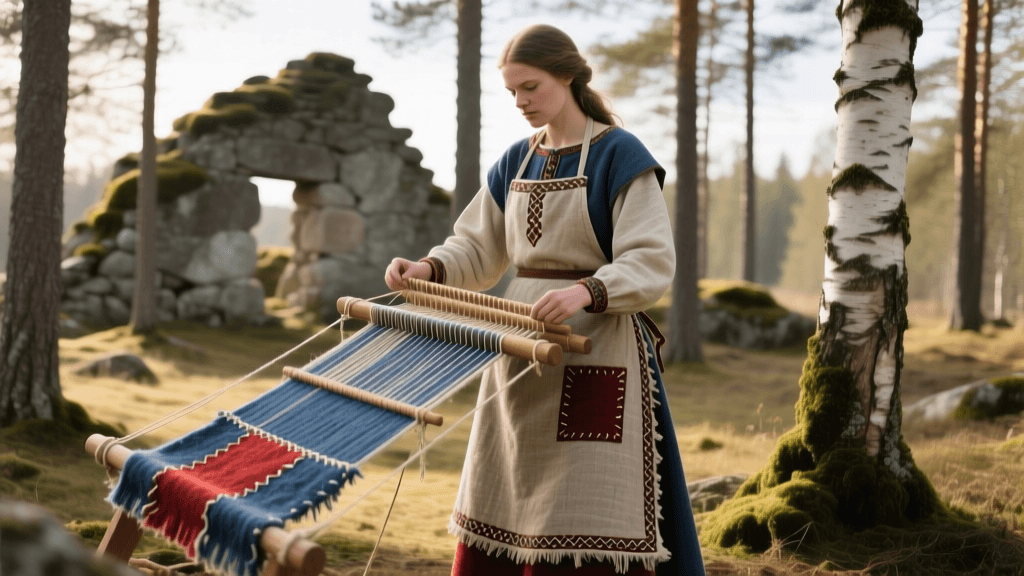
The Viking smokkr, commonly referred to as the apron dress or hangerock, remains the most iconic and widely recognized garment of the Norse female wardrobe. As we navigate the historical reenactment landscape in 2026, the community has largely abandoned the simplistic, heavily stylized tube-and-strap models that dominated the early 2000s. Today, experimental archaeology and advanced textile analysis have ushered in a new era of evidence-based reconstruction. Modern artisans and historians are now focusing on the intricate pleating, complex draping, and luxurious embellishments found in high-status graves, fundamentally shifting our understanding of Viking Age fashion.
Reconstructing the smokkr requires a deep dive into archaeological textile fragments, an understanding of historical weaving techniques, and a commitment to authentic material sourcing. This comprehensive guide explores the current 2026 standards for recreating the Viking apron dress, drawing heavily on finds from Birka, Hedeby, and the Oseberg ship burial.
Archaeological Evidence: Birka and Hedeby
The foundation of any accurate smokkr reconstruction lies in the physical evidence unearthed from major Viking Age trading hubs. According to the extensive collections curated by the Swedish History Museum, the graves of Birka have yielded some of the most crucial textile fragments associated with the apron dress. These fragments, often preserved by the corrosion of copper-alloy oval brooches, reveal that the smokkr was frequently made of high-quality diamond twill wool or, in rare high-status cases, silk and linen.
Similarly, the National Museum of Denmark highlights the Hedeby harbor finds, which include a heavily pleated wool fragment. This specific artifact has revolutionized modern pattern drafting, proving that the top edge of the smokkr was often tightly pleated and gathered, rather than cut as a simple flat rectangle. In 2026, incorporating these pleats is considered a hallmark of an advanced, historically accurate reconstruction.
Selecting Authentic Textiles for 2026
Choosing the right fabric is arguably the most critical step in recreating a convincing Viking garment. Modern commercial wools often feature synthetic blends, machine-spun yarns with high twist, and chemical dyes that look entirely out of place in a historical context. For an authentic 2026 build, reenactors must seek out hand-woven or specially milled heritage wools that mimic the thread count and weave structures of the 9th and 10th centuries.
Fabric Comparison Chart
| Fabric Type | Weave Structure | Thread Count (approx.) | Historical Accuracy | Best Application |
|---|---|---|---|---|
| Diamond Twill Wool | 2/2 Twill Variation | 20x15 per cm | Exceptional | High-status winter smokkr |
| Tabby Wool | Plain Weave | 15x15 per cm | High | Everyday working smokkr |
| Herringbone Twill | 2/2 Twill Variation | 18x14 per cm | Moderate to High | Regional variations, outer layers |
| Bleached Linen | Plain Weave | 25x25 per cm | High (for underdress) | Base layer beneath the smokkr |
| Silk Samite | Complex Weft-faced | N/A | Exceptional (Elite) | Appliqué bands and trim |
Pattern Drafting: Tube, Wrapped, or Pleated?
The debate over the exact cut of the smokkr has raged in historical costuming circles for decades. While the exact pattern likely varied by region, time period, and the wearer's social status, three primary models dominate the 2026 reenactment consensus:
- The Closed Tube Model: A simple cylinder of fabric with two shoulder loops. While easy to construct, this model is increasingly viewed as too simplistic and lacking the drape seen in Norse art and figurines.
- The Wrapped Model: A single wide panel wrapped around the body and secured by the brooches at the front. This allows for easier nursing and movement but can gap at the sides.
- The Pleated Panel Model (Hedeby Style): This is currently the most favored approach for high-status impressions. It involves a rectangular panel that is tightly pleated at the top edge, bound with a woven trim, and suspended from the shoulders. Side panels or gores are then added to provide flare and ease of movement.
When drafting your pattern, always pre-wash and block your wool fabric. Viking Age textiles were fulled and finished, meaning they shrank and tightened. Washing your fabric before cutting prevents warping after the garment is completed.
Natural Dyeing: Achieving Historical Colors
Viking Age Scandinavians were master dyers, utilizing a rich palette of botanical and mineral sources. In 2026, sustainable and historically accurate natural dyeing has become a staple of the textile arts community. To achieve authentic colors for your smokkr, consider the following historical dye sources:
- Woad (Isatis tinctoria): The primary source of blue in the Viking Age. Achieving a deep, colorfast blue requires a careful fermentation vat or a modern fructose reduction vat. Woad blues range from pale sky to deep navy, depending on the number of dips.
- Madder (Rubia tinctorum): Used extensively for reds and oranges. Madder requires an alum mordant and careful temperature control; boiling the dye bath will result in muddy browns, while keeping it below 70°C yields vibrant brick reds and corals.
- Weld (Reseda luteola) and Dyers Greenweed (Genista tinctoria): The go-to sources for brilliant, lightfast yellows. These were often overdyed with woad to create the highly prized Lincoln green and forest green shades.
- Walnut Hulls and Oak Galls: Used for deep, rich browns and blacks. Oak galls, combined with an iron modifier, can produce a striking, dark grey-black that was highly valued for elite garments.
Tablet Weaving and Silk Appliqué
No high-status smokkr is complete without intricate trim. The top edge of the apron dress was frequently bound with tablet-woven bands. Using 20 to 40 tablets threaded with fine wool or silk, modern weavers can recreate the complex geometric patterns found in the Oseberg and Birka graves.
Beyond tablet weaving, the application of silk samite and metallic wire embroidery (such as the Mammen stitch) elevates a garment from common to elite. The Mammen find in Jutland revealed a garment heavily embroidered with wool and silk in a padded, couched stitch. Replicating this technique in 2026 requires a firm linen backing to support the heavy wool yarn and prevent the fabric from puckering.
Experimental archaeology has shown that the creation of a single, high-status Viking outfit, complete with tablet-woven trims, natural dyeing, and hand-stitching, can easily require over 400 hours of dedicated labor. This immense investment of time highlights the extraordinary value placed on textiles in the Norse economy.
Hardware: Oval Brooches and Bead Swags
The smokkr is fundamentally held together by a pair of oval brooches, often colloquially called tortoise brooches due to their domed, ornate shape. These brooches were not merely functional; they were potent symbols of wealth, marital status, and regional identity. When sourcing brooches for your 2026 kit, avoid cheap, mass-produced zinc alloys. Instead, commission or purchase cast bronze or brass replicas based directly on specific archaeological typologies, such as the Petersen Type 51 or Type 37.
Suspended between these brooches was often a swag of glass and amber beads. The glass beadmakers of Ribe produced intricate millefiori and melon beads that were highly traded across the Norse world. A historically accurate bead swag should feature a mix of small, round glass beads, a few larger amber or jet pieces, and perhaps a stray silver or bronze pendant, reflecting the organic, accumulated nature of Viking jewelry.
Conclusion
The reconstruction of the Viking smokkr in 2026 is a testament to the growing maturity and rigor of the historical reenactment community. By moving beyond outdated stereotypes and embracing the complex textile evidence provided by institutions like the Swedish History Museum and the National Museum of Denmark, modern artisans are breathing vibrant, accurate life into the past. Whether you are weaving your own tablet bands, dyeing wool with woad, or carefully pleating a diamond twill panel, the pursuit of the authentic apron dress is a deeply rewarding journey into the heart of Norse material culture.