Authentic Romanian Ie Blouse Embroidery & Sourcing Guide 2026
The Enduring Legacy of the Romanian Ie in 2026
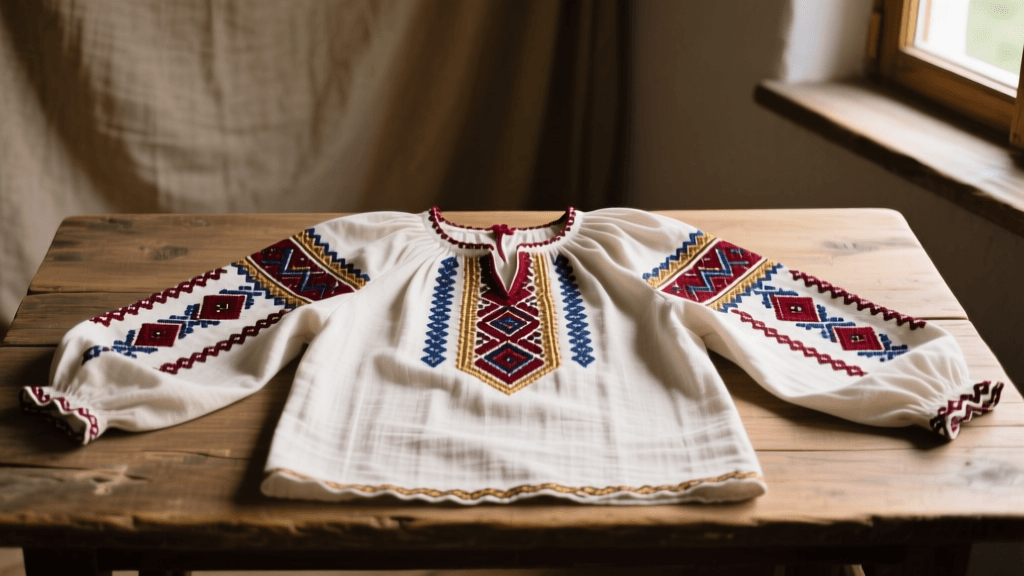
The Romanian Ie (pronounced "yeh") is far more than a traditional garment; it is a woven manuscript of Eastern European history, spirituality, and regional identity. As a cornerstone of Balkan and Slavic-adjacent folk dress, the Ie has transcended its rural origins to become a global symbol of heritage craftsmanship. In 2026, the worldwide pivot toward slow fashion and artisanal revival has elevated this traditional blouse from a museum artifact to a highly sought-after staple in contemporary, sustainable wardrobes. Recognized for its profound cultural significance, the art of the traditional blouse with embroidery on the shoulder was inscribed on the UNESCO Intangible Cultural Heritage list, cementing its status as a protected and celebrated textile tradition.
For textile enthusiasts, historical reenactors, and modern fashion consumers alike, understanding the construction, regional variations, and proper sourcing of the Ie is essential. This comprehensive 2026 guide will walk you through the anatomy of the blouse, where to source authentic materials, and how to integrate this Eastern European masterpiece into a modern wardrobe.
Anatomy of the Traditional Blouse
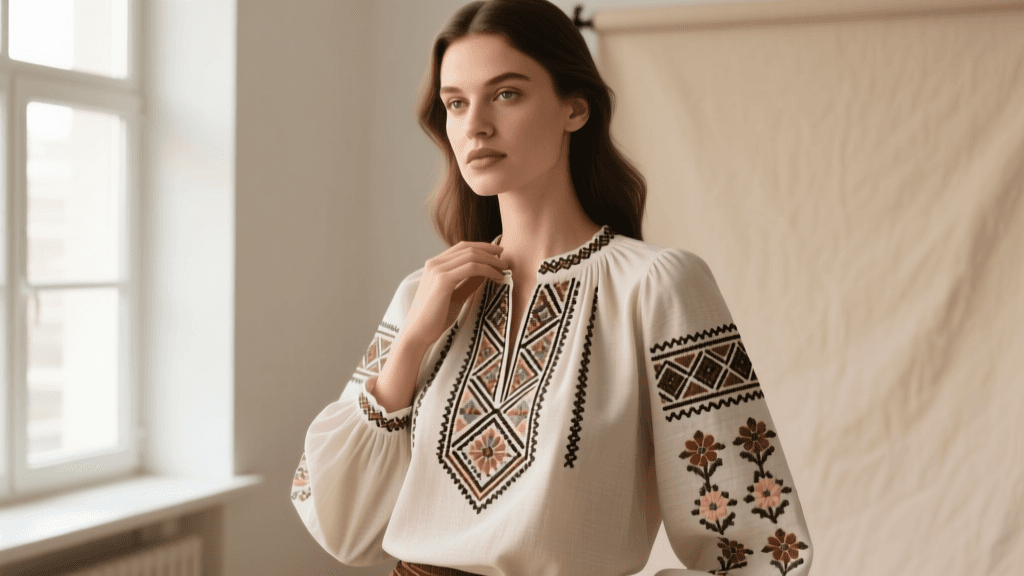
The Ie is constructed from rectangular pieces of handwoven fabric, gathered and embroidered in specific, mathematically precise zones. Unlike Western tailoring, which relies on curved seams and darts, the Ie uses a grid-based, zero-waste geometric construction. The four primary components include:
- Altita (The Shoulder Epaulette): The most sacred and complex part of the blouse. Historically, this wide band of embroidery across the shoulder served as a spiritual shield, protecting the wearer from evil spirits. It is dense with geometric or floral motifs and dictates the color palette for the rest of the garment.
- Incretul (The Neckline Gathering): A delicate, smocked, or tightly gathered section just below the collarbone, often featuring a contrasting, finer stitch pattern that bridges the heavy altita and the flowing sleeves.
- Rauri (The Sleeve Rivers): Vertical bands of embroidery flowing down the sleeves. The term translates to "rivers," symbolizing the flow of life, time, and ancestral lineage. These can be continuous columns or alternating geometric blocks.
- Poale (The Hem and Skirt): While technically a separate underskirt or tunic layer, the poale is often embroidered at the bottom hem to match the rauri of the blouse, creating visual continuity when worn with a traditional woven wrap skirt (fota or catrinta).
Regional Variations: A Map of Motifs
Eastern European folk dress is highly localized, and the Romanian Ie is no exception. In 2026, collectors and designers categorize these blouses by their historical provinces, each boasting distinct color theories and stitch densities.
Arges and Muscel
Blouses from the Arges region are renowned for their strict, geometric patterns and a restrained color palette, predominantly featuring black, dark red, and occasionally metallic gold or silver threads. The motifs are heavily influenced by Byzantine and medieval court aesthetics, favoring stylized stars, rhombuses, and the iconic "peacock tail" (coada paunului).
Valcea and Olt
In contrast, the Valcea and Olt regions embrace curvilinear, floral motifs. The "carnation" (karamfil) and "vine" (coarda vitei) patterns are executed in vibrant reds, greens, and yellows. The embroidery here is often denser, covering up to 70% of the visible sleeve fabric, creating a rich, tapestry-like effect that is highly prized by textile archivists.
Maramures and Bucovina
Northern regions favor a more minimalist, archaic aesthetic. Blouses from Maramures often feature intricate white-on-white embroidery (tesatura in alb) or subtle black cross-stitch on heavy, unbleached hemp, reflecting the harsher climate and the region's deep-rooted woodworking and carving traditions.
2026 Material Sourcing Guide
Sourcing authentic materials is the most critical step in creating or restoring an Ie. The 2026 textile market has seen a massive resurgence in heritage farming, making it easier than ever to find authentic, hand-loomed Eastern European fabrics, though it requires knowing where to look. Mass-produced cotton blends are unsuitable for traditional embroidery, as they lack the structural integrity to support heavy wool or silk threads.
When sourcing base fabrics, you must consider the thread count and weight. Traditional Ie fabrics are measured in grams per square meter (GSM). Below is a comparison chart for 2026 fabric sourcing:
| Material Type | Weight (GSM) | Best Use in Ie Construction | 2026 Avg. Cost (per meter) |
|---|---|---|---|
| Handwoven Hemp (Caneapa) | 250-300 | Winter blouses, heavy structural base, Maramures styles | €45 - €65 |
| Semi-Bleached Linen (In) | 150-190 | All-season wear, standard Rauri sleeves, Arges styles | €28 - €40 |
| Fine Cotton Muslin (Bumbac) | 80-110 | Summer blouses, delicate Incret gathers, Valcea styles | €15 - €25 |
Thread Sourcing: For embroidery, modern makers in 2026 frequently rely on high-quality mercerized cotton like DMC Pearl Cotton (Size 8 or 12) or Anchor Tapis. However, for strict historical accuracy, artisanal cooperatives in Bucovina still produce hand-spun wool and naturally dyed silk threads. Natural dyes—such as madder root for red, walnut shells for brown, and woad for blue—are experiencing a major revival, with specialized Eastern European dye houses offering color-fast, naturally dyed skeins directly to international consumers.
Mastering the Embroidery Techniques
The embroidery of the Ie is executed by counting the threads of the woven base fabric, ensuring perfect symmetry. The two most prominent stitches are:
- Punctul de Cruce (Cross-Stitch): The foundational stitch of Balkan and Slavic folk art. In the Romanian tradition, the cross-stitch is often worked in a "slanted" or "Italian" method to create a smoother, more continuous line, especially for the intricate rauri.
- Lantisor (Chain Stitch): Used extensively for outlining motifs and filling in the curvilinear floral patterns of the Olt and Valcea regions. The chain stitch allows for fluid, organic shapes that contrast beautifully with the rigid grid of the woven fabric.
- Tivul (Hemstitching): A decorative drawn-thread work technique used to finish the edges of the blouse and create the delicate, lace-like insertions that join the rectangular panels of the garment together.
For those studying historical execution, the Metropolitan Museum of Art's European Textile Collection offers excellent high-resolution archives of 19th-century Eastern European garments, allowing modern embroiderers to zoom in and analyze the exact tension and thread-pulling techniques of historical artisans.
Contemporary Styling and Wardrobe Integration
In 2026, the Ie is no longer confined to folk festivals or national holidays. The modern slow-fashion movement has embraced the blouse as a versatile statement piece. The key to styling the Ie today is balancing its voluminous, traditional silhouette with structured, contemporary tailoring.
- The Tailored Contrast: Pair a heavily embroidered, voluminous Valcea-style Ie with high-waisted, wide-leg wool trousers and a structured leather belt. The contrast between the romantic, flowing sleeves and the sharp, modern tailoring creates a striking, fashion-forward silhouette.
- Layering for Autumn: Wear a minimalist, white-on-white Maramures hemp blouse under a tailored, oversized blazer or a sleeveless shearling vest. This nods to the traditional layering of the Balkans while remaining highly functional for modern urban environments.
- Denim and Heritage: For a more casual, everyday approach, an Arges-style geometric blouse pairs beautifully with raw, selvedge denim and artisanal leather boots, bridging the gap between Eastern European heritage and classic workwear.
Caring for Heritage Textiles
Authentic handwoven hemp and linen require specialized care to maintain their structural integrity and prevent the natural dyes from bleeding. Always hand-wash the Ie in cool water (below 30°C) using a pH-neutral, enzyme-free detergent designed for delicate textiles. Never wring or twist the fabric; instead, press the water out gently and lay the garment flat on a clean towel to dry, reshaping the incret and altita while damp.
When storing vintage or newly crafted pieces, avoid wire hangers, which can distort the shoulder seams and crush the raised embroidery. Fold the blouse using acid-free tissue paper to buffer the folds, and store it in a breathable cotton garment bag in a cool, dark environment. As documented by preservation experts at the Smithsonian Center for Folklife and Cultural Heritage, proper environmental control is the single most effective way to prevent the degradation of natural fibers and organic dyes over time.
Conclusion
The Romanian Ie is a masterclass in geometric design, spiritual symbolism, and sustainable craftsmanship. As we navigate the 2026 fashion landscape, the desire to connect with our sartorial roots and support ethical, artisanal production has never been stronger. Whether you are sourcing hand-loomed hemp to stitch your own rauri, or investing in a vintage piece from a Bucovina cooperative, the Ie remains a profound, wearable connection to the rich tapestry of Eastern European folk dress.