Romanian Ia Blouse Revival: 2026 Styling & Sourcing Guide
The Renaissance of the Romanian Ia in 2026
The Romanian Ia (pronounced 'ee-ah') has transcended its origins as a regional peasant garment to become a cornerstone of the 2026 global slow fashion movement. No longer confined to museum archives or annual village festivals, this traditional hand-embroidered blouse is being reclaimed by contemporary wardrobes, high-end streetwear, and sustainable fashion advocates worldwide. Driven by a renewed interest in heritage textiles and ethical production, the modern revival of the Ia focuses on preserving ancestral techniques while adapting the silhouette for today's dynamic lifestyles.
In 2026, the demand for authentic, hand-stitched heritage garments has reached an all-time high. Consumers are moving away from mass-produced 'peasant blouse' imitations, seeking instead the profound cultural narratives woven into genuine artisan pieces. According to frameworks established by the UNESCO Intangible Cultural Heritage initiatives, which recognized the traditional blouse with shoulder embroidery, the preservation of these techniques is vital to maintaining European cultural identity. This guide will equip you with the knowledge to source authentic pieces, understand their intricate anatomy, and style the Ia seamlessly into a modern 2026 wardrobe.
Decoding the Anatomy: Altita, Incret, and Rauri
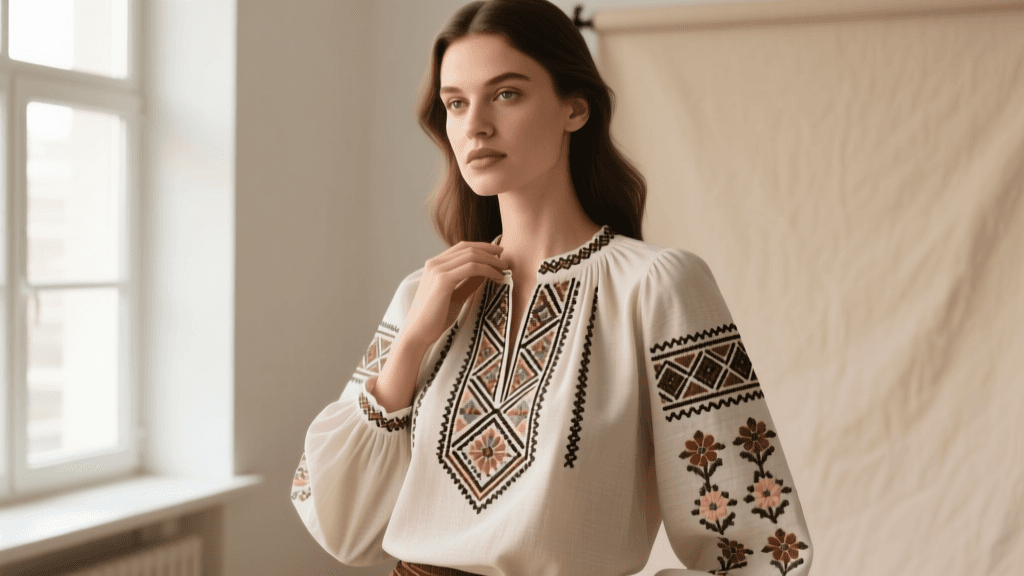
To appreciate the value of an authentic Ia, one must understand its highly structured anatomy. The embroidery is not random; it follows a strict, centuries-old architectural code that varies by region, such as the geometric motifs of Neamț or the floral, curvilinear patterns of Argeș.
- The Altita: This is the most crucial element—a dense, rectangular block of embroidery located on the shoulder. Historically, the altita served as a protective talisman and a marker of the wearer's regional identity and social status. In genuine 2026 artisan pieces, the altita is stitched using the punctul românesc (the Romanian stitch), a complex, interlocking technique that creates a reversible, incredibly durable pattern.
- The Incret: Situated just below the altita, this is a narrower, horizontal band of gathering and embroidery that transitions the dense shoulder block into the flowing sleeve.
- The Rauri: Meaning 'rivers' or 'streams,' these are the vertical bands of embroidery that flow down the sleeve and the bodice. They are designed to elongate the silhouette and guide the eye downward.
Modern artisan cooperatives are currently reviving natural dyeing methods for the embroidery threads. In 2026, you will frequently see authentic pieces featuring threads dyed with walnut husks (yielding deep ochres), woad (for muted blues), and madder root (for terracotta reds), offering a much softer, more luxurious palette than the harsh synthetic reds and blacks of the mid-20th century.
2026 Sourcing Guide: Authentic Artisans vs. Mass Production
As the popularity of the Ia has surged, so has the market for cheap, machine-made replicas imported from overseas fast-fashion hubs. Distinguishing a genuine heritage piece from a factory-made imitation is essential for ethical sourcing and investment dressing. Below is a comparative analysis of the 2026 market.
| Feature | Authentic Handmade Ia (2026 Artisan Market) | Mass-Produced Imitation (Fast Fashion) |
|---|---|---|
| Embroidery Technique | Hand-stitched using punctul românesc; reversible and textured. | Machine-embroidered; flat, with visible bobbin threads on the reverse. |
| Fabric Base | Hand-woven cotton, linen, or hemp; slightly irregular slub texture. | Uniform, chemically treated cotton voile or polyester blends. |
| Pattern Alignment | Minor, human imperfections; patterns align organically with the weave. | Perfectly uniform, laser-cut patterns that ignore the fabric's grain. |
| Construction | Traditional flat-felled seams; gathered manually at the neckline. | Overlocked (serged) seams; elasticated or drawstring necklines. |
| Price Range (EUR) | €350 – €1,200+ (Depending on region and silk thread usage) | €35 – €85 |
Actionable Sourcing Tip: When purchasing online in 2026, always request macro-photographs of the reverse side of the altita. A true handmade Ia will look nearly as neat on the inside as the outside, with no chaotic jump threads or synthetic stabilizers. Look for verified cooperatives based in regions like Vrancea, Olt, or Suceava, which frequently export directly to international buyers via dedicated heritage textile platforms.
Contemporary Styling: The Ia in the Modern 2026 Wardrobe
The beauty of the Ia lies in its voluminous, romantic silhouette, which contrasts beautifully with the structured, minimalist tailoring trending in 2026. Here are three actionable styling formulas to integrate this heritage piece into your daily rotation.
Look 1: The Urban Professional
Contrast the delicate, voluminous sleeves of a white linen Ia with sharp, modern tailoring. Pair a mid-weight Ia featuring subtle blackwork or navy rauri with high-waisted, wide-leg crepe trousers in charcoal or deep olive. Tuck the blouse in to define the waist, allowing the altita to sit perfectly on the shoulder seam. Finish with structured leather loafers and a minimalist top-handle bag. This look respects the blouse's heritage while grounding it in contemporary corporate elegance.
Look 2: Riviera Summer Elegance
For warm-weather styling, lean into the romantic origins of the garment. Choose an Ia made from lightweight, semi-sheer hemp-cotton blend with terracotta embroidery. Pair it with a bias-cut silk midi skirt in a complementary earth tone, or raw, wide-leg denim for a more relaxed approach. Leave the blouse untucked but belted with a thin, woven leather belt. Accessorize with handcrafted ceramic jewelry and woven leather sandals.
Look 3: Evening Edge
The 'blackwork' Ia (white fabric with black and silver metallic thread embroidery) is a staple of the Oltenia region and translates flawlessly to evening wear. Layer a delicate, semi-sheer blackwork Ia over a sleek, black silk slip dress. Allow the neckline of the Ia to fall slightly off the shoulder, framing the collarbone. Pair with minimalist strappy heels and oxidized silver drop earrings to echo the metallic threads in the embroidery.
Custom Sizing and Tailoring Measurements
Because traditional Ias are constructed from rectangular loom-widths rather than modern curved pattern pieces, they are inherently forgiving in fit. However, if you are commissioning a custom piece from an artisan in 2026, precise measurements ensure the altita sits correctly on your body.
- Shoulder Drop: Measure from the base of your neck (cervical bone) down to the point where you want the sleeve gathering to begin. This dictates the width of the altita.
- Bust Circumference: Measure the fullest part of your chest. The artisan will use this to calculate the number of fabric widths (usually 2 to 4 panels) needed for the bodice.
- Sleeve Circumference: Measure around your bicep with a slight bend in the arm, adding 5-8 cm for ease, ensuring the intricate underarm gussets (if applicable) do not restrict movement.
- Desired Length: Measure from the base of the neck to the hip bone for a traditional tuck-in length, or to the mid-thigh for a modern tunic style.
Heritage Textile Care and Preservation
An authentic, hand-embroidered Ia is an investment piece meant to last generations. Proper care is essential to maintain the integrity of the natural fibers and dyes. According to the conservation guidelines outlined by the Victoria and Albert Museum's textile collections department, natural fibers require specific environmental controls and cleaning methods to prevent degradation.
- Washing: Never machine wash a handmade Ia. Hand wash in cool water (maximum 30°C) using a pH-neutral detergent specifically formulated for delicate textiles. Do not wring or twist the fabric; instead, roll it in a clean, dry towel to press out excess moisture.
- Drying and Ironing: Lay the garment flat to dry away from direct sunlight, which can fade natural dyes. Iron the blouse while it is still slightly damp, using a low heat setting. Always iron on the reverse side over a thick, padded towel to prevent crushing the three-dimensional texture of the embroidery stitches.
- Storage: Store your Ia flat or rolled in acid-free tissue paper. Avoid wire hangers, which can distort the shoulder seams and stress the dense altita embroidery. Place natural cedar blocks in the storage drawer to deter moths without exposing the delicate threads to harsh chemical mothballs.
By understanding the profound history, intricate construction, and modern styling potential of the Romanian Ia, you do more than just wear a beautiful garment—you participate in the active preservation of European textile heritage in 2026 and beyond.