2026 Guide to Norwegian Bunad Silver & Bridal Crowns
The Enduring Legacy of Norwegian Bunad Silver
When discussing European folk dress, few textile and metalwork traditions command as much reverence as the Norwegian bunad and its accompanying silver jewelry, known collectively as bunadsølv. In 2026, the global resurgence of heritage craftsmanship has propelled traditional Norwegian silver from regional family heirlooms to highly sought-after sartorial investments. The distinctive clinking sound of dangling silver leaves and filigree rosettes is not merely decorative; it is an auditory signature of Norwegian cultural identity.
Historically, silver jewelry served as a rural farmer’s portable bank account. In an era before modern banking reached the remote fjords and valleys, wealth was worn on the body. Today, as inflation and economic shifts influence luxury markets in 2026, investing in authentic, handcrafted bunad silver is viewed as both a preservation of cultural heritage and a tangible asset. Whether you are preparing for a traditional Norwegian wedding, attending a Syttende Mai (Constitution Day) celebration, or simply researching European folk accessories, understanding the anatomy, sourcing, and etiquette of bunad silver is essential.
Anatomy of Authentic Bunad Silver (Sølv)
A complete set of bunad silver is a complex ecosystem of functional fasteners and decorative masterpieces. Each piece is specifically designed to secure the garment’s layers while showcasing the silversmith’s mastery of techniques like filigree, casting, and oxidation. According to guidelines maintained by Norges Husflidslag (the Norwegian Folk Art and Craft Association), a full women’s silver set can comprise over a dozen individual pieces.
The Halsknapp and Sølje
The halsknapp (neck button) and sølje (neck brooch) are the foundational pieces of the bodice. The halsknapp is a small, often domed silver button used to fasten the collar of the linen under-shirt. Directly below it sits the sølje, a larger, intricate brooch. In regions like Hardanger, the sølje features delicate filigree work and dangling 'leaves' (løv) that catch the light and create a soft chiming sound with the wearer's movements.
The Brystsølje (Chest Brooch)
Resting lower on the bodice is the brystsølje. This is typically the largest and most ornate piece of silver on the entire bunad. In the Telemark region, the bryststølje is heavily oxidized, featuring dark, dramatic contrasts and cast mythological motifs like dragons or crowns. In contrast, the Valdres bryststølje is brighter, featuring polished silver rosettes and hanging spoon-shaped pendants.
Mansjettknapper and Beltestølv
Functional silver extends to the extremities. Mansjettknapper (cufflinks) secure the wide cuffs of the embroidered blouse, often mirroring the design of the halsknapp. The beltestølv (belt silver) consists of ornate clasps and decorative plates that adorn the woven wool belt, serving to cinch the waist while displaying the family's silversmithing pedigree.
Regional Variations: Hardanger vs. Telemark
One of the most common mistakes made by enthusiasts in 2026 is assuming all Norwegian silver is interchangeable. Bunad silver is strictly regional. The Norwegian Museum of Cultural History (Norsk Folkemuseum) archives demonstrate that mixing silver from different regions with a specific bunad is considered a major sartorial faux pas.
- Hardanger Silver: Characterized by bright, polished sterling silver, intricate wirework (filigree), and numerous dangling elements that represent the lush, fertile landscape of the western fjords.
- Telemark Silver: Known for its heavy, solid cast pieces, deep black oxidation, and Viking-era inspired motifs. It is robust, dramatic, and entirely devoid of dangling leaves.
- Hallingdal Silver: Features unique 'coin' motifs and elaborate chest pieces that often incorporate colored glass or semi-precious stones, reflecting historical trade routes.
The Brudekrone: Norway’s Majestic Bridal Crown
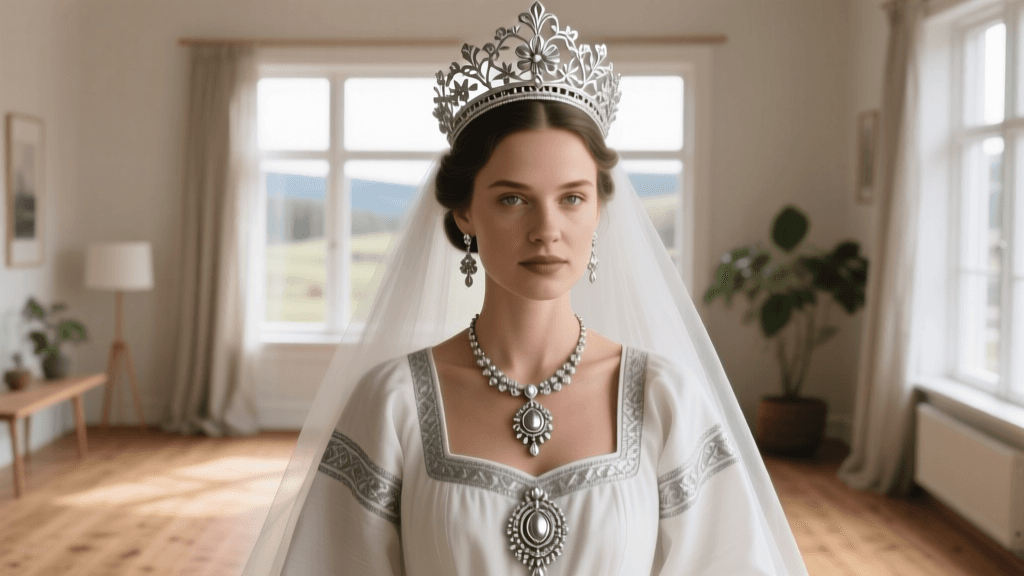
No discussion of European folk headwear is complete without the Norwegian brudekrone (bridal crown). Unlike the delicate floral wreaths of Eastern Europe or the lace veils of Western Europe, the traditional Norwegian bridal crown is a towering, heavy, and spectacular piece of metalwork and textile art.
Historically, the brudekrone was not owned by the bride but was the property of the local parish church or a wealthy farming family, loaned out for the wedding day to symbolize the bride's purity and her temporary status as a 'queen' for the day. Often weighing between 1.5 and 3 kilograms, these crowns are constructed from brass, silver, or copper, and adorned with glass gems, pearls, ribbons, and mirrors (intended to ward off evil spirits by reflecting them away).
In 2026, the brudekrone has experienced a massive revival in contemporary Norwegian weddings. While some brides opt for the traditional route of renting an antique crown from a local museum or historical society, a new wave of bespoke milliners and metalsmiths are creating modern, lightweight interpretations using 3D-printed armatures dipped in silver and adorned with sustainable silk ribbons. This allows modern brides to wear the crown comfortably from the church ceremony through the late-night folk dancing.
2026 Pricing and Sourcing Authentic Pieces
The global commodities market has significantly impacted the price of raw silver over the last few years. As of 2026, the cost of bespoke, hand-forged bunad silver has risen, making vintage and estate pieces highly competitive. When sourcing, it is critical to avoid mass-produced, dropshipped 'costume' jewelry marketed online as authentic bunad silver. True bunad silver is crafted by trained artisans, often taking weeks or months to complete.
| Item | Material / Technique | 2026 Avg. Price Range (USD) | Artisan Lead Time |
|---|---|---|---|
| Hardanger Sølje (Neck Brooch) | Sterling Silver, Filigree | $450 - $850 | 4 - 6 Weeks |
| Telemark Brystsølje (Chest) | Sterling Silver, Cast & Oxidized | $700 - $1,400 | 8 - 12 Weeks |
| Beltestølv (Belt Clasps) | Sterling Silver or Silver-Plated Brass | $300 - $800 | 3 - 5 Weeks |
| Bespoke Brudekrone (Bridal Crown) | Mixed Metals, Glass, Silk | $2,800 - $7,500+ | 6 - 14 Months |
Identifying Hallmarks and Makers
To verify authenticity, buyers must look for the official Norwegian silver control marks. According to historical metallurgy records and contemporary assay standards documented by the Museum of Cultural History in Oslo, authentic Norwegian silver will bear a maker's mark (the silversmith's initials or symbol) alongside the purity stamp. Historically, Norwegian silver was stamped S830 (83% pure silver), which is slightly softer and more traditional than the international S925 (Sterling) standard. Both are acceptable today, but the presence of the S830 mark on a vintage piece is a strong indicator of domestic Norwegian origin.
Modern Styling Etiquette and Rules
Wearing bunad silver in 2026 comes with a set of unwritten, yet fiercely guarded, cultural rules. First and foremost: never mix metals or regions. If your bunad is from the Sunnmøre region, you must wear Sunnmøre silver. Wearing a Telemark brooch on a Hardanger dress is immediately noticeable to locals and is considered disrespectful to the specific regional heritage.
Furthermore, the placement of the jewelry is non-negotiable. The halsknapp must sit exactly at the collarbone, the sølje directly beneath it, and the bryststølje must rest precisely on the sternum. For men, the silver is more subdued, typically consisting of a simple neck button, cufflinks, and a silver clasp for the vest, but the rule of regional strictness applies equally.
Care and Maintenance of Heirloom Silver
Proper maintenance ensures these pieces survive for the next generation. A common mistake is using harsh chemical silver dips, which strip away the intentional oxidation that gives pieces like the Telemark bryststølje their dramatic depth and contrast.
Expert Tip: Never polish the dark crevices of oxidized bunad silver. Use a soft, untreated microfiber cloth to gently buff only the raised, polished surfaces. For heavily tarnished filigree, use a mild soap, warm water, and a soft-bristled baby toothbrush, drying immediately with a lint-free cloth.
Storage is equally critical. Silver should never be stored in plastic bags, as trapped moisture accelerates tarnishing. In 2026, the standard practice is to wrap each individual piece in untreated, anti-tarnish flannel cloth and store them in a wooden box lined with acid-free tissue paper, keeping the delicate filigree wires and dangling leaves safe from bending or snapping.
Conclusion
The Norwegian bunad silver and brudekrone traditions represent a masterclass in the intersection of utility, wealth, and cultural storytelling. As we navigate 2026, the commitment to preserving these regional metalworking techniques offers a powerful counter-narrative to fast fashion. Whether you are investing in a single, authentic sølje or commissioning a bespoke bridal crown, you are participating in a living, breathing European folk tradition that continues to shine across generations.