Authentic Slavic Vyshyvanka & Ie Blouses: 2026 Guide
The 2026 Revival of Eastern European Textile Heritage
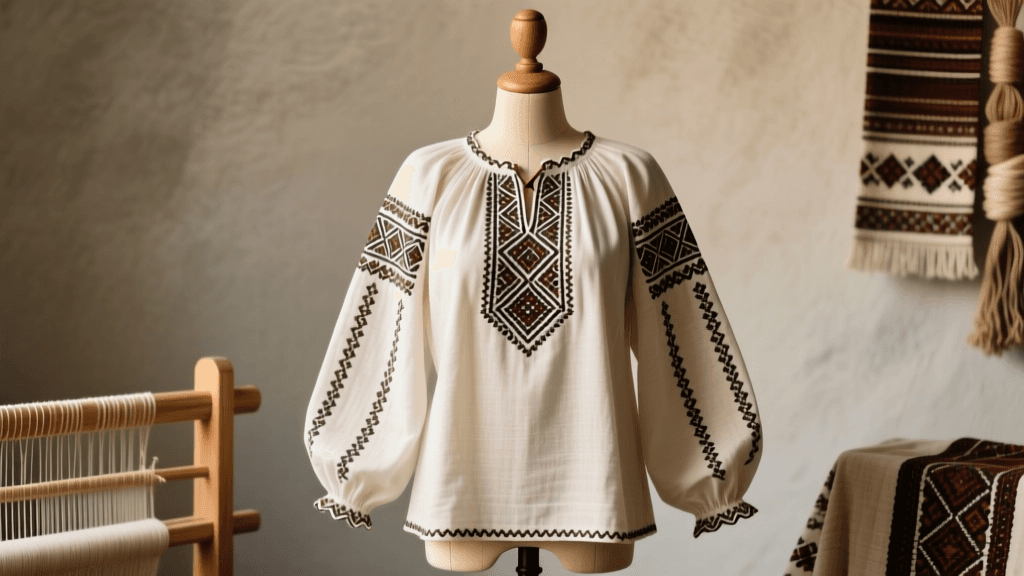
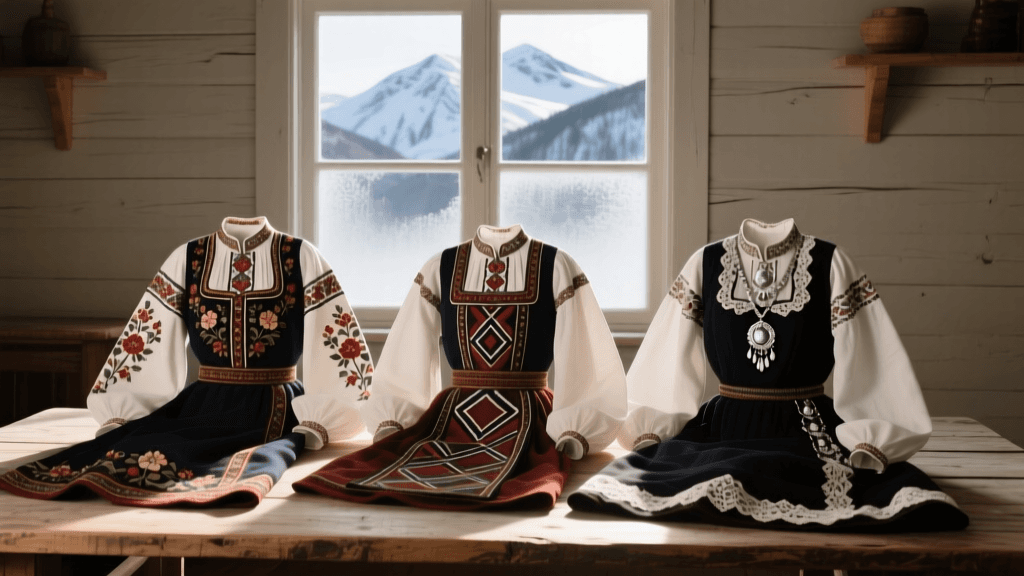
As we navigate 2026, the global appreciation for Eastern European and Balkan folk dress has transcended mere festival wear, evolving into a profound statement of cultural resilience, artisanal mastery, and sustainable fashion. At the forefront of this movement are two iconic garments: the Ukrainian Vyshyvanka and the Romanian Ie. Both garments rely on centuries-old embroidery techniques, geometric and botanical symbolism, and meticulous construction methods that modern makers are fiercely preserving. According to the UNESCO Intangible Cultural Heritage lists, traditional embroidery and textile techniques are not merely decorative; they serve as a visual language encoding regional identity, spiritual protection, and social status. For contemporary dressmakers and historical costumers, recreating these garments in 2026 requires moving beyond commercial, mass-produced costumes and returning to authentic material sourcing, historical pattern drafting, and heritage stitchery. This comprehensive guide provides actionable, up-to-date instructions for sourcing materials, decoding regional motifs, and constructing these masterpieces of Slavic and Balkan folk dress.
Sourcing Authentic Linen: Handwoven vs. Mill-Spun
The foundation of any authentic Eastern European blouse is the fabric. Historically, hemp and linen were spun and woven by hand, resulting in a fabric with a distinct 'slub' (irregularities in the yarn thickness) that modern machinery struggles to replicate. In 2026, the market for heritage textiles has stabilized, but true handwoven linen from the Carpathian and Balkan regions remains a premium commodity. When sourcing fabric for your Vyshyvanka or Ie, you must consider the weight, weave, and preparation.
- Weight and GSM: For a traditional summer blouse, look for a medium-weight linen ranging from 150 to 190 grams per square meter (GSM). Heavier linens (up to 220 GSM) are appropriate for outer garments or winter-weight shifts, but they make the intricate drawn-thread hemstitching (merezhka) excessively difficult.
- Thread Count: Authentic embroidery requires a fabric with a perfectly balanced warp and weft. A 25-count or 28-count evenweave linen is ideal for counted-thread techniques like cross-stitch and the Ukrainian nyzynka (darning stitch).
- Preparation and Shrinkage: Heritage linens can shrink up to 10% during their first wash. In 2026, best practice dictates pre-washing your raw linen at 60°C (140°F) without detergent to set the fibers, followed by a hot press while the fabric is still slightly damp. This ensures your meticulous embroidery will not pucker after the garment's first laundering.
Decoding the Motifs: Vyshyvanka vs. Ie
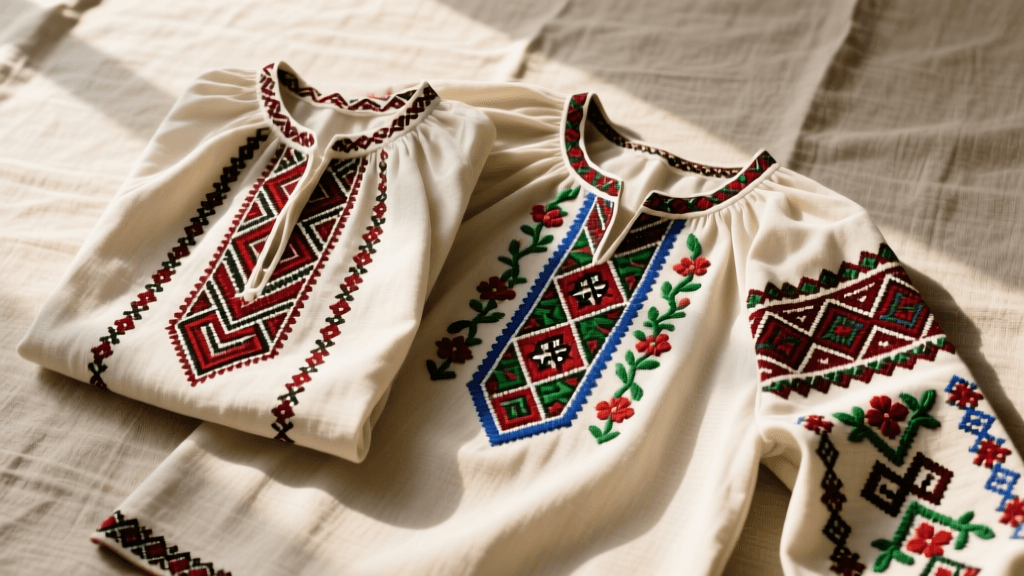
While both garments feature heavily embroidered sleeves and necklines, their structural layouts and symbolic vocabularies differ significantly. The Ukrainian Vyshyvanka is renowned for its strict geometric precision and regional color coding, whereas the Romanian Ie is celebrated for its flowing botanical motifs and complex structural epaulettes. The Victoria and Albert Museum fashion collections frequently highlight how these regional distinctions served as immediate identifiers of a wearer's village and marital status.
| Feature | Ukrainian Vyshyvanka | Romanian Ie |
|---|---|---|
| Primary Layout | Vertical bands down the front, collar, and cuffs. | Shoulder epaulette (altiță), gathering (încreț), and flowing sleeve rivers (râuri). |
| Dominant Motifs | Geometric: Rhombuses, stars, eight-pointed rosettes, and zigzag 'water' lines. | Botanical & Abstract: Tree of life, stylized leaves, sun wheels, and meandering vines. |
| Color Palette | High contrast. Red and black (Poltava/Chernihiv), or stark white-on-white (Poltava). | Earthy and varied. Deep indigo, rust red, olive green, and metallic gold thread accents. |
| Key Stitch | Nyzynka (reverse-side darning) and Zavolikannya (running stitch). | Picioruș (chain stitch) and dense satin stitch for the altiță. |
Essential Embroidery Threads and Tools for 2026
The shift away from synthetic, high-sheen threads has been a major trend in the 2026 historical costuming community. To achieve an authentic matte finish that mimics historical wool and linen threads, modern makers must select their materials carefully.
- Threads: While DMC and Anchor stranded cottons remain accessible staples, serious artisans in 2026 are turning to hand-dyed, mercerized cotton and silk blends. Brands specializing in historical reproductions now offer 'aged' color palettes that replicate the natural dyes (madder root, walnut hull, and woad) used prior to the 20th century. Expect to pay around $65 for a comprehensive, historically accurate 24-skein silk-cotton blend kit.
- Needles: Counted-thread embroidery on 28-count linen requires a blunt tapestry needle to avoid piercing the fabric threads. Size 24 or 26 Bohin or John James tapestry needles are the current industry standard for their smooth eyes and durable gold-plated finishes, which reduce friction on delicate silk threads.
- Frames: Embroidery hoops distort the warp and weft of linen, ruining the tension required for drawn-thread work. In 2026, custom-milled beechwood slate frames (scroll frames) from Eastern European woodworkers are highly sought after, costing approximately $85 to $120. They keep the fabric drum-tight without crushing the fibers.
The Art of Merezhka and Pova Techniques
Constructing these blouses is not merely about sewing seams; it is about structural embellishment. Two techniques define the authenticity of Eastern European folk blouses: Merezhka and the Pova.
Merezhka (Drawn Thread Hemstitching)
Merezhka is the intricate drawn-thread work used to join panels of fabric or finish hems. It is a hallmark of the Vyshyvanka. To execute a basic prutik (rod) hemstitch:
- Mark the area where threads will be withdrawn. Using a blunt needle, carefully pull out 4 to 6 horizontal weft threads across the entire width of the fabric panel.
- Thread your needle with a matching linen thread. Secure it at the left edge of the withdrawn gap.
- Bundle 3 or 4 vertical warp threads together, wrapping the working thread around the base of the bundle twice to cinch them tightly.
- Move to the next bundle and repeat. This creates a beautiful, lace-like ladder effect that provides both structural integrity and decorative openness.
The Pova (Hidden Hem Allowance)
The Romanian Ie features a brilliant, pragmatic construction detail known as the pova. Because handwoven linen was incredibly valuable, blouses were constructed with a massive, hidden hem allowance (often 10 to 15 centimeters) folded to the inside of the sleeves and bodice. If the blouse was damaged, or if it was passed down to a younger, smaller family member, the pova could be let out, and the garment could be entirely re-embroidered or resized without wasting a single inch of textile. When drafting your 2026 pattern, always include a minimum 8cm pova allowance on all major seams to honor this sustainable historical practice.
2026 Cost and Time Investment Breakdown
Creating an authentic, hand-embroidered Eastern European blouse is a labor of love that requires significant time and financial investment. Below is a realistic breakdown for a maker creating a mid-complexity Romanian Ie or Ukrainian Vyshyvanka in 2026.
| Project Phase | Estimated Cost (2026 USD) | Time Investment | Notes |
|---|---|---|---|
| Fabric Sourcing | $90 - $140 | 2 - 5 Days | Includes shipping for authentic European evenweave linen and pre-washing time. |
| Threads & Notions | $60 - $95 | 1 Day | Hand-dyed silk/cotton blends, beeswax, and slate frame. |
| Pattern Drafting | $0 - $25 | 4 - 6 Hours | Traditional geometric drafting using a grid; no complex curved armholes. |
| Embroidery | $0 (Labor) | 80 - 150 Hours | The most time-intensive phase. Pacing is vital to prevent repetitive strain. |
| Construction | $15 - $30 | 10 - 15 Hours | Hand-sewn seams, merezhka insertion, and traditional smocked neckline. |
Preserving the Thread of History
The creation of a Slavic Vyshyvanka or a Balkan Ie in 2026 is an act of profound cultural stewardship. By rejecting fast-fashion approximations and committing to the slow, deliberate processes of drawn-thread hemstitching, counted-thread geometry, and natural fiber sourcing, modern makers ensure that these textile traditions remain living, breathing art forms. Whether you are meticulously charting an eight-pointed star from the Poltava region or carefully gathering the altiță of a Carpathian blouse, every stitch connects you to a centuries-old lineage of artisans who wove their hopes, protections, and identities into the very fabric of their garments.