2026 Guide to Crafting Authentic Greek Chitons & Roman Stolas
The Resurgence of Ancient Mediterranean Textiles in 2026
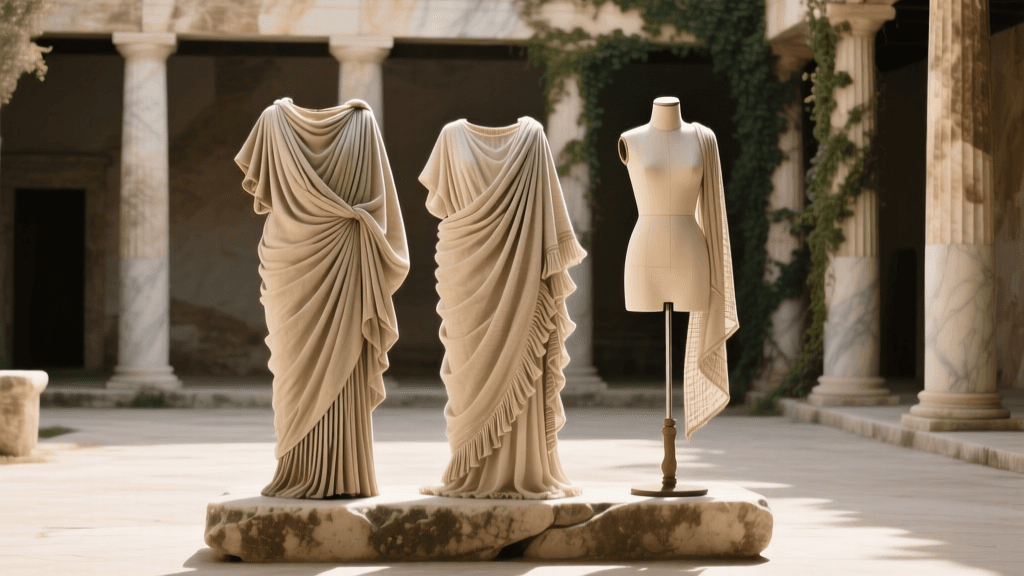
As historical costuming, theatrical design, and living history communities enter 2026, the demand for meticulous accuracy in ancient Mediterranean garments has reached an all-time high. Modern makers and reenactors are moving away from the inaccurate, mass-produced polyester costumes of the past, favoring instead the authentic drape of heavyweight linens and naturally dyed wools. Understanding the structural differences between the Greek chiton and the Roman stola is essential for anyone looking to recreate the ancient world with fidelity. This comprehensive guide explores the construction, draping, and textile sourcing required to craft authentic ancient Greek and Roman garments today.
Understanding the Greek Chiton: Doric vs. Ionic
The chiton was the foundational garment of ancient Greece, worn by both men and women. However, the term encompasses two distinctly different styles of construction and draping. According to the World History Encyclopedia, the evolution of the chiton reflects broader shifts in Greek trade, textile production, and cultural exchange with the East.
The Doric Chiton (Peplos)
Often referred to as a peplos when worn by women, the Doric chiton is the older, more austere of the two styles. It is constructed from a single, large rectangular piece of heavyweight wool. The defining feature of the Doric style is the apoptygma—an overfold created by folding the top edge of the fabric down by 12 to 18 inches before draping. The garment is left open on one side and pinned at the shoulders with large, ornate fibulae (brooches). For 2026 reenactors, sourcing a wool fabric with a weight of at least 250 GSM (grams per square meter) is critical to achieving the stiff, structured drape characteristic of the Doric style.
The Ionic Chiton
Introduced later and influenced by Eastern Mediterranean styles, the Ionic chiton is made from lightweight, finely woven linen or silk. Unlike the Doric version, the Ionic chiton is much wider and is often sewn along the side seams to form a tube. Instead of a single heavy overfold, the Ionic chiton relies on multiple small pins or buttons along the upper arms to create intricate, flowing sleeves. The Metropolitan Museum of Art notes that the sheer, pleated linens of the Ionic chiton allowed for a more complex display of wealth and textile craftsmanship, as the fabric required significantly more material and labor to produce.
Step-by-Step: Draping the Ionic Chiton
Constructing an Ionic chiton requires no complex tailoring, but it does demand precise measurements and careful pinning. Follow these steps for a historically accurate drape:
- Calculate the Fabric: Measure your wingspan (fingertip to fingertip with arms extended). Multiply this measurement by 1.5 to determine the width of your fabric. The height should be your shoulder-to-floor measurement plus 15 inches to allow for the kolpos (the bloused overhang at the waist).
- Prepare the Edges: Hem all four sides. In antiquity, the edges were often weighted with small lead loom weights or bronze beads to help the lightweight linen drape elegantly against the body.
- Pin the Shoulders: Fold the fabric in half width-wise. Starting at the neck opening, pinch the front and back layers together and secure them with small bronze or bone fibulae every 3 to 4 inches along the arms, stopping just before the elbow.
- Belt and Blouse: Wrap a woven wool or leather zona (belt) around your natural waist. Pull the excess fabric up and over the belt to create the kolpos, adjusting the drape so the hem falls evenly at the ankles.
Roman Garments: The Tunica, Stola, and Toga
While Greek dress relied heavily on the drape of rectangular textiles, Roman clothing incorporated more structured elements to denote social status, gender, and citizenship. The World History Encyclopedia emphasizes that Roman dress codes were strictly enforced, with specific garments legally reserved for certain classes of people.
The Tunica and Stola
The base layer for both men and women was the tunica, a simple T-shaped garment woven to shape on a loom or sewn from two rectangular pieces of wool or linen. For respectable, married Roman women, the tunica was covered by the stola. The stola was a long, sleeveless overdress suspended from the shoulders by small straps called anadesma. The most crucial visual marker of the stola was the institia—a decorative, often contrasting border at the hem and V-neckline that signaled the wearer's matronly status. In 2026, historical costumers recreate the institia using tablet-woven wool bands or embroidered linen trim.
The Toga: A Triumph of Draping
Though often misrepresented in modern media as a simple wrapped sheet, the Roman toga was an enormous, complex garment. Cut in a semi-circular or elliptical shape, a formal toga could measure up to 18 feet in length and 11 feet in width. Woven from heavyweight white wool (the toga virilis), it required the assistance of a slave or servant to drape correctly, creating the sinus (a deep pouch-like fold across the chest) and the umbo (a decorative knot of fabric at the center). For modern makers attempting a toga, using a lightweight wool flannel (around 200 GSM) is a practical compromise, as authentic heavyweight broadcloth would be physically exhausting to wear at contemporary outdoor festivals.
Comparative Analysis: Greek and Roman Garment Structures
To help makers choose the right project, here is a structural comparison of the primary garments discussed:
| Garment | Primary Fabric | Construction Method | Fastening | Primary Wearer |
|---|---|---|---|---|
| Doric Chiton (Peplos) | Heavyweight Wool | Single rectangle, folded over (apoptygma), open side | Large shoulder fibulae | Greek Women |
| Ionic Chiton | Lightweight Linen | Wide rectangle, often sewn sides, no overfold | Multiple small arm pins | Greek Men & Women |
| Roman Tunica | Wool or Linen | Two T-shaped panels sewn at sides and shoulders | Woven belt (zona) | Roman Men & Women |
| Roman Stola | Linen or Fine Wool | Sleeveless tube with shoulder straps, bordered hem | Shoulder straps, belted | Married Roman Women |
| Roman Toga | Heavy White Wool | Massive semi-circular drape, no sewing | Friction and complex folding | Roman Male Citizens |
Sourcing Fabrics and Natural Dyes for 2026 Reenactors
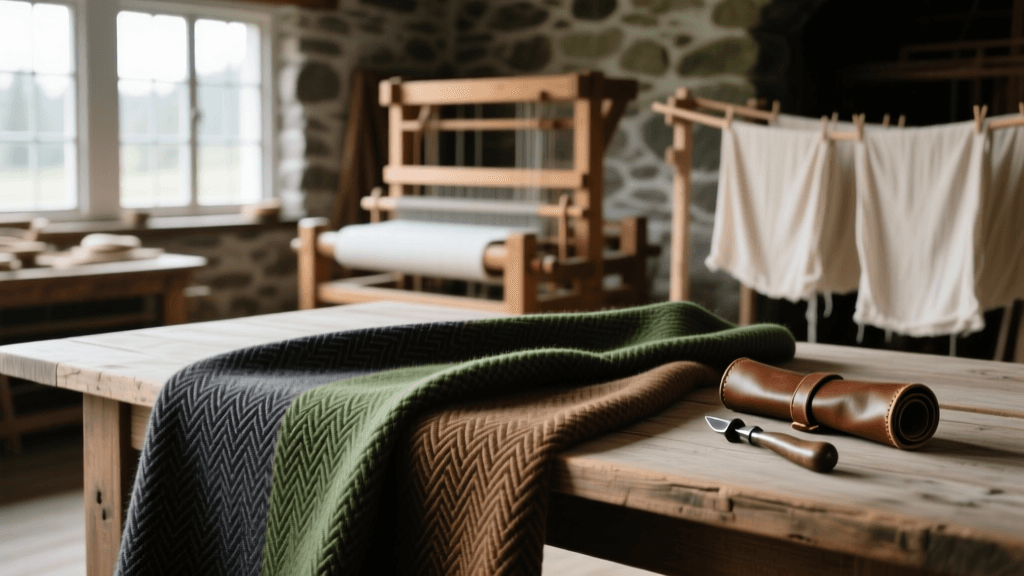
The authenticity of an ancient garment relies entirely on its textile. Modern synthetic dyes and machine-spun yarns lack the subtle variations and organic drape of ancient fabrics. As of 2026, the most dedicated historical costumers are turning to heritage textile mills in Ireland, Belgium, and the Baltic states for authentic materials.
- Linen: Seek out 'half-bleached' or 'unbleached' slub linen. The natural irregularities in the yarn mimic hand-spun ancient threads. Avoid stiff, heavily sized upholstery linens; opt for garment-weight linens (150-180 GSM) that have been washed and softened.
- Wool: Look for plain-weave or twill-weave woolens. Melton wool is too thick and felted for chitons; instead, source tropical wools or lightweight wool flannels that drape fluidly.
- Natural Dyeing: If you wish to replicate the vibrant colors of antiquity, explore natural dyeing. Madder root produces the iconic terracotta reds, weld yields bright yellows, and woad or indigo provides the blues. Remember that in ancient Greece and Rome, undyed, off-white, and natural brown wools were the most common for everyday wear, while vibrant purples (derived from the incredibly expensive Murex sea snail) were strictly reserved for the elite and imperial classes.
Essential Accessories: Fibulae and Footwear
No ancient Mediterranean garment is complete without its functional accessories. The fibula was not merely jewelry; it was a structural necessity. For Doric chitons, you will need robust, penannular or omega-style brooches cast in bronze or brass. Avoid flimsy costume jewelry, as the tension of heavy wool will easily bend modern alloy pins. Many specialized artisan blacksmiths and bronze casters operating online today offer historically accurate, hand-forged fibulae that can withstand the tension of thick textiles.
Footwear is equally important. The Greek krepides and Roman calcei or soleae (sandals) were constructed from vegetable-tanned leather. In 2026, several bespoke historical shoemakers offer custom-molded leather sandals that replicate the strapping patterns seen on classical marble statuary, providing both historical accuracy and the ergonomic support needed for walking on uneven terrain at living history events.
Conclusion
Crafting authentic Greek chitons and Roman stolas is a deeply rewarding exercise in experimental archaeology and textile arts. By understanding the geometry of the drape, respecting the properties of natural fibers, and utilizing historically accurate accessories, modern makers can breathe life into the ancient world. Whether you are preparing for a museum exhibition, a theatrical production, or a high-level historical reenactment in 2026, the key to success lies in the fabric and the fold. Embrace the simplicity of the loom-shaped textile, and let the natural drape of wool and linen tell the story of antiquity.