Best Schuhplattler Tracht for 2026 Alpine Dance Festivals
The 2026 Renaissance of Authentic Alpine Dance Tracht
As the 2026 Alpine festival and Gaufest circuit kicks into high gear, a significant shift is occurring within the European folk dress community. Dancers and festival attendees are moving away from mass-produced, fast-fashion costumes and returning to authentic, historically accurate Vereins-Tracht (club-regulated traditional dress). For those participating in or attending rigorous folk dance events—most notably the Schuhplattler, the iconic Bavarian and Tyrolean slap dance—wearing the correct garments is not merely a matter of aesthetics. It is a strict requirement for biomechanical function, safety, and cultural respect.
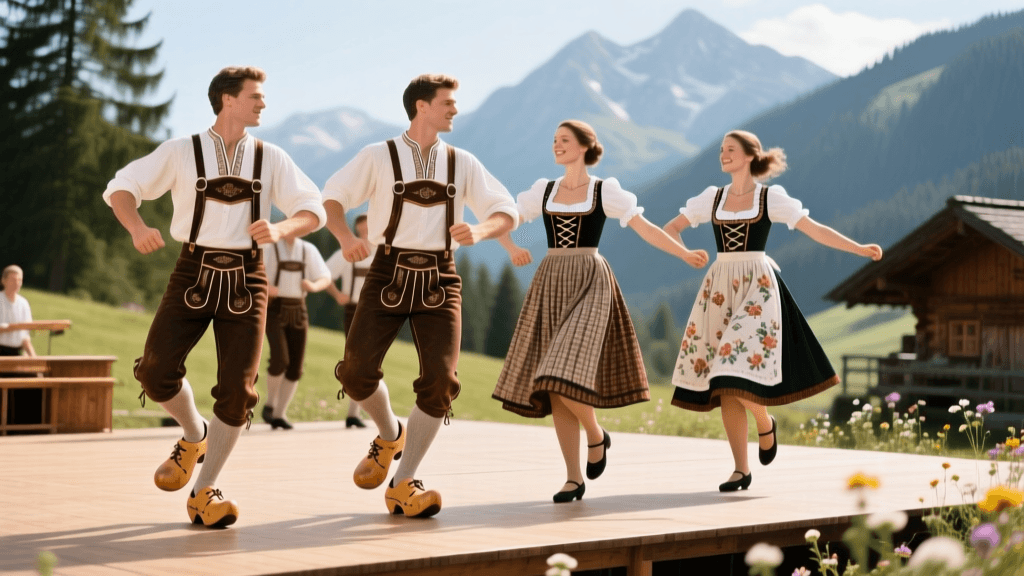
The Schuhplattler is a highly athletic courtship dance originating from the Alpine regions of Germany, Austria, and South Tyrol. It involves rhythmic stomping, leaping, and the forceful striking of the thighs, knees, and calves with flat hands. To perform these movements without injury, and to ensure the garments survive the intense physical demands, dancers require specialized construction. According to the guidelines maintained by the Bayerischer Trachtenverband (Bavarian Costume Association), authentic dance tracht must adhere to strict regional patterns and material standards that have been refined over centuries. In 2026, master tailors and leatherworkers are seeing record demand for bespoke, dance-ready pieces that honor these historical specifications while accommodating the modern festival schedule.
The Anatomy of Dance-Ready Lederhosen: The Plattlerhose
Standard fashion lederhosen, often made from thin goat leather or synthetic blends, are entirely unsuitable for the Schuhplattler. The repeated, high-velocity slapping of the thighs will quickly tear inferior leather and leave the dancer with severe bruising. For the 2026 dance season, the gold standard is the Plattlerhose, a specific variation of the traditional Bundlederhose (drop-front breeches) engineered specifically for folk dance.
Material and Tanning
Authentic dance lederhosen are crafted from Hirschleder (deer leather) or Rehleder (roe deer leather). The leather must be processed using Sämischgerbung, a traditional brain-tanning method utilizing cod liver oil. This labor-intensive process yields a leather that is incredibly soft, breathable, and washable, yet possesses a dense, spongy thickness that acts as a natural shock absorber against the dancer's hands. In 2026, a bespoke pair of hand-embroidered Hirschleder Plattlerhosen from a master saddler in Upper Bavaria typically costs between €900 and €1,400, reflecting the scarcity of ethically sourced alpine deer hides and the hundreds of hours required for hand-stitching.
Cut and Construction
The cut of a Plattlerhose differs subtly but crucially from everyday tracht. The inseam is slightly shorter, and the thigh is cut with a bit more ease to allow for the deep squats and high kicks required in the Radl (wheel) formations. The drop-front (Latze) is reinforced with heavy linen backing to prevent the horn or bone buttons from popping off during vigorous movement. Furthermore, the Hosenträger (suspenders) are cross-braced at the back and heavily embroidered, ensuring the heavy leather breeches remain securely anchored at the natural waist without restricting diaphragmatic breathing during the dance.
The Tanzdirndl: Aerodynamics of the Alpine Skirt
While the men's Schuhplattler focuses on percussive striking, the women's role in the dance revolves around graceful, rapid spinning, intricate footwork, and the elegant presentation of the Tanzdirndl. A standard fashion dirndl, with its narrow, A-line skirt, will not generate the necessary centrifugal force required for the Landler and Polka turns. Research into historical dance costumes archived at the Deutsches Tanzarchiv Köln (German Dance Archive) highlights that the silhouette of the Alpine dance skirt has always relied on volume and specific pleating techniques.
Skirt Circumference and the Tellerschnitt
For the 2026 festival season, serious folk dancers require a dirndl skirt with a minimum circumference of 3 to 4 meters. This is often achieved through a Tellerschnitt (plate cut) or a densely gathered cartridge pleat at the waistband. When the dancer spins, the heavy wool or premium cotton skirt flares out into a perfect, horizontal disc. To weigh the hem down and enhance this visual effect, a Besatzband (decorative hem tape) is sewn into the inner lining of the skirt's bottom edge. This added weight prevents the skirt from flying up immodestly while maximizing the dramatic 'swing' that judges look for in competitive Gaufeste.
Bodice Support and the Schleife
The bodice (Mieder) of a Tanzdirndl is heavily boned and structured to provide core support during rapid partner turns. Unlike fashion dirndls that rely on zippers, authentic dance bodices close with heavy metal hooks or silver eyelets laced with silk ribbons. The apron (Schürze) is tied in a precise Schleife (bow). According to strict traditional etiquette, the placement of the bow communicates the dancer's relationship status: left for single, right for married or taken, center for a virgin (historically), and back for a widow. Dancers must ensure the bow is tied tightly and secured with a hidden safety pin, as a loose apron can easily become tangled in a partner's boots during complex figure-eight routines.
Footwear Mechanics: Haferlschuhe and the Stampfen
The rhythmic foundation of the Schuhplattler is the Stampfen—the forceful, syncopated stamping of the feet that mimics the call of the Auerhuhn (capercaillie). This requires highly specialized footwear. The traditional Bavarian Haferlschuh is characterized by its distinctive toe cap, side-lacing (or sometimes front-lacing), and robust construction. For dance, the shoe must be flexible enough to allow the foot to articulate, yet rigid enough to protect the toes and produce a sharp, resonant sound against the wooden festival stages.
In 2026, master cobblers in regions like Berchtesgaden and Garmisch-Partenkirchen are producing dance-specific Haferlschuhe featuring a double row of traditional hobnails (Stiften) across the toe cap. These nails are not merely decorative; they are essential for creating the percussive 'clack' when the dancer strikes the toe against the floor or the heel of the opposite boot. The soles are crafted from layered, compressed leather rather than rubber, which would deaden the sound and cause the dancer to stick to polished wooden floors. Expect to invest between €350 and €500 for a pair of custom-fitted, dance-ready Haferlschuhe in the current market.
2026 Festival Gear: Fashion Tracht vs. Vereins-Tracht
Understanding the difference between commercial festival wear and authentic dance tracht is critical for anyone looking to participate in or respectfully attend Alpine folk events. The following table outlines the primary distinctions in the 2026 market.
| Feature | Fashion / Commercial Tracht | Authentic Vereins-Tracht (Dance Ready) |
|---|---|---|
| Lederhosen Material | Thin goat leather, cowhide, or synthetic PU. | Brain-tanned Hirschleder (deer) or Rehleder. |
| Skirt Circumference | 1.5 to 2 meters (A-line or gathered). | 3 to 4+ meters (Tellerschnitt or cartridge pleated). |
| Footwear | Fashion boots, rubber-soled loafers, or sneakers. | Leather-soled Haferlschuhe with hobnailed toe caps. |
| Bodice Closure | Hidden zippers, decorative non-functional lacing. | Steel hooks or functional eyelets with silk lacing. |
| Approx. 2026 Cost (Full Set) | €150 - €400 | €1,800 - €3,500+ |
Accessories and Hat Etiquette for Dancers
No Alpine folk costume is complete without the Tirolerhut (Tyrolean hat), typically made of loden wool or felt and adorned with a Gamsbart (a tuft of hair from the chamois antelope). For the everyday festival-goer, the hat is simply placed on the head. For the Schuhplattler dancer, however, the hat presents a unique aerodynamic challenge. During the Radl (where dancers link arms and spin in a rapid circle) and the high leaps of the solo Plattler, an unsecured hat will fly into the audience.
To combat this, authentic dance hats are fitted with a Sturmriemen (storm strap)—a thin, often braided leather or cord chin strap that is discreetly hidden beneath the chin or secured at the nape of the neck. Additionally, the Gamsbart is rooted in a conical silver or horn holder that is stitched directly into the hat's band, ensuring it does not detach during vigorous movement. According to curators at the Austrian Museum of Folk Life and Folk Art, the size and quality of the Gamsbart historically indicated the wearer's wealth and hunting prowess; today, in the context of dance clubs, it signifies the dancer's rank and dedication to the preservation of regional heritage.
Sourcing and Maintenance for the 2026 Season
Acquiring authentic dance tracht requires planning. Master tailors and leatherworkers in Bavaria and Tyrol often have waitlists extending six to twelve months. If you are preparing for the 2026 festival season, it is highly recommended to commission your garments in the autumn of the previous year. When sourcing, always look for makers who are certified by regional Trachtenverbände (costume associations) to ensure you are not purchasing culturally appropriated or historically inaccurate garments.
Maintenance of dance tracht is equally specialized. Hirschleder must never be dry-cleaned or washed with standard detergents, which will strip the natural oils and cause the leather to stiffen and crack. After a long day of dancing, the lederhosen should be brushed with a soft bristle brush, aired out in a shaded, well-ventilated area, and periodically treated with a specialized leather milk or pure neatsfoot oil to maintain its spongy, shock-absorbing qualities. The dirndl skirt and blouse can generally be hand-washed in cold water with a mild wool detergent, but the heavily boned bodice should only be spot-cleaned to preserve its structural integrity.
Conclusion
The European folk dress of the Alpine regions is not a static museum exhibit; it is a living, breathing textile tradition that must withstand the extreme physical demands of the Schuhplattler. As we navigate the 2026 festival season, the commitment to authentic, dance-ready Vereins-Tracht ensures that the biomechanics of the dance are preserved, the dancers are protected from injury, and the rich cultural heritage of the Alps is presented with the dignity and precision it deserves. Whether you are a seasoned Plattler or a passionate observer, understanding the intricate engineering behind the Plattlerhose, the Tanzdirndl, and the Haferlschuh profoundly deepens the appreciation of this spectacular folk tradition.