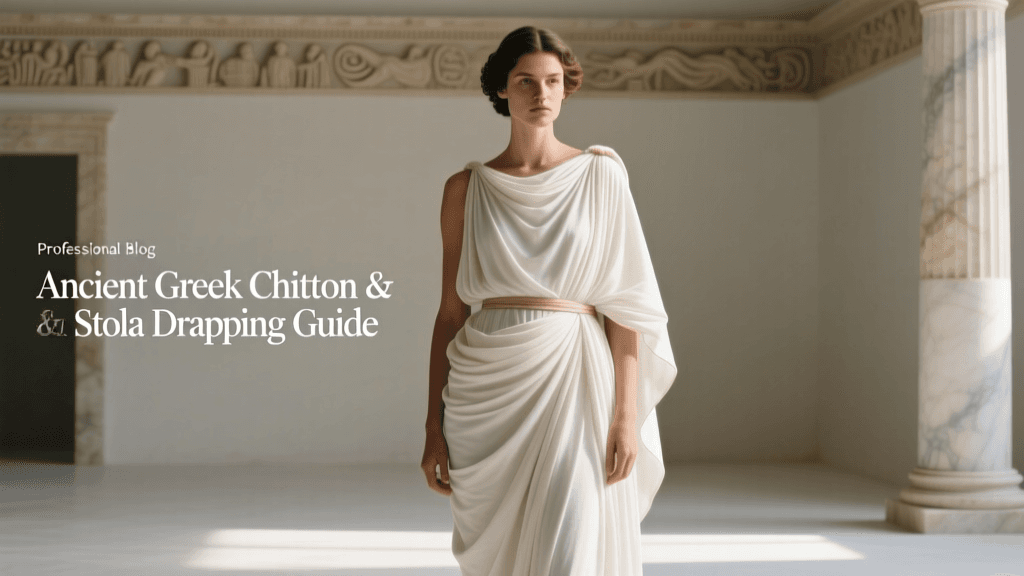
Greek Chiton & Roman Stola Guide 2026: Fabrics & Draping
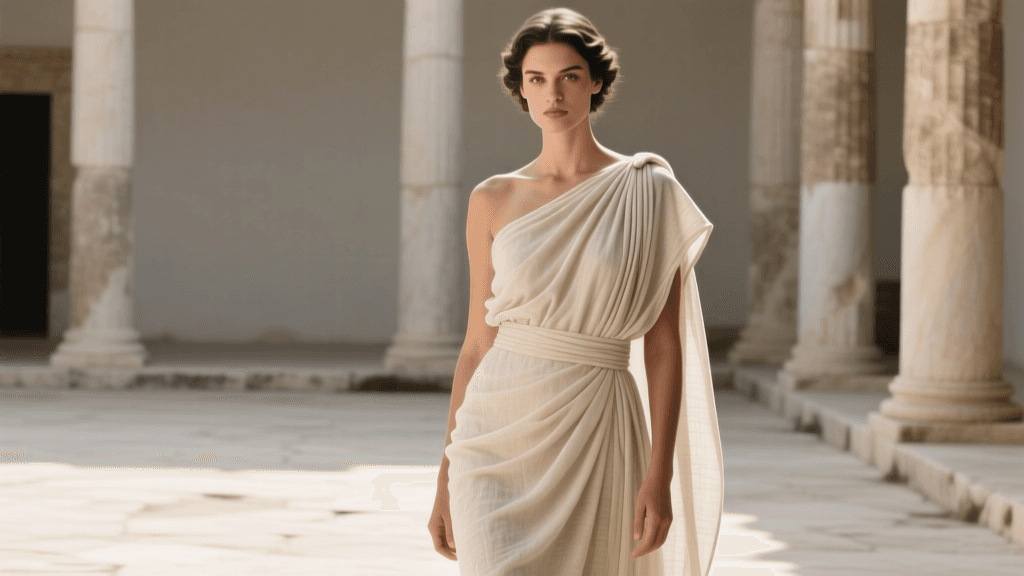
The Resurgence of Classical Garments in 2026
The revival of classical antiquity within the broader scope of European folk dress and historical reenactment has reached new heights in 2026. Across Europe, from the Hellenic Heritage Festival circuit in the Mediterranean to the expansive Roman history encampments in Northern Europe, enthusiasts and scholars are demanding unprecedented accuracy in their ancient garments. Moving away from the theatrical, synthetic costumes of the past, the 2026 standard for ancient Greek and Roman dress focuses on authentic textile weights, historically accurate draping mechanics, and period-correct accessories.
Whether you are preparing for a university-level classical studies presentation, participating in a high-fidelity historical reenactment, or simply exploring the roots of European textile traditions, understanding the mechanics of the Greek chiton and the Roman stola is essential. This comprehensive guide will walk you through the historical context, modern fabric sourcing, and step-by-step draping techniques required to master these iconic garments today.
Decoding the Greek Chiton: Doric vs. Ionic
The chiton was the foundational garment of ancient Greece, worn by both men and women, though its style and draping varied significantly by gender, age, and region. According to the extensive archives found in The Metropolitan Museum of Art's Chiton Artifact Archive, the two primary variations of this garment were the Doric and the Ionic chiton. Understanding the distinction is critical for any modern reenactor aiming for historical accuracy.
The Doric Chiton (Peplos)
The Doric chiton, often referred to as a peplos when worn by women, is the older and heavier of the two styles. It was traditionally woven from wool, which provided the necessary structure for its signature folding technique. The defining feature of the Doric chiton is the apoptygma—an overfold at the top of the garment that drapes down over the chest and back. This overfold not only added warmth but also created a visually striking, structured silhouette. In 2026, accurate reproduction of the Doric chiton requires medium-to-heavyweight wool tabby weaves that can hold a crisp fold without bulking excessively at the shoulders.
The Ionic Chiton
In contrast, the Ionic chiton emerged as a lighter, more voluminous alternative. Woven primarily from linen, the Ionic style lacked the heavy overfold of the Doric version. Instead, it was constructed from a significantly wider piece of fabric, gathered and pinned along the arms to create a series of elegant, flowing sleeves. The Ionic chiton was often belted high under the bust or at the natural waist, allowing the wearer to blouse the fabric over the belt (a technique known as kolpos) to adjust the hemline and add decorative volume. For modern practitioners, sourcing high-quality, tightly woven linen is paramount to achieving the fluid drape characteristic of the Ionic style.
Roman Elegance: The Stola and the Toga
While Greek dress heavily influenced Roman fashion, the Romans developed their own distinct sartorial codes that communicated social status, citizenship, and gender. As detailed in Smith's Dictionary of Greek and Roman Antiquities via the Perseus Digital Library, Roman clothing was deeply intertwined with the legal and social fabric of the empire.
The Stola: The Mark of the Roman Matron
The stola was the traditional, outer garment of the respectable Roman married woman (matron). Worn over a base tunic (tunica interior), the stola was a long, sleeveless dress suspended from the shoulders by straps or small brooches. The most critical identifying feature of the stola was the instita—a decorative, often contrasting band of fabric or embroidery sewn along the lower hem. In 2026, historical costumers emphasize that the stola should not be form-fitting; rather, it should be cut wide and belted tightly to create deep, vertical folds that convey modesty and dignity.
The Toga: Complexity and Citizenship
No garment is more synonymous with Rome than the toga. However, it is a common misconception that the toga was everyday wear. By the height of the Empire, the toga was a formal, ceremonial garment reserved exclusively for male Roman citizens. It was a massive, semi-circular piece of heavyweight white wool, measuring up to 18 feet in length. Draping a toga correctly is a complex art form involving the creation of the sinus (a deep, sweeping pocket of fabric across the front) and the umbo (a decorative knot or fold at the chest). Due to its sheer weight and restrictiveness, the toga required the assistance of a slave or servant to drape properly, a reality that modern reenactors must plan for when dressing for 2026 historical events.
2026 Fabric Sourcing Guide & Measurement Chart
Sourcing the correct textiles is the most common hurdle for modern classicists. The 2026 textile market offers excellent options for historically accurate weaves, provided you know what to look for. Avoid modern poly-blends, jersey knits, and overly sheer muslins. Instead, seek out natural fibers with a tight, even weave.
| Garment Type | Recommended Fabric | Weight (oz/yd²) | Yardage Needed (2026 Std) | Est. Cost per Yard |
|---|---|---|---|---|
| Doric Chiton (Peplos) | 100% Wool Tabby or Twill | 8 - 12 oz | 3.5 - 4.5 yards | $28 - $45 |
| Ionic Chiton | Medium-Weight Linen | 5.3 - 7 oz | 4 - 6 yards | $18 - $26 |
| Roman Stola | Lightweight Linen or Fine Wool | 4 - 6 oz | 4 - 5 yards | $20 - $30 |
| Roman Toga (Virilis) | Heavyweight Wool Flannel/Broadcloth | 14 - 18 oz | 6 - 8 yards (60" wide) | $35 - $60 |
| Base Tunics (Subucula) | Lightweight Linen or Hemp | 3.5 - 5 oz | 2.5 - 3 yards | $14 - $22 |
Note: Pricing reflects average 2026 retail costs from specialized historical textile mills in Italy, Greece, and the UK. Always pre-wash and press your natural fibers before cutting or draping to account for shrinkage.
Step-by-Step Draping Instructions
Unlike modern clothing, ancient Mediterranean garments were rarely cut and sewn into complex shapes. They were primarily rectangular pieces of cloth draped directly onto the body. Here is how to achieve an authentic drape for the most popular garments.
Draping the Ionic Chiton
- Measure the Fabric: Cut a rectangle of linen. The width should be roughly 1.5 times your full arm span (fingertip to fingertip). The length should be from your shoulder to the floor, plus 12 inches for the kolpos (blousing).
- Pin the Shoulders: Fold the fabric in half vertically. Starting at the front neck edge, use period-correct bronze or iron fibulae (brooches) to pin the front and back layers together along the top edge, leaving gaps for your head and arms. Space the pins about 4 to 6 inches apart to create the signature 'sleeves'.
- Belt and Blouse: Tie a woven wool or linen cord around your natural waist. Pull the fabric up and over the belt until the hem falls to your desired length (ankle-length for women, knee-length for men). This creates the kolpos.
Draping the Roman Stola
- Prepare the Base: Put on your base tunic and tie it securely at the waist.
- Attach the Straps: The stola is essentially a large tube or rectangle. If using a rectangular cut, sew the side seams partially up, leaving the top open. Attach shoulder straps (or use fibulae to join the front and back panels at the shoulders).
- Secure the Instiuta: Ensure the decorative hem band rests evenly around your ankles. Belt the stola high, just under the bust, using a decorative cord or woven belt.
Authentic Accessories for the Modern Reenactor
A garment is only as authentic as its accessories. In 2026, the European folk dress community has seen a massive surge in artisan blacksmiths and jewelers creating museum-quality replicas of ancient hardware.
- Fibulae (Brooches): Essential for securing the chiton and toga. Look for 'bow' or 'crossbow' style fibulae made from cast bronze. Avoid modern safety-pin mechanisms; authentic tension-pin replicas are widely available from specialized historical artisans.
- Footwear: For Greek dress, krepides (strapped leather sandals with a thick sole) are the standard. For Roman dress, calcei (enclosed leather shoes) were worn by patricians and citizens in the city, while caligae (hobnailed military sandals) are strictly for martial reenactments.
- Jewelry and Hair: Greek and Roman women utilized intricate hair nets, diadems, and drop earrings. Men of status wore signet rings on the left ring finger, used to seal wax documents.
Conclusion
Mastering the chiton, stola, and toga requires a departure from modern tailoring and an embrace of the ancient art of draping. By sourcing the correct weight of natural fibers and understanding the structural geometry of classical garments, you can achieve a level of historical accuracy that meets the rigorous standards of 2026's European folk dress and reenactment communities. Whether you are donning the heavy wool of a Doric peplos or the sweeping, complex folds of a Roman toga, you are participating in a living tradition that keeps the material culture of antiquity vibrantly alive today. For further visual research, we highly recommend exploring The Metropolitan Museum of Art's Roman Dress Collection to study the surviving fragments and statuary that continue to inform our modern reconstructions.