Norwegian Bunad Regional Guide 2026: Hardanger, Setesdal & Telemark
The Living Heritage of the Norwegian Bunad in 2026
In Norway, traditional folk dress is not a relic confined to museum glass; it is a vibrant, living wardrobe worn by tens of thousands of citizens every year, particularly on Constitution Day (Syttende Mai). As of 2026, the Norwegian Museum of Cultural History estimates that over 70% of Norwegian women and a rapidly growing percentage of men own a regional bunad. However, the term 'bunad' encompasses over 450 distinct regional variations, each governed by strict historical accuracy, specific textile requirements, and localized embroidery techniques.
For enthusiasts, collectors, and those tracing their Scandinavian ancestry, understanding the nuances between regions is critical. This guide provides an in-depth, updated look at three of the most iconic and historically significant regional costumes: the Hardanger, Setesdal, and Telemark bunads. We will explore their unique construction, the 2026 market for authentic silver (sølv), and the strict guidelines enforced by the Norsk Institutt for Bunad og Folkedrakt (NBF).
The Hardanger Bunad: The Pioneer of National Romanticism
Often referred to as the 'first' Norwegian bunad, the Hardanger costume from the Hordaland region became the symbolic standard for Norwegian national identity during the National Romantic period of the late 19th and early 20th centuries. While modern iterations have been refined for historical accuracy based on 18th-century rural garments, its core aesthetic remains instantly recognizable.
Textiles and Embroidery
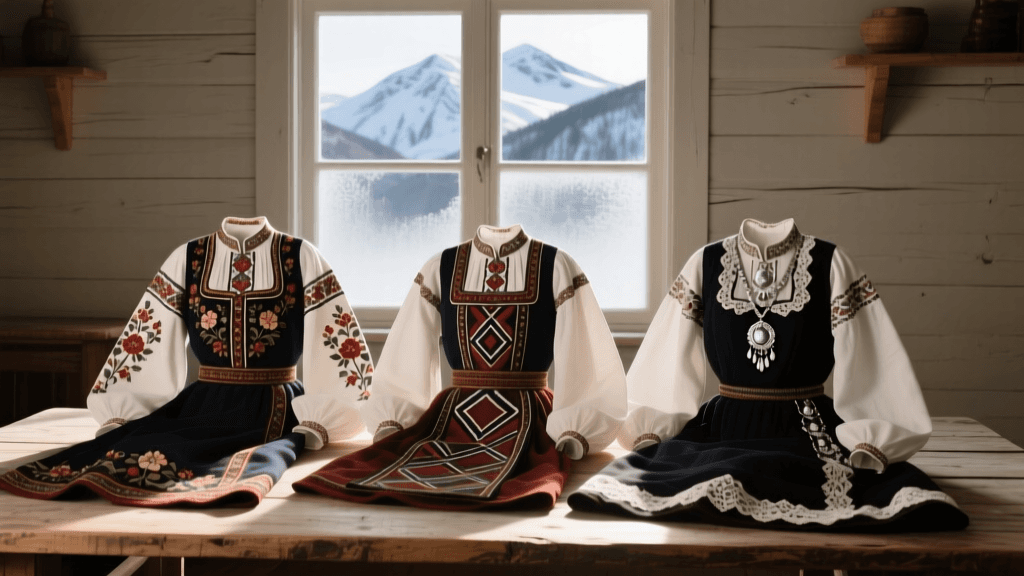
The women's Hardanger bunad features a bodice (liv) typically made of black or deep dark blue wool, paired with a white linen shirt featuring intricate whitework embroidery. The defining feature is the apron (forkle), which is crafted from fine white linen or cotton and adorned with the region's famous cross-stitch (kross-saum) and drawn-thread work (hardangersøm). In 2026, authentic Hardanger aprons are still heavily favored when made from locally woven European linen, avoiding mass-produced Asian imports that lack the necessary structural drape.
For men, the Hardanger bunad consists of a collarless vest (vest) with silk or wool embroidery, knee-breeches (knebukse), and white knitted stockings. The embroidery on the men's vest often mirrors the floral motifs found on the women's aprons, utilizing vibrant reds, yellows, and greens against a dark wool base.
The Setesdal Bunad: Unbroken Viking and Medieval Lineage
Unlike many Norwegian folk costumes that were reconstructed from fragments during the 19th-century revival, the Setesdal bunad boasts an unbroken lineage. The isolated valley of Setesdal in Southern Norway preserved its medieval and Viking-era clothing traditions well into the modern era. Consequently, the Setesdal costume feels heavier, older, and deeply rooted in ancient Nordic utility.
Heavy Wool and Kvitsaum
The most striking element of the Setesdal bunad is its heavy, black, home-spun wool. The fabric is exceptionally dense, designed to withstand harsh mountain winters. The women's skirt (stakk) is heavily pleated and features a wide band of intricate white wool embroidery known as kvitsaum near the hem. This embroidery is not merely decorative; historically, the dense stitching reinforced the hem against wear and tear from rough terrain.
The men's Setesdal costume is equally robust, featuring a thick woolen jacket (trøye) with silver buttons and a distinctive high collar. In 2026, sourcing authentic Setesdal wool remains a point of pride, with local mills in the Agder region experiencing high demand for the specific 280g/m² worsted weight required by NBF standards.
The Telemark Bunad: A Canvas of Rosemaling and Silk
Telemark, a region renowned for its sweeping valleys and rich artistic heritage, produces some of the most visually complex and colorful bunads in Norway. The Telemark bunad is heavily influenced by the region's famous rosemaling (traditional floral painting), translating the sweeping, asymmetrical C-scrolls and acanthus leaves into textile art.
East vs. West Telemark Variations
When commissioning a Telemark bunad in 2026, buyers must choose between East Telemark (Aust-Telemark) and West Telemark (Vest-Telemark) variations. The East Telemark women's bunad is celebrated for its rich, dark blue or black wool skirt and a bodice adorned with vibrant silk or wool thread embroidery. The floral patterns are dense, asymmetrical, and highly individualized, meaning no two authentically hand-embroidered East Telemark bodices are exactly alike.
The West Telemark variation often incorporates lighter base colors and features elaborate silver belts and distinct headdresses. The men's Telemark bunad is equally ornate, featuring a dark wool jacket with elaborate floral embroidery on the lapels and cuffs, paired with a silk neckerchief and silver cufflinks.
2026 Regional Comparison Matrix
To help collectors and heritage enthusiasts differentiate between these three major regional styles, the table below outlines the core material and design specifications recognized in 2026.
| Region | Base Material | Dominant Embroidery Style | Key Silver Piece (Sølje) | 2026 Custom Wait Time |
|---|---|---|---|---|
| Hardanger | Dark Blue/Black Wool, White Linen | Cross-stitch (Kross-saum), Drawn-thread | Skjortesølje (Shirt Brooch) | 12 - 18 Months |
| Setesdal | Heavy Black Home-spun Wool | White Wool Embroidery (Kvitsaum) | Brystsølje (Chest Brooch) & Belt | 18 - 24 Months |
| Telemark (East) | Dark Blue Wool, Silk Accents | Asymmetrical Floral Silk/Wool Stitchery | Veskelås (Purse Clasp) & Belte | 14 - 20 Months |
Navigating the 2026 Silver (Sølv) Market
No Norwegian bunad is complete without its accompanying silver jewelry, known collectively as sølv. The silver pieces are not merely accessories; they are structural components of the dress, serving as clasps, brooches, and fasteners. Historically, a family's wealth was displayed through the weight and intricacy of their bunad silver.
Essential Silver Components
- Skjortesølje (Shirt Brooch): Used to fasten the collar of the linen shirt. In Hardanger, this is often a delicate filigree piece.
- Brystsølje (Chest Brooch): A larger, highly ornate piece worn on the bodice. Setesdal chest brooches are famous for their heavy, oxidized silver and dangling coin-like charms.
- Belte (Silver Belt): Worn primarily by men in Telemark and Setesdal, these belts consist of interlocking silver plates and can weigh several kilograms.
- Veskelås (Purse Clasp): A decorative silver clasp attached to the woven belt or apron tie, holding a small velvet or silk pouch.
In 2026, the global surge in precious metal prices has significantly impacted the bunad market. According to recent craft industry reports, the cost of newly cast, hallmarked Norwegian bunad silver has risen by nearly 18% since 2024. Consequently, many buyers are turning to the secondary market for antique or vintage silver pieces. When purchasing vintage sølv, it is imperative to look for the traditional Norwegian hallmarks, including the city stamp (often an Oslo 'O' or Bergen 'B') and the maker's mark, to ensure historical authenticity and proper silver purity (typically 830s or 925s sterling).
Textile Sourcing and the Bunad-Gerilja Legacy
A crucial aspect of purchasing a bunad in 2026 is understanding where the textiles and labor originate. In recent years, the 'Bunad-gerilja' (Bunad Guerrilla) movement successfully campaigned against the outsourcing of bunad embroidery to countries with cheaper labor, arguing that the cultural heritage and economic value of the garment must remain in local Norwegian communities.
Today, authorized retailers like Husfliden (the Norwegian Craft Association) enforce strict provenance rules. When commissioning a Hardanger or Telemark bunad, the embroidery is completed by certified local artisans. The waiting lists for a fully hand-embroidered, custom-fitted bunad from an authorized Husfliden affiliate currently range from 12 to 24 months. Buyers should be highly skeptical of online retailers offering 'custom' Norwegian bunads with delivery times of under four weeks, as these almost universally utilize machine-embroidered synthetic blends that violate NBF guidelines and lack the breathability and drape of traditional worsted wool.
Preservation and Storage in Modern Climates
Investing in a regional bunad is a significant financial and cultural commitment, with complete ensembles (including silver) often exceeding $5,000 to $8,000 USD in 2026. Proper care is essential to ensure the garment lasts for generations.
Storage Best Practices
Wool and linen are natural fibers that require specific environmental conditions. Bunads should never be stored in plastic garment bags, which trap moisture and encourage mold growth or attract silverfish. Instead, the garment should be wrapped in unbleached, acid-free cotton muslin and stored in a cool, dark, and dry environment. The heavy pleats of the Setesdal skirt or the Hardanger stakk should be hung on wide, padded hangers to maintain their structure, while the delicate linen shirts should be folded with acid-free tissue paper to prevent permanent creasing.
Cleaning Protocols
Under no circumstances should a wool bunad be dry-cleaned using modern chemical solvents, as these can strip the natural lanolin from the wool and cause the vibrant embroidery threads to bleed or fade. Spot cleaning with a damp cloth and mild, lanolin-based wool soap is recommended for minor stains. For comprehensive cleaning, the garment must be sent to a specialized textile conservator who understands the specific dye lots and historical construction methods of Norwegian folk dress.
Conclusion
The Norwegian bunad is far more than a festive costume; it is a meticulously preserved archive of regional history, textile art, and silversmithing. Whether you are drawn to the pioneering whitework of Hardanger, the ancient, heavy wools of Setesdal, or the vibrant, painted aesthetics of Telemark, acquiring a regional bunad in 2026 is an investment in living European heritage. By respecting the strict guidelines of the NBF, supporting local artisans, and understanding the profound history woven into every stitch, wearers ensure that these magnificent garments will continue to grace the valleys and fjords of Norway for centuries to come.