Best Viking Apron Dress Fabrics & Patterns For 2026 Reconstruction
The Resurgence of the Smokkr in 2026 Heritage Crafting
The year 2026 has seen an unprecedented surge in the meticulous reconstruction of European folk dress, particularly within the Celtic, Nordic, and Viking spheres. Among the most iconic and fiercely debated garments is the Viking apron dress, widely known in archaeological circles as the smokkr or hangerock. Unlike the simpler tunics and trousers worn by men, the female apron dress represents a complex intersection of status, regional identity, and advanced textile craftsmanship. For modern historical reenactors, heritage crafters, and textile historians, achieving accuracy in 2026 requires moving beyond the simplistic "tube dress" theories of the late 20th century and embracing the nuanced, evidence-based patterns derived from recent archaeological finds in Birka, Hedeby, and the Oseberg ship burial.
At The Garment Atlas, we track the evolution of traditional garment reconstruction. This comprehensive guide details the exact fabrics, weaving structures, and construction techniques required to build a historically accurate Nordic apron dress today, incorporating the latest consensus from experimental archaeology.
Anatomy of the Apron Dress: Moving Beyond the Tube
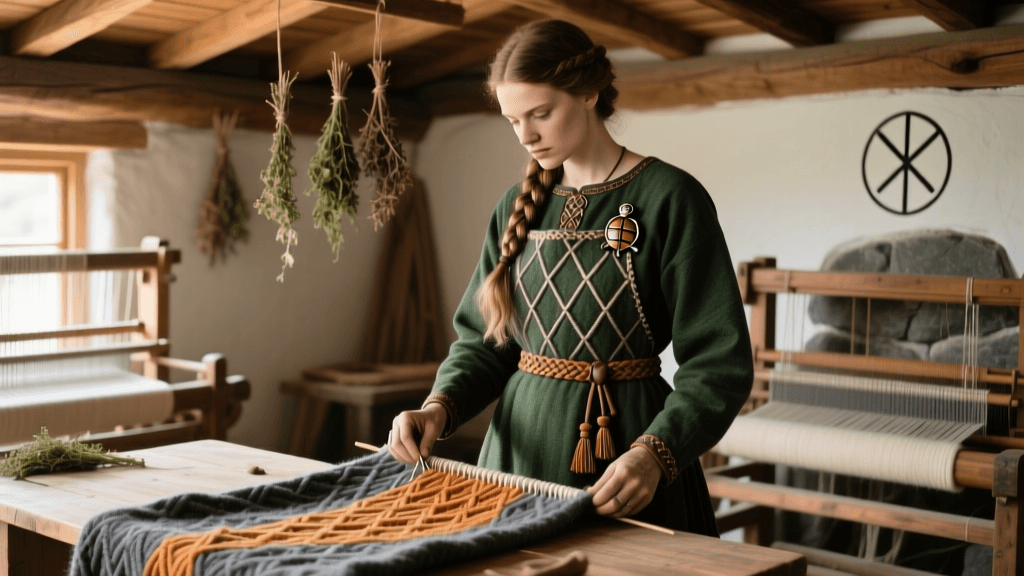
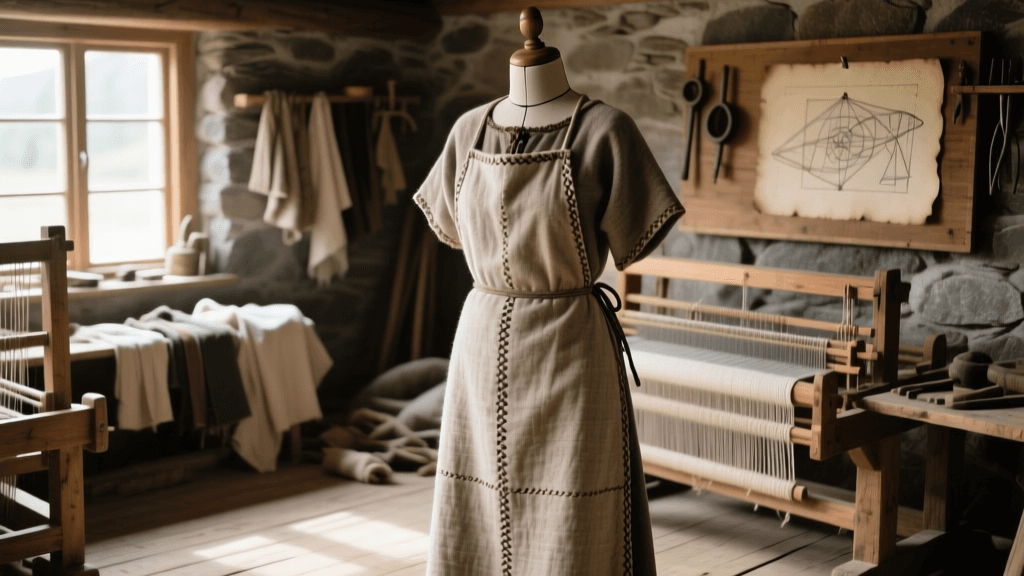
For decades, popular culture depicted the Viking apron dress as a simple wrapped tube of fabric secured by tortoise brooches. However, textile fragments preserved beneath metal brooches reveal a far more structured garment. In 2026, the prevailing academic consensus points toward a tailored, multi-panel construction. The garment typically consisted of a front panel, a back panel, and side gores or pleats that allowed for movement and accommodated the wearer's figure.
When planning your reconstruction, you must decide between the pleated model (heavily supported by finds in Køstrup, Denmark) and the flat-panel model (supported by finds in Birka, Sweden). The pleated model utilizes a wider piece of fabric that is gathered or pleated at the top edge, creating a flared silhouette. The flat-panel model relies on precise tailoring and side gores to achieve the A-line shape. Both require distinct weaving structures and fabric weights to drape correctly.
Sourcing Authentic Textiles: Weave Structures and Weights
The foundation of any accurate Nordic or Celtic-influenced garment is the textile. Viking Age weavers utilized vertical warp-weighted looms, producing fabrics with distinct characteristics that modern industrial looms often fail to replicate. When sourcing materials in 2026, you must prioritize weave structure over mere color or fiber content.
Diamond Twill and Herringbone Wools
Diamond twill was the hallmark of high-status Viking Age outerwear. This weave structure creates a geometric pattern that is not only visually striking but also adds structural integrity and water resistance to the wool. For an authentic smokkr, look for a diamond twill wool with a thread count of approximately 20-30 threads per centimeter in the warp and weft. The fabric weight should ideally fall between 250 and 320 grams per square meter (g/m²). Anything lighter will lack the historical drape and warmth; anything heavier will bunch awkwardly beneath the brooches.
Tabby-Woven Linen Underdresses
Beneath the wool apron dress, a linen underdress (the serk) was standard. Unlike the wool, which was often dyed in vibrant reds, blues, or yellows, linen was typically left in its natural unbleached state or lightly bleached in the sun. The weave for the serk should be a simple tabby (plain weave). In 2026, heritage linen suppliers offer "rustic" or "slub" linens that better mimic the uneven hand-spun yarns of the early medieval period, avoiding the hyper-smooth finish of modern commercial linens.
2026 Heritage Textile Supplier Comparison
Sourcing historically accurate textiles remains a challenge, as mainstream fabric stores rarely carry warp-weighted loom equivalents. Below is a comparison of the textile profiles you should target from specialized heritage weavers operating in 2026.
| Textile Type | Weave Structure | Target Weight (g/m²) | Best Application | Estimated 2026 Cost |
|---|---|---|---|---|
| Diamond Twill Wool | 2/2 Twill Variation | 280 - 320 | Outer Smokkr (High Status) | $65 - $90 / meter |
| Herringbone Wool | Broken Twill | 250 - 290 | Outer Smokkr / Cloaks | $55 - $75 / meter |
| Tabby Wool | Plain Weave | 200 - 240 | Everyday Smokkr / Serk | $40 - $55 / meter |
| Rustic Tabby Linen | Plain Weave (Uneven) | 150 - 180 | Underdress (Serk) | $30 - $45 / meter |
Tablet Weaving and Celtic-Nordic Trim Intersections
No Viking apron dress is complete without its trims, and this is where the profound cultural exchange between Celtic artisans and Nordic weavers becomes most visible. Tablet weaving (or card weaving) was utilized to create intricate, durable bands used to edge necklines, armholes, and the bottom hems of the smokkr. The famous Oseberg ship burial in Norway yielded remnants of tablet-woven bands featuring complex brocading techniques that hint at deep stylistic ties to Insular (Celtic and Anglo-Saxon) art. The interlacing beast motifs found in the Borre and Jelling styles share undeniable DNA with Celtic La Tène knotwork.
In 2026, the revival of tablet weaving has reached new heights of accuracy. Modern crafters are moving away from shiny cotton perle threads and instead utilizing fine, worsted-spun wool and reeled silk. To replicate the Snartemo band or the intricate trims found in the Mammen hoard, weavers must master the technique of brocading—where a secondary, often metallic or silk, weft thread is floated over the surface of the structural wool warp to create the pattern. According to textile analyses preserved by institutions like the National Museum of Denmark, these trims were not merely decorative; they served to reinforce high-stress areas of the garment while broadcasting the wearer's wealth and far-reaching trade connections.
Natural Dyeing: Achieving Authentic 10th-Century Colors
The misconception that the Viking Age was a drab, muddy era has been thoroughly debunked by modern chromatography and dye analysis. The Nordic and Celtic peoples had access to a vibrant palette, though the intensity of the color was directly tied to social status. When dyeing your 2026 reconstruction, avoid synthetic aniline dyes, which possess a harsh, flat reflectivity that instantly breaks historical immersion.
- Madder Root (Rubia tinctorum): The primary source for reds and oranges. Achieving a deep, blood-red requires a careful alum mordant and multiple dye baths. This was a highly prized, often imported dye, signaling significant wealth.
- Woad (Isatis tinctoria): The premier blue dye of Northern Europe before the importation of indigo. Woad yields a range of pale sky blues to deep, dark navies depending on the concentration of the vat.
- Weld (Reseda luteola): The most lightfast and vibrant yellow available to early medieval dyers, often over-dyed with woad to produce the highly prized deep teal shades.
- Clubmoss and Walnut Hulls: Clubmoss was historically used in Celtic and Nordic traditions as an alum substitute for mordanting, while walnut hulls provide rich browns and greys.
Construction Techniques: The Invisible Stitches
The final hallmark of an authentic European folk dress reconstruction lies in the assembly. The sewing machine is entirely banished from this process. In 2026, the highest standard for historical accuracy demands the use of period-correct hand-stitching techniques, utilizing linen or silk thread rather than modern cotton or polyester.
The primary seam used in Viking Age garment construction is the running stitch, often executed with a slight backstitch for added strength in high-tension areas like the armholes. However, the true secret to a durable and historically accurate smokkr is the treatment of the seam allowances. Rather than simply pressing them open and leaving them raw, historical garments frequently employed the herringbone stitch or overcast stitch to secure the raw edges flat against the inside of the garment. This technique, sometimes referred to as the "Viking stitch," not only prevents fraying but creates a flexible, comfortable interior that lies flat against the underdress.
Furthermore, the integration of tablet-woven bands directly into the seam construction—rather than simply top-stitching them on after the fact—provides structural reinforcement that modern sewing methods cannot replicate. As highlighted by the extensive textile collections documented by the National Museum of Sweden, the integration of weave, trim, and stitch was a holistic process, reflecting a deep understanding of textile mechanics that we are only now fully appreciating in the modern heritage crafting movement.
Conclusion: Embracing the Heritage Craft in 2026
Reconstructing the Celtic and Nordic smokkr in 2026 is more than a mere costume endeavor; it is an act of experimental archaeology and cultural preservation. By prioritizing diamond twill wools, rustic tabby linens, natural botanical dyes, and intricate tablet-woven trims, modern artisans are breathing life back into the sophisticated textile traditions of early medieval Europe. Whether you are preparing for a high-level historical encampment, contributing to academic research, or simply honoring your ancestral heritage, the pursuit of authenticity in every stitch connects you directly to the master weavers of the Viking Age.