Viking Smokkr Apron Dress: 2026 Authentic Sewing Guide
Introduction to the Viking Smokkr in 2026
As we navigate the 2026 historical costuming and reenactment season, the demand for archaeological accuracy in European folk dress has never been higher. The Viking Age smokkr, commonly known as the apron dress, remains the most iconic garment of Norse women's traditional clothing. Moving far beyond the fantasy tropes and inaccurate commercial costumes of the past decades, today's textile historians and heritage sewers are focused on meticulous reconstruction. This comprehensive guide will walk you through the process of drafting, sourcing, and constructing an authentic Viking smokkr using historically accurate materials and techniques validated by modern experimental archaeology.
The Archaeological Evidence: Køstrup and Hedeby
To build an accurate smokkr, we must look to the surviving textile fragments. Because the acidic soils of Scandinavia rarely preserve whole garments, researchers rely on fragments found clinging to metal artifacts, particularly the oval tortoise brooches used to suspend the dress. According to the National Museum of Denmark, the most critical finds come from graves in Køstrup (Denmark) and Hedeby (modern-day Germany). The Køstrup find famously revealed a smokkr featuring a pleated front panel and intricate tablet-woven trim, while the Hedeby fragments suggest a tailored, wrapped silhouette. In 2026, the consensus among experimental archaeologists favors a tubular or wrapped construction suspended by shoulder loops, rather than the heavily flared, multi-gore 'princess seam' designs that incorrectly dominated the early 2000s reenactment scene.
Sourcing Authentic Diamond Twill Wool in 2026
The foundation of any high-status Viking smokkr is the fabric. Archaeological evidence heavily points to diamond twill and herringbone weaves as the standard for outer garments. As of 2026, heritage weavers in Scandinavia, the Baltics, and the UK are producing exceptional historically accurate wools. When sourcing your fabric, you must avoid modern, highly processed merino wools, which lack the structural integrity and historical silhouette of heritage breeds. Instead, look for fabrics woven from Gotland, Shetland, or Spelsau sheep.
Current 2026 market pricing for authentic, handwoven or traditionally shuttle-woven diamond twill ranges from $45 to $95 per yard, depending on the weave density and the specific heritage breed used. You will typically need between 2.5 and 3.5 yards of 60-inch wide fabric for a standard ankle-length smokkr.
Material Comparison: Best Wools for the Smokkr
| Wool Breed | Historical Accuracy | 2026 Avg. Price (per yard) | Best For |
|---|---|---|---|
| Gotland Sheep | High (Baltic/Scandinavian) | $65 - $85 | Outer Smokkr, cooler climates |
| Shetland Sheep | High (British Isles/Norse-Gael) | $45 - $60 | Everyday wear, layered garments |
| Spelsau (Norwegian) | Very High (Norway/Iceland) | $70 - $95 | Winter garments, heavy outerwear |
| Modern Merino | Low (Avoid for strict reenactment) | $20 - $30 | Underdresses (Serks) only |
Natural Dyeing: Achieving Authentic 2026 Colors
If you are sourcing undyed yardage, you have the opportunity to utilize authentic natural dyes. The Viking Age color palette was rich but dictated by trade and local flora. For a high-status smokkr, madder root (Rubia tinctorum) was used to achieve deep reds and terracottas, while woad (Isatis tinctoria) or imported indigo provided vibrant blues. In 2026, sustainable natural dyeing practices have seen a massive resurgence. When mordanting your wool, use alum and cream of tartar rather than modern chemical fixatives. A properly mordanted diamond twill dyed with madder will yield a colorfast, historically brilliant red that perfectly matches the spectral analysis of high-status grave finds.
Step-by-Step Pattern Drafting and Construction
The most widely accepted and practical pattern for the smokkr is the wrapped or semi-tubular design. Here is how to draft your pattern using your own measurements.
1. Taking Measurements and Cutting Panels
- Bust Measurement: Measure around the fullest part of your bust. Divide this number by 2.
- Front Panel Width: Take the halved bust measurement and add 6 to 8 inches. This extra width allows for the characteristic front pleating seen in the Køstrup find.
- Back Panel Width: Take the halved bust measurement and add 2 inches for ease of movement.
- Length: Measure from your armpit down to your desired hemline (usually ankle or mid-calf). Add 2 inches for hem allowances.
Cut your front and back panels from the diamond twill wool. The side seams will connect these panels, leaving the top few inches open for the armscye (armhole).
2. Historical Stitching Techniques
Modern sewing machines have no place in a strictly accurate 2026 reconstruction. All seams must be sewn by hand using historically documented stitches. The Viking Ship Museum in Roskilde emphasizes the importance of using the correct thread: never use cotton or synthetic thread on wool. Use a fine, worsted-spun wool thread or a strong, unbleached linen thread.
- Running Stitch: Use a fine running stitch for the main side seams. Keep your stitches small (about 3-4mm) and consistent to prevent the bias edges of the twill from stretching.
- Whip Stitch and Flat Felling: To finish the raw edges and prevent fraying, fold the seam allowance to one side and secure it to the garment using a whip stitch. This creates a flat-felled seam that is incredibly durable and lies flat against the body.
- Herringbone Stitch: Use the herringbone stitch (catch stitch) for hemming the bottom edge. This stitch allows the thick wool hem to stretch slightly without snapping the threads.
3. Creating the Shoulder Loops
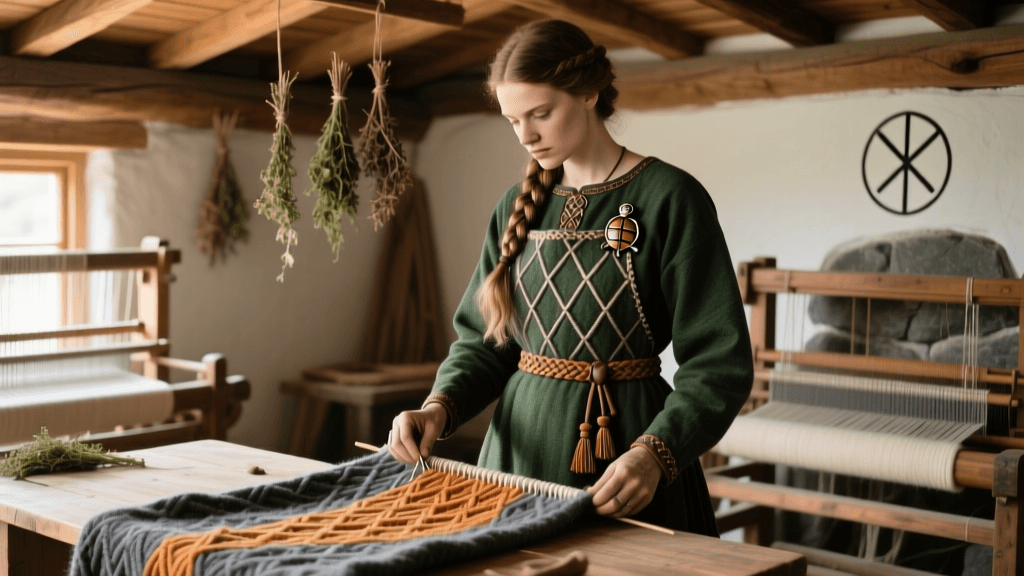
The shoulder loops suspend the smokkr from the oval brooches. Cut strips of your wool fabric, roughly 1.5 inches wide and 18 inches long. Fold the raw edges inward and whip stitch them closed to create sturdy tubes, or weave them using a simple tablet weaving technique. Attach one end of the loop to the top edge of the front panel, and the other to the back panel. The length of the loop must be carefully fitted so the dress hangs just below the armpit without gaping.
Hardware and Accessories: Oval Brooches and Beads
The smokkr is not complete without its defining hardware: the oval tortoise brooches (skjaldbroche). These brooches serve a functional purpose, acting as the anchor points for the shoulder loops, while also displaying the wearer's wealth and status. In 2026, the market for historically accurate, sand-cast bronze brooches is robust. Avoid cheap, mass-produced zinc alloys or stamped sheet metal. Look for artisan casters who use the lost-wax method or traditional sand-casting based directly on museum molds, such as the P37 or P51 styles.
Between the brooches, it was common to drape one to three strands of glass and amber beads. When sourcing beads, seek out lampworked glass replicas that mimic the slightly asymmetrical, textured look of early medieval glass, avoiding perfectly uniform modern factory beads. Amber beads should be unpolished or lightly tumbled to reflect historical finishing techniques.
Adding Tablet Woven Trim
To elevate your smokkr to a high-status garment, add tablet-woven trim to the top edge of the front panel. The Køstrup fragment famously featured a complex tablet-woven band. In 2026, many weavers utilize 3/2/2 twill patterns using fine wool or silk threads. If you are new to tablet weaving, start with a simple warp-faced band using 12 to 16 cards, weaving a geometric diamond pattern that complements the diamond twill of the dress itself. Stitch this band flat over the top edge of the front panel before attaching the shoulder loops, ensuring the raw edges are completely encased.
Conclusion and 2026 Reenactment Standards
Crafting an authentic Viking smokkr is a deeply rewarding endeavor that connects you directly to the textile traditions of the Norse world. By prioritizing heritage wools, natural dyes, and meticulous hand-stitching, you create a garment that not only looks authentic but behaves and drapes exactly as it would have a millennium ago. As the historical costuming community continues to elevate its standards in 2026, embracing these experimental archaeology techniques ensures that the legacy of European folk dress is preserved with the utmost respect and accuracy. Whether you are attending a major heritage festival in Scandinavia or simply expanding your historical wardrobe, a properly constructed diamond twill smokkr is a timeless masterpiece of functional art.