15th-Century Burgundian Gown Guide 2026: Fabrics & Patterns
The Renaissance Silhouette: Understanding the Burgundian Houppelande
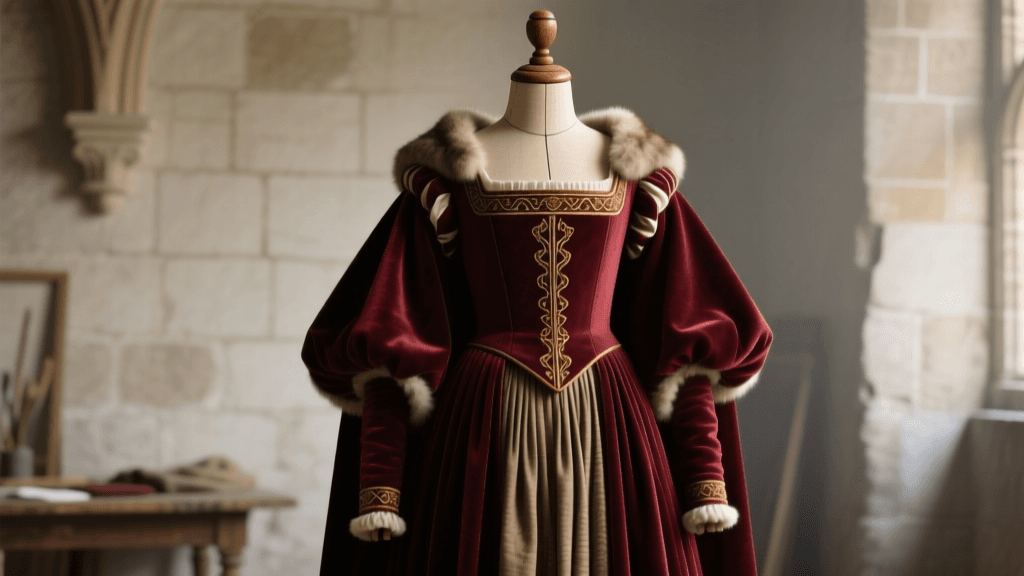
The transition from the structured, layered garments of the High Middle Ages to the flowing, dramatic silhouettes of the early Renaissance is perhaps best exemplified by the Burgundian court of the 15th century. As we navigate the historical European martial arts (HEMA) and Renaissance reenactment boom of 2026, the demand for museum-quality, historically accurate reconstructions has never been higher. The quintessential garment of this era is the houppelande—a voluminous, high-waisted gown characterized by its sweeping bombard sleeves, deep V-neckline, and heavily pleated skirt. According to the Victoria and Albert Museum's Renaissance collections, the Burgundian aesthetic was defined by an opulent display of textiles, where the drape and weight of the fabric were just as critical as the tailoring itself.
For modern makers and historical dress enthusiasts in 2026, recreating this garment requires moving beyond generic 'medieval' patterns. The Burgundian houppelande is an exercise in fabric manipulation, specifically cartridge pleating, and requires a deep understanding of period-appropriate textiles. This comprehensive guide will walk you through the exact materials, drafting techniques, and construction methods required to build an authentic 15th-century Burgundian gown today.
Sourcing Authentic Fabrics in 2026
The most common pitfall in historical reconstruction is the use of modern, synthetic, or incorrectly woven fabrics. The drape of a houppelande relies entirely on the weight and bias stretch of natural fibers. As of early 2026, the global supply chain for heritage textiles has stabilized, making it easier than ever to source accurate materials from specialized mills in the UK and Italy.
The Outer Layer: Wool Broadcloth and Silk Damask
For the primary outer shell, you must choose a fabric with substantial weight and a smooth, fulled finish. Wool broadcloth (historically fulled and sheared to obscure the weave) is the most accurate choice for the vast majority of the population, including wealthy merchants and lower nobility. Look for a medium-to-heavy weight wool, ideally between 250 and 350 gsm, with a high wool content and a slight nap. Avoid modern coating wools that are heavily blended with polyester, as they will not pleat correctly and will melt under the heat of a modern iron when setting seams.
For high nobility portrayals, silk damask or voided velvet is appropriate. In 2026, imported Italian silk brocades remain the gold standard, though they are a significant investment. When sourcing silk, ensure the pattern repeat is historically plausible—large-scale pomegranate or thistle motifs woven in metallic threads are ideal. Always consult visual primary sources, such as the British Library's Catalogue of Illuminated Manuscripts, to verify the scale and style of textile patterns depicted in 15th-century Burgundian art.
The Interlining and Lining: Linen and Fur
A houppelande is rarely a single layer of fabric. To achieve the stiff, architectural high waist and the heavy drape of the skirt, an interlining is mandatory. Use a medium-weight bleached or unbleached linen (approximately 5.3 oz or 180 gsm) for the bodice interlining. For the skirt, a lighter linen or a secondary layer of lightweight wool can be used to add volume without excessive heat.
Historically, the gown and sleeves were lined with fur (such as miniver, sable, or marten). In 2026, ethical reenactment standards strongly favor high-pile modacrylic faux furs or heavy linen linings for the sleeves and skirt. If using faux fur, select a short-to-medium pile that mimics sheared marten, and ensure it has a woven backing rather than a knit backing, as knit backings will stretch and distort the heavy sleeve seams.
Pattern Drafting: The High-Waisted Bodice
Unlike later Renaissance gowns that relied on complex, multi-piece bodices to shape the torso, the Burgundian houppelande bodice is relatively simple in its cutting but complex in its fitting. The gown is cut from a single front panel and a single back panel, or occasionally with side gores for additional skirt volume.
Taking the 2026 Measurements
To draft your pattern, you must measure the empire waist—the narrowest part of the torso just beneath the bust, not the natural waist at the navel. The bodice should end precisely at this high-waist line. The front neckline is cut into a deep V-shape, often extending down to the high-waist seam, while the back neckline remains high and snug against the neck. The shoulders should be cut slightly extended, dropping past the natural shoulder joint, which allows the heavy bombard sleeves to hang elegantly without pulling the bodice out of shape.
Constructing the Skirt and Cartridge Pleats
The skirt of the houppelande is where the garment truly comes alive. It is not gathered; it is cartridge pleated. This technique creates dense, tubular folds that stand away from the body, giving the gown its iconic bell-like silhouette. To achieve this, cut your skirt panels as wide as possible—historical garments often used 4 to 6 yards of fabric just for the skirt circumference.
- Prepare the Edge: Fold the top edge of the skirt down by 1.5 inches to create a sturdy header for the pleats.
- Mark the Grid: Using a water-soluble pen, mark dots along the folded edge. For heavy wool, space the dots 1/2 inch apart horizontally, and create 3 to 4 parallel rows of dots vertically, spaced 1/2 inch apart.
- Run the Stitch: Using heavy-duty, waxed linen thread, run a gathering stitch through the dots. Do not tie off the ends; leave long tails.
- Pull and Secure: Pull the threads simultaneously to draw the fabric into tight, accordion-like tubes. Bind the top edge of the pleats with a strip of linen to secure them before attaching the bodice.
When attaching the pleated skirt to the bodice, use a heavy whip stitch, catching only the very top edge of each pleat tube and the finished edge of the bodice. This allows the pleats to flare out beautifully from the high waist.
The Bombard Sleeve: Construction and Weighting
The bombard sleeve is a hallmark of 15th-century Burgundian fashion. It features a high, padded sleeve cap (the grande assiette armhole), a fitted upper arm, and a massive, flaring lower sleeve that often touches the ground. Constructing this sleeve requires careful attention to the armhole shape. The armhole must be cut deep into the bodice side seam to allow for a full range of motion despite the heavy, restrictive fabrics.
To prevent the massive lower sleeve from collapsing inward and to ensure it drapes in heavy, luxurious folds, the hem must be weighted. Historically, this was achieved through thick fur linings or lead weights sewn into the hem binding. For a 2026 reconstruction, you can use heavy drapery weights encased in linen tape, sewn discreetly into the hem facing of the sleeve. This ensures the sleeve swings dramatically when the wearer walks, perfectly mimicking the fluid motion seen in period portraiture.
Accessories: The Hennin and the Partlet
No Burgundian ensemble is complete without the towering hennin headdress and the sheer linen partlet that fills the deep V-neckline. The steeple hennin is constructed over a conical wire or buckram frame, covered in silk or velvet, and draped with a fine linen or silk veil. The veil's length indicated social status, with noblewomen wearing veils that trailed to the floor.
Beneath the gown, a crisp, white linen partlet or kirtle fills the V-neckline. This under-layer should be made of lightweight, semi-sheer linen (around 3.5 oz), featuring a subtle gathered ruffle at the neckline. The contrast between the stark white linen at the neck and the rich, dark wools or silks of the houppelande is a defining visual element of the era. Researchers utilizing the Digital Scriptorium database can find countless high-resolution scans of 15th-century manuscripts that clearly illustrate the precise layering of these linen undergarments beneath the heavy outer robes.
2026 Material Cost Estimate for a Complete Ensemble
Building a historically accurate garment is an investment in both time and materials. Below is a realistic cost breakdown for sourcing premium, authentic materials in 2026 for a high-status Burgundian houppelande.
| Material / Component | Quantity Required | Estimated 2026 Cost (USD) | Notes |
|---|---|---|---|
| Wool Broadcloth (Outer) | 6 yards | $240 - $360 | 100% wool, 300gsm, fulled finish |
| Medium Linen (Interlining) | 4 yards | $80 - $110 | 5.3 oz weight, unbleached |
| Lightweight Linen (Lining/Partlet) | 3 yards | $75 - $95 | 3.5 oz weight, bleached white |
| Faux Fur (Sleeve Lining) | 2 yards | $60 - $90 | Short pile, woven backing |
| Silk Thread & Waxed Linen | Various | $40 - $60 | For cartridge pleating and finishing |
| Buckram & Millinery Wire | 1 kit | $35 - $50 | For the hennin headdress frame |
| Total Estimated Cost | $530 - $765 | Excludes labor and specialized tools |
Common Mistakes to Avoid in Modern Reconstructions
Even experienced tailors can stumble when transitioning from modern historical costuming to strict 15th-century accuracy. Avoid these common errors:
- Using Machine Gathering Instead of Cartridge Pleats: A standard machine-gathered skirt will bunch and hang poorly. Cartridge pleating is non-negotiable for the correct Burgundian silhouette.
- Ignoring the Armhole Depth: Modern sleeve caps are set high on the shoulder. A houppelande requires a deep, gusseted, or extended armhole (grande assiette) to accommodate the heavy sleeves and allow arm movement.
- Visible Topstitching: Seams in the 15th century were sewn from the inside and finished flat or bound. Avoid modern topstitching on the outside of the garment; use blind hemming and prick stitches for all visible hems.
- Incorrect Neckline Proportions: The V-neck should not be overly wide across the collarbones. It should be narrow and plunge deeply, framing the white linen partlet beneath.
Conclusion
Recreating the 15th-century Burgundian houppelande is a deeply rewarding endeavor that bridges the gap between historical research and tangible craftsmanship. By prioritizing heavy, natural fibers, mastering the geometry of the cartridge pleat, and paying close attention to the dramatic proportions of the bombard sleeve, modern makers can bring the opulent elegance of the Renaissance court to life. Whether you are preparing for a major historical exhibition or a high-level reenactment event in 2026, adhering to these period-accurate techniques will ensure your garment is not just a costume, but a true piece of living history.