The Ancient Greek Chiton And Roman Toga Guide For 2026
Introduction to Classical Antiquity Garments in 2026
As we navigate the historical reenactment and heritage festival season of 2026, the demand for meticulous accuracy in classical antiquity garments has reached an all-time high. Enthusiasts, museum educators, and theatrical costumers are moving away from the synthetic, mass-produced costumes of the past decade. Instead, the modern standard for Hellenic and Roman dress demands authentic, hand-woven linens, naturally dyed wools, and historically accurate draping techniques. Whether you are preparing for a major Hellenic festival, a Roman military and civilian encampment, or a university-led historical symposium, understanding the foundational garments of the ancient Mediterranean is essential.
The ancient Greek chiton and the Roman toga remain the most iconic symbols of classical European folk and historical dress. However, recreating them requires more than simply wrapping a bedsheet around your body. True historical accuracy relies on precise textile weights, specific dimensional ratios, and an understanding of how these garments interacted with the human form during daily life, labor, and civic duty. This comprehensive guide will walk you through the construction, sourcing, and draping of these magnificent garments, ensuring your 2026 wardrobe is both authentic and functional.
The Greek Chiton: Doric vs. Ionic Styles
The chiton was the fundamental garment of ancient Greece, worn by both men and women. According to the World History Encyclopedia on Greek Dress, the chiton evolved significantly over the centuries, primarily dividing into two distinct categories: the Doric chiton (often associated with the heavier peplos) and the Ionic chiton. Understanding the difference is crucial for any serious reenactor or textile historian.
The Doric Chiton and Peplos
The Doric style is the older, more austere of the two. It was typically crafted from heavyweight woolen cloth, which provided structure and warmth. The defining feature of the Doric peplos is the apoptygma—a deep fold-over at the top of the garment that draped over the chest and back. This fold was pinned at the shoulders using large, decorative fibulae (brooches). For a modern recreation in 2026, you should source a medium-to-heavy weight wool flannel or a tightly woven woolen twill. The fabric width should equal the wearer's wingspan plus 14 inches to allow for the characteristic side drape, while the height should be the distance from the shoulder to the floor, plus an additional 12 inches to accommodate the apoptygma fold and the blousing (kolpos) over the belt.
The Ionic Chiton
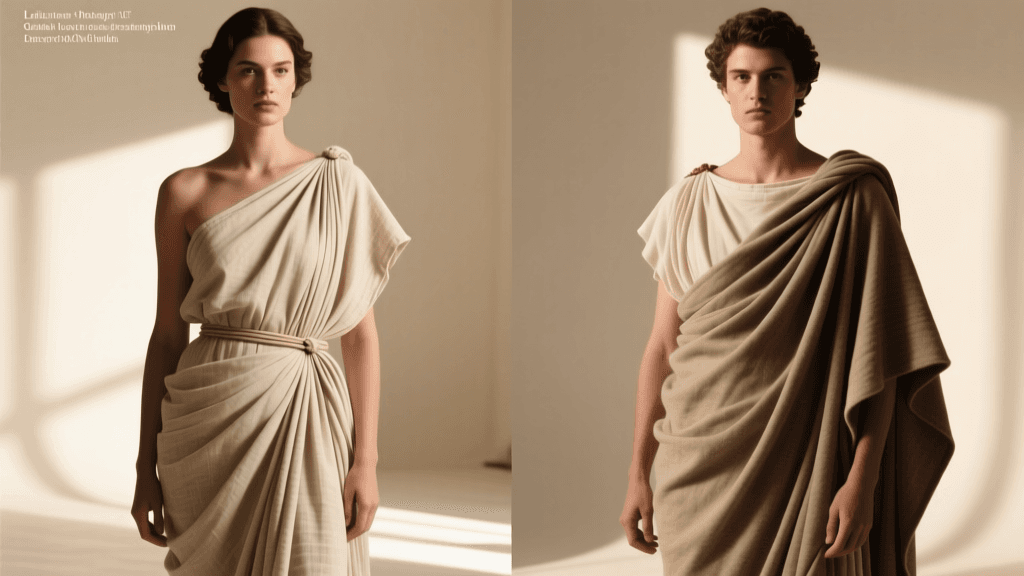
In contrast, the Ionic chiton emerged as a lighter, more voluminous alternative. Woven from fine linen or, for the ultra-wealthy, imported silk, the Ionic chiton featured no fold-over. Instead, the excess fabric was gathered into multiple small pleats and pinned continuously along the arms, creating a flowing, sleeve-like effect. The Metropolitan Museum of Art's Greek and Roman Art department frequently highlights the delicate, crinkled textures of Ionic linen garments in their surviving marble statuary. To replicate this, you will need a lightweight, 5.3 oz linen. The fabric width should be at least twice the wearer's wingspan to achieve the necessary volume for the sleeve pins.
The Roman Toga and Stola: Complexity and Status
While the Greeks favored the relatively simple chiton, Roman civic dress was defined by the notoriously complex toga. As detailed in the World History Encyclopedia on Roman Clothing, the toga was not merely a piece of clothing; it was a potent symbol of Roman citizenship, status, and political power. Only male citizens were permitted to wear it, and its specific styling could indicate everything from a senatorial rank to a state of mourning.
Draping the Toga: A Step-by-Step Approach
Recreating a Roman toga for a 2026 reenactment requires patience and a significant amount of fabric. The imperial-era toga was a massive semi-circle of wool, measuring approximately 18 feet in length and 7 feet in width at its deepest point. Here is how to achieve the classic imperial drape:
- Step 1: The Umpo. Drape one end of the semi-circle over your left shoulder, allowing it to hang down to your calves in the front.
- Step 2: The Back Wrap. Pull the fabric across your back, passing it under your right arm. Ensure the fabric is pulled taut across the back to support the heavy wool.
- Step 3: The Sinus. Bring the fabric across your chest, creating a deep, sweeping curved fold known as the sinus. This fold should reach down to the mid-thigh and was often used as a makeshift pocket for holding scrolls or small items.
- Step 4: The Balteus. Finally, throw the remaining fabric over your left shoulder again, creating a tight, diagonal band across the chest called the balteus. Adjust the folds so the weight is evenly distributed on your left shoulder.
The Stola for Roman Women
Roman women did not wear the toga; instead, the mark of a respectable, married female citizen was the stola. The stola was a long, sleeveless, pleated dress worn over a base tunic (tunica interior). It was suspended from the shoulders by narrow straps and belted high under the bust. In 2026, the most accurate way to construct a stola is to use a lightweight linen or fine wool, pleating the back panel heavily and securing the shoulder straps with small knots or decorative buttons, leaving the sides open to reveal the tunic beneath.
2026 Fabric Sourcing for Historical Accuracy
The most common mistake modern enthusiasts make is choosing the wrong textile weight and fiber content. The ancient Mediterranean climate and the available technology dictated specific weaving practices. Today, the historical textile market has matured significantly. When sourcing fabrics for your classical garments, adhere to these 2026 industry standards:
- Linen: Avoid stiff, modern craft-store linens. Look for 'softened' or 'stone-washed' 100% flax linen in weights between 5.3 oz (for Ionic chitons and stolas) and 7.2 oz (for base tunics). Opt for unbleached, natural, or historically accurate plant-dyed colors like weld (yellow) or madder (red).
- Wool: For Doric chitons and togas, seek out 100% wool flannel or lightweight melton. The fabric must have a good drape and be able to hold a pressed pleat. Avoid synthetic blends, as they do not breathe well and will cause severe overheating during summer festivals.
- Hemming: All edges must be finished with a hand-rolled hem or a small machine hem. Raw edges are historically inaccurate for classical antiquity garments, as the Greeks and Romans were meticulous about their textile finishing.
Comparison Chart: Classical Garments
| Garment | Primary Material | Dimensions | Fastening Method | Best Used For |
|---|---|---|---|---|
| Doric Chiton / Peplos | Heavy Wool Twill | Wingspan + 14in wide | Shoulder Fibulae | Outdoor events, colder weather, Spartan/Athenian civilian dress |
| Ionic Chiton | Lightweight Linen | Wingspan x 2 wide | Multiple Sleeve Pins | Summer festivals, indoor events, Hellenistic period portrayals |
| Roman Toga | Wool Flannel | 18ft x 7ft Semi-circle | Tension Draping | Senate meetings, civic ceremonies, oratorical performances |
| Roman Stola | Linen or Fine Wool | Floor length, pleated | Shoulder Straps & Belt | Female citizen portrayals, domestic and religious ceremonies |
| Base Tunica | Medium Linen/Wool | T-tunic cut, knee/calf length | Woven Belt | Everyday wear, labor, military undergarments |
Accessories: Fibulae, Belts, and Footwear
No classical garment is complete without the proper accessories. The fibula (brooch) was the safety pin of the ancient world. For a Doric chiton, you will need large, sturdy bronze or iron penannular or bow fibulae capable of supporting the heavy wool fold. For the Ionic chiton, smaller, decorative disc fibulae or simple linen ties are more appropriate along the arms.
Belts were essential for creating the kolpos—the bloused effect where the fabric is pulled up over the belt to adjust the hemline and create a pouch for carrying small items. Use woven wool bands or simple leather cords. Finally, footwear should consist of leather sandals. For Greek portrayals, simple strapped sandals that wrap around the ankle are ideal. For Roman civilian dress, the solea (a simple thonged or strapped sandal) is correct, while military reenactors should invest in properly hobnailed caligae.
Essential 2026 Draping Kit
To maintain your garments on-site at festivals, assemble a dedicated draping and repair kit. Your kit should include:
- Extra bronze reproduction fibulae (pins frequently bend or get lost).
- A spool of heavy, unbleached linen thread and a bone or bronze needle for emergency seam repairs.
- Beeswax for lubricating pins and preventing rust on iron accessories.
- Small brass safety pins (strictly for hidden, internal emergency use where historical pins fail).
- A natural bristle brush for removing dust and dirt from heavy wool togas and peplos.
Conclusion
Mastering the ancient Greek chiton and the Roman toga is a rewarding journey into the heart of European historical dress. By prioritizing authentic textile weights, precise measurements, and historically documented draping techniques, you elevate your historical portrayal from a simple costume to a living, breathing piece of history. As the 2026 reenactment season unfolds, let your commitment to accuracy and craftsmanship inspire others and honor the incredible textile traditions of the classical Mediterranean world.