Viking Smokkr Apron Dress 2026: Patterns and Wool Guide
The Historical Foundation of the Norse Smokkr
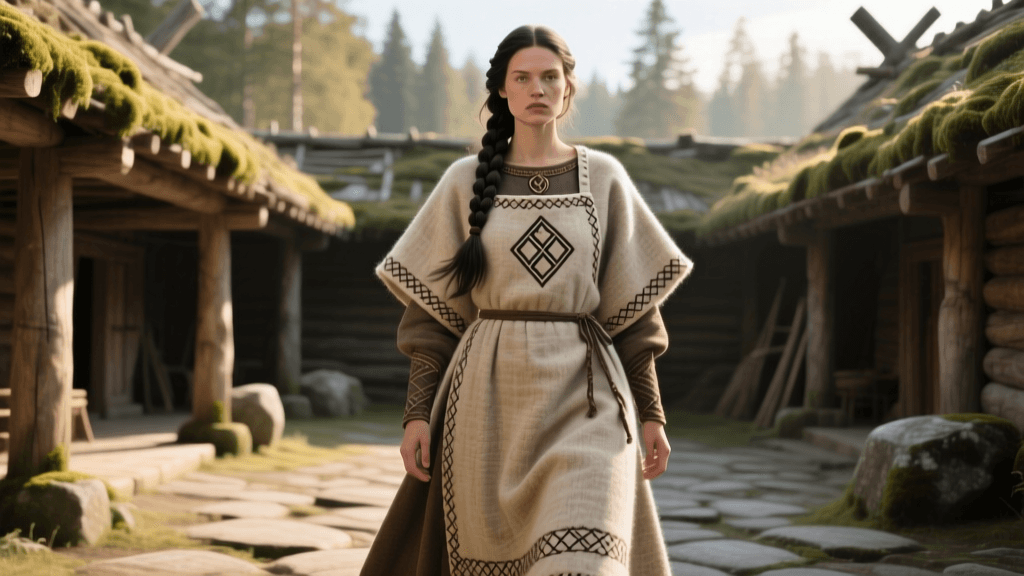
As we navigate the historical reenactment and heritage fashion landscape of 2026, the demand for archaeological accuracy in European folk dress has never been higher. Among the most iconic and widely reproduced garments of the early medieval period is the Viking smokkr, commonly known as the apron dress. Worn over a linen or wool underdress (the serk), the smokkr was a staple of Scandinavian women's wardrobes from the 9th to the 11th centuries. Today, understanding the precise construction, textile choices, and archaeological context of the smokkr is essential for anyone serious about Nordic and Celtic traditional garments.
The modern understanding of the smokkr relies heavily on fragmented archaeological finds, as wool degrades rapidly in most soil conditions. The two most critical discoveries informing 2026 pattern drafting are the Køstrup find in Denmark and the Hedeby harbor fragments. According to the National Museum of Denmark, the Køstrup dress provides rare evidence of a pleated front panel, suggesting that Norse seamstresses utilized complex gathering techniques to create volume and elegance at the chest. Conversely, fragments found in the Hedeby harbor point to a more tailored, gored construction that hugged the body before flaring at the hips. Reconciling these two distinct regional styles is the first step in drafting your own historically grounded garment.
Pattern Drafting: Tubular vs. Rectangular Cuts
When drafting a smokkr pattern today, makers generally choose between a closed tubular design and an open rectangular wrap design. The tubular cut, supported by the placement of oval tortoise brooches found in countless graves across Scandinavia, involves a continuous loop of fabric. This design requires the wearer to step into the dress, with the front and back panels suspended from the shoulders by woven straps or fabric loops.
Key Measurements for the Tubular Smokkr
- Chest Circumference: Measure loosely around the bust, adding 10-15 cm for ease and historical drape.
- Front Panel Width: Typically 45 cm to 60 cm across, allowing enough space for the oval brooches to sit flat against the collarbone without pulling the fabric taut.
- Back Panel Width: Often wider than the front, ranging from 60 cm to 80 cm, to provide adequate coverage and movement.
- Length: Historically, the smokkr fell anywhere from mid-calf to just above the ankle, usually measuring 90 cm to 110 cm from the armpit to the hem, depending on the wearer's height.
- Gores: To achieve the characteristic A-line flare without wasting precious woven yardage, insert triangular side gores starting just below the armpit or at the natural waist.
If you are replicating the Køstrup style, you will need to allocate an extra 30 cm of width in the front panel to accommodate the tightly stitched pleats. These pleats were likely drawn up with a linen thread and secured at the top edge, creating a beautiful, textured focal point that remains highly popular in 2026 heritage festivals.
Textile Selection: Diamond Twill and Tabby Weaves
The soul of any Nordic garment lies in its textile. The Vikings were master weavers, utilizing warp-weighted looms to produce fabrics that were both durable and remarkably fine. For an authentic smokkr, you must avoid modern, commercially dyed suit wools and instead seek out heritage weaves. The Textile Research Centre notes that diamond twill and herringbone weaves were highly prized in the Viking Age, often reserved for the outer garments of high-status women.
Diamond twill creates a geometric, repeating pattern that catches the light beautifully, mimicking the intricate metalwork found in Norse jewelry. Tabby (plain weave) was also common, particularly for lighter, everyday apron dresses, while herringbone twill offered a heavier, more weather-resistant option for garments worn in the harsh Scandinavian winters. When sourcing wool in 2026, look for yarns spun from Gotland, Wensleydale, or Icelandic sheep breeds, as their long staples and natural luster closely resemble the fleece available to early medieval weavers.
The Viking Palette: Natural Dyes in 2026
Color in the Viking Age was not the chaotic mix of synthetic hues we see in mass-produced costumes. It was a deliberate display of wealth, trade connections, and botanical knowledge. If you are commissioning or dyeing your own smokkr fabric, adhere to the historical Norse palette:
- Woad (Blue): The most common blue dye, derived from the Isatis tinctoria plant. It produces a range of soft, powdery blues to deep navies depending on the number of dips.
- Madder (Red): Sourced from the roots of Rubia tinctorum, madder yields rich terracottas, brick reds, and deep oranges. True, vibrant crimsons were rare and incredibly expensive, often requiring imported kermes insects.
- Weld and Tansy (Yellow): These native plants provided bright, clear yellows and olive-greens (when over-dyed with woad).
- Walnut Hulls and Bog Iron (Browns/Blacks): Used for deep, earthy tones and dark, somber overdresses.
2026 Sourcing Guide for Authentic Norse Wool
Sourcing historically accurate, shuttle-woven wool has become more specialized in 2026, with several heritage mills in the UK, Scandinavia, and the Baltic states catering specifically to the reenactment and historical fashion communities. Below is a comparison of the most sought-after fabrics for the smokkr, including current market estimates and best-use scenarios.
| Fabric Type | Weave Structure | Weight (g/m²) | 2026 Est. Price (per yard) | Best Use Case |
|---|---|---|---|---|
| Diamond Twill Wool | 2/2 Twill Variation | 350 - 420 | $65 - $95 | High-status smokkr, winter garments, formal reenactment |
| Heritage Tabby Wool | Plain Weave | 250 - 300 | $40 - $55 | Everyday smokkr, summer festivals, under-layers |
| Herringbone Twill | Broken Twill | 380 - 450 | $70 - $100 | Cold-weather outer garments, Celtic-Norse crossover styles |
| Vadmal (Wadmal) | Plain Weave, Fulled | 500+ | $85 - $120 | Extreme cold weather, cloaks, heavily structured apron dresses |
When purchasing, always request a burn test or a fiber composition sheet from the mill to ensure the fabric is 100% wool with no synthetic nylon or polyester blends, which will ruin the historical drape and react poorly to natural dye baths.
Construction and Sewing Techniques
Authenticity extends beyond the fabric to the very stitches holding the garment together. The Viking Age seamstress did not have access to modern sewing machines or even fine steel needles. While using a modern machine for hidden structural seams is a common compromise for 2026 makers on a budget, all visible seams, hems, and neckline finishes should be completed by hand.
The running stitch was the workhorse of Norse construction. Use a fine, waxed linen thread (never cotton or polyester) and keep your stitches small and even, roughly 3 to 4 millimeters in length. For seams that will endure stress, such as the attachment of the shoulder straps or the base of the side gores, employ a backstitch. Once the panels are joined, fell the seams flat against the inside of the dress using a whipstitch or an overcast stitch to prevent the wool from fraying and to create a clean, comfortable interior. This technique, known as flat-felling, is crucial for the longevity of the garment and is a hallmark of high-quality historical tailoring.
Accessories: Oval Brooches and Bead Swags
The smokkr is functionally dependent on its hardware. The garment is suspended by loops that pass over the shoulders and are pinned at the collarbone by a pair of oval brooches, often colloquially called "tortoise brooches" due to their domed, intricate shape. In 2026, the market for cast bronze and silver-plated replicas is robust, with many artisans using lost-wax casting methods based directly on 10th-century molds found in Birka and Gotland.
Between these brooches, Norse women frequently draped swags of glass, amber, and jet beads. According to research highlighted by the Viking Ship Museum in Roskilde, these bead necklaces were not merely decorative; they served as potent amulets and displays of familial wealth. When assembling your bead swag, avoid perfectly uniform, modern glass beads. Instead, seek out hand-melted, asymmetrical glass beads that mimic the organic, slightly irregular shapes produced by early medieval beadmakers using mosaic and millefiori techniques.
Conclusion: Wearing History in the Modern Era
Crafting a Viking smokkr in 2026 is a profound exercise in experimental archaeology and cultural appreciation. By respecting the archaeological record, choosing historically accurate diamond twill wools, utilizing natural dyes, and employing traditional hand-sewing techniques, you do more than just create a costume—you resurrect a tangible piece of European folk dress. Whether you are participating in a living history encampment, attending a heritage festival, or simply exploring the deep roots of Nordic textile traditions, the smokkr remains a powerful, elegant, and enduring symbol of the Viking Age.