Renaissance Doublet Tailoring and Materials Guide 2026
The Anatomy of the 16th-Century Doublet
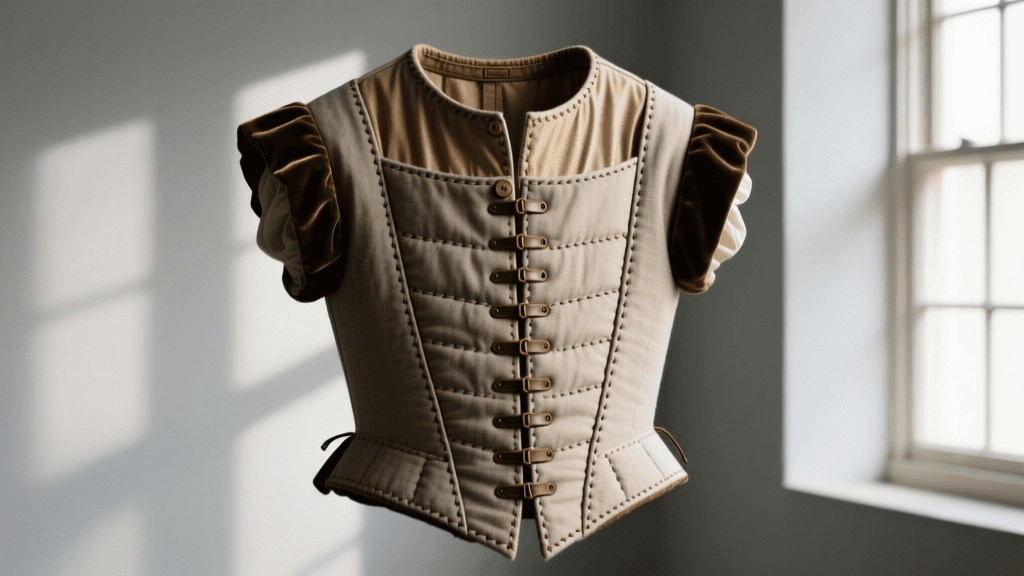
The doublet was the undisputed foundational garment of men's fashion during the Tudor and Elizabethan eras, serving as both a structural base for the hose and a canvas for displaying wealth through textiles and tailoring. As historical reenactment and living history communities update their authenticity standards in 2026, the demand for historically accurate, hand-tailored doublets has reached an all-time high. Unlike modern suits that rely on fusible interfacings and machine stitching, a true Renaissance doublet is a masterpiece of structural engineering, utilizing heavy pad-stitching, layered interlinings, and strategic padding to create the iconic silhouettes of the 16th century.
Whether you are aiming for the broad-shouldered, square-cut silhouette of the 1530s or the exaggerated, protruding 'peascod belly' popularized in the 1570s and 1580s, understanding the internal architecture of the garment is paramount. According to The Metropolitan Museum of Art's Heilbrunn Timeline of Art History, the evolution of the doublet reflects not just changing aesthetics, but advancements in textile production and the socio-political desire to project martial readiness and aristocratic grace simultaneously.
Sourcing Authentic Fabrics in 2026
Sourcing period-accurate textiles remains one of the most significant hurdles for modern tailors. The global textile market in 2026 has seen a resurgence in heritage weaving, yet finding the correct weight and weave requires specialized knowledge. For the outer shell, a heavily fulled wool broadcloth or a high-quality silk taffeta is essential. Cotton was not used for outer garments in 16th-century Europe, and modern polyester blends are strictly forbidden in high-tier authenticity circles.
As of early 2026, the cost of authentic European-woven wool broadcloth has risen to approximately $75 to $95 per yard due to sustainable farming practices and specialized milling in the UK and Italy. For the interlining, you must source a heavyweight, unbleached linen canvas (often referred to as 'holland' or 'buckram' in historical texts). This linen must be stiff enough to hold the padding but flexible enough to mold to the wearer's body over time. Lightweight linen or silk is used for the inner lining, providing comfort against the wearer's shirt.
The Art of Pad-Stitching and Bombast
The secret to the doublet's rigid, armor-like fit lies in the pad-stitching. This technique involves sewing the outer fabric and the interlining together using thousands of small, diagonal stitches. In 2026, master tailors recommend using a heavily waxed linen thread (such as 18/3 or 25/3 weight) to prevent tangling and to provide structural tension. The stitches are typically worked in a chevron or V-shaped pattern across the chest to encourage the fabric to curve around the pectorals, while horizontal stitches are used over the abdomen to support the padding.
The padding itself, historically known as 'bombast,' was traditionally made from tow (scrap flax fibers), raw wool flock, or cotton wadding. While some modern costumers resort to carved upholstery foam for the peascod belly, the 2026 consensus among elite historical tailors is that layered cotton batting or raw wool fleece, stitched down progressively, yields a far more authentic drape and weight. The bombast is applied in graduated layers, thickest at the lower front and tapering to nothing at the chest and side seams.
Material Comparison Chart: Historical vs. 2026 Equivalents
The following table outlines the materials required for an authentic doublet, comparing historical usage with the best available 2026 sourcing equivalents and their associated costs.
| Garment Layer | Historical Material (16th C.) | 2026 Sourcing Equivalent | Approx. Cost/Yard (2026) | Accuracy Rating |
|---|---|---|---|---|
| Outer Shell | Wool Broadcloth / Silk Damask | Heritage Milled Wool Broadcloth (20-24oz) | $75 - $95 | Excellent |
| Interlining | Heavy Linen Canvas / Horsehair | Heavyweight Unbleached Linen (10oz+) | $28 - $40 | Excellent |
| Padding (Bombast) | Tow, Wool Flock, Cotton Wadding | Raw Wool Flock / Unbleached Cotton Batting | $15 - $25 (by weight) | Excellent |
| Inner Lining | Lightweight Linen / Silk Taffeta | Medium-weight Linen (3.5oz - 5oz) | $18 - $30 | Excellent |
| Thread (Structural) | Waxed Linen | Waxed Linen Cord (18/3 or 25/3) | $12 per spool | Excellent |
| Buttons | Silk-Wrapped Wood / Cast Metal | Hand-Wrapped Silk over Wooden Cores | $4 - $8 per button | Excellent |
Step-by-Step Construction Guide
Step 1: Drafting the Pattern
A historically accurate doublet pattern is typically composed of multiple panels to allow for extreme shaping. An 8-panel back and a 4-panel front are standard for the late 16th century. The armscye (armhole) is cut exceptionally high and tight, extending over the shoulder joint to allow for freedom of movement while keeping the torso rigid. In 2026, digital pattern drafting tools can assist in scaling historical grids, but a physical mockup (toile) made of heavy canvas is non-negotiable to test the fit of the padding.
Step 2: Interlining and Pad-Stitching
Cut your interlining and begin pad-stitching before cutting the outer fashion fabric. The tension of your stitches will slightly shrink the canvas, creating a three-dimensional curve. Work the pad-stitching in rows spaced about 1/2 inch apart, ensuring your stitches catch only a single thread of the outer fabric if you are stitching the shell and canvas together simultaneously, or stitch the canvas layers together first and mount the shell later.
Step 3: Building the Peascod Belly
To achieve the iconic peascod belly, apply your cotton batting or wool flock to the lower front panels of the interlining. Start with a base layer covering the entire lower abdomen, then add progressively smaller, oval-shaped layers to build the protrusion. Secure each layer with large, loose tacking stitches. The transition from the padded belly to the flat chest must be smooth; use a tailoring ham and a heavy iron with steam to mold the layers into a seamless curve.
Step 4: Eyelets and Lacing
The doublet must support the weight of the trunk hose (breeches) and upper stocks. This is achieved through a series of reinforced eyelets along the lower waistband. Never use modern metal grommets. Instead, use a brass awl to pierce the fabric, pushing the threads aside rather than cutting them. Bind the eyelets using a buttonhole stitch with heavy, waxed linen thread. According to the Victoria and Albert Museum's Fashion Collections, surviving garments show remarkable consistency in the hand-stitched reinforcement of these stress points, a detail that separates master-level reproductions from amateur costumes.
Step 5: Silk-Wrapped Buttons and Buttonholes
The front closure of a Renaissance doublet often featured dozens of closely spaced buttons. For authenticity, avoid purchasing mass-produced metal shank buttons. Instead, carve small wooden cores or use tightly rolled linen, and wrap them tightly with silk thread (Güttermann silk or similar high-quality filament). The buttonholes must be hand-worked using a silk buttonhole twist, featuring a raised knotted edge and a circular bar tack at the base to accommodate the shank.
Modern Technology vs. Historical Accuracy in 2026
As we navigate the tailoring landscape of 2026, the intersection of modern technology and historical accuracy presents interesting choices. While laser-cutting services can perfectly slice through heavy wool broadcloth with sealed edges to prevent fraying during the lengthy pad-stitching process, purists argue that the slight irregularities of hand-cut shears are vital to the garment's soul. Similarly, while 3D-printed resin buttons can perfectly mimic cast pewter or brass originals from museum archives, they lack the weight, temperature, and tactile feel of true metal or silk-wrapped wood.
Ultimately, the goal of tailoring a 16th-century doublet is not merely to create a visual replica, but to understand the physical relationship between the garment and the body. The rigid posture enforced by the pad-stitched canvas, the shift in balance caused by the peascod belly, and the restriction of the high armscye all contribute to the distinct 'swagger' and physical presence of the Renaissance man. By investing in heritage textiles and mastering the time-intensive hand-stitching techniques detailed in this guide, modern tailors can keep the profound textile traditions of Europe alive and wearable for generations to come.