Styling Ukrainian Vinok and Baltic Amber Jewelry in 2026
The Resurgence of Authentic European Folk Accessories in 2026
As we navigate the 2026 European folk festival season, a profound shift has taken place in how traditional garments are worn and celebrated. The era of mass-produced, fast-fashion 'peasant' costumes is firmly in the past. Today, cultural enthusiasts, diaspora communities, and folk revivalists are prioritizing historical accuracy, artisanal craftsmanship, and deep symbolic meaning. Nowhere is this more evident than in the realm of accessories—specifically, the intricate floral headwear of Eastern Europe and the ancient, sun-kissed resins of the Baltic coast.
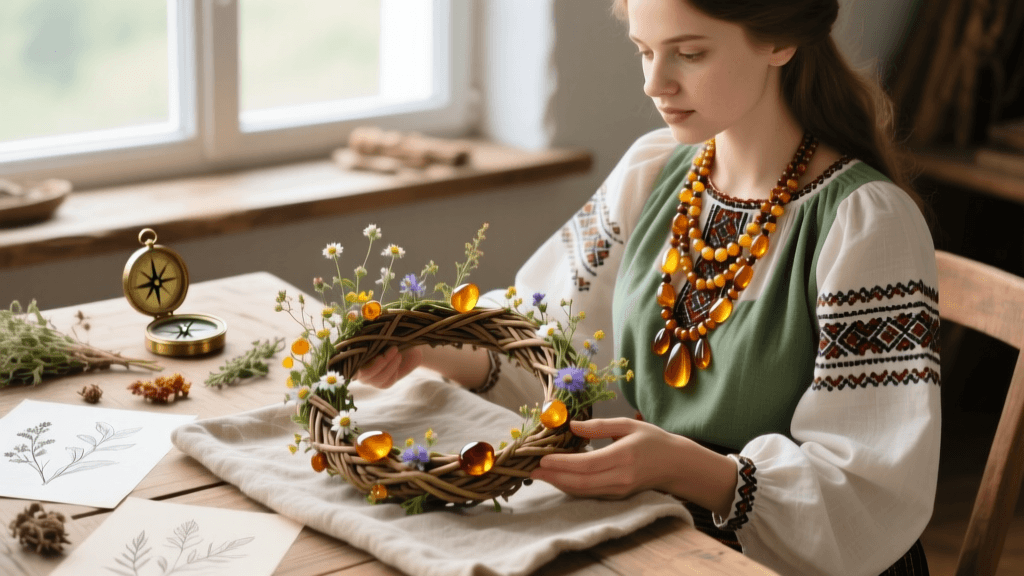
Two of the most iconic and visually striking elements of Eastern European folk dress are the Ukrainian vinok (flower wreath) and traditional Baltic amber jewelry. When styled correctly, these accessories elevate a traditional outfit from a simple historical reenactment to a living, breathing expression of cultural heritage. This comprehensive guide explores the anatomy, sourcing, and modern styling of these exquisite pieces for the 2026 festival circuit, from Midsummer celebrations in Scandinavia to Kupala Night gatherings across Central and Eastern Europe.
The Ukrainian Vinok: Anatomy of a Floral Crown
The vinok is far more than a simple flower crown; it is a complex, coded language of botany and ribbon work that historically conveyed a woman's age, marital status, and regional identity. According to ethnographic archives preserved by institutions like The Ukrainian Museum, the vinok has been a central element of Slavic folk dress for centuries, serving as both a protective talisman and a marker of maidenhood.
Botanical Elements and Symbolism
An authentic vinok relies on specific flora, each carrying distinct cultural weight. While modern festivals see a lot of creative liberty, traditionalists in 2026 are returning to historically accurate botanical pairings:
- Periwinkle (Barvinok): The foundational greenery of the wreath, symbolizing eternity, fidelity, and the enduring nature of the human soul.
- Cornflower (Voloshka): Woven for its striking blue hue, representing saintliness, purity, and clarity of vision.
- Chamomile (Romashka): A staple of the summer harvest wreaths, symbolizing peace, tenderness, and familial warmth.
- Poppy (Mak): Used carefully, as it represents both the fleeting nature of beauty and the sorrow of historical memory.
The Ribbon Code (Strichky)
The ribbons trailing from the back of the vinok are just as important as the flowers. Traditionally, the ribbons must be at least as long as the wearer's braided hair, ensuring they flow down the back. The color sequence is strictly codified:
- Light Blue: Worn closest to the center, representing youth and the sky.
- Gold/Yellow: Symbolizing the sun, prosperity, and agricultural abundance.
- Green: Representing the earth, fertility, and the beauty of nature.
- Crimson/Red: Placed on the outer edges, signifying passion, life force, and protection against malevolent spirits.
Crafting Your Own Vinok Base
For those looking to craft an authentic base in 2026, skip the plastic headbands. Start with a dual-band structure using 14-gauge green floral wire, padded with natural unbleached linen strips for comfort. Measure your head circumference at the hairline and add 4 centimeters to allow for a secure, comfortable fit that won't slip during vigorous folk dancing. Attach silk or naturally dyed cotton flowers using 22-gauge paddle wire, ensuring the bulk of the blooms sits slightly forward on the forehead, framing the face without obstructing vision.
Baltic Amber: The Gold of the North
While the vinok crowns the head, Baltic amber adorns the neck and wrists. Known as succinite, Baltic amber is fossilized tree resin dating back over 40 million years. It has been a cornerstone of Northern and Eastern European adornment since the Neolithic era, traded along the ancient Amber Road.
Identifying Authentic Succinite in the 2026 Market
With the 2026 market seeing an influx of advanced synthetic resins and heated copal (young, semi-fossilized resin), identifying genuine Baltic amber requires a keen eye. The Gemological Institute of America (GIA) notes that true Baltic amber possesses unique inclusions and physical properties that synthetics cannot perfectly replicate.
The Saltwater Test: Genuine Baltic amber is remarkably light. Mix 1 cup of warm water with 3 tablespoons of non-iodized salt. Real amber will float in this saturated solution, while glass, heavy plastics, and some copal will sink.
The UV Fluorescence Test: Under a standard 365nm UV flashlight, authentic Baltic amber will fluoresce a pale, milky blue or soft green. Copal tends to fluoresce a stark, bright white, while modern plastics show no fluorescence at all.
Traditional vs. Modern Amber Silhouettes
For folk dress, perfectly spherical, highly polished amber beads are actually less historically accurate than raw or lightly tumbled nuggets. Traditional Eastern European necklaces often feature graduated, unpolished amber chunks strung on natural linen or hemp cord, sometimes interspersed with small silver beads or traditional coral accents. In 2026, the most sought-after pieces are multi-strand 'bib' necklaces featuring raw amber, which catch the sunlight beautifully during outdoor summer solstice festivals.
2026 Sourcing Guide and Pricing Table
Sourcing authentic pieces requires navigating a market that values heritage craftsmanship. Below is a breakdown of what to expect when purchasing authentic folk accessories in 2026. Prices reflect current artisan rates, accounting for the rising cost of raw Baltic amber and the specialized labor required for traditional silk floristry.
| Accessory Type | Material & Origin | 2026 Market Price (USD) | Authenticity Marker |
|---|---|---|---|
| Artisan Vinok | Silk flowers, linen base, Ukraine/Poland | $95 - $180 | Hand-wired, natural dye ribbons, no hot glue |
| Mass-Market Vinok | Polyester, plastic band, Factory-made | $25 - $45 | Uniform machine-stitching, synthetic sheen |
| Raw Amber Necklace (Multi-strand) | Uncut Succinite, Linen cord, Lithuania | $160 - $350 | UV fluorescence, natural inclusions, IAA cert |
| Polished Amber Beads (Single) | Tumbled Succinite, Silver clasp, Latvia | $80 - $140 | Warm to touch, emits pine scent when rubbed |
| Amber Imitation | Epoxy resin, Glass, Synthetic | $15 - $30 | Cold to touch, sinks in saltwater, no scent |
Note: When purchasing amber, always look for sellers affiliated with the International Amber Association or those who provide a certificate of authenticity detailing the amber's origin (typically the Kaliningrad region, Lithuania, or Poland).
Styling the Vinok and Amber Together
Wearing both a vinok and amber jewelry simultaneously requires an understanding of visual balance. The vinok is inherently loud, colorful, and expansive, drawing the eye upward and outward. Amber is warm, glowing, and grounded.
Neckline Considerations
The traditional Ukrainian vyshyvanka (embroidered shirt) or the namitka (linen wrap) usually features a square, gathered, or keyhole neckline. A multi-strand raw amber necklace sits perfectly against the collarbone, filling the negative space of a square neckline without competing with the dense, cross-stitch embroidery of the garment. Avoid wearing amber with high-collared shirts, as the beads will bunch awkwardly and obscure the intricate neckline stitching.
Color Harmony
Because the vinok contains a wide spectrum of colors, let the amber act as a unifying neutral. The golden-yellow and honey-brown tones of Baltic amber naturally complement the red and gold embroidery threads typical of Poltava and Kyiv-region folk dress. If your vyshyvanka features predominantly black and red geometric embroidery, opt for darker, cherry-amber or cognac-colored beads to provide a rich contrast against the white linen.
Care and Preservation of Folk Accessories
Authentic folk accessories are heirlooms meant to be passed down, but they require specific care to survive the rigors of the 2026 summer festival season.
- Amber Care: Amber is remarkably soft (2 to 2.5 on the Mohs scale). Never store amber jewelry in a box where it can be scratched by silver or gemstones. Keep it in a soft cotton pouch. Avoid spraying perfumes, hairsprays, or DEET-based insect repellents directly onto the beads, as the alcohol and chemicals will permanently cloud the resin's natural polish.
- Vinok Storage: Silk and cotton flowers are highly susceptible to dust and moisture. After a festival, gently brush the wreath with a soft makeup brush to remove pollen and dust. Store the vinok in a wide, shallow, acid-free archival box, stuffed lightly with unbleached tissue paper to maintain its circular shape. Never hang a vinok by its ribbons, as the weight will distort the wire base over time.
Conclusion
The European folk dress revival of 2026 is defined by a deep respect for material culture and historical truth. By choosing an authentically crafted Ukrainian vinok and genuine Baltic amber jewelry, you are not merely accessorizing; you are participating in the preservation of ancient botanical codes and geological marvels. Whether you are dancing around a midsummer fire or attending a cultural heritage parade, these accessories connect you to the earth, the sun, and the enduring spirit of European folklore. For further reading on the preservation of traditional crafts, the UNESCO Intangible Cultural Heritage database offers extensive documentation on the safeguarding of these vital regional traditions.