Alpine Folk Dress 2026: Bavarian, Tyrolean & Swiss Tracht Guide
The Renaissance of Authentic Alpine Tracht in 2026
For decades, the global perception of Alpine folk dress was heavily skewed by mass-produced, synthetic "party costumes" sold for Oktoberfest. However, as we navigate 2026, a profound cultural renaissance is underway. Across Germany, Austria, and Switzerland, a new generation of artisans, historians, and consumers are reclaiming authentic Tracht (traditional regional dress). This movement prioritizes historical accuracy, sustainable textiles, and the preservation of hyper-local tailoring techniques that date back centuries.
Understanding European folk dress by country and region requires looking past the caricatures and examining the intricate textile traditions that define specific valleys and cantons. According to the German National Tourist Board, the demand for bespoke, historically accurate Tracht has surged, with heritage tailors in Munich and Salzburg reporting multi-year waitlists for authentic garments. This guide explores the distinct regional variations of Alpine folk dress in 2026, offering actionable advice for collectors, cultural enthusiasts, and travelers seeking genuine heritage garments.
Bavaria: The Miesbacher and Werdenfelser Traditions
When discussing Bavarian folk dress, it is crucial to recognize that there is no single "Bavarian" costume. The region is a patchwork of distinct Tracht zones. The most globally recognized is the Miesbacher Tracht, originating from the Miesbach district south of Munich.
The Miesbacher Lederhosen
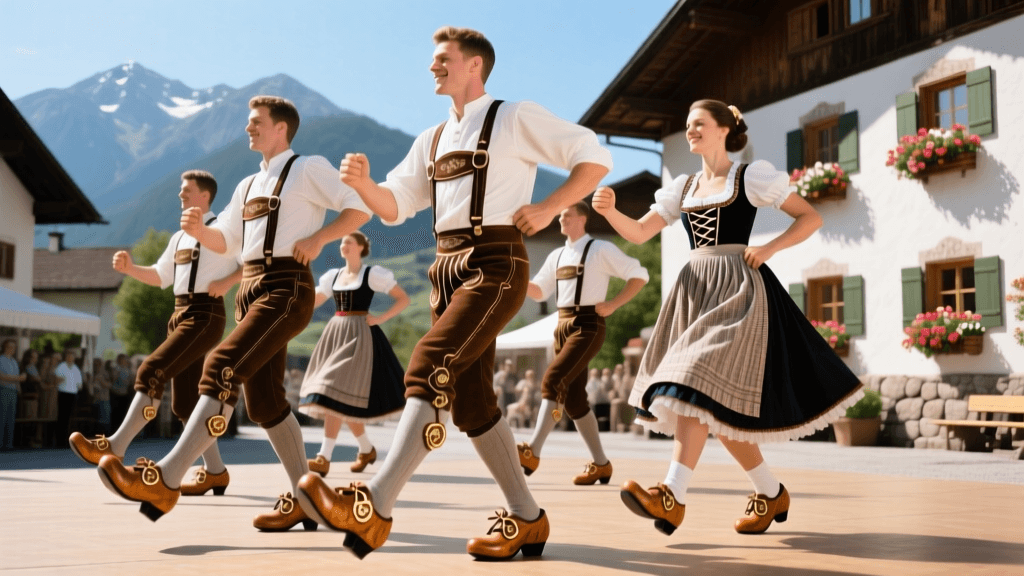
Authentic Miesbacher Lederhosen (leather breeches) are crafted from Hirschleder (deer leather), specifically tanned using traditional brain-tanning or vegetable-tanning methods to achieve a soft, velvety finish. In 2026, the hallmark of a genuine pair is the presence of hand-embroidered motifs—typically Alpine roses, edelweiss, or oak leaves—executed in muted, natural-dyed threads. The drop-front flap (Latze) is secured by genuine horn buttons, never plastic or metal.
The Werdenfelser Dirndl
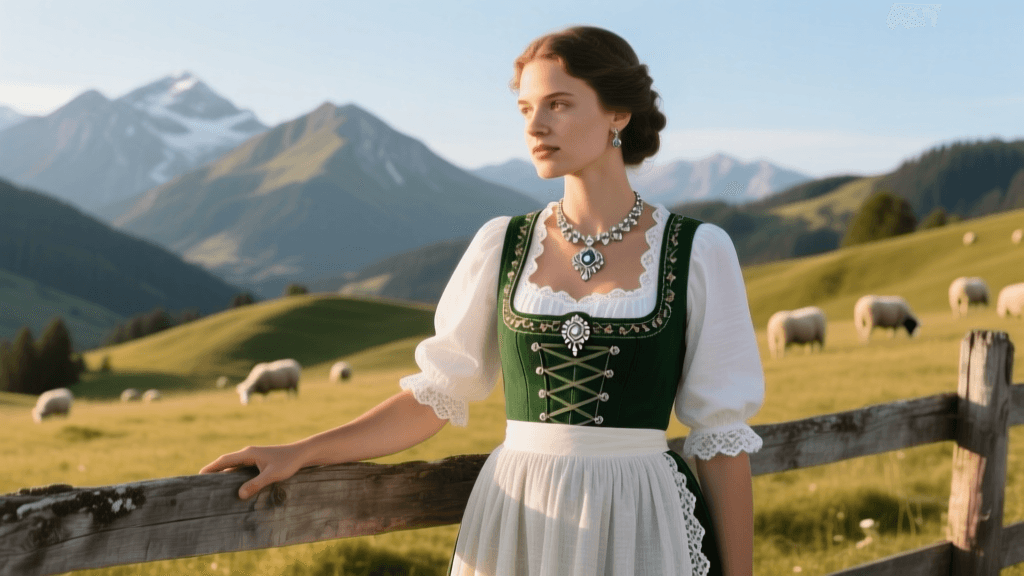
Further west, near Garmisch-Partenkirchen, the Werdenfelser Tracht dominates. The Werdenfelser Dirndl is characterized by its rich, dark color palette and heavy use of silk and fine wool. Unlike the lighter cotton Dirndls worn in summer, the traditional Werdenfelser festive dress features a heavily pleated skirt, a structured bodice reinforced with natural fibers, and a silk apron that signifies the wearer's marital status through its knot placement.
Austria: Tyrolean Leather and Ausseer Color-Blocking
Austrian folk dress is deeply tied to the country's imperial history and its rugged alpine geography. The Austrian National Tourist Office highlights how regional isolation allowed distinct textile traditions to flourish, resulting in dramatic variations from the Tyrolean Alps to the Salzkammergut lake district.
The Ausseer Dirndl
Originating in the Styrian Salzkammergut region, the Ausseer Dirndl is arguably the most visually striking of all Austrian folk dresses. It eschews the floral prints common in Bavaria in favor of bold, solid color-blocking. The traditional Ausseer combination features a pink skirt, a green bodice, and a blue apron. In 2026, master tailors in Bad Aussee continue to use hand-blocked linen and raw silk, with the bodice often featuring intricate, tone-on-tone embroidery that is only visible up close.
Tyrolean Bundlederhose
In the Tyrol, the Bundlederhose (gathered leather breeches) is the standard. Unlike the knee-length Miesbacher style, the Tyrolean version often extends below the knee and is heavily gathered at the calf. The embroidery here frequently incorporates the Edelraute (alpine lovage) motif, and the leather is often smoked, giving it a distinct, darker patina that ages beautifully over decades of wear.
Switzerland: Appenzeller Filigree and Bernese Peasant Dress
Swiss folk dress, or Trachten, is governed by the Swiss National Tracht Association, which strictly preserves the patterns and materials of each canton. Switzerland Tourism notes that Swiss regional dress is heavily influenced by the country's historic textile industry, particularly lace-making and silk weaving.
The Appenzeller Sunday Dress
The Appenzeller Sonntags-Tracht (Sunday dress) from the Appenzell canton is a masterpiece of contrast and metalwork. The dress itself is typically made of deep black velvet or wool, serving as a canvas for the breathtaking silver filigree jewelry (Filigran) worn by women. The headpiece, or Haube, features intricate white lace and silver wirework that mimics the delicate structure of snowflakes. For men, the traditional Appenzeller outfit includes the famous Chüeli (silver cow ornaments) worn on leather straps across the chest, paired with bright yellow leather breeches.
The Bernese Peasant Dress
The Berner Bauern-Tracht (Bernese peasant dress) is iconic for its vibrant red, black, and white color scheme. The bodice is heavily structured, often fastened with silver chains and hooks. The defining feature of the Bernese dress is the Smock (smocking) on the white linen blouse and the intricate black lace cap that frames the face, a nod to Bern's historical wealth derived from the linen and lace trades.
Regional Alpine Tracht Comparison (2026 Data)
The following table provides a comparative overview of key regional Alpine garments, their signature materials, and the approximate cost for bespoke, artisan-crafted pieces in the 2026 market.
| Region | Signature Garment | Key Textiles & Materials | 2026 Bespoke Artisan Cost (Approx.) |
|---|---|---|---|
| Miesbach (Bavaria) | Miesbacher Lederhosen | Brain-tanned Deer Leather, Horn Buttons | €1,200 - €1,800 |
| Bad Aussee (Austria) | Ausseer Dirndl | Raw Silk, Hand-blocked Linen | €950 - €1,400 |
| Tyrol (Austria) | Bundlederhose | Smoked Chamois Leather, Wool Thread | €1,100 - €1,600 |
| Appenzell (Switzerland) | Sonntags-Tracht | Black Velvet, Silver Filigree, Lace | CHF 2,500 - CHF 4,000+ |
| Bern (Switzerland) | Berner Bauern-Tracht | Wool Broadcloth, Linen, Silver Hooks | CHF 1,800 - CHF 2,800 |
Sourcing Authentic Tracht in 2026: A Buyer's Guide
If you are looking to acquire authentic European folk dress in 2026, avoiding mass-market imitations requires a discerning eye and an understanding of traditional construction. Here is actionable advice for sourcing genuine garments:
- Inspect the Leather: Authentic Hirschleder (deer) or Gamsleder (chamois) should feel supple, almost like suede, and have a natural, uneven grain. If the leather is perfectly uniform, stiff, or smells heavily of chemical tanning agents, it is likely mass-produced cowhide.
- Check the Embroidery: Turn the garment inside out. Hand-embroidered Tracht will show the threads carrying across the back of the leather or fabric. Machine embroidery often uses a continuous bobbin thread that looks overly uniform and lacks the slight tension variations of human craftsmanship.
- Verify the Hardware: Genuine Tracht uses buttons made from deer antler, cow horn, or carved bone. Authentic horn buttons will have slight color variations and may feel cool to the touch. Plastic imitations will be perfectly uniform and warm.
- Seek Out Heritage Tailors: In Munich, look for tailors in the Altstadt-Lehel district who are members of the Innung (the official tailors' guild). In Salzburg, the Getreidegasse and surrounding side streets house multi-generational Tracht boutiques that offer made-to-measure services.
"True Tracht is not a costume you put on; it is a regional identity you wear. In 2026, the most radical fashion statement one can make is investing in a garment that takes three months to hand-stitch and will outlive the wearer." — Archivist, Bavarian State Museum of Ethnology
Etiquette: The Dirndl Apron Knot Code
While the garments themselves are steeped in history, the etiquette surrounding them remains strictly observed in Alpine regions today. The most famous of these traditions is the Dirndl apron knot code, which signals the wearer's relationship status to the community:
- Knot on the Left: The wearer is single and available.
- Knot on the Right: The wearer is married, engaged, or in a committed relationship.
- Knot in the Center (Front): Traditionally signifies that the wearer is a virgin (though in modern 2026 contexts, it is often just worn by young girls or those unaware of the code).
- Knot in the Back: The wearer is widowed, or the knot is tied at the back for practical working purposes (e.g., by waitresses or artisans).
Conclusion
The landscape of European folk dress is a testament to the incredible diversity of textile traditions contained within a relatively small geographic area. From the smoked leather of the Tyrol to the silver filigree of Appenzell, authentic Alpine Tracht represents a living, breathing heritage. As the 2026 market continues to favor sustainability, slow fashion, and cultural preservation, investing in regional folk dress is not merely an act of sartorial appreciation—it is an act of historical conservation. Whether you are attending a traditional Almabtrieb (alpine cattle drive) or simply studying the evolution of European textiles, understanding these regional nuances ensures that the legacy of the Alpine artisans endures for generations to come.