Styling the Romanian Ie Blouse: 2026 Capsule Wardrobe Guide
The Renaissance of the Romanian Ie in 2026
As we navigate the fashion landscape of 2026, the industry-wide pivot toward radical sustainability and slow fashion has brought heritage textiles to the forefront of contemporary wardrobes. Discerning style enthusiasts are moving away from mass-produced fast fashion, seeking instead garments that carry historical weight, artisanal craftsmanship, and a zero-waste ethos. At the heart of this European folk dress revival is the traditional Romanian Ie (pronounced 'yeh'), a masterfully embroidered blouse that has transcended its rural roots to become a cornerstone of the modern, eco-conscious capsule wardrobe.
Following its celebrated inscription on the UNESCO Representative List of the Intangible Cultural Heritage of Humanity, the global appreciation for the Ie has surged. However, the 2026 revival is not about wearing the garment as a costume; it is about integrating its profound textile artistry into everyday, contemporary styling. Whether you are curating a minimalist office rotation or a textured weekend wardrobe, the Ie offers a masterclass in balancing heritage craftsmanship with modern silhouettes.
Understanding the Anatomy of an Authentic Ie
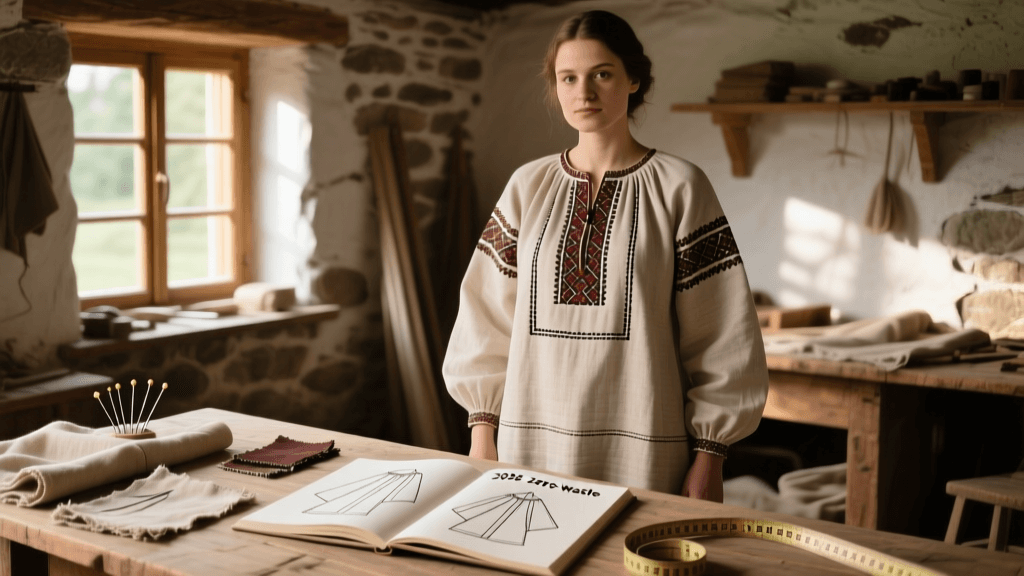
To style the Ie effectively, one must first understand its intricate anatomy. A genuine traditional blouse is constructed from hand-loomed hemp, cotton, or linen, utilizing a zero-waste geometric cutting technique where rectangular panels are gathered and stitched together, leaving no fabric scraps behind. The embroidery is not merely decorative; it is a complex semiotic language that historically indicated the wearer's region, marital status, and social standing.
The most crucial element of the Ie is the altiță (shoulder embroidery), which serves as the visual anchor of the garment. Below the altiță lies the increț (a gathering band), followed by the râuri (rivers), which are diagonal or vertical embroidered stripes flowing down the sleeves. According to textile historians at the Museum of the Romanian Peasant, the precision of the altiță is what separates a true heritage piece from a modern commercial imitation. In 2026, authentic artisan cooperatives continue to use natural dyes—such as madder root for reds, walnut husks for deep browns, and weld for vibrant yellows—ensuring that the colors age beautifully and harmonize with modern earth-toned wardrobes.
Key Regional Variations
When sourcing an Ie for your wardrobe, understanding regional variations will help you match the blouse to your personal color palette and styling preferences.
| Region | Base Fabric | Dominant Palette | Signature Motif & Vibe |
|---|---|---|---|
| Moldova | Heavy Hemp/Cotton | Black, Deep Red, Gold | Dense geometric patterns; bold and structured. |
| Muntenia | Fine Cotton/Boracic | White, Silver, Pale Blue | Delicate floral and vine motifs; ethereal and light. |
| Transylvania | Linen blends | Black, Orange, Indigo | Stylized solar symbols and crosses; striking contrast. |
| Oltenia | Sheer Cotton | Red, Black, Metallic Thread | Intricate lace-like needlework; highly textured. |
Sourcing Authentic and Sustainable Pieces in 2026
The commercialization of folk dress has led to a market flooded with machine-embroidered polyester replicas. In 2026, the hallmark of a sophisticated wardrobe is provenance. To ensure you are acquiring an authentic Ie, look for pieces sourced directly from Romanian artisan guilds or verified vintage textile dealers. Authentic hand-embroidery will show slight, natural irregularities on the reverse side of the fabric, whereas machine embroidery will appear perfectly uniform with a heavy bobbin thread backing.
When investing in a new piece, seek out weavers who utilize GOTS-certified organic cotton or heritage hemp. The price of a fully hand-embroidered, authentic Ie typically ranges from $350 to $800 in 2026, reflecting the dozens of hours of meticulous hand-stitching required. Vintage pieces from the mid-20th century can often be found in specialized European textile markets for $150 to $400, though they may require careful restoration.
Contemporary Styling: Integrating the Ie into Modern Outfits
The true magic of the Ie lies in its versatility. The voluminous sleeves and intricate necklines provide a striking contrast to the tailored, streamlined silhouettes dominating 2026 fashion. Here is how to seamlessly integrate this heritage garment into your daily rotation.
1. The Elevated Office Look
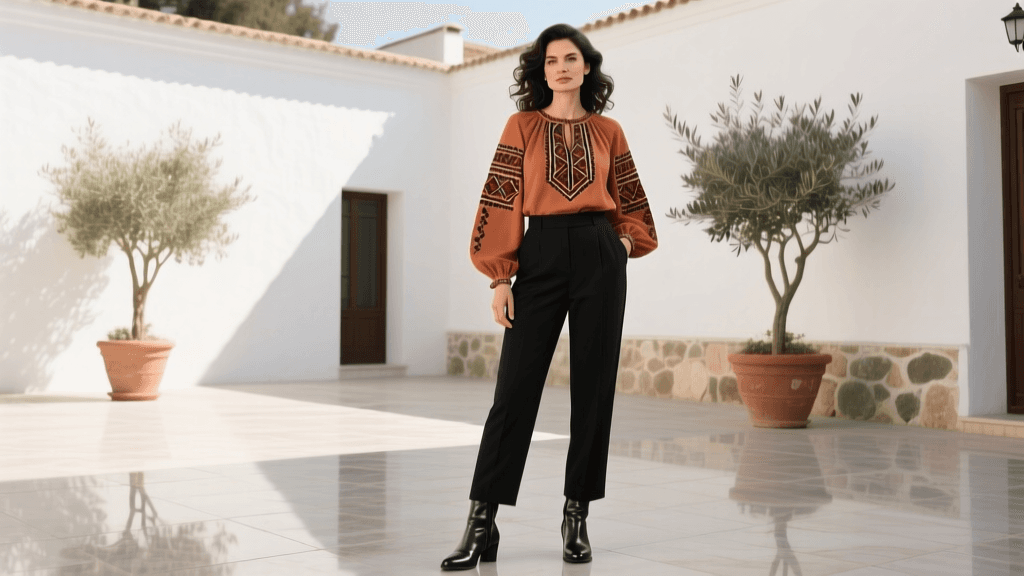
To adapt the Ie for a professional environment, lean into the 'Heritage Minimalism' trend. Choose a Muntenia-style blouse in a monochromatic white-on-white or subtle silver palette. Tuck the blouse into high-waisted, wide-leg wool trousers in charcoal or deep navy. The volume of the blouse's sleeves should be balanced by the sharp, vertical lines of the trousers. Finish the look with structured, square-toe leather loafers and minimalist gold hoop earrings. The key is to let the altiță (shoulder embroidery) peek out elegantly from beneath a tailored, oversized blazer when you move.
2. Weekend Casual and Streetwear
For off-duty styling, the contrast between delicate folk embroidery and rugged utilitarian fabrics creates a compelling visual narrative. Pair a heavily embroidered, darker Moldova-style Ie with raw, unwashed selvedge denim. The stiffness of the raw denim complements the structured hemp of the blouse. Add a pair of chunky, lug-sole leather boots and a slouchy, unstructured leather crossbody bag. In cooler 2026 autumn months, layer a fine-gauge, sleeveless merino wool vest over the blouse to highlight the intricate sleeve work while providing core warmth.
3. Evening Elegance
The Ie can easily transition into evening wear when styled with luxurious, fluid fabrics. A sheer Oltenia blouse featuring metallic threadwork looks breathtaking when paired with a bias-cut, heavy silk slip skirt in a complementary jewel tone, such as emerald or sapphire. Cinch the waist with a thin, artisanal leather belt or a subtle corset belt to give structure to the voluminous silhouette. Complete the ensemble with strappy velvet heels and an updo that exposes the intricate neckline and shoulder embroidery.
'The traditional blouse is not a relic of the past to be kept behind glass; it is a living, breathing textile that gains new meaning when it moves through the modern world. Styling it with contemporary pieces is an act of cultural preservation.'
— Textile Conservation Symposium, 2026
Caring for Heritage Textiles
Investing in an authentic Ie requires a commitment to proper textile care. Never machine-wash or dry-clean these garments, as the harsh chemicals and agitation will destroy the natural fibers and cause the organic dyes to bleed. Instead, hand-wash the blouse in cool water using a pH-neutral, eco-friendly detergent designed for delicate wools and silks. Gently press the water out without wringing, and lay the garment flat on a clean, dry towel to air-dry away from direct sunlight, which can fade natural plant dyes.
When storing your Ie between seasons, avoid wire hangers, which will distort the delicate shoulder seams and stretch the altiță. Fold the blouse carefully, padding the folds with acid-free tissue paper to prevent permanent creases, and store it in a breathable cotton garment bag in a cool, dry environment. Cedar blocks can be added to deter moths without introducing the harsh odors of chemical mothballs.
Conclusion
The integration of the Romanian Ie into the 2026 capsule wardrobe represents a profound shift in how we consume and value clothing. By choosing to wear and style these masterpieces of European folk dress, we support artisan communities, champion sustainable textile practices, and carry forward a rich cultural narrative. Whether paired with sharp tailoring for the boardroom or raw denim for the weekend, the Ie proves that true style is timeless, deeply personal, and rooted in the hands that made it.