Drafting the Slavic Rubakha Tunic: Zero-Waste Patterns for 2026
The Renaissance of the Rubakha in 2026
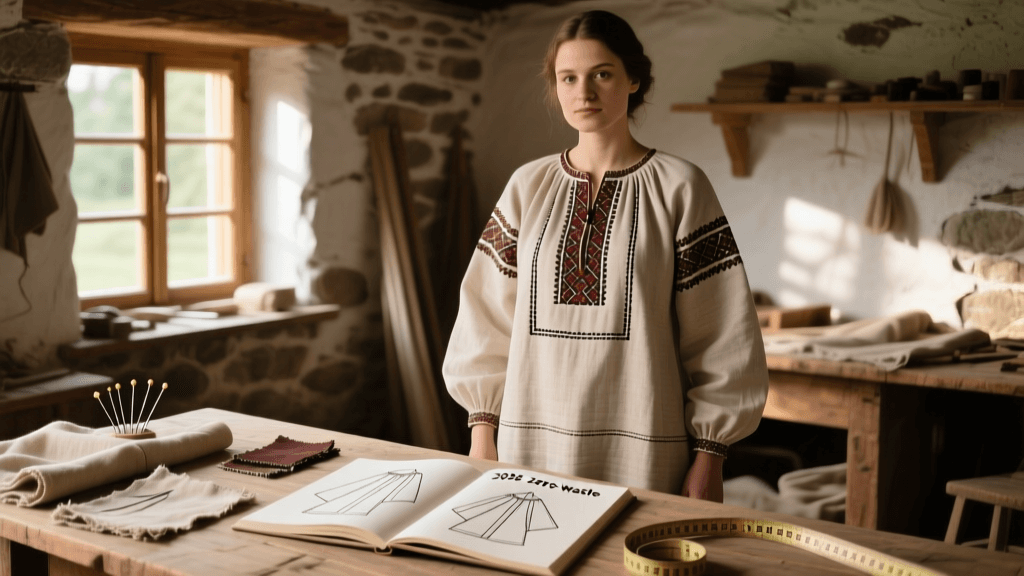
As the global fashion industry continues to grapple with its environmental impact in 2026, modern sewists, historical reenactors, and sustainable designers are increasingly looking to the past for zero-waste solutions. At the forefront of this revival is the traditional Slavic rubakha (also known regionally as the sorochka or skjorta), the foundational tunic of Eastern European and Scandinavian folk dress. Unlike modern commercial patterns that rely on curved armholes, princess seams, and complex darts—which inherently create fabric waste—the rubakha is a masterclass in geometric efficiency. It is constructed entirely from rectangles, squares, and triangles, utilizing every single inch of the woven cloth.
Historically, this zero-waste approach was born of necessity. Hand-woven linen was incredibly labor-intensive to produce, and wasting even a few inches of fabric was unthinkable. Today, the rubakha offers a brilliant blueprint for sustainable garment construction. By understanding the mathematical precision of traditional Eastern European folk patterns, we can create beautifully draped, highly functional garments that honor heritage techniques while meeting the eco-conscious demands of 2026.
Sourcing Heritage Textiles: Linen and Hemp in 2026
The success of a rectangular zero-waste garment relies heavily on the drape, weight, and width of the fabric. Because the pattern blocks are dictated by the geometry of the cloth rather than the curves of the body, the textile must do the work of shaping the garment through gravity and gathering. In 2026, the market for heritage and sustainable textiles has expanded significantly, making it easier than ever to source authentic materials.
For a traditional rubakha, you must avoid modern stretch wovens or heavy canvas. The ideal choices are medium-weight European flax linen or linen-hemp blends. These fabrics provide the necessary structure for the crisp geometric folds while softening beautifully with wear and washing. When sourcing your fabric, pay close attention to the loom width. Historically, linen was woven on narrow looms (often 14 to 20 inches wide), which dictated the proportions of the body panels. Modern heritage linens are typically woven on wider looms, so you will need to adjust your rectangular blocks to accommodate 54-inch to 60-inch widths, or deliberately cut and seam panels to mimic the narrow-loom aesthetic.
| Material Type | Weight (oz/yd²) | Est. Cost per Yard (2026) | Best Application |
|---|---|---|---|
| Organic European Flax Linen | 5.0 - 6.5 oz | $28 - $36 | Summer tunics, lightweight under-dresses |
| Medium-Weight Slub Linen | 7.0 - 8.5 oz | $22 - $30 | Everyday rubakha, durable outer shirts |
| Linen-Hemp Heritage Blend | 8.0 - 10.0 oz | $35 - $45 | Winter tunics, structured folk costumes |
| Ramie-Cotton Blend | 4.5 - 6.0 oz | $18 - $24 | Budget-friendly historical practice pieces |
The Geometry of the Rubakha: Core Pattern Blocks
Drafting a rubakha requires abandoning the modern measuring tape's obsession with bust, waist, and hip curves. Instead, you will measure in straight lines, focusing on circumference, length, and mobility. The pattern consists of three primary geometric blocks: the Stan (body), the sleeves, and the Lastovitsa (underarm gusset).
The Stan (Body Panels)
The main body of the tunic is formed by one or two large rectangles. For a pullover style with a center front slit, the body is often a single massive rectangle folded over the shoulders, or two identical rectangles joined at the shoulder seams. The width of the Stan is determined by taking your full bust or chest measurement, adding 4 to 6 inches for ease and gathering, and then dividing by two (for the front and back panels). The length is measured from the highest point of the shoulder down to the desired hemline, plus 2 inches for hem allowances. Because there are no side seams shaping the waist, the tunic is traditionally belted, which creates the iconic bloused silhouette characteristic of Eastern European folk dress.
The Sleeves and the Lastovitsa (Gusset)
The sleeves are simple, wide rectangles. The width of the sleeve rectangle is determined by the bicep measurement plus significant ease (often 6 to 10 inches) to allow for deep, traditional pleating at the cuff. The length runs from the shoulder edge to the wrist.
However, a rectangular sleeve sewn directly to a rectangular body would severely restrict arm movement. This is where the lastovitsa—the underarm gusset—becomes the most critical element of the pattern. The lastovitsa is a perfect square, typically measuring 5x5 inches or 6x6 inches for an adult. It is inserted at the intersection of the side seam and the sleeve seam. This ingenious geometric addition transforms a rigid two-dimensional cross into a three-dimensional garment that allows the wearer to raise their arms fully without pulling the entire tunic upward. According to historical analyses preserved in the Metropolitan Museum of Art's Heilbrunn Timeline of Art History, the gusset was a universal feature in peasant dress across the Slavic and Baltic regions, ensuring that agricultural labor could be performed without tearing the hand-woven seams.
Assembly and Historical Seam Techniques
Constructing the rubakha is an exercise in precision. Because the garment lacks complex tailoring, the quality of the seams and the neatness of the interior finishing are paramount. In 2026, while modern sergers can finish edges in seconds, traditionalists and historical sewists prefer the run-and-fell (flat-felled) seam.
The Run-and-Fell Seam
This technique encloses all raw edges, making the garment incredibly durable and comfortable against the skin—essential for an undergarment or tunic worn without modern lining. To execute a run-and-fell seam:
- Place the fabric pieces wrong sides together and sew a standard running stitch or machine straight stitch at a 3/8-inch seam allowance.
- Trim one side of the seam allowance down to 1/8 inch.
- Fold the longer seam allowance over the trimmed edge, encasing the raw edge completely.
- Press flat and stitch down close to the fold. This results in a clean, flat line of stitching on both the inside and outside of the garment.
For the gusset insertion, precision is key. You must clip the corner of the body/sleeve seam exactly to the stitch line, pivot the fabric, and carefully sew the square gusset into the diamond-shaped opening. Reinforcing the inner corners with a tiny backstitch or modern fray-check prevents the high-stress underarm area from tearing during wear.
Embroidery: Protective Geometry and Placement
A rubakha is rarely left entirely plain. In traditional Slavic folk culture, embroidery was not merely decorative; it was apotropaic, meaning it was designed to ward off evil spirits and protect the wearer. Because the geometric construction leaves the fabric vulnerable at the openings, these areas were heavily fortified with counted-thread embroidery, typically in red and black linen or silk threads.
As documented in the extensive textile archives of the Victoria and Albert Museum, historical peasant embroidery relied heavily on cross-stitch, double-running stitch (Holbein stitch), and satin stitch. When planning your 2026 rubakha project, you must place your embroidery before assembling the garment. The primary zones for embroidery include:
- The Collar and Neck Slit: Protecting the throat and entry points to the body.
- The Cuffs: Protecting the wrists, where the pulse is visible and the body is considered spiritually vulnerable.
- The Hem: Protecting the wearer from the earth and the spirits of the ground.
- The Shoulder Seams: Often marked with small geometric rosettes or solar symbols to protect the bearer of burdens.
Modern sewists can utilize digital pattern-making software to map out counted-thread charts directly onto their fabric grid, ensuring perfect symmetry before a single needle pierces the linen.
Adapting the Zero-Waste Grid for Contemporary Fit
While the traditional rubakha is inherently oversized and relies on belting for shape, modern wearers often desire a slightly more tailored fit without sacrificing the zero-waste ethos. In 2026, pattern drafters are adapting the historical grid by manipulating the proportions of the rectangles rather than introducing curves.
To create a more fitted torso while maintaining zero-waste principles, you can reduce the width of the Stan panels and compensate by increasing the width of the sleeves and the size of the gusset. This shifts the volume of the garment to the arms and the underarm, creating a dramatic, wing-like drape when the arms are raised, while keeping the torso relatively streamlined. Additionally, instead of cutting away excess fabric at the side seams to shape the waist (which creates waste), you can introduce internal tie-strings or channel casings at the natural waistline. When tied, these internal channels pull the rectangular fabric inward, creating a bloused effect that mimics modern tailoring while keeping the structural integrity of the original zero-waste blocks intact.
Conclusion
The Slavic rubakha is a testament to the ingenuity of historical garment makers who viewed fabric as a precious, finite resource. By mastering the geometric drafting of the Stan, the sleeve, and the vital lastovitsa gusset, modern sewists can create garments that are deeply rooted in European folk tradition while perfectly aligned with the sustainable, zero-waste fashion movements of 2026. Whether you are crafting a historically accurate reenactment piece or a modern, minimalist linen tunic for everyday wear, the rubakha proves that true elegance lies in the purity of geometry and the respect for the cloth.