Recreating the Ancient Greek Chiton: A 2026 Reenactor's Guide
Introduction to the Chiton in Modern Reenactment
The revival of classical antiquity within the living history community has reached unprecedented levels of accuracy and craftsmanship as we move through 2026. At the forefront of this movement is the meticulous recreation of the ancient Greek chiton, the foundational garment of Hellenic dress. Far from the simplistic, toga-like costumes of early 20th-century cinema, the modern historical reenactor understands that the chiton was a sophisticated, mathematically proportioned garment that relied entirely on the drape of the fabric and the strategic placement of pins and belts. Whether you are preparing for the 2026 Mediterranean Living History Symposium or participating in local Hellenic polytheist festivals, mastering the chiton is an essential rite of passage for any serious student of European folk dress and ancient textile traditions.
According to The Metropolitan Museum of Art's Heilbrunn Timeline of Art History, the chiton was not merely a piece of clothing but a reflection of social status, regional identity, and the evolving aesthetic ideals of the ancient Greek world. Unlike tailored garments that require complex pattern drafting, the chiton is a masterpiece of geometric simplicity—a single rectangular piece of woven cloth transformed into elegant attire through folding, pinning, and belting. This guide will walk you through the precise historical specifications, fabric sourcing, and draping techniques required to create an authentic chiton for the modern era.
Doric vs. Ionic Chiton: A Structural Comparison
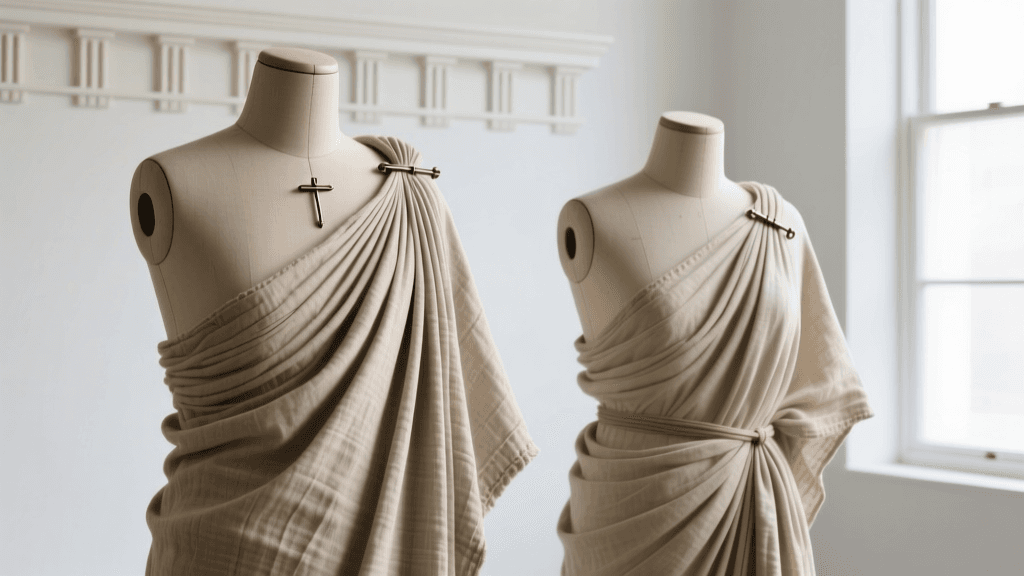
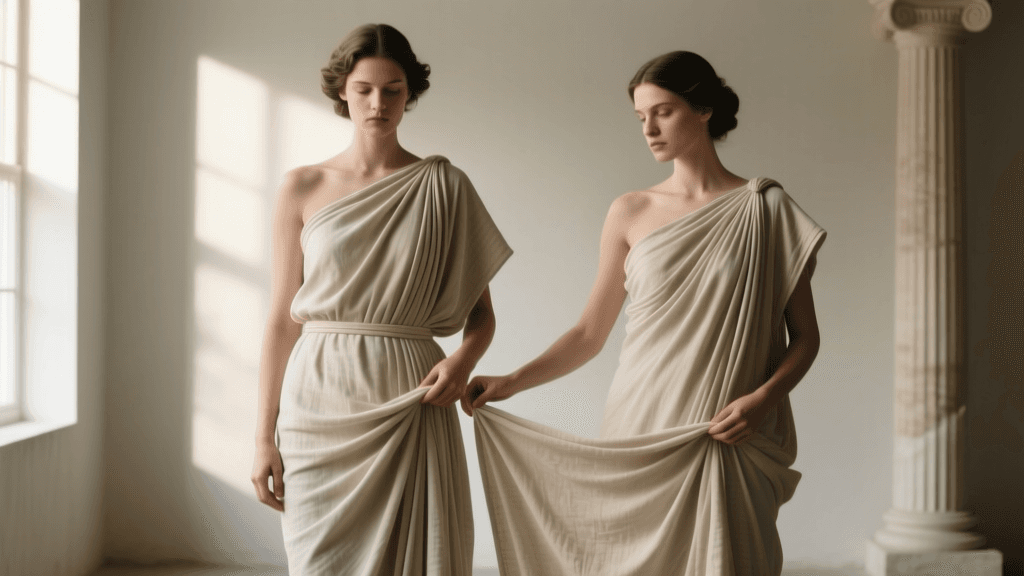
To recreate an accurate chiton, one must first understand the two primary variations that dominated ancient Greek fashion: the Doric and the Ionic chitons. While both share the same fundamental rectangular construction, their differences in fabric weight, fastening methods, and silhouette are profound. The Doric chiton, heavily associated with the Archaic and Early Classical periods, utilizes heavier wool or dense linen and relies on large fibulae (brooches) at the shoulders. The Ionic chiton, which gained prominence in the Late Classical and Hellenistic periods, favors lighter, finely woven linen and features sewn shoulder seams that create the illusion of wide, flowing sleeves.
| Feature | Doric Chiton | Ionic Chiton |
|---|---|---|
| Era of Prominence | Archaic to Early Classical | Late Classical to Hellenistic |
| Primary Fabric | Heavy Wool or Medium-Weight Linen | Fine, Lightweight, Semi-Sheer Linen |
| Shoulder Fastening | Pinned with large Fibulae | Sewn or tightly pinned at intervals |
| Sleeve Style | Sleeveless (open armholes) | Wide, flowing, multi-point sleeves |
| Kolpos (Blousing) | Prominent, deep overhang | Less pronounced, softer drape |
| Typical Wearer | Men, older women, Spartans | Women, Ionian Greeks, deities in art |
Sourcing Historical Fabrics for 2026 Reenactments
The success of your chiton relies entirely on the behavior of the textile. In 2026, the living history community has shifted heavily toward GOTS-certified heritage flax and naturally processed wools, moving away from the chemically treated, overly stiff linens of the past decade. For a Doric chiton, you require a fabric with enough body to hold sharp, sculptural folds. Look for a medium-weight linen or lightweight wool in the range of 180 to 220 GSM (grams per square meter). The fabric must have a high twist yarn to ensure the drape falls in crisp, vertical lines rather than clinging to the body.
For the Ionic chiton, the fabric must be significantly lighter, ideally between 100 and 130 GSM. Modern heritage weavers in 2026 are producing exceptional semi-sheer linens that mimic the famous "wet drapery" style seen in classical Parthenon sculptures. When sourcing your fabric, always purchase 100% natural fibers. Blends containing polyester or rayon will destroy the historical silhouette, as synthetic fibers lack the necessary weight and memory to hold the kolpos (the bloused overhang) properly when belted.
Natural Dyeing and Color Accuracy
While the modern imagination often pictures ancient Greeks in stark, blinding white, historical reality was far more vibrant. As of 2026, advanced chromatography analysis of surviving textile fragments has allowed reenactors to replicate ancient dye palettes with stunning accuracy. If you wish to dye your chiton, utilize period-accurate botanical dyes. Madder root yields beautiful terracotta and deep reds, weld provides vibrant yellows, and woad or indigo offers rich blues. For a truly authentic aesthetic, leave the borders of your chiton undyed or weave a simple geometric tablet-woven band (tania) into the hem, as archaeological evidence suggests that intricate borders were a primary indicator of wealth and regional identity.
Measurements and Mathematical Proportions
The ancient Greeks did not use standardized sizing; instead, garments were proportioned to the individual's body using mathematical ratios. To determine the correct dimensions for your chiton, you will need a soft measuring tape and a willing assistant.
Calculating the Width
The width of the fabric dictates the fullness of the drape and the depth of the folds. For a standard Doric chiton, measure your wingspan (from wrist to wrist with arms outstretched) and add 12 to 18 inches. This extra width allows for the side overlap and the deep folds that characterize the Doric style. For an Ionic chiton, which requires more fabric to create the multiple sleeve points, measure your wingspan and add at least 24 to 30 inches.
Calculating the Height
The height of the fabric determines the length of the garment and the depth of the kolpos. Measure from the prominent vertebra at the base of your neck down to your desired hemline (typically the ankle for women, and anywhere from the mid-thigh to the knee for men). To this measurement, add 10 to 15 inches. This crucial extra length creates the kolpos, the bloused overhang that drapes over the belt, allowing for freedom of movement and preventing the garment from riding up during physical activity.
Step-by-Step Draping and Construction Guide
Draping a chiton is an art form that requires patience and an understanding of how gravity interacts with woven fibers. Follow these precise steps to achieve a historically accurate silhouette:
- Prepare the Fabric: Hem all four edges of your rectangular cloth. In antiquity, the selvedge edges of the loom were often left unhemmed, but for modern durability and fray prevention, a narrow rolled hem is recommended.
- Create the Apoptygma (Overfold): If you are making a Doric chiton, fold the top edge of the fabric down by 10 to 15 inches. This creates the apoptygma, a deep flap that drapes over the chest and back. The Ionic chiton typically omits this overfold.
- Wrap the Body: Wrap the fabric around your body, starting under the left arm and bringing the two edges together at your right side. Ensure the side seam falls straight and the hem is level with the floor.
- Pin the Shoulders: For the Doric style, gather the front and back layers (including the apoptygma) at equal intervals over your shoulders. Secure them with heavy bronze or iron fibulae. For the Ionic style, sew the front and back layers together at multiple points along the shoulder and upper arm, creating the signature wide sleeve.
- Apply the Zoni (Belt): Tie a woven wool or linen cord (the zoni) tightly around your natural waist or just under the bust. Pull the fabric up and over the belt to create the kolpos. Adjust the overhang so it falls evenly around your hips.
- Final Adjustments: Fluff and arrange the vertical folds. The Greeks prized deep, tubular folds, which can be encouraged by dampening the linen and allowing it to dry while tightly braided or twisted.
Essential Accessories: Fibulae, Zoni, and the Himation
No chiton is complete without its accompanying accessories. The World History Encyclopedia's comprehensive guide to Greek Clothing notes that the manner in which a garment was fastened and layered communicated volumes about the wearer's civic status and gender. The fibulae used to pin the Doric chiton should be cast bronze or iron, featuring historical designs such as the bow fibula or the annular ring. Avoid modern safety pins, as they lack the weight to hold heavy wool and disrupt the historical illusion.
The zoni, or belt, is equally important. While simple cords were common for everyday wear, ceremonial chitons were often paired with wide, tablet-woven sashes featuring complex geometric motifs. Finally, for outdoor wear or formal occasions, the chiton was layered with the himation—a massive rectangular cloak draped diagonally across the body. In the 2026 reenactment season, mastering the himation drape, which requires leaving one arm entirely free while securing the heavy wool across the chest and back, is considered the hallmark of an advanced living historian.
Caring for Your Ancient Garments
Proper maintenance of your chiton ensures its longevity and preserves the integrity of the drape. Never machine wash historical linens or wools, as the aggressive agitation will cause felting and destroy the carefully arranged fold memory. Instead, hand wash your garments in cool water using a pH-neutral, olive-oil-based soap. After washing, gently squeeze out excess water without wringing, and hang the garment to dry in the shade. The weight of the wet fabric will naturally pull the fibers into crisp, vertical lines. Once dry, store the chiton folded along its natural drape lines, or roll it around a cardboard tube to prevent deep, unnatural creases from forming before your next historical event.