Norwegian Bunad Guide 2026: Hardanger & Telemark Costs
Understanding the Norwegian Bunad Tradition in 2026
The Norwegian bunad is far more than a simple folk costume; it is a deeply rooted cultural identifier that connects the wearer to their ancestral heritage, regional geography, and local textile history. As of 2026, the bunad remains a staple of Norwegian national celebrations, weddings, and milestone events, with a growing international appreciation for its meticulous handcrafted construction. Unlike generic historical costumes, a true bunad is governed by strict regional guidelines regarding fabric, color, embroidery patterns, and accompanying silver jewelry.
For those looking to commission, inherit, or restore a bunad in 2026, understanding the specific nuances of regional variations is critical. According to the Norwegian Bunad and Folk Costume Council, there are over 450 distinct bunad variations documented across Norway. Among the most iconic, historically significant, and highly sought-after are the Hardangerbunad and the Telemarksbunad. This guide provides a comprehensive, actionable breakdown of these two regional masterpieces, including current 2026 market costs, material specifications, and expert fitting advice.
The Hardangerbunad: Norway’s Most Recognized Regional Dress
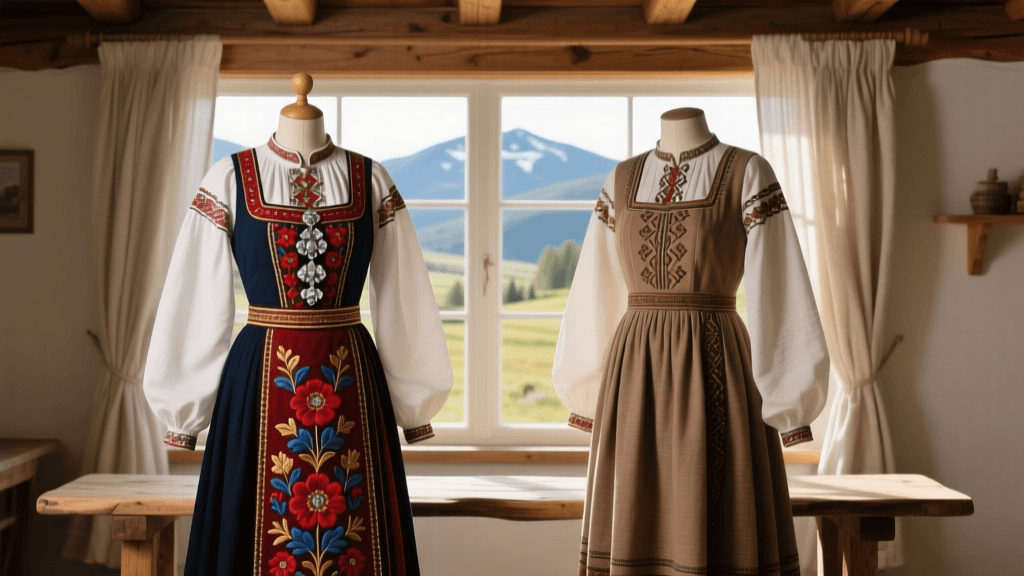
Often referred to as the 'national bunad' due to its widespread popularity and historical use during the 19th-century national romantic movement, the Hardangerbunad originates from the Hardanger fjord region in Vestland county. The women’s Hardangerbunad is instantly recognizable by its striking contrast: a deep black wool bodice and skirt paired with a pristine white linen apron featuring intricate cross-stitch embroidery and beadwork.
Embroidery and Fabric Specifications
The foundation of the Hardangerbunad relies on heavyweight, tightly woven worsted wool. In 2026, premium wool sourced from traditional Norwegian mills remains the standard, ensuring the garment holds its structured silhouette. The bodice (liv) is typically lined with sturdy linen and features a deep V-neckline, laced at the front with a silver chain or silk ribbon. The embroidery on the apron and bodice utilizes a specific color palette dictated by local heritage committees—primarily red, green, and white silk threads, occasionally accented with glass beads.
When commissioning a Hardangerbunad, the white linen blouse (skjorte) is equally important. It features delicate whitework embroidery (kvitsaum) on the collar and cuffs. Modern textile conservation standards introduced in 2026 highly recommend using unbleached, organic European flax linen for the blouse, as it ages more gracefully and resists yellowing compared to chemically bleached alternatives.
The Telemarksbunad: Rosemaling and Vibrant Wool
While Hardanger represents the fjords, the Telemarksbunad captures the lush, forested inland valleys of Telemark county. The Telemark region is famous for its vibrant folk art, particularly rosemaling (decorative rose painting), and this aesthetic translates directly into the region's textile traditions. The women’s Telemarksbunad is renowned for its rich, dark blue or black wool base, heavily adorned with elaborate, multi-colored floral embroidery that mimics the sweeping curves and teardrop motifs of traditional wood painting.
The Art of Smøyg and Regional Variations
What truly sets the Telemarksbunad apart is the use of the smøyg stitch (a type of Holbein or double-running stitch) and intricate drawn-thread work. The embroidery is dense, covering significant portions of the bodice, skirt hem, and apron. Because Telemark is a large and diverse county, the Norwegian Museum of Cultural History archives show distinct variations between East Telemark (Aust-Telemark) and West Telemark (Vest-Telemark). East Telemark bunads often feature a red wool bodice with a black skirt, while West Telemark favors a cohesive dark blue or black ensemble with highly contrasting, vibrant floral threadwork.
If you are commissioning a Telemarksbunad in 2026, you must first verify your family's specific parish ties. The 'bunad police' (a colloquial term for heritage enthusiasts who enforce traditional accuracy) are particularly strict about Telemark variations. Wearing an East Telemark bodice with a West Telemark skirt is considered a major faux pas.
Essential Silver (Sølv) and Accessories
No Norwegian bunad is complete without its accompanying silver (sølv). The silver is not merely decorative; historically, it represented a family's portable wealth and financial security. For both Hardanger and Telemark bunads, the silver set includes a large sun brooch (solje) worn at the collar, smaller breast clasps (brystknapp), cufflinks, and a highly ornate silver belt.
In 2026, the global precious metals market has seen significant fluctuations, directly impacting the cost of commissioning custom bunad silver. Traditional bunad silver is crafted in either 830S (83% pure silver, historically standard in Norway) or 925S (sterling silver). While 830S remains the preferred choice for purists seeking historical accuracy, 925S has become increasingly common due to its durability and wider availability from international silversmiths. A full set of oxidized and polished silver for a Telemark bunad can weigh upwards of 400 grams, making it a substantial financial investment.
2026 Cost Breakdown and Commissioning Timeline
Commissioning a bunad is a slow-fashion endeavor. It requires multiple fittings, hand-embroidery, and custom silversmithing. Below is a comparative data table outlining the estimated costs and lead times for commissioning a complete women's Hardangerbunad versus a Telemarksbunad in 2026. Prices are estimated in USD based on current exchange rates and artisan pricing.
| Component | Hardangerbunad (2026 Est.) | Telemarksbunad (2026 Est.) | Typical Lead Time |
|---|---|---|---|
| Bodice & Skirt (Wool & Tailoring) | $2,800 - $3,500 | $3,200 - $4,100 | 6 - 9 Months |
| Embroidered Apron | $800 - $1,200 | $1,100 - $1,600 | 4 - 6 Months |
| Linen Blouse (Skjorte) | $400 - $600 | $500 - $750 | 2 - 3 Months |
| Silver Set (Full 830S/925S) | $1,500 - $2,500 | $1,800 - $3,000 | 2 - 4 Months |
| Shoes, Buckles & Accessories | $350 - $500 | $350 - $500 | 1 - 2 Months |
| Total Estimated Cost | $5,850 - $8,300 | $6,950 - $9,950 | 9 - 12 Months |
Note: The Norwegian Cultural Council occasionally offers grants for the preservation of endangered regional embroidery techniques, which can sometimes subsidize the cost of highly specialized Telemark smøyg work if commissioned through approved heritage workshops.
Practical Advice for Fittings, Sizing, and Care
Whether you are traveling to Norway for your fittings or working with a certified international bunad consultant, precise measurements are the difference between a garment that looks historically accurate and one that looks like a costume. Follow these actionable steps for your 2026 commissioning process:
- The Toile Fitting: Never allow a maker to cut the final wool without a mock-up (toile) fitting. The bodice must fit like a corset—snug enough to support the heavy silver belt and provide structure, but with exactly 2 cm of breathing room at the underbust to allow for comfortable movement and dining.
- Skirt Pleating and Hemming: The skirt should be pleated to fit your exact natural waist, not your modern trouser waist. The hem must fall precisely at the mid-calf. When measuring, wear the specific shoes you intend to use with the bunad, as traditional bunad shoes have a distinct low heel that alters your stance and the skirt's drape.
- Silver Maintenance: Bunad silver is meant to be worn, and the natural oils from your skin help maintain its patina. However, in 2026, environmental pollutants and humidity require careful storage. Store your silver in anti-tarnish cloth bags, separate from the wool garment to prevent sulfur transfer from the wool dyes to the silver.
- Textile Care and Moth Prevention: Never dry-clean the embroidered sections of a Telemark or Hardanger bunad, as modern chemical solvents can degrade the silk threads and strip the wool of its natural lanolin. Instead, air the garment outside on a dry, shaded day. For moth prevention, abandon chemical mothballs; use a combination of natural cedar blocks and dried lavender sachets placed in the storage box, and consider freezing the folded garment in a sealed plastic bag for 72 hours once a year to eliminate any dormant textile pests.
Investing in a Hardanger or Telemark bunad is a commitment to preserving European textile heritage. By understanding the regional rules, budgeting for the 2026 silver market, and adhering to strict fitting protocols, you ensure that your garment will not only honor your ancestors but will also endure as a pristine heirloom for generations to come.