Authentic Norwegian Bunad Silver & Headwear: 2026 Guide
The Enduring Legacy of Norwegian Bunad Accessories
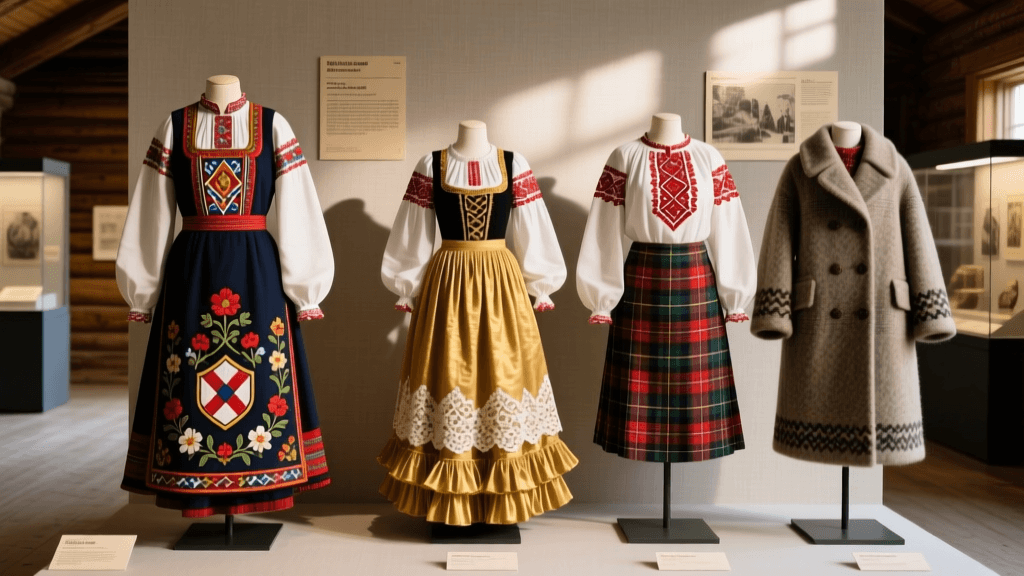
When discussing European folk dress, few traditions are as meticulously preserved and passionately celebrated as the Norwegian bunad. While the embroidered wool garments often capture the immediate attention of textile enthusiasts, it is the accompanying silver jewelry (sølje) and regional headwear that truly complete the ensemble and convey the deepest historical narratives. As we navigate the cultural landscape of 2026, there has been a massive resurgence in heritage craftsmanship, driven by a global desire for sustainable, locally forged, and historically accurate folk accessories. Whether you are a collector of antique European jewelry, a participant in contemporary folk festivals, or simply an admirer of traditional Scandinavian metalwork and textile arts, understanding the nuances of bunad silver and headwear is essential.
Bunad Silver (Sølje): Anatomy and 2026 Market Trends
Historically, silver in Norwegian folk dress served a dual purpose: it was a display of a family's agricultural wealth and a spiritual talisman. According to folklore documented by the Norwegian Museum of Cultural History, the reflective nature of silver and the chiming sounds it produced were believed to ward off malevolent spirits, particularly the huldra and trolls of the deep forests. Today, this spiritual significance has evolved into a profound appreciation for master metallurgy.
A complete bunad silver set is an intricate ecosystem of functional and decorative pieces. The centerpiece is the brystnål (chest brooch), which is often a large, ornate disc featuring hanging pendants known as løv (leaves) or skjeer (spoons). The acoustic resonance of these silver elements clinking together remains a hallmark of quality. This is paired with a halsknapp (neck button), which secures the collar of the linen shirt, and a pair of mansjettknapper (cufflinks). For many regional bunads, a vespestøl (silver purse clasp) and an ornate belt buckle are also mandatory.
In 2026, the market for authentic bunad silver has shifted dramatically. Due to global fluctuations in precious metal markets and a renewed emphasis on ethical, localized sourcing, the spot price of silver has heavily influenced artisan commissions. A newly forged, master-crafted brystnål from a certified Norwegian silversmith now typically starts at 4,500 NOK (approximately $420 USD), with highly complex, antique-replica sets from regions like Telemark or Hardanger easily exceeding 25,000 NOK. Collectors in 2026 are increasingly favoring oxidized silver finishes, which highlight the intricate filigree and repoussé work without the constant maintenance required for high-polish pieces.
Regional Headwear: The Skaut, Hodelin, and Kyse
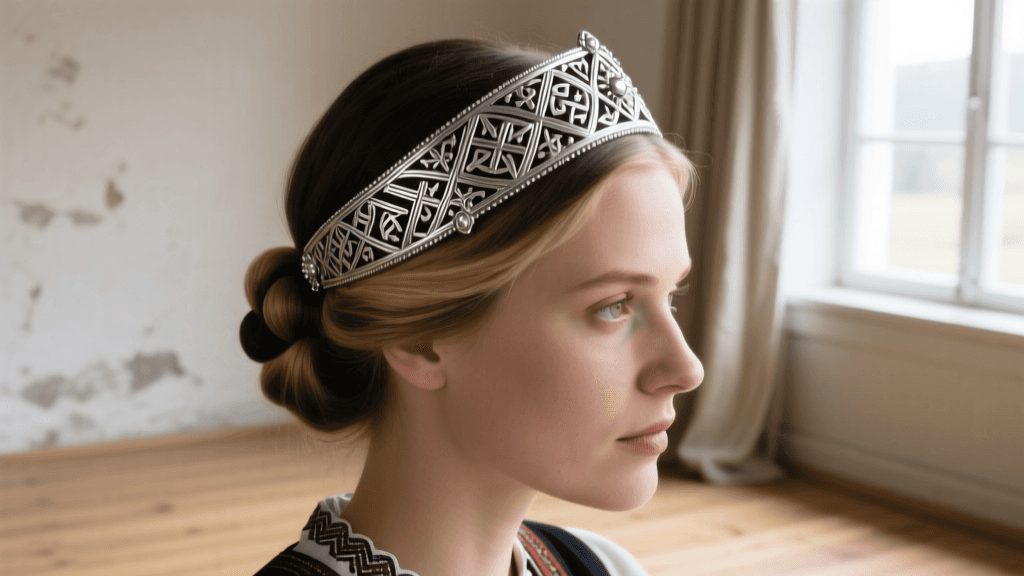
While silver provides the flash, traditional Norwegian headwear provides the context. In historical European folk dress, headwear was the primary indicator of a woman's marital status, social standing, and exact geographic origin. The Museum of Cultural History at the University of Oslo notes that the transition from a maiden's bare hair or simple ribbon to a married woman's structured headpiece was the most significant visual marker in rural Scandinavian society.
Below is a comparison of the most prominent traditional Norwegian headwear styles still actively worn and commissioned in 2026:
| Region | Headwear Name | Material & Structure | Marital Indicator | 2026 Avg. Artisan Cost |
|---|---|---|---|---|
| Hardanger | Skaut | White linen, heavily folded and pinned | Married women (White) | 2,800 - 4,500 NOK |
| Telemark | Hodelin | White linen with intricate lace edging | Married women | 3,200 - 5,000 NOK |
| Valdres | Kyse | Structured bonnet, often with silk ribbons | Varies by color/ribbon | 2,500 - 4,000 NOK |
| Setesdal | Skaut / Lin | Stiffened linen with distinct folding | Married women | 3,000 - 4,800 NOK |
The Hardanger skaut is perhaps the most architecturally complex of these garments. It is not merely a piece of cloth; it is an origami-like marvel of traditional linen folding. The precise folds, secured with hidden, specialized silver pins, signify the wearer's specific parish. In 2026, master artisans who possess the generational muscle memory to fold and starch a skaut correctly are highly sought after, often booking consultations months in advance for midsummer festivals and bridal parties. Conversely, unmarried women historically wore a band (a woven ribbon) or a simpler, unstructured linen cap, allowing their hair to remain partially visible.
Sourcing Authentic Pieces: Avoiding 2026 Counterfeits
As the global fascination with European folk dress has grown, so too has the market for mass-produced, imported replicas. The Norwegian Folk Art and Craft Association (Norges Husflidslag) strictly regulates the production of official bunads and their accessories to ensure historical accuracy and support local economies. When sourcing silver in 2026, it is critical to look for the Mesterbrev (Master Craftsman Certificate) or purchase directly from authorized Husfliden retailers.
Authentic Norwegian silver will always bear specific hallmarks. You should look for:
- The 925S Stamp: Indicating 92.5% pure sterling silver, the standard for modern bunad jewelry.
- The Maker's Mark: A unique symbol or initials registered with the Norwegian authorities (e.g., Thavenow, Oslo Sølvvarefabrikk, or independent master smiths).
- The City Mark: Often a crown or specific municipal symbol indicating where the piece was assayed and crafted.
Purchasing from uncertified e-commerce platforms often results in acquiring 'alpaca' or nickel-silver alloys that lack the weight, acoustic resonance, and heirloom longevity of true 925 sterling silver. In 2026, investing in a certified piece is not just a cultural choice, but a financially sound one, as authentic artisan silver continues to appreciate in value.
Care, Maintenance, and Modern Styling
Maintaining heirloom bunad silver requires a gentle approach, especially given the shift toward eco-friendly household products in 2026. Avoid harsh chemical dips that strip the oxidation from the crevices of the filigree work. Instead, use a mild, phosphate-free soap and a soft-bristled brush for cleaning, followed by polishing with a microfiber cloth treated with anti-tarnish compounds. When storing the sølje, wrap each piece individually in acid-free tissue paper or untreated cotton flannel, and include silica gel packets in the storage box to combat humidity-induced tarnishing.
Interestingly, 2026 has seen a beautiful evolution in how these traditional accessories are integrated into daily life. While the full bunad is reserved for Constitution Day (Syttende Mai), weddings, and folk festivals, younger generations are reimagining folk accessories for contemporary wardrobes. It is increasingly common to see a vintage brystnål pinned to the lapel of a modern, tailored wool winter coat, or a traditional silver belt buckle adapted onto high-quality contemporary leather belts. Similarly, the intricate lace and linen textures of the hodelin are inspiring modern milliners who are creating folk-fusion headpieces that honor the structural integrity of the past while fitting seamlessly into modern European street style.
Ultimately, Norwegian bunad silver and headwear are not static museum artifacts. They are living, breathing elements of European folk dress that continue to evolve. By understanding their regional distinctions, respecting the master craftsmanship required to forge them, and caring for them properly, we ensure that these stunning accessories will continue to chime and shine for generations to come.