Authentic Viking Smokkr Dress: 2026 Reconstruction Guide
The Evolution of the Smokkr in Modern Reenactment
As the historical reenactment and living history communities continue to grow in 2026, the demand for meticulous, archaeologically accurate Norse garments has never been higher. At the center of the female Viking Age wardrobe is the smokkr, commonly referred to as the apron dress. Worn over a linen or wool underdress (the serk), the smokkr was a symbol of status, practicality, and regional identity across Scandinavia and the Norse settlements from the 8th to the 11th centuries. For modern enthusiasts preparing for the 2026 festival season, moving away from the inaccurate, heavily darted 'Viking dresses' of the early 2000s and embracing evidence-based reconstruction is essential.
Decoding the Archaeological Record
To build an accurate smokkr today, we must look to the surviving textile fragments. Because wool and linen degrade rapidly in most soils, complete garments are virtually nonexistent. However, the acidic, waterlogged environments of bogs and the mineralized preservation found in metal-rich graves have provided crucial clues. The most significant finds come from the Hedeby harbor in modern-day Germany, the Adelvold find in Denmark, and the wealthy female graves at Birka, Sweden.
According to the National Museum of Denmark, the presence of loops made from folded fabric or tablet weaving attached to the top corners of these garments confirms they were suspended by straps. Furthermore, the discovery of tortoise-shaped oval brooches in situ across the chest of female remains in Norway and Sweden provides the exact anchor points for these straps, allowing modern reconstructors to map the garment's drape and tension with remarkable precision.
Choosing the Right Wool: 2026 Sourcing Guide
The foundation of any authentic smokkr is the fabric. The Vikings did not use modern, uniformly milled broadcloth. They utilized hand-woven wools, most notably diamond twill, herringbone twill, and tabby weaves. As of 2026, the historical textile market has matured significantly, with specialized weavers in Iceland, Estonia, and the UK producing period-accurate, pit-loom woven wools that perfectly mimic the thread count and drape of 10th-century artifacts.
When sourcing fabric for the 2026 reenactment season, you must avoid synthetic blends, machine-overlocked edges, and modern chemical dyes. Look for a thread count between 10 to 18 threads per centimeter in the warp and weft. Below is a comparison of the most historically accurate wool weaves available for smokkr reconstruction this year.
| Weave Type | Historical Accuracy | Weight & Drape | Approx. 2026 Cost (per meter) | Best Used For |
|---|---|---|---|---|
| Diamond Twill | Exceptional (Hedeby/Birka finds) | Medium-Heavy, excellent structured drape | $85 - $130 USD | High-status garments, winter festivals |
| Herringbone Twill | High (Common across Scandinavia) | Medium, soft but durable | $65 - $95 USD | Everyday wear, versatile layering |
| Tabby (Plain) Weave | High (Often used for underdresses) | Light to Medium, crisp drape | $45 - $70 USD | Lined smokkrs, summer events, serks |
| Diamond Twill (Fulled) | Moderate (More common in later eras) | Heavy, stiff, highly weather-resistant | $110 - $150 USD | Winter cloaks, heavy outerwear |
Pattern Drafting and Measurements
There are two primary, archaeologically supported theories for the construction of the smokkr: the tubular (closed) dress and the rectangular wrap dress. The tubular design, supported by the Adelvold find, consists of a single tube of fabric gathered or pleated at the front, while the wrap design, suggested by some interpretations of the Hedeby fragments, consists of a flat back panel and overlapping front panels.
For a standard 165cm (5'5") tall woman, drafting a tubular smokkr requires the following measurements:
- Circumference: Measure the bust and add 15-20cm for ease and historical drape. A typical finished circumference is 110cm to 130cm.
- Length: Measure from the armpit down to the mid-calf or ankle. A standard length is 105cm to 115cm.
- Strap Length: Measure from the front apex, over the shoulder, to the back apex. Add 10cm for looping and seam allowances. Typically 45cm to 55cm per strap.
The front panel of a high-status smokkr was often pleated. To achieve this, you cut the front panel 2.5 times wider than your chest measurement and use a gathering stitch with heavily waxed linen thread to draw it into tight, vertical pleats before securing it to the top band.
Sewing Techniques and Tools
Authenticity extends beyond the fabric to the very stitches holding the garment together. According to extensive research compiled by Hurstwic, Viking Age seamstresses utilized specific stitches that provided both flexibility and immense durability without the use of modern sewing machines. For your 2026 reconstruction, you should employ the following hand-sewing techniques:
- Running Stitch: Used for basic seams. Keep stitches small (3-4mm) and use a backstitch every 4th or 5th stitch to prevent the seam from popping under tension.
- Felled Seams: Essential for the smokkr. Fold the raw edges of the seam allowance inward and stitch them flat against the garment using a hem stitch or whip stitch. This encases the raw wool, preventing fraying and creating a clean interior.
- Thread Choice: Use 100% linen thread (waxed with beeswax) or fine wool thread. Cotton is strictly forbidden in accurate Norse reenactment, as it was not available in Scandinavia during the Viking Age.
- Needles: While modern steel needles are easier to use, using replica bone or bronze needles for visible top-stitching adds an unparalleled layer of authenticity to your living history kit.
Dyes and Color Accuracy
The stereotype of the Viking wearing only drab browns and grays is a myth that modern archaeology has thoroughly debunked. The Norse loved vibrant colors, and a high-status smokkr would have been a brilliant display of wealth. In 2026, natural dyeing has seen a massive resurgence, making it easier than ever to source historically accurate, plant-dyed wools.
When selecting colors for your smokkr, stick to the natural dye palette available in 10th-century Northern Europe:
- Woad (Blue): Ranging from pale sky blue to deep navy. Woad was cultivated extensively and was a staple dye.
- Madder (Red): Producing shades from soft terracotta to deep brick red. True, vibrant crimson was rare and highly expensive, often imported.
- Weld and Weld/Indigo Overdyes (Yellow and Green): Weld produced bright yellows, while overdyeing weld with woad created the rich greens seen in high-status graves.
- Walnut Hulls and Lichens (Browns and Purples): Used for earthy tones and, in the case of specific rock lichens, rare and prized purples.
Essential Accessories: Oval Brooches and Tablet Weaving
A smokkr is incomplete without its suspension system and embellishments. The garment was held up by straps fastened by a pair of oval brooches (often called tortoise brooches) at the collarbone. In 2026, the market for cast bronze and silver replica brooches is highly developed. Avoid cheap, hollow-cast zinc alloys; invest in solid sand-cast bronze or lost-wax cast brass pieces that replicate the intricate gripping beast or Borre-style motifs found in museum collections.
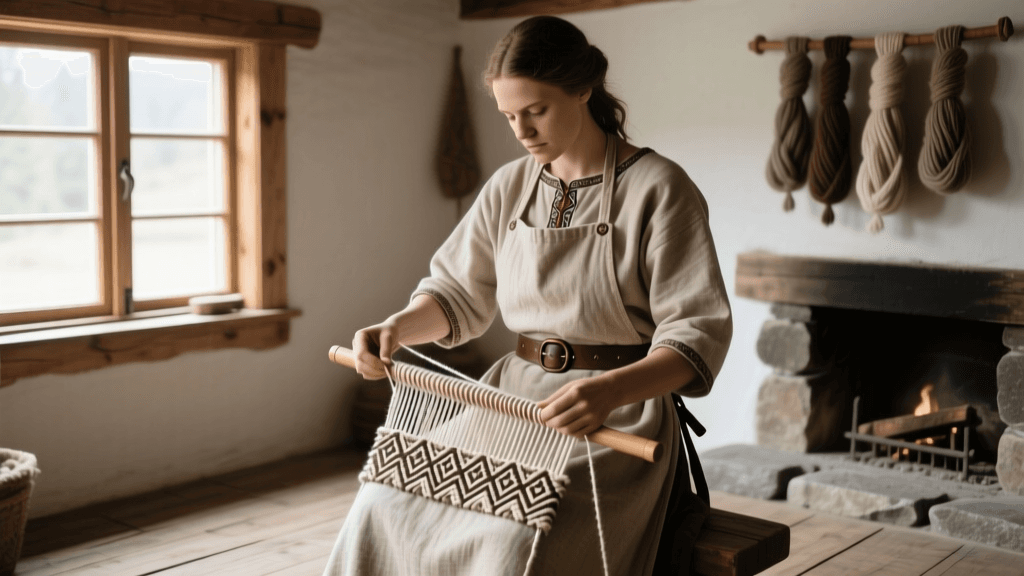
To elevate the garment further, incorporate tablet weaving. Tablet-woven bands were used to trim the neckline, the top edge of the smokkr, and sometimes the hem. Using a 20-to-30-card setup with fine wool or silk yarn, you can weave geometric patterns or the classic 'ramshorn' motif. Sewing a 5cm wide tablet-woven band across the top edge of the smokkr not only adds stunning visual contrast but also reinforces the fabric where the heavy bronze brooches will pull.
Conclusion
Reconstructing a Viking Age smokkr in 2026 is a rewarding journey into the past that requires patience, research, and a dedication to historical truth. By sourcing authentic diamond twill wool, utilizing period-accurate felled seams, and embracing the vibrant natural dye palette of the Norse, you create more than just a costume. You create a tangible, wearable connection to the women of the Viking Age, honoring their craftsmanship and their enduring legacy in the tapestry of European folk dress.