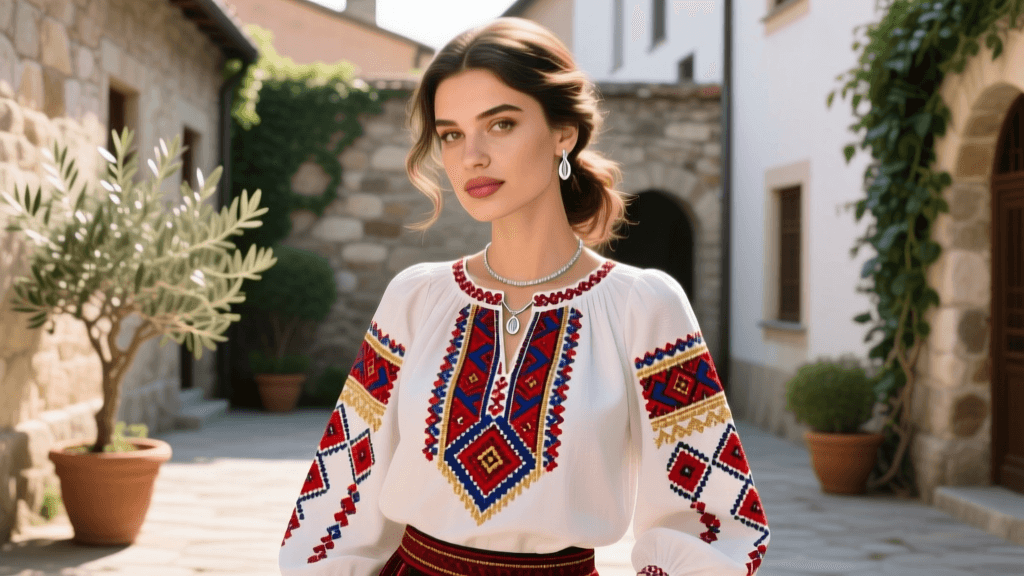
Carpathian Linen Shirt Patterns: Zero-Waste Drafting 2026
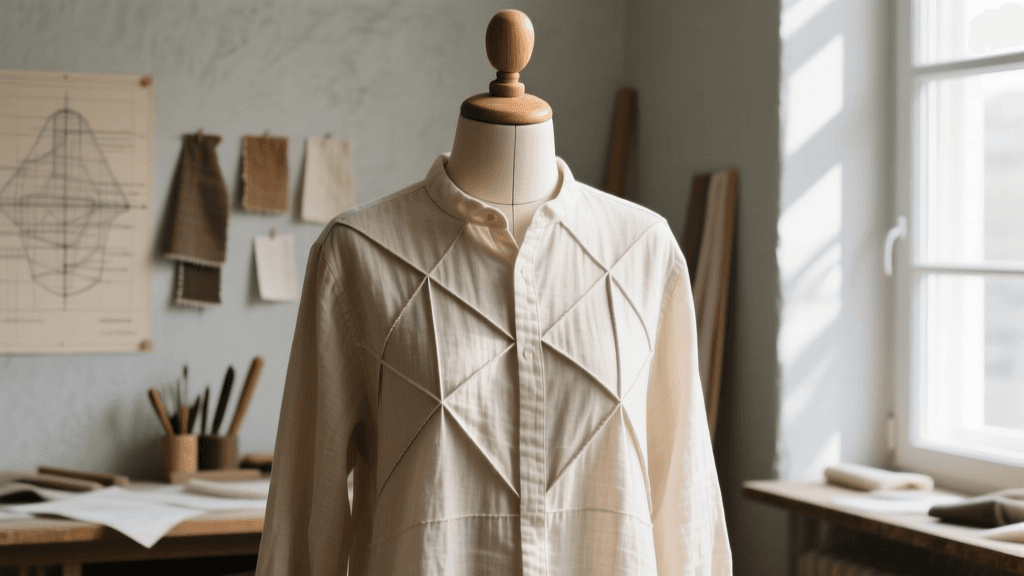
The Renaissance of Geometric Folk Patterns in 2026
As the global fashion industry faces intense scrutiny over textile waste in 2026, modern patternmakers, artisans, and historians are looking backward to move forward. The traditional Carpathian linen shirt—known regionally as the vyshyvanka, sorochka, or rubakha—represents an absolute masterclass in zero-waste pattern drafting. Unlike modern Western tailoring, which relies on curved armholes, princess seams, and complex darts that generate up to 20% fabric waste on the cutting room floor, Eastern European folk dress utilizes strict geometric construction. Every single inch of the loom-width fabric is utilized through a brilliant, mathematically precise system of rectangles, squares, and triangular gussets.
Today, the intersection of historical European folk dress and modern sustainable design has never been more relevant. Artisans and slow-fashion brands in 2026 are adopting these ancient Slavic and Balkan cutting techniques not just for their cultural significance, but for their unparalleled ecological efficiency. By understanding the structural logic of the Carpathian linen shirt, contemporary sewists can create garments that offer maximum mobility, zero waste, and a profound connection to European textile heritage.
The Geometry of the Slavic Linen Shirt
The foundational rule of traditional Eastern European shirt construction is the absolute respect for the loom. Historically, linen was woven on narrow handlooms, producing fabric widths of roughly 35 to 45 centimeters. Because weaving was an incredibly labor-intensive process, cutting into the fabric and discarding the scraps was unthinkable. Instead, the garment was engineered entirely from geometric shapes that fit together like a jigsaw puzzle.
The body of the shirt is formed from two long rectangles that fold over the shoulders, eliminating the need for a shoulder seam. The sleeves are also simple rectangles, attached directly to the body panels without a curved armscye. To compensate for the lack of tailoring and to allow the wearer to raise their arms for agricultural labor or traditional dancing, square gussets (known as lastovitsa) are inserted at the underarm. Triangular godets are added to the side seams to provide sweeping volume at the hem. According to structural analyses preserved by The Costume Society, this geometric approach creates a garment that distributes tension evenly across the linen fibers, significantly increasing the lifespan of the textile compared to modern bias-cut or tailored garments.
Zero-Waste Pattern Drafting in 2026
In 2026, zero-waste pattern drafting has been revolutionized by digital tools, yet the core mathematics of the Carpathian shirt remain unchanged. Modern makers utilize open-source software like Valentina and advanced 3D rendering environments to nest their geometric pattern pieces perfectly within standard modern fabric widths. While historical weavers were constrained by 40cm widths, today's standard European flax linen typically comes in 140cm to 150cm widths.
To adapt the traditional pattern for modern fabric without losing the zero-waste ethos, 2026 drafting methodologies involve cutting multiple shirts simultaneously or utilizing the remaining width for complementary accessories, such as woven sashes (poias) or headwraps (namitka). The digital nesting ensures that 100% of the yardage is allocated, honoring the historical mandate that nothing is thrown away.
The Crucial Role of Gussets and Godets
Drafting the Underarm Gusset (Lastovitsa)
The underarm gusset is the mechanical heart of the Carpathian linen shirt. Without a curved armhole, a simple rectangular sleeve attached to a rectangular body would bind severely at the armpit, restricting movement and tearing the linen under tension. The lastovitsa is typically a square or diamond-shaped piece of fabric, measuring between 12cm and 15cm per side in modern adult garments.
When inserted, the gusset acts as a three-dimensional pivot point. It transforms the flat, two-dimensional cross of the body and sleeves into a volumetric shape that accommodates the human shoulder joint. In 2026, historical reenactors and folk dancers insist on precisely aligned grainlines for the gusset—usually placed on the true bias (45 degrees) or strictly on the straight grain, depending on the specific regional variant (e.g., Hutsul vs. Lemko styles)—to ensure optimal drape and stretch.
Adding Godets for Hem Volume
To achieve the characteristic A-line silhouette of the traditional shirt, triangular godets are inserted into the side seams, starting from the hip or waist and extending to the hem. These triangles are often cut from the exact same continuous piece of cloth as the sleeves, utilizing the negative space of the fabric width. The insertion of godets not only provides walking ease but also creates a beautiful, rhythmic swing during traditional circle dances like the horo or kolomyika.
Fabric Width Adaptation: Historical vs. 2026 Standards
| Pattern Component | Historical Loom Width (Pre-1900) | 2026 Standard Fabric Width | Modern Drafting Adjustment |
|---|---|---|---|
| Body Panels | 35-40 cm | 140-150 cm | Cut two panels side-by-side; use remaining width for sleeves. |
| Sleeves | 35-40 cm | 140-150 cm | Nest sleeve rectangles horizontally across the leftover fabric width. |
| Gussets & Godets | Scraps from loom ends | Negative space from nesting | Extract triangles and squares from the voids between sleeve and body panels. |
Step-by-Step Construction Sequence
Constructing a Carpathian linen shirt requires a departure from modern assembly-line sewing. The sequence is designed to manage bulk and ensure that all raw edges are enclosed, a necessity for linen which frays easily. According to the Victoria and Albert Museum's textile archives, historical garments often survived centuries precisely because of these meticulous, enclosed seam finishes.
- Preparation and Blocking: Linen shrinks significantly. Pre-wash your 2026-certified European flax linen in hot water and tumble dry or iron damp to pre-shrink the fibers. Pull a thread to ensure your cutting lines are perfectly on the grain.
- Cutting the Geometry: Cut the main body rectangle, the sleeve rectangles, the square underarm gussets, and the triangular side godets. Mark all alignment points with tailor's tacks, not snips, to preserve the zero-waste integrity of the edges.
- Inserting the Gusset: Sew one edge of the square gusset to the sleeve underarm seam, and the adjacent edge to the body side seam. This forms a corner pivot. Press the seams open carefully before enclosing them.
- Flat-Felled Seams: Join the sleeves to the body panels using traditional flat-felled seams. This involves sewing wrong sides together, trimming one seam allowance, folding the wider allowance over the trimmed one, and topstitching. This creates a highly durable, fray-proof seam that lies flat against the skin.
- Neckline Gathering: The neckline is not curved but rather a straight slit or drawstring channel. Gather the excess fabric of the body and sleeves using heavy, waxed linen thread. Bind the gathered edge with a narrow, straight-grain linen strip.
- Hem Finishing: Finish the bottom edge with a microscopic roll-hem or a traditional drawn-thread whitework border, adding weight and structure to the hemline.
Sourcing Authentic Linen in 2026
The success of a traditional folk garment relies entirely on the quality of its textile. In 2026, the market is flooded with synthetic blends masquerading as linen. For authentic Carpathian shirt construction, you must source 100% long-staple European flax linen, ideally in a medium weight (180-220 GSM) with a natural, unbleached ecru or bright white finish.
To guarantee authenticity and ecological responsibility, look for the Masters of Linen certification. The European Flax and Hemp Confederation (CELC) oversees this standard, ensuring that the flax is grown in Western Europe without artificial irrigation or defoliants, and spun in traceable mills. As of early 2026, authentic, certified European linen retails between €25 and €40 per meter. While this represents a premium investment compared to fast-fashion textiles, the zero-waste drafting method ensures that you will only need 2.5 to 3 meters of fabric for a complete, voluminous adult shirt, making the project both economically viable and deeply sustainable.
Conclusion
The Carpathian linen shirt is far more than a nostalgic costume; it is a highly engineered, zero-waste marvel that solves modern sustainability challenges using centuries-old wisdom. By mastering the geometric drafting of rectangles, gussets, and godets, today's sewists and designers can participate in the vital preservation of European folk dress while actively reducing their environmental footprint in 2026 and beyond.