Schuhplattler Dance Tracht: 2026 Festival Costume Guide
The Kinetic Art of Bavarian Tracht: A 2026 Perspective
The intersection of traditional European folk dress and kinetic movement is nowhere more apparent than in the Bavarian and Tyrolean Schuhplattler. As we enter the 2026 festival season, marked by the highly anticipated regional Gaufest competitions and summer Maibaum (Maypole) celebrations, the demand for historically accurate, movement-optimized Tracht (traditional costume) has reached new heights. Unlike static museum garments or mass-produced tourist souvenirs, authentic dance costumes are engineered for extreme physical exertion, rapid spins, and percussive impact.
For folk dance enthusiasts, cultural historians, and garment makers, understanding the precise construction of the Tanzdirndl (dance dirndl) and Plattler-Lederhosen is essential. The Bayerischer Trachtenverband (Bavarian Folk Costume Association) continues to set the gold standard for regional authenticity, emphasizing that a true folk costume must serve the dance, not merely decorate the dancer. This guide breaks down the exact measurements, material requirements, and 2026 market trends for sourcing and constructing festival-ready Schuhplattler garments.
The Tanzdirndl: Engineering the Perfect Spin
When a female dancer executes the Drehen (the continuous spinning movement central to the Schuhplattler), her skirt must flare outward into a perfect horizontal disc, known in the dialect as das Tellerln (the plating). Achieving this aerodynamic bell shape requires specific textile engineering that standard fashion dirndls completely lack.
Skirt Circumference and Fabric Weight
A commercial fashion dirndl typically features a skirt circumference of 2.0 to 2.5 meters. For the 2026 competitive dance season, a certified Tanzdirndl demands a minimum circumference of 3.8 to 4.5 meters. This massive amount of fabric is heavily pleated into a waistband that is reinforced with inner cotton twill tape to prevent tearing during high-velocity spins.
The fabric choice is equally critical. Synthetic blends are strictly prohibited in authentic dance circles because they trap heat and lack the necessary drape. The 2026 standard relies on 100% mid-weight cotton poplin or fine-woven linen, typically weighing between 180 and 220 GSM (grams per square meter). This weight provides enough centrifugal force to throw the skirt outward, while remaining light enough to collapse instantly when the dancer stops.
The Mieder (Bodice) and Structural Support
The female dancer's upper body is subjected to vigorous arm movements, partner swings, and sudden directional changes. The Mieder (bodice) must act almost like a corset. Modern authentic bodices utilize flexible steel boning encased in cotton channels, replacing the rigid whalebone or heavy synthetics of the past. The front lacing must be reinforced with metal eyelets, and the neckline is traditionally finished with a Miedertuch (a silk or fine linen bust cloth) that is pinned securely to prevent displacement during the dance.
Lederhosen and Schuhplattler Gear for Men
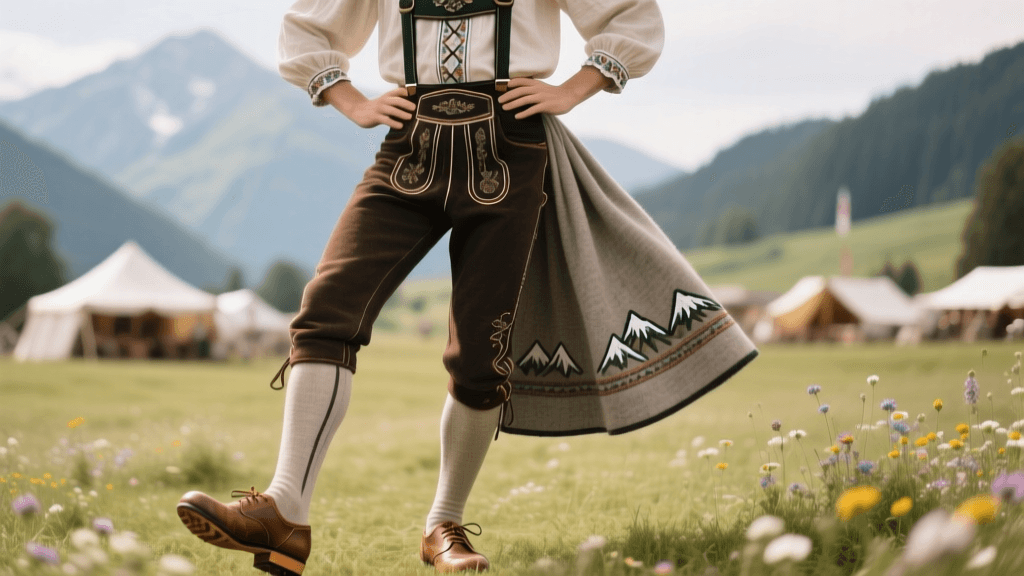
The male Schuhplattler costume is a masterclass in functional leatherwork. The dance involves rhythmically slapping the thighs, knees, and soles of the feet. Therefore, the garments must withstand immense percussive friction while allowing a full range of squatting and leaping motion.
Hirschleder (Deer Leather) Specifications
Authentic Lederhosen for dance are exclusively crafted from Hirschleder (deer leather) that has undergone Sämischgerbung (brain-tanning or oil-tanning). This ancient, eco-friendly tanning method uses cod liver oil and natural fats, resulting in a suede-like finish that is breathable, washable, and incredibly soft against the skin. For the 2026 market, top-tier artisans are sourcing deer hides from managed Alpine forests, ensuring a leather thickness of exactly 1.0mm to 1.2mm. Thinner leather will tear during the thigh-slapping (Plattln), while thicker leather will restrict the deep squats required for the Hackenschlagen (heel-clicking) jumps.
Footwear: The Haferlschuh
Dancers require specialized footwear known as Haferlschuhe. These traditional Alpine shoes feature side-lacing and a slightly upturned toe. For the 2026 festival circuit, dancers are opting for custom-cobbled versions with reinforced double-leather soles and specialized rubber heel grips. The side-lacing prevents the leather from loosening around the ankle during repetitive stomping, providing crucial lateral stability on wooden outdoor stages.
Comparison: Commercial vs. Authentic Dance Tracht
To understand the investment required for serious folk dance participation, it is helpful to compare mass-market festival wear with the garments required by official Trachtenvereine (costume clubs).
| Garment Feature | Tourist / Fashion Tracht | Authentic Vereinstracht (Dance Standard) |
|---|---|---|
| Dirndl Skirt Circumference | 2.0 - 2.5 meters | 3.8 - 4.5 meters (Pleated) |
| Bodice Boning | Plastic zip-ties or none | Flexible spiral steel boning |
| Lederhosen Leather | Cowhide, chrome-tanned, 1.5mm+ | Deer leather, brain-tanned, 1.0-1.2mm |
| Embroidery (Stickerei) | Machine-embroidered synthetic thread | Hand-stitched silk or cotton floss |
| Shirt Buttons | Plastic or base metal | Genuine stag horn or carved wood |
| Estimated 2026 Cost (Full Set) | €150 - €350 | €1,200 - €2,800+ |
2026 Market Trends and Sourcing
The 2026 Tracht market is heavily influenced by a return to hyper-local sustainability and regional specificity. According to cultural heritage reports highlighted by Munich's official cultural tourism board, there is a growing rejection of generic "Pan-Alpine" designs in favor of strictly localized village patterns. Dancers are now commissioning garments that reflect the exact embroidery motifs of their specific home valleys, such as the distinct floral patterns of the Miesbach region or the geometric stag motifs of Werdenfels.
Sustainable Dyes and Textiles
A major trend for the 2026 Gaufest season is the use of natural, plant-based dyes. Artisans are utilizing woad for deep blues, madder root for traditional reds, and walnut husks for the rich brown tones seen in men's embroidery. Furthermore, organic, regionally grown flax is being spun into high-grade linen for the Trachtenhemden (traditional shirts), offering superior breathability during the peak heat of July and August outdoor festivals.
The Cost of Authenticity
Investing in authentic dance Tracht is a significant financial commitment. A bespoke, hand-embroidered Tanzdirndl from a certified master tailor in Bavaria currently ranges from €850 to €1,400. For men, a pair of custom-fitted, hand-stitched Hirschleder breeches with traditional Hosenträger (suspenders) will cost between €1,200 and €2,200, reflecting the hundreds of hours of skilled leatherwork and embroidery required. However, unlike fast-fashion costumes that degrade after a single season, authentic brain-tanned leather and steel-boned bodices are designed to be passed down through generations.
Garment Care and Maintenance for Dancers
Maintaining the structural integrity of dance Tracht requires specialized care, particularly after a grueling weekend of festival performances.
- Leather Care: Brain-tanned deer leather is uniquely washable. If the Lederhosen become stained with sweat or stage dirt, they can be gently hand-washed in lukewarm water with a specialized leather soap. Crucially, they must be worn while slightly damp to stretch and mold back to the dancer's exact body shape as they dry.
- Skirt Starching: To maintain the crisp pleats of the Tanzdirndl skirt, dancers use a traditional liquid wheat starch spray. The skirt is then ironed using a specialized pressing cloth to avoid scorching the cotton, and hung on a wide, padded hanger to preserve the pleat geometry.
- Silk Accessories: The women's Seidenhut (silk bonnet) and silk shawls must be dry-cleaned or carefully spot-treated, as water will ruin the structural stiffness of the traditional headwear.
Conclusion
As the 2026 European folk dance season unfolds, the Schuhplattler remains a breathtaking display of rhythm, strength, and cultural pride. The garments worn by these dancers are not mere costumes; they are highly specialized tools of the trade, engineered through centuries of trial and error to facilitate human movement. Whether you are a seasoned member of a Trachtenverein or a textile enthusiast studying the mechanics of traditional dress, respecting the precise measurements and authentic materials of the Tanzdirndl and Lederhosen is essential to keeping this vibrant Alpine heritage alive.