2026 Guide: Sourcing Authentic Romanian Ie & Vyshyvanka
The Revival of Eastern European Embroidered Blouses in 2026
In 2026, the appreciation for Eastern European folk dress has transcended mere costume, evolving into a profound movement of cultural preservation and sustainable fashion. At the forefront of this revival are the Romanian Ie and the Ukrainian Vyshyvanka. These garments are not simply clothing; they are wearable archives of Slavic and Balkan history, encoding regional identities, spiritual beliefs, and ancestral craftsmanship into every stitch. For collectors, cultural enthusiasts, and sustainable fashion advocates, sourcing authentic pieces requires navigating a complex market where mass-produced imitations often overshadow genuine artisan work.
This comprehensive guide explores the anatomical structures of these iconic blouses, decodes their regional patterns, and provides actionable strategies for sourcing authentic, ethically made garments in the current 2026 market landscape.
Understanding the Romanian Ie: Altita, Incret, and Rauri
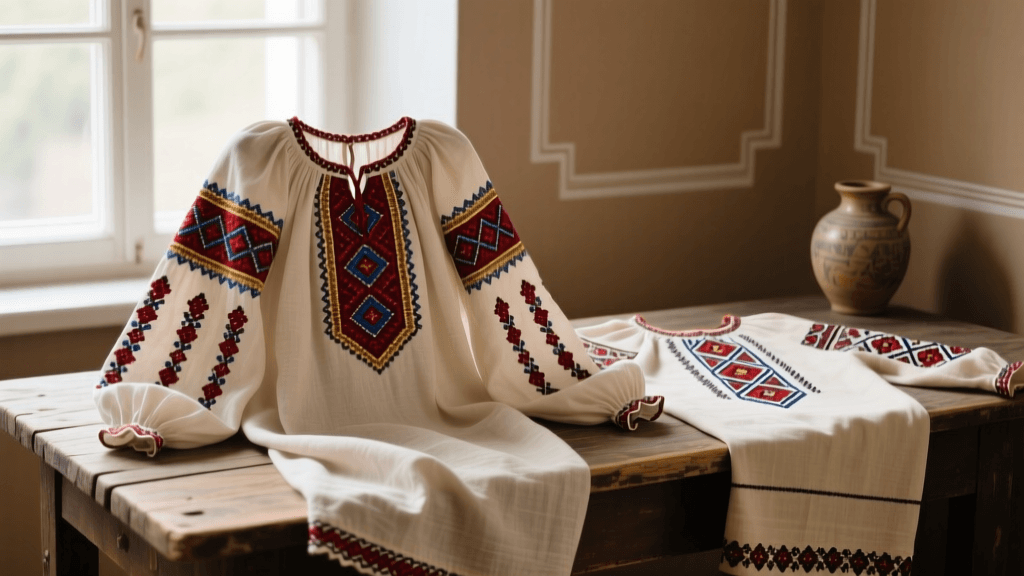
The traditional Romanian blouse, universally recognized as the Ie, is a masterclass in structural symbolism. According to the UNESCO Intangible Cultural Heritage registry, the art of creating the traditional blouse with shoulder embroidery (the altiță) is a protected cultural element. The anatomy of the Ie is strictly divided into three distinct zones, each carrying specific cosmological meanings:
- Altița (The Shoulder): The most elaborately embroidered section, representing the sky and the divine. In 2026, authentic artisans in the Argeș and Muscel regions still use hand-spun silk and metallic threads to create dense, geometric blocks that signify celestial protection.
- Increțul (The Gathering): Located just below the altița, this narrow band often features a contrasting color (typically yellow or black) and represents the earth and the transition between the divine and the mortal realms.
- Rândurile or Râurile (The Rivers): These are the vertical stripes of embroidery flowing down the sleeves. They symbolize the rivers of life, carrying blessings from the heavens down to the earth. The density and color of the râuri historically indicated the wearer's age, marital status, and village of origin.
When examining a potential purchase, inspect the reverse side of the fabric. Authentic hand-embroidered Ie blouses will show a nearly flawless reverse, with threads carried meticulously to avoid tangling, a hallmark of the techniques preserved by the National Museum of the Romanian Peasant and rural cooperatives.
The Ukrainian Vyshyvanka: Regional Codes and Stitching Techniques
The Ukrainian Vyshyvanka is equally steeped in semiotics, with over 100 distinct regional stitching techniques documented by ethnographers. In 2026, the demand for region-specific Vyshyvankas has skyrocketed, with collectors seeking out rare techniques that were nearly lost during the 20th century.
Key Regional Variations
- Poltava White-on-White: A highly sophisticated technique utilizing up to 180 different shades of white and cream thread. The interplay of shadow, texture, and intricate cutwork (merezhka) creates a subtle, three-dimensional effect that is highly prized in contemporary minimalist styling.
- Hutsul Geometrics: Originating from the Carpathian Mountains, Hutsul embroidery is characterized by dense, vibrant geometric patterns in red, black, and orange. The rhombus, a dominant motif, is an ancient Slavic symbol of fertility and the sown field.
- Volyn and Polissya: Northern regions favor stark, rhythmic geometric patterns, primarily in red and black, executed in the zavolikannya (running stitch) technique, which mimics the look of woven tapestry.
2026 Sourcing Landscape: Navigating Artisans and Cooperatives
Sourcing an authentic Slavic or Balkan blouse in 2026 requires diligence. The market is currently saturated with machine-embroidered garments manufactured in fast-fashion hubs, falsely marketed as 'traditional.' To acquire a genuine piece, buyers must shift their focus from commercial retail platforms to direct-to-artisan networks and heritage cooperatives.
Platforms utilizing blockchain verification for textile provenance have emerged this year, allowing buyers to trace the exact village, artisan, and material source of their garment. Furthermore, cultural NGOs in Eastern Europe have established digital storefronts that funnel profits directly back into rural weaving communities. When sourcing, always request documentation of the linen's origin and the natural dyes used, such as madder root for reds or woad for blues.
Material Comparison: 2026 Market Authenticity Guide
The foundation of any authentic folk blouse is the textile. The table below outlines the primary materials used in 2026, comparing their authenticity, cost, and structural integrity.
| Material Type | Origin / Sourcing | 2026 Avg. Cost (per meter) | Authenticity Rating | Best Use Case |
|---|---|---|---|---|
| Hand-loomed Carpathian Hemp | Rural Ukraine / Romania | $45 - $65 USD | Highest (Heritage) | Museum replicas, high-end heirloom pieces |
| Artisan Flax Linen | Baltic & Slavic Cooperatives | $25 - $40 USD | High (Traditional) | Everyday traditional wear, festival garments |
| Factory-Produced Cotton | Global Textile Mills | $8 - $15 USD | Low (Modern Adaptation) | Casual modern styling, stage costumes |
| Synthetic Blends | Mass Market Fast Fashion | $3 - $6 USD | None (Inauthentic) | Not recommended for cultural preservation |
Caring for Hand-Embroidered Linen and Hemp
Preserving these garments requires a departure from modern laundry habits. Hand-loomed hemp and artisan linen are highly durable but susceptible to damage from harsh chemicals and aggressive agitation. In 2026, textile conservators recommend the following protocol for maintaining heirloom folk dress:
- Washing: Never machine wash. Submerge the garment in lukewarm water with a pH-neutral, enzyme-free detergent designed for antique textiles. Gently agitate by hand for no more than five minutes.
- Rinsing and Drying: Rinse thoroughly in cool water. Do not wring the fabric; instead, roll it in a clean, dry cotton towel to press out excess moisture. Lay flat to dry away from direct sunlight, which can degrade natural dyes and weaken linen fibers.
- Ironing: Iron the garment while it is still slightly damp, using a medium-hot setting. Always iron on the reverse side, placing a clean cotton cloth over the embroidery to prevent crushing the three-dimensional stitches.
- Storage: Store folded garments in acid-free tissue paper within a breathable cotton pillowcase. Avoid plastic bins, which trap moisture and promote mildew growth.
Styling Traditional Folk Dress for Contemporary 2026 Events
The modern revival of Eastern European folk dress is not about wearing a static museum replica; it is about integrating heritage into contemporary life. In 2026, fashion stylists and cultural advocates promote 'heritage pairing'—combining a highly ornate, hand-embroidered Ie or Vyshyvanka with modern, minimalist tailoring.
For formal events, pair a white-on-white Poltava Vyshyvanka with high-waisted, wide-leg wool trousers and structured leather boots. The Romanian Ie, with its voluminous sleeves, pairs beautifully with a tailored, high-waisted midi skirt or dark, raw-denim jeans, allowing the intricate altiță shoulder work to remain the focal point. By respecting the garment's origins and supporting rural artisans, you ensure that the profound legacy of Slavic and Balkan textile arts continues to thrive for generations to come.