Norwegian Bunad Silver & Bridal Crowns: 2026 Buyer Guide
The Resurgence of Norwegian Heritage: Silver and Crowns in 2026
The Norwegian bunad is far more than a simple festive garment; it is a wearable archive of regional history, familial lineage, and masterful craftsmanship. As we move through 2026, the revival of traditional European folk dress has reached unprecedented heights. Younger generations across Scandinavia are embracing their heritage not just on Constitution Day (May 17th), but at weddings, galas, and international cultural festivals. Central to this visual splendor are the intricate silver accessories known as sølje and the breathtaking, towering bridal crowns known as brudkrona.
Whether you are a collector of antique European folk jewelry, a bride planning a traditional Scandinavian wedding, or a textile enthusiast looking to understand the anatomy of regional dress, navigating the market for authentic Norwegian silver and headwear requires specialized knowledge. This comprehensive 2026 buyer guide explores the anatomy, regional variations, market pricing, and care of Norway's most iconic folk accessories.
The Anatomy of Norwegian Bunad Silver (Sølje)
A complete bunad is never finished without its silver. The term sølje encompasses a wide variety of filigree, cast, and oxidized silver jewelry pieces that serve both functional and deeply symbolic purposes. Historically, silver was a display of a family's wealth and social standing, often passed down through generations as part of a dowry. According to the Norwegian Museum of Cultural History, the specific arrangement and weight of silver on a bunad can immediately identify the wearer's specific valley or municipality.
The Hierarchy of Silver Fasteners
To properly dress in a bunad, one must understand the hierarchy of silver fasteners. A traditional women's bunad from regions like Hardanger or Telemark typically requires the following pieces:
- Halsknapp (Neck Button): A small, often domed silver button used to fasten the collar of the linen shirt (skjorte). It is usually secured with a leather thong or a small silver chain.
- Brystknapp (Breast Brooch): The most visually prominent piece of silver, this large, ornate brooch fastens the front of the bodice or the neckline of the shirt. In the Hardanger region, the brystknapp is characterized by intricate, lace-like filigree work.
- Livknapp (Bodice Buttons): A set of smaller, uniform silver buttons used to lace or fasten the front of the woolen bodice (liv). A standard set includes anywhere from six to twelve buttons, depending on the regional pattern.
- Mansjettknapper (Cufflinks): Decorative silver links used to secure the wide, embroidered cuffs of the linen shirt.
- Beltespenne (Belt Buckle): A heavy, rectangular or oval silver buckle that fastens the woven belt or leather strap at the waist.
Regional Variations in Silver Craftsmanship
Norway's dramatic topography historically isolated its valleys, leading to highly distinct regional styles of silversmithing. In 2026, master silversmiths continue to use centuries-old techniques to recreate these specific regional motifs.
Hardanger Sølje: Originating from the fjord-rich Hardanger region, this silver is famous for its delicate, oxidized filigree. The silver threads are twisted, soldered, and layered to create a dark, lace-like appearance that contrasts beautifully with the crisp white linen and black wool of the Hardanger bunad.
Telemark Sølje: In stark contrast, Telemark silver is bold, heavy, and highly sculptural. It often features large, polished silver balls, cast acanthus leaves, and deep engraving. The Telemark brystknapp is a masterpiece of three-dimensional metalwork, designed to catch the light and project authority.
Setesdal Sølje: The Setesdal valley is renowned for its unique skjerv (hanging spoons or loops). These silver dangles are attached to brooches and buttons, designed to clink softly with the wearer's movement, a feature historically believed to ward off evil spirits and the hulder (forest creatures of Norse folklore).
The Brudkrona: Norway’s Traditional Bridal Crown
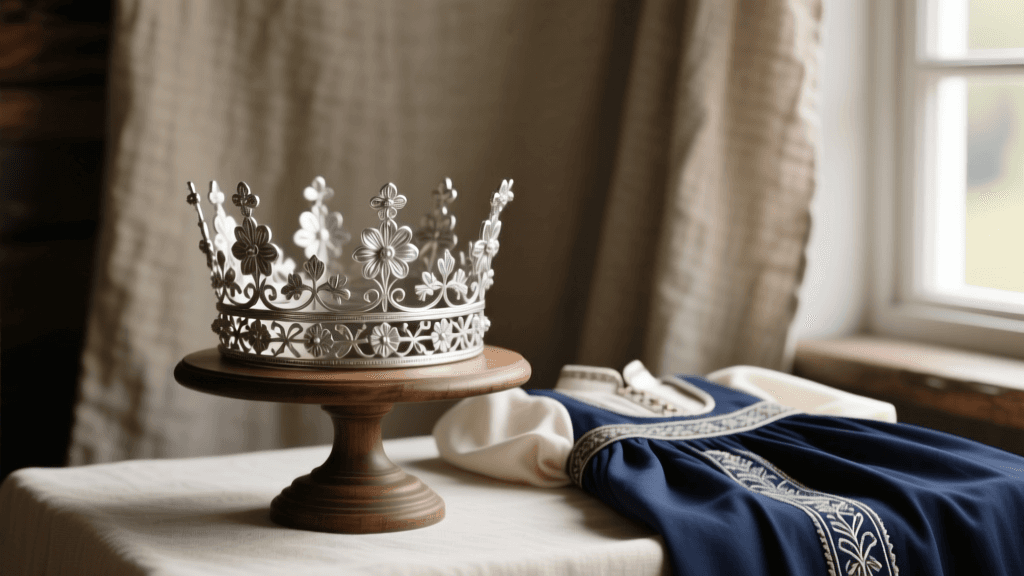
No element of European folk headwear is as majestic as the Norwegian brudkrona (bridal crown). Historically, the bridal crown was not owned by the bride but was a communal treasure. Wealthy farming families or local churches owned these elaborate headdresses, renting them out to brides for their wedding day. The crown symbolized the bride's purity, her transition into womanhood, and her family's social standing.
Traditional brudkrona are constructed from a base of brass or copper, heavily gilded in silver or gold, and adorned with glass stones, faux pearls, and metallic ribbons. A defining feature of the authentic Norwegian crown is the presence of sommerfugler (butterflies)—delicate, trembling metal leaves and ornaments attached to thin wires that vibrate and catch the light with every step the bride takes down the aisle.
2026 Bridal Trends: The Crown Revival
In 2026, there is a massive resurgence in traditional Scandinavian weddings, with brides opting for the bunad and brudkrona over the conventional white gown and veil. Modern brides are increasingly commissioning bespoke crowns from heritage jewelers, blending historical accuracy with lightweight, modern metallurgy to ensure comfort during long wedding celebrations. Furthermore, the integration of heirloom crowns—restored by professional conservators to maintain their 19th-century patina while ensuring structural integrity—is a major trend in the current wedding market.
2026 Market Guide: Pricing, Sourcing, and Authenticity
Investing in bunad silver and bridal headwear is a significant financial commitment. The price of raw silver has fluctuated over the past few years, impacting the retail cost of hand-forged pieces. When sourcing these items, buyers must distinguish between mass-produced cast replicas (often imported and sold in tourist shops) and authentic, locally forged silver verified by official craft guilds.
Official retailers affiliated with Norges Husflidslag (The Norwegian Folk Art and Craft Association) guarantee that the silver is forged in Norway, adhering to strict historical patterns and quality standards. Below is a comparative pricing table for the 2026 market.
| Item Category | Mass-Produced / Cast Replica | Authentic Hand-Forged (Husfliden) | Antique / Heritage (Pre-1950) |
|---|---|---|---|
| Brystknapp (Breast Brooch) | $80 - $150 USD | $350 - $800 USD | $900 - $2,500+ USD |
| Livknapp Set (10 Bodice Buttons) | $120 - $200 USD | $450 - $950 USD | $1,100 - $3,000 USD |
| Complete Silver Set (5 pieces) | $300 - $600 USD | $1,500 - $3,500 USD | $4,000 - $10,000+ USD |
| Brudkrona (Bridal Crown) | N/A (Rarely mass-produced) | $2,000 - $5,500 USD (Purchase) | $8,000 - $20,000+ USD |
| Brudkrona Rental (Weekend) | $150 - $300 USD | $400 - $850 USD | $1,000 - $2,500 USD |
Note: Prices are estimated in USD for the 2026 market and are subject to exchange rate fluctuations and raw silver commodity pricing. Antique pricing heavily depends on provenance, hallmarks, and condition.
Sourcing Authentic Pieces in 2026
If you are outside of Norway, sourcing authentic bunad silver requires diligence. Avoid generic e-commerce marketplaces that lack verifiable hallmarks. Instead, look for the S-merket (the Silver Mark) or the Thygesen hallmarks, which indicate certified Norwegian silversmiths. Many heritage workshops in Voss, Oslo, and Bergen now offer international shipping with insured logistics, providing certificates of authenticity and detailed regional provenance for every piece.
For the brudkrona, renting is the most practical option for a one-time event. Several specialized folk-dress archives and regional bunad councils in Norway offer international rental programs for destination weddings, complete with custom-fitted padding and instructional videos on how to properly secure the heavy crown to the bride's braided hair using traditional silk ribbons.
Caring for Heritage Silver and Crowns
Proper maintenance is crucial to preserving the historical integrity of your accessories. In 2026, conservationists strongly advise against harsh chemical dips or abrasive polishing cloths, which can strip away the intentional oxidation that gives Hardanger silver its signature dark, intricate contrast.
- For Oxidized Silver: Use a soft, untreated microfiber cloth to gently wipe away skin oils and dust. Never use silver polish on oxidized filigree, as it will ruin the dark patina in the crevices.
- For Polished Telemark Silver: A mild, eco-friendly silver cream applied with a cotton swab can restore shine to the raised, sculptural elements without damaging the recessed areas.
- Brudkrona Storage: Bridal crowns should never be stored in plastic, which can trap moisture and cause the brass or copper base to verdigris. Store the crown in a breathable, acid-free textile box, stuffed with unbleached cotton to maintain the shape of the metallic ribbons and protect the delicate trembling wires from bending.
Conclusion
The accessories of the Norwegian bunad are not mere decorations; they are the metallic soul of Scandinavian folk dress. Whether you are fastening a Telemark brystknapp or placing a trembling brudkrona upon a bride's head, you are participating in a living tradition that bridges the gap between ancestral craftsmanship and modern celebration. By understanding the regional nuances, investing in authentic 2026 market pieces, and practicing proper conservation, you ensure that these magnificent artifacts of European folk culture will continue to shine for generations to come.