Authentic Bavarian Schuhplattler Dance Costumes: 2026 Festival Guide
The Renaissance of Authentic Alpine Folk Dance in 2026
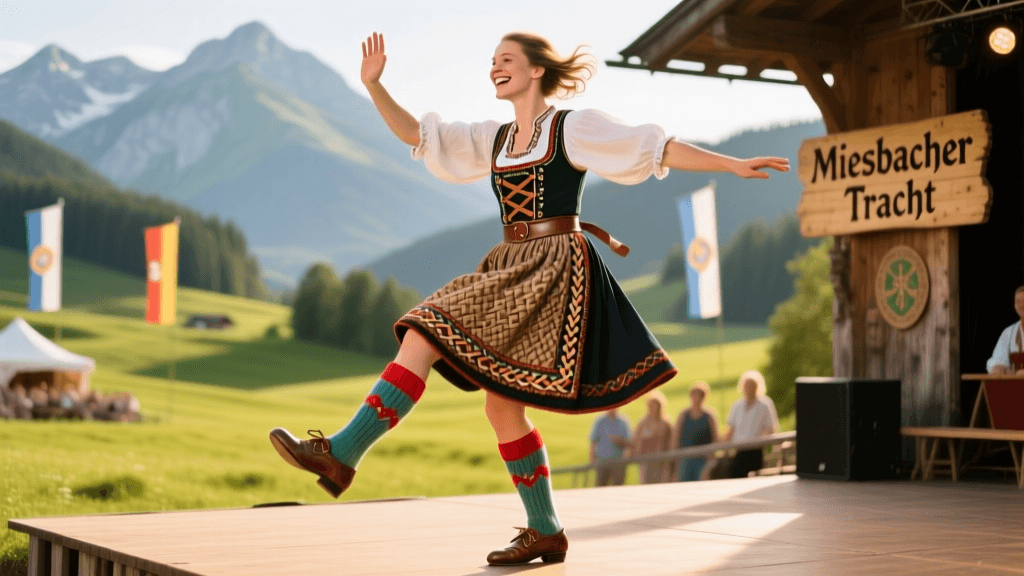
As the 2026 Alpine folk festival season approaches, thousands of dancers, cultural preservationists, and textile enthusiasts are preparing for the regional Gaufeste and summer celebrations across Bavaria and Austria. At the heart of these gatherings is the Schuhplattler, a traditional folk dance characterized by its percussive stomping, thigh-slapping, and acrobatic spins. While commercialized 'beer tent' costumes often dominate the global perception of Oktoberfest, the actual folk dance community adheres to strict, historically accurate dress codes. For the 2026 festival circuit, the Miesbacher Tracht remains the gold standard for Schuhplattler performers, offering a masterclass in how traditional European garments are engineered specifically for high-mobility folk dance.
Unlike static museum pieces, authentic dance Tracht is living, breathing workwear. According to the Bayerischer Trachtenverband (Bavarian Tracht Association), the revival of hand-stitched, regionally sourced garments has seen a massive surge among younger dance troupes in 2026, moving away from fast-fashion synthetics and back to heritage materials that can withstand the rigorous physical demands of the Plattler.
The Mechanics of the Plattler: Why Garment Mobility Matters
The Schuhplattler is not merely a dance; it is a display of agility, rhythm, and endurance. Dancers must execute high kicks, rapid spins, and forceful strikes against their thighs and shoe soles. A standard commercial costume will tear at the seams within minutes of a genuine performance. Authentic Miesbacher Tracht is constructed with specific gussets, reinforced stress points, and natural fibers that allow for a full range of motion while maintaining the crisp, traditional silhouette required by folk dance judges.
Men's Dance Tracht: Beyond the Beer Tent
For male dancers, the foundation of the costume is the kurze Lederhose (short leather breeches). For the 2026 dance season, authentic troupes exclusively commission breeches made from Sämischleder (brain-tanned or chamois-tanned deer leather). This specific tanning process, utilizing cod liver oil and alpine woods, results in a leather that is exceptionally soft, breathable, and washable—crucial features for dancers performing under the hot summer sun. The breeches are cut higher on the thigh than commercial variants to prevent the leather from catching during the rapid leg lifts and thigh-slapping sequences.
The suspenders (Hosenträger) are heavily embroidered with regional motifs, typically alpine roses, oak leaves, or edelweiss, using the Weißstickerei (white embroidery) technique. Crucially, the suspenders are not merely decorative; they are structurally integrated to keep the heavy leather breeches perfectly positioned during acrobatic leaps, featuring reinforced cross-bracing at the back.
Women's Miesbacher Dirndl: Engineered for the Spin
The women's Miesbacher Tracht is a marvel of textile engineering, specifically designed to accentuate the Drahrn (the rapid spinning sequences performed with a partner). The skirt (Rock) is cut from a heavy, pure wool or high-density linen blend, weighted at the hem to ensure it flares out into a perfect, bell-shaped circle when spinning, without riding up or tangling. In 2026, the preferred fabric weight for summer festival skirts hovers around 220g/m², providing enough momentum for the spin while remaining breathable.
The bodice (Mieder) is heavily boned and laced with a specific silver or brass chain, providing core support similar to a modern athletic corset, allowing the dancer to maintain perfect posture during complex footwork. The apron (Schürze) is tied with a precise bow, and its length is strictly regulated by dance federations to end exactly two centimeters above the skirt hem, ensuring it does not trip the dancer or her partner during close-hold turns.
2026 Sourcing Guide: Commercial vs. Authentic Dance Tracht
Sourcing authentic garments requires navigating a landscape of heritage tailors and specialized ateliers. With the global supply chain for high-quality alpine deer leather tightening in 2026, lead times for bespoke Lederhosen from master tailors in Upper Bavaria now average six to eight months. Below is a comprehensive comparison to help dancers and festival-goers understand the investment required for genuine folk dance attire.
| Garment Component | Commercial Festival Wear | Authentic Dance Tracht (Miesbacher) |
|---|---|---|
| Primary Material | Synthetic blends, PU leather, polyester | 100% Sämischleder, pure linen, virgin wool |
| Skirt/Breeches Cut | Restrictive, fashion-oriented, low-rise | Gusseted, reinforced seams, high-thigh cut |
| Embroidery | Machine-printed, glued, or cheap thread | Hand-stitched Weißstickerei, silk thread |
| 2026 Average Cost | €50 - €150 (Full set) | €600 - €1,400 (Men) / €550 - €1,100 (Women) |
| Lifespan | 1-2 seasons before tearing | Generational (50+ years with proper care) |
For those looking to acquire authentic pieces in 2026 without the bespoke wait times, specialized heritage retailers in Munich and Salzburg offer 'off-the-rack' dance-grade Tracht. However, buyers must verify the presence of the Echtheitszertifikat (certificate of authenticity) which guarantees regional manufacturing and traditional hand-finishing techniques.
Footwear: The Foundation of the Percussive Strike
No Schuhplattler costume is complete without the correct footwear, which serves as both a percussive instrument and a vital piece of safety equipment. Men wear traditional Haferlschuhe, characterized by their unique side-lacing system and thick, nailed leather soles. The side-lacing prevents the laces from snapping or coming undone when the dancer violently strikes the top of the shoe with the flat of his hand. In 2026, top-tier dance troupes are favoring custom-fitted Haferlschuhe from alpine cobblers who reinforce the toe box and heel counter to absorb the immense shock of the Watsch'n (the slapping routine).
Women's dance shoes (Dirndlschuhe) are equally specialized. They feature a sturdy, low block heel (typically 3 to 4 centimeters) and a reinforced toe cap. The sole is crafted from a specific composite leather that provides the exact amount of slip-and-grip required on wooden festival stages, preventing catastrophic falls during rapid pivots while allowing the shoe to produce a sharp, resonant 'clack' when striking the floor.
Maintenance and Care for the 2026 Season
Maintaining authentic Tracht is a discipline in itself. The Bavarian National Museum's textile conservation department notes that improper cleaning is the leading cause of degradation in heritage garments. The Bavarian National Museum archives highlight that Sämischleder should never be dry-cleaned. Instead, after a long day at a 2026 Gaufest, dancers should brush off dried mud with a soft bristle brush and let the leather air dry away from direct heat. Because brain-tanned leather is inherently washable, heavily soiled breeches can be gently hand-washed in lukewarm water with a specialized leather soap, then massaged and stretched while damp to retain their shape and softness.
Linen and wool skirts require careful airing and spot-cleaning. The heavy wool skirts are brushed with a natural bristle garment brush to remove stage dust and pollen, while the delicate silk embroidery on the bodices and suspenders must be protected from the oils and sweat of the dancer's skin, often requiring a protective, washable linen under-layer.
Conclusion: Honoring the Heritage on the Dance Floor
As the 2026 festival season unfolds, the distinction between a costume and a cultural garment becomes vividly clear on the dance floor. The Miesbacher Tracht is not a relic of the past; it is a highly functional, meticulously engineered athletic uniform that honors centuries of Alpine heritage. Whether you are a seasoned Schuhplattler preparing for the regional championships or a cultural enthusiast attending your first folk festival, understanding the construction, materials, and purpose of these garments deepens the appreciation for one of Europe's most vibrant and enduring folk traditions.