Authentic Bunad and Dirndl: 2026 Regional Sourcing Guide
The Renaissance of Regional Authenticity in 2026
The landscape of European folk dress has experienced a profound renaissance as we move through 2026. Moving far beyond the realm of theatrical costumes or mass-produced festival wear, contemporary enthusiasts, cultural historians, and diaspora communities are increasingly investing in historically accurate, regionally specific garments. Two of the most prominent and heavily regulated traditions in European textile heritage are the Norwegian Bunad and the Alpine Tracht (encompassing the Bavarian and Austrian Dirndl and Lederhosen). Sourcing these garments today requires navigating strict regional guilds, understanding complex textile semiotics, and preparing for significant financial and temporal investments. This comprehensive guide explores the nuances of acquiring authentic Bunads and Tracht in 2026, ensuring your wardrobe respects centuries of cultural heritage.
The Norwegian Bunad: Heritage Woven in Wool and Silver
The Norwegian Bunad is not merely a historical costume; it is a living, evolving expression of regional identity, deeply tied to the Norwegian concept of kledebunad (clothing tradition). Unlike generic folk costumes, a true Bunad must be tied to a specific geographic region, often reflecting the historical clothing of that exact valley or fjord. The governing body for these standards, the Norsk institutt for bunad og folkedrakt (Norwegian Institute for Bunad and Folk Costume), rigorously monitors patterns, textile compositions, and embroidery techniques to ensure historical fidelity.
Key Regional Variations
There are over 450 distinct Bunad variations documented in Norway. Among the most sought-after in 2026 are:
- Hardangerbunad: Often referred to as the national Bunad, originating from the Hardanger fjord region. It is famous for its intricate svartsaum (blackwork embroidery) on white linen and elaborate beadwork.
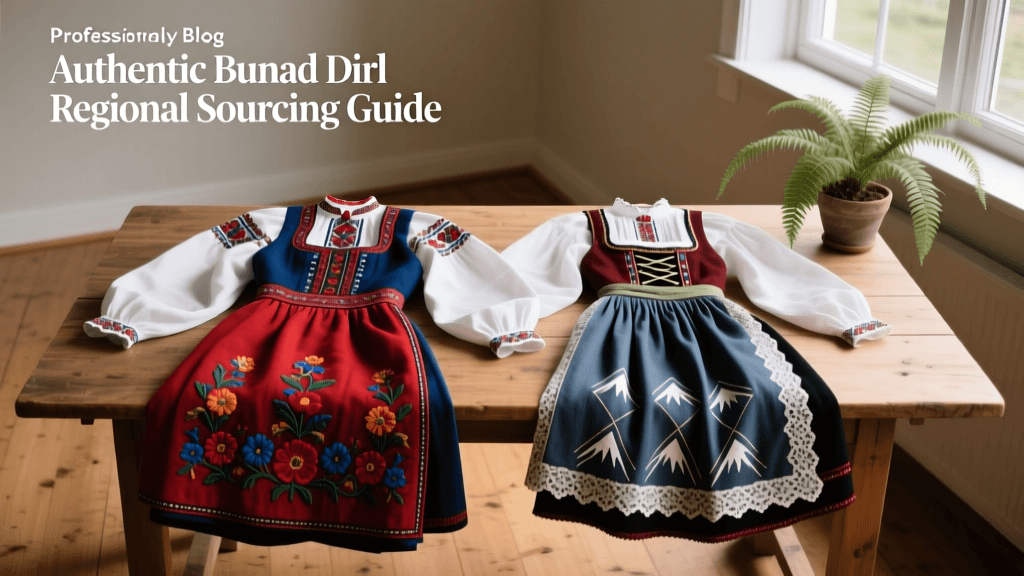
- Nordlandsbunad: Hailing from Nordland county, this is currently one of the most popular choices due to its striking blue wool base and vibrant, nature-inspired floral embroidery.
- Bunad fra Agder: Characterized by its rich, dark fabrics, heavy silver filigree jewelry, and distinct woven ribbons that denote specific parishes within the Agder region.
2026 Sourcing, Pricing, and Tailoring Realities
Acquiring an authentic Bunad in 2026 is a significant undertaking. Due to a resurgence in artisan craftsmanship and a shortage of master silversmiths and traditional weavers, lead times have extended. Expect to wait between 8 to 14 months from your initial measurement appointment to the final fitting. The financial investment is equally substantial. A complete women is Hardangerbunad, including the wool skirt, embroidered bodice, linen shirt, silk scarf, and requisite silver jewelry (sølv), averages 48,000 NOK (approximately $4,500 USD) in 2026. Men is Bunads, featuring hand-woven wool trousers, silver knee buckles, and embroidered vests, typically range from 35,000 to 42,000 NOK. It is crucial to purchase only from certified bunadtilvirker (Bunad manufacturers) who adhere to the strict guidelines set by the Bunad- og folkedraktrådet.
Alpine Tracht: Beyond the Oktoberfest Cliché
While the global market is flooded with cheap, synthetic Dirndls every autumn, authentic Alpine Tracht is a highly respected, codified system of dress rooted in the rural history of Bavaria, Tyrol, and Salzburg. The Trachteninformationszentrum (Center for Tracht Information) in Benediktbeuern serves as the authoritative voice on what constitutes genuine historical Tracht versus modern commercial interpretations. In 2026, the push for Erneuerung der Tracht (renewal of Tracht) focuses on natural fibers, hand-pleating, and regional specificity.
The Anatomy of Authentic Tracht
Authentic Tracht is divided into several categories, including Alltagstracht (everyday work wear), Festtagstracht (festive wear), and Kirchentracht (church attire). A genuine festive Dirndl consists of four distinct elements: a heavily structured bodice (Leiberl), a mid-calf length skirt (Rock), a delicate cotton or silk blouse (Bluse), and an apron (Schürze). The fabrics must be natural—silk, linen, cotton, or fine wool. Polyester blends are immediately recognized as inauthentic by purists.
For men, authentic Lederhosen are a masterpiece of leatherworking. True Plattlerhosen or Kniebundhosen are crafted from brain-tanned deer or chamois leather, which is incredibly soft and breathable. The embroidery, known as Federkielstickerei (peacock feather quill embroidery), is done entirely by hand using the split quills of peacock feathers, creating a unique, iridescent raised texture that machines cannot replicate.
2026 Market Pricing for Alpine Garments
The market for bespoke Tracht in 2026 reflects the premium placed on artisanal labor. A master-crafted pair of Lederhosen with full Federkielstickerei from a traditional tannery in Garmisch-Partenkirchen or Salzburg will cost between €900 and €1,600. Hand-pleated silk Dirndls, which require up to 15 meters of fabric and dozens of hours of meticulous hand-stitching to achieve the perfect drape, start at €750 and can exceed €2,000 for bridal or highly ornate festival versions.
2026 Sourcing and Investment Comparison Table
To help prospective buyers navigate these two distinct traditions, the following table compares the core logistical and financial aspects of sourcing a Norwegian Bunad versus an Alpine Dirndl/Lederhosen in 2026.
| Feature | Norwegian Bunad | Alpine Tracht (Dirndl/Lederhosen) |
|---|---|---|
| Base Cost (2026) | $3,500 - $5,500 USD | $800 - $2,200 USD |
| Tailoring Lead Time | 8 - 14 Months | 3 - 8 Months |
| Primary Textiles | Woven Wool, Linen, Silk | Brain-tanned Leather, Silk, Linen |
| Regional Strictness | Extremely High (Guild Regulated) | High (Village/Valley Specific) |
| Essential Accessories | Silver Filigree (Sølv), Woven Belts | Apron, Charivari (Silver Chain), Hat |
The Semiotics of Silver and Silk: Reading the Garments
Both traditions utilize accessories to communicate social and marital status, though the mechanisms differ vastly. In the Alpine tradition, the Dirndl apron knot is a widely recognized social signal. Tied on the left side, it indicates the wearer is single; on the right, she is married or in a committed relationship; tied in the front center, it traditionally signifies virginity (though in 2026, this is often just worn by young girls or brides); and tied at the back, it denotes widowhood or that the wearer is a working waitress.
In Norway, the silver jewelry (bunadsølv) tells a story of historical wealth and regional pride. The solje (sun brooch) is a staple, featuring dangling spoon-shaped pendants that historically were believed to ward off evil spirits and protect the wearer during life transitions, such as weddings or christenings. The weight and complexity of the silver belt buckles and crown-like headpieces (brudekrone) directly correlate to the historical agricultural wealth of the wearer is ancestral valley.
Footwear, Hosiery, and Strict Etiquette
A common mistake made by international buyers is neglecting the strict footwear and hosiery rules that govern both traditions. For the Bunad, modern pantyhose or sheer tights are considered a severe breach of etiquette. Women must wear opaque, knee-high woolen socks or specialized thick cotton stockings, paired with low-heeled, black leather shoes featuring traditional silver buckles. Men wear black leather shoes with silver or brass buckles, paired with thick, hand-knitted wool socks that reach just below the knee, held up by woven garters.
Alpine Tracht requires equally specific footwear. Men wear Haferlschuhe, a distinct shoe with a boat-like front and side lacing, originally designed for alpine terrain. These are paired with Loferl (calf warmers), which are two-piece knitted wool garments consisting of a calf sleeve and a separate ankle sock. Women wearing a Dirndl must opt for closed-toe leather pumps, traditional Trachtenschuhe with a sturdy heel, or high-quality leather ballet flats. Open-toed shoes, sneakers, or modern stilettos instantly invalidate the authenticity of the ensemble.
Preservation and Heirloom Care
Given the immense financial and cultural value of these garments, proper preservation is paramount. The Bayerisches Nationalmuseum (Bavarian National Museum), which houses one of the world is most extensive historical Tracht collections, advises against the use of standard chemical dry cleaning for antique or highly structured folk garments, as the harsh solvents can degrade natural brain-tanned leathers and strip the patina from hand-embroidered silk threads.
For wool Bunads, storage must involve breathable cotton garment bags in a climate-controlled environment. Cedar blocks and lavender sachets are essential for deterring textile moths, which are highly attracted to the lanolin in untreated Norwegian wool. Silver jewelry must be removed before storage to prevent oxidation stains on the linen and wool, and should be kept in anti-tarnish cloth pouches. By adhering to these meticulous sourcing and preservation standards, collectors and cultural enthusiasts in 2026 can ensure that these magnificent examples of European folk dress survive as pristine heirlooms for generations to come.