Top Heritage Table Looms for Viking Smokkr Weaving 2026
The Resurgence of Authentic Nordic Textile Crafting in 2026
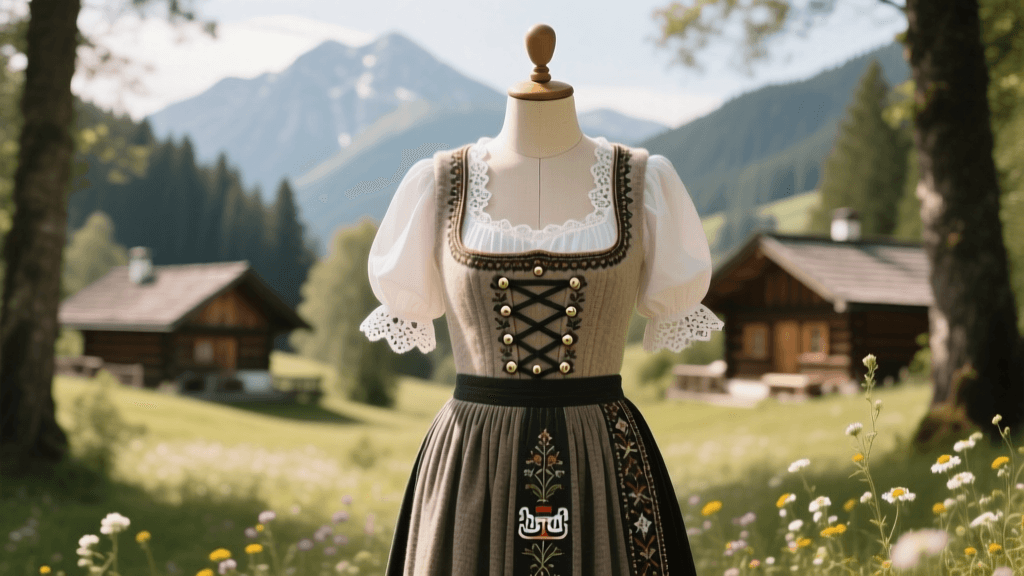
The year 2026 has marked a monumental shift in the historical reenactment and heritage crafting communities. As interest in European folk dress deepens, artisans are moving away from mass-produced, synthetic costumes and returning to the meticulous, archaeologically accurate reconstruction of traditional garments. Nowhere is this more evident than in the revival of Celtic and Viking Age textiles. The crown jewel of this movement is the Smokkr, often referred to as the Viking apron dress or hangerock. Reconstructing a true Smokkr requires more than just sewing; it demands an intimate understanding of historical weave structures, authentic fleece preparation, and the right weaving equipment.
For modern weavers dedicated to European folk dress, selecting the proper loom is the most critical investment. The coarse, sticky, and historically accurate handspun wools used in Nordic garment making require looms with specific tensioning capabilities and shedding mechanisms. In this comprehensive 2026 guide, we review the top heritage table looms suited for Viking textile reconstruction, explore the anatomy of the Smokkr, and provide actionable advice on natural dyeing techniques.
Understanding the Viking Smokkr and Textile Requirements
Before investing in a loom, it is vital to understand what you are weaving. According to the textile archives at the National Museum of Denmark, the preservation of wool fragments from graves and bog finds reveals that Viking Age clothing was highly sophisticated. The Smokkr was a tubular or open-front overgarment worn suspended from the shoulders by oval brooches (tortoise brooches). While early 20th-century historians assumed these dresses were simple wrapped blankets, modern archaeological consensus—heavily supported by the Swedish History Museum's Birka grave analyses—points to tailored, pleated, and intricately woven garments.
Historical Weave Structures and Yarn
To weave an authentic Smokkr in 2026, you must replicate historical weave structures. The most common weaves found in high-status Norse graves are diamond twill (routmönster) and 2/1 chevron twill. These weaves require a minimum of four shafts, though eight shafts allow for more complex, symmetrical diamond patterns. Furthermore, the yarn itself must be historically plausible. Artisans today are sourcing fleece from heritage sheep breeds like the Norwegian Spælsau or Swedish Gotland. These breeds produce a dual-coated fleece: a long, water-resistant outer coat (tog) and a soft, insulating inner coat (thel). When spun using a drop spindle with a Z-twist for the warp and an S-twist for the weft, the resulting fabric possesses the distinct diagonal ribbing and weather-resistant qualities prized by the Norse.
Top 3 Heritage Table Looms for Viking Garment Weaving (2026 Review)
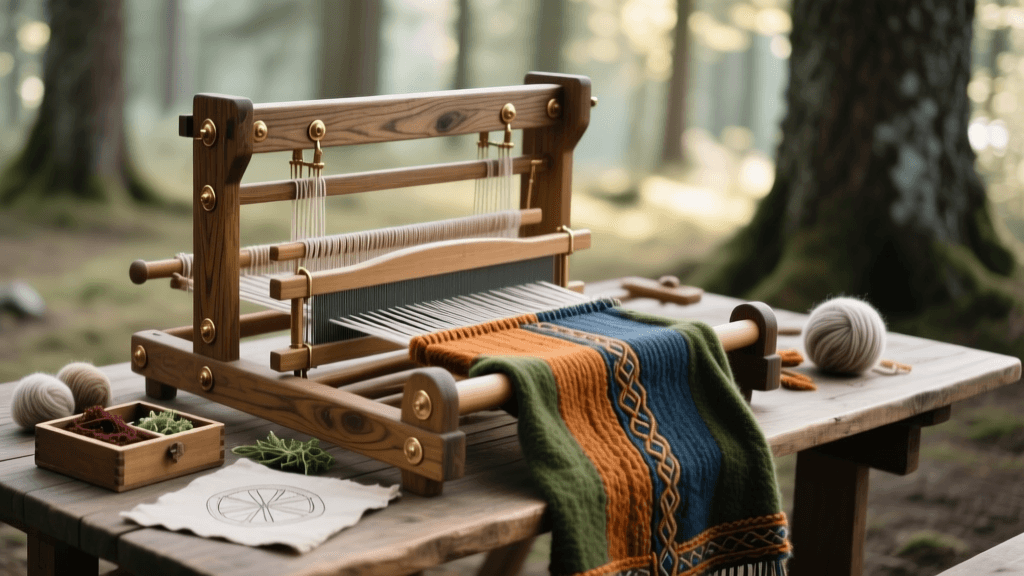
Weaving yards of diamond twill wool requires a loom that can handle high tension and sticky, handspun warp threads. Floor looms are traditional, but heritage table looms have become the preferred choice for modern urban artisans and traveling reenactors in 2026. Here are the top three models currently dominating the Nordic weaving space.
1. Glimåkra Julia 8-Shaft Table Loom
The Glimåkra Julia remains the gold standard for serious historical weavers in 2026. Priced at approximately $1,550, this Swedish-engineered table loom features a countermarch tie-up system, which is an absolute necessity when working with uneven, handspun wool. The countermarch actively pulls the warp threads down while lifting others, ensuring a clean, wide shed even when using sticky Z-spun outer-coat wool. With eight shafts and ten treadles, the Julia allows weavers to draft complex Viking diamond twills and intricate Celtic border patterns without constantly re-tying the loom. Its folding design also makes it ideal for artisans who demonstrate their craft at historical festivals across Europe.
2. Louet Spring Loom (Table/Floor Hybrid)
Retailing around $2,950 in 2026, the Louet Spring is a premium, parallel tie-up loom that bridges the gap between table and floor models. While it is an investment, its floating breast beam provides automatic, continuous tension control. This is a game-changer when weaving long warp lengths (10+ meters) of dense Smokkr fabric, as it prevents warp breakage—a common frustration when weaving with high-twist historical yarns. The Spring’s ergonomic design reduces physical strain, allowing weavers to produce the 3 to 4 meters of 60cm-wide fabric required for a single pleated apron dress in a fraction of the time.
3. Ashford Knitters 4-Shaft Table Loom
For beginners entering the European folk dress space or those on a stricter budget, the Ashford Knitters 4-Shaft Table Loom is an excellent entry point at $680. While it lacks the advanced shaft count of the Julia, four shafts are perfectly sufficient for weaving the foundational tabby (plain weave) and basic 2/1 twills used in everyday Viking undergarments (the serk) and Celtic léine fabrics. Made from sustainable New Zealand silver beech wood, it is lightweight, portable, and features a built-in raddle and warp stick storage, making it a highly practical choice for weaving linen and finer wool blends.
Loom Comparison Chart for Nordic Weavers
| Loom Model | Shafts / Treadles | Tie-Up System | 2026 Price (USD) | Best Historical Application |
|---|---|---|---|---|
| Glimåkra Julia | 8 / 10 | Countermarch | $1,550 | Complex Diamond Twill (Smokkr) |
| Louet Spring | 8 / 10 | Parallel / Floating | $2,950 | Long Warp Tensioning (Heavy Wool) |
| Ashford Knitters | 4 / 4 | Jack | $680 | Tabby & 2/1 Twill (Serk / Léine) |
Sourcing Authentic Natural Dyes for Celtic and Viking Wool
A woven garment is only half the journey; color is what truly brings European folk dress to life. Experimental archaeology projects documented by the Viking Ship Museum in Roskilde demonstrate that the Norse and Celts were master dyers, utilizing complex vat processes to achieve vibrant, colorfast hues. In 2026, heritage dyers are moving away from synthetic chemical dyes, sourcing organic botanical materials to replicate the exact shades found in ancient textile fragments.
Woad and Madder: The Colors of the Norse Elite
- Woad (Isatis tinctoria) for Norse Blue: Achieving the iconic Viking blue requires a woad vat. Unlike modern immersion dyes, woad is a vat dye that requires an alkaline, oxygen-depleted environment. In 2026, artisans use a fermentation vat powered by fructose and calcium hydroxide (pickling lime), avoiding the toxic ammonia methods of the past. The yarn is submerged, removed, and magically oxidizes from yellow-green to deep indigo blue upon hitting the air.
- Madder (Rubia tinctorum) for Celtic and Norse Red: Red was a highly prized color, often denoting wealth and status. Madder root requires a mordant of aluminum potassium sulfate (alum) and cream of tartar to bind the dye to the wool fibers. The key to a vibrant, historically accurate red in 2026 is temperature control; keeping the dye bath strictly below 80°C (176°F) prevents the extraction of undesirable brown and yellow compounds from the root, yielding a brilliant, clear crimson.
- Walnut Hulls and Birch Bark for Earth Tones: For the everyday garments of the working class, natural browns and yellows were achieved using locally foraged materials. Green walnut hulls require no mordant and yield a deep, colorfast brown, while the inner bark of the birch tree provides soft, golden yellows when simmered gently with an alum mordant.
Final Thoughts on Reconstructing European Folk Dress
The dedication required to weave, dye, and construct a historically accurate Viking Smokkr or Celtic tunic is immense, but the rewards are unparalleled. By investing in the right heritage table loom, mastering the processing of dual-coated fleece, and embracing the alchemy of natural botanical dyes, modern artisans are keeping the textile traditions of Northern Europe alive. As we move through 2026, the line between historical reenactment and sustainable, slow-fashion heritage wear continues to blur, proving that the garments of our ancestors still hold profound relevance and beauty in the modern world.