Historically Accurate Birka Viking Smokkr Dress Guide 2026
The Evolution of Viking Reenactment in 2026
As we navigate the historical reenactment landscape in 2026, the standard for Norse and Viking Age garments has reached unprecedented levels of archaeological rigor. The days of fantasy-inspired, overly-leathered "Viking" costumes are firmly in the past. Today, living historians and textile artists focus on meticulous reconstructions based on surviving textile fragments. Among the most iconic and heavily researched garments is the smokkr, commonly known as the Viking apron dress. This guide provides a comprehensive, actionable blueprint for reconstructing a 10th-century Birka smokkr, utilizing the latest material sourcing strategies and construction techniques validated by modern textile archaeology.
Decoding the Birka Smokkr: Archaeological Evidence
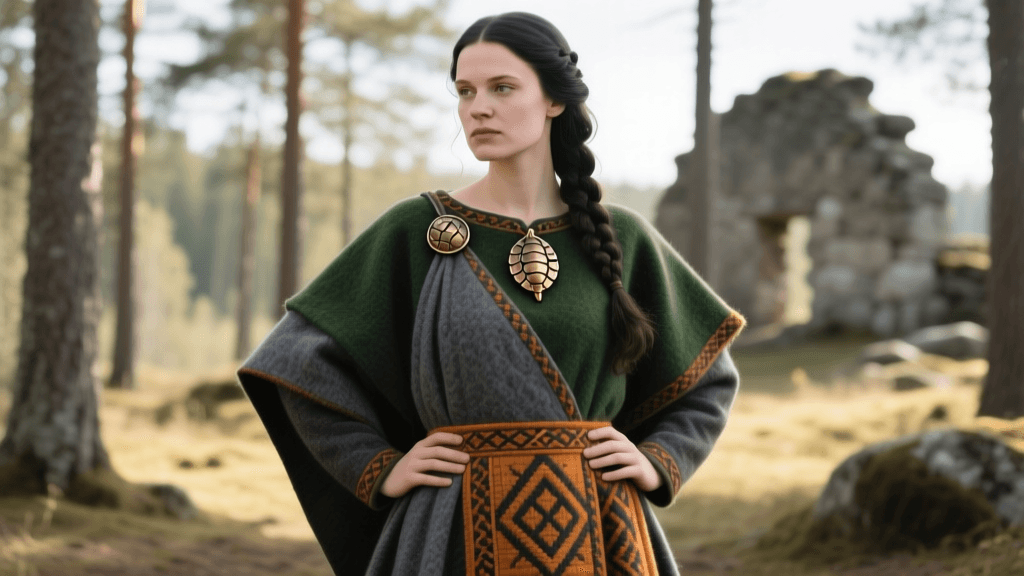
The primary archaeological evidence for the smokkr comes from the Birka burial site in Sweden, excavated extensively in the 19th and 20th centuries. Textile fragments preserved by the corrosion products of bronze oval brooches reveal a complex, layered garment. According to the Swedish History Museum's Birka archives, graves such as Bj 464 and Bj 597 provide crucial data regarding fabric types, layering, and decorative trims. The consensus among 2026 textile historians is that the Birka smokkr was likely a tube-shaped or wrapped garment, suspended from the shoulders by two linen or wool loops, and fastened at the collarbone with a pair of cast bronze oval brooches.
Sourcing Authentic Textiles: 2026 Buyer’s Guide
Creating an accurate smokkr begins with selecting the correct fibers and weaves. Modern commercial wools often lack the drape, texture, and thread count of Viking Age textiles.
Wool for the Outer Smokkr
The most prestigious and commonly found outer fabric in high-status Birka graves is diamond twill wool. In 2026, specialized heritage weavers offer handwoven or shuttle-loom diamond twill with a thread count of approximately 20x12 threads per centimeter. Expect to pay between $55 and $85 per yard for authentic, plant-dyed diamond twill. Look for wools dyed with madder (yielding deep reds and oranges) or woad (yielding authentic blues), as these were the premier dyes of the era.
Authentic Dyeing Techniques and Color Palettes
If you are sourcing undyed heritage wool to dye yourself, understanding 10th-century mordanting is essential. Viking Age dyers primarily used alum as a mordant to fix colors to the wool fibers. For a historically accurate Birka palette, utilize madder root (Rubia tinctorum) for rich terracotta and deep reds, weld (Reseda luteola) for vibrant yellows, and woad (Isatis tinctoria) for blues. Avoid modern synthetic acid dyes, as they produce flat, overly saturated colors that immediately read as inauthentic under natural sunlight. A properly alum-mordanted, madder-dyed diamond twill will exhibit beautiful, subtle variations in color that mimic the archaeological textile fragments perfectly.
Material Comparison Chart for 2026 Sourcing
| Material Type | Historical Accuracy | 2026 Avg. Cost (per yard) | Best Use Case |
|---|---|---|---|
| Commercial Melton Wool | Low (Wrong weave/drape) | $18 - $25 | Budget beginner projects |
| Machine-Woven Diamond Twill | Medium (Accurate pattern, modern yarn) | $35 - $45 | Intermediate reenactors |
| Handwoven Plant-Dyed Tabby | High (Authentic fiber and dye) | $60 - $80 | Advanced living history |
| Heritage Shuttle-Loom Twill | Exceptional (Museum-grade replica) | $90 - $120 | Master-level exhibition pieces |
Step-by-Step Smokkr Construction
1. Taking Measurements and Cutting Panels
Unlike modern tailored clothing, Viking Age garments were constructed using geometric shapes to minimize fabric waste. For a standard adult smokkr, measure from your collarbone down to your mid-calf (typically 105-115 cm). The width of the garment should be roughly 140 cm to allow for a comfortable, draped fit over the underdress. Cut two main rectangular panels for the front and back, and two narrower side panels or godets to provide flare at the hem.
2. Historical Seam Finishes
Do not use modern sergers or zigzag stitches. The National Museum of Denmark's textile research highlights the prevalence of flat-felled seams and overcast edges in Norse garments. Use a fine, worsted wool or linen thread (approx. 60/2 weight). Sew your primary seams using a running stitch (8-10 stitches per inch), then fold the raw edges inward and whipstitch them down to the main fabric to create a clean, durable flat-felled seam.
The Underdress (Serkr) and Pleating Techniques
Beneath the smokkr, a linen underdress or serkr was worn. Evidence from high-status graves indicates that finely pleated linen underdresses were highly prized. You will need approximately 3.5 meters of lightweight, unbleached linen (100-130 gsm) to achieve the necessary volume.
Pleating the Serkr Neckline
To recreate the famous pleated necklines found in Birka and Køge, use a wet-pleating technique. Draw the neckline up using a strong linen thread in a tight gathering stitch. Once gathered to the desired circumference (usually around 60-70 cm), wet the linen thoroughly with water and allow it to dry completely in the sun or near a gentle heat source. The wet linen will "memorize" the tight pleats. Once dry, carefully remove the gathering thread and bind the top edge with a narrow strip of linen or a fine tablet-woven band to secure the pleats permanently.
Tablet Weaving and Trim Integration
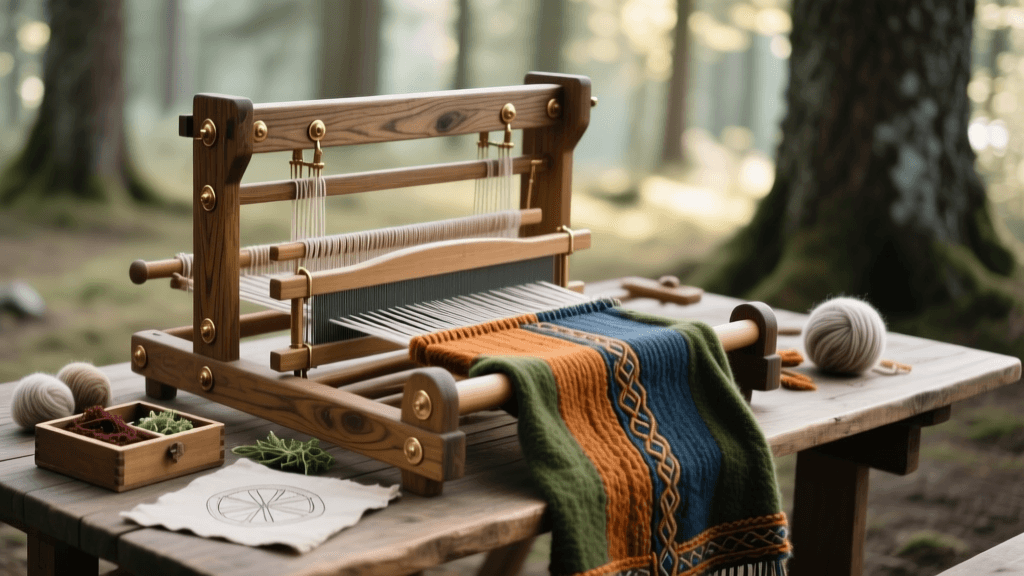
No Birka smokkr is complete without tablet-woven trim. Archaeological finds show that silk tablet-woven bands, often imported from Byzantium or the East, were highly prized. For a practical 2026 reconstruction, you can weave your own band using a 12-card setup. Use a strong, tightly spun wool or silk for the warp, and a contrasting linen or silk for the weft. A standard smokkr requires about 2.5 meters of trim, woven to a width of 1.2 to 1.5 cm. Attach the trim to the top edge of the smokkr using a fine whipstitch, ensuring the tension matches the drape of the wool so the neckline does not pucker.
Fastening with Oval Tortoise Brooches
The smokkr is suspended by loops that pass through the pins of oval "tortoise" brooches. The most historically accurate type for Birka is the JP 51 classification. In 2026, several master metalsmiths and historical foundries offer lost-wax cast bronze replicas of these brooches, typically priced between $120 and $180 for a matched pair. Ensure your garment loops are made from the same fabric as the smokkr or from sturdy tablet-woven bands, and are sewn securely to the inside of the top hem. The loops should be just long enough to allow the brooch to sit comfortably on the collarbone without dragging the fabric downward.
Final Thoughts on 2026 Authenticity Standards
Reconstructing a Birka smokkr is a rewarding journey into the textile mastery of the Viking Age. By prioritizing archaeological evidence over pop-culture tropes, utilizing accurate diamond twill weaves, and employing period-correct flat-felled seams, your 2026 garment will not only look stunning but will also stand up to the rigorous standards of modern living history encampments. Take your time with the tablet weaving, invest in quality bronze castings, and let the historical textiles speak for themselves.