Norwegian Bunad & Bavarian Tracht: 2026 Regional Folk Dress Guide
The Living Heritage of European Regional Folk Dress in 2026
In 2026, the global slow fashion movement and a renewed focus on cultural preservation have catalyzed a massive resurgence in traditional European folk dress. Far from being static museum relics, regional garments are living, breathing expressions of local identity. At the forefront of this renaissance are two of Europe's most meticulously preserved textile traditions: the Norwegian Bunad and the Bavarian Tracht. While both serve as potent symbols of regional pride, their construction, socio-cultural rules, and market dynamics differ vastly. This comprehensive guide explores the intricate details of these two iconic costume traditions, providing actionable insights, current 2026 pricing, and expert sourcing protocols for collectors, cultural enthusiasts, and textile historians.
The Norwegian Bunad: A Masterclass in Regional Identity
The Norwegian Bunad is not a single, monolithic national costume, but rather a collection of over 450 distinct regional designs, each tied to a specific valley, fjord, or municipality. Rooted in the rural folk costumes of the 18th and 19th centuries, the Bunad movement was formalized in the early 20th century and has since evolved into a highly regulated cultural institution. According to the Norsk institutt for bunad og folkedrakt (Norwegian Institute for Bunad and Folk Costume), the strict adherence to historical patterns and local textile techniques remains the cornerstone of authentic Bunad production in 2026.
Key Regional Variations and Textile Techniques
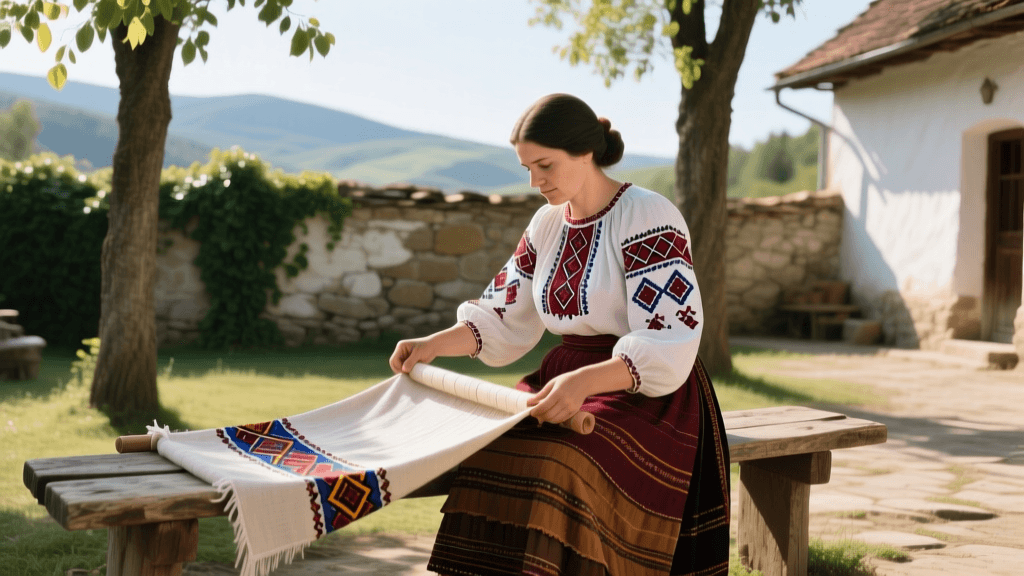
The Hardangerbunad, often referred to as the 'mother of all bunads,' originates from the Hardanger fjord region and is renowned for its intricate Hardangersøm (cutwork embroidery) and hvitsøm (white embroidery) on the linen undergarments and apron. The woolen skirt, or stakk, is typically deep black or rich navy, heavily pleated and adorned with woven ribbon bands. Conversely, the Setesdalsbunad from the Agder county features heavy, dark wool with striking red and green woolen embroidery, reflecting the isolated, rugged nature of the Setesdal valley. The silver jewelry, known as sølje, is equally region-specific, featuring elaborate filigree work, cascading dangles, and neck rings that historically denoted the wearer's wealth and marital status.
2026 Market Pricing and Sourcing Protocols
Acquiring a genuine Bunad in 2026 is a significant financial investment, reflecting the hundreds of hours of hand-embroidery and bespoke tailoring required. A complete women's Hardangerbunad, including the wool skirt, embroidered bodice, linen shirt, silk scarf, and silver, currently ranges from 55,000 to 75,000 NOK (approximately $5,200 to $7,100 USD). Men's Bunads, which feature elaborate woolen waistcoats and breeches, typically cost between 35,000 and 50,000 NOK. Due to strict regional authenticity laws, buyers must often prove a genealogical or residential connection to the specific region they wish to represent, though enforcement of this 'Bunad police' has relaxed slightly in 2026 to accommodate the global diaspora. Sourcing must be done through certified local bunadtilvirker (Bunad manufacturers) rather than commercial costume shops.
The Bavarian Tracht: Beyond the Oktoberfest Caricature
Moving south to the Alpine regions of Germany and Austria, the Bavarian Tracht presents a fascinating contrast. While the global market is flooded with cheap, synthetic 'Oktoberfest costumes,' authentic Tracht is a highly respected, historically grounded wardrobe governed by traditional Trachtenvereine (folk costume clubs). The Bayerischer Trachtenverband (Bavarian Tracht Association) actively promotes the preservation of historical Alpine dress, emphasizing natural materials and regional tailoring distinctions that separate true Tracht from modern party wear.
Anatomy of Authentic Tracht
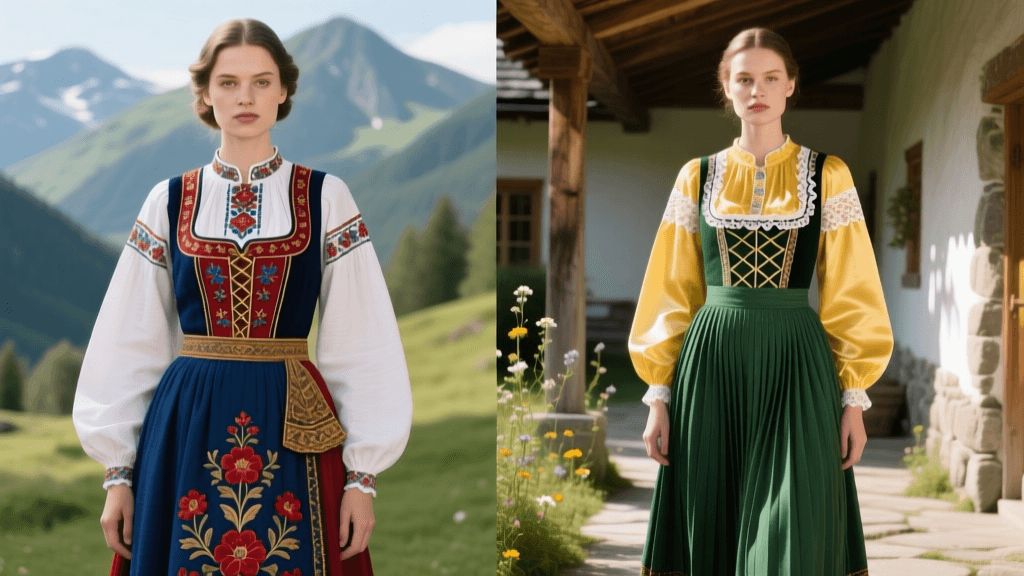
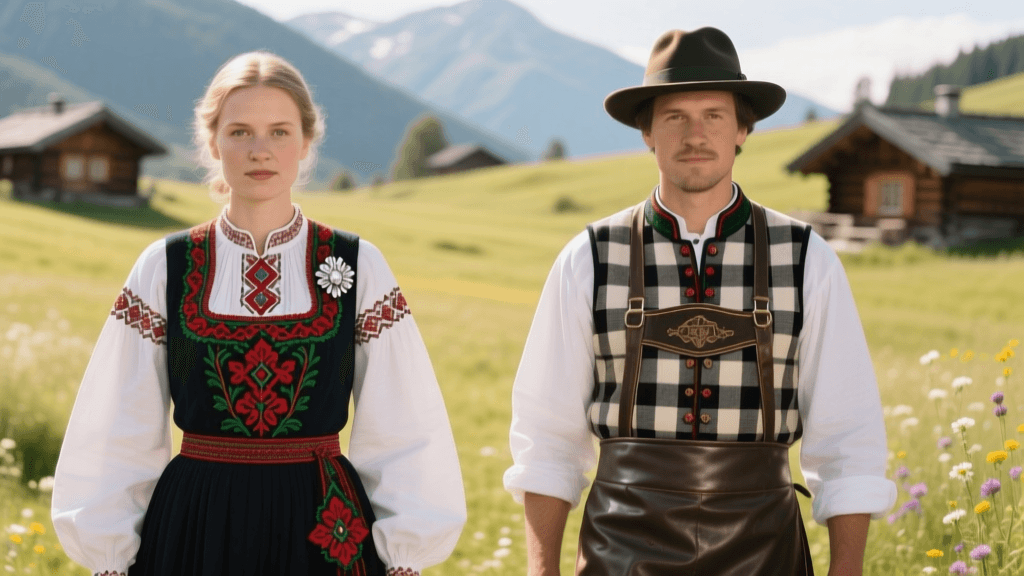
The iconic Lederhosen (leather breeches) of Bavaria are traditionally crafted from Hirschleder (deer leather) or Gamsleder (chamois leather), tanned using traditional brain-tanning or vegetable-tanning methods to achieve a soft, suede-like finish. Authentic pairs feature hand-embroidered Hosenträger (suspenders) with regional motifs like edelweiss or oak leaves, and a distinctive drop-front flap. For women, the authentic Dirndl consists of four separate pieces: the Mieder (structured bodice), the Bluse (high-necked linen or cotton blouse), the Rock (wide, pleated wool or silk skirt), and the Schürze (apron). The placement of the apron bow remains a strict social code in 2026: tied on the left indicates the wearer is single, on the right means she is married or taken, in the center signifies a maiden (or sometimes a virgin), and at the back indicates the wearer is widowed or working as a waitress.
The 2026 Shift Toward Sustainable Tracht
In 2026, the Tracht market has seen a definitive pivot toward hyper-local, sustainable sourcing. Master saddlers and tailors in regions like Garmisch-Partenkirchen and Miesbach are experiencing multi-year waiting lists for bespoke Lederhosen, which start at 1,200 EUR and can exceed 2,500 EUR for master-crafted pieces with horn buttons and hand-stitched seams. Bespoke silk Dirndls from a Munich Trachtenmodist (milliner and dressmaker) currently range from 900 to 1,800 EUR. The modern consumer is increasingly rejecting mass-produced polyester blends in favor of locally milled loden wool, organic linen, and naturally dyed silks, aligning Alpine heritage with contemporary ecological values.
Comparative Analysis: Bunad vs. Tracht
To understand the distinct characteristics of these two premier European folk dresses, we must compare their structural and cultural elements side-by-side.
| Feature | Norwegian Bunad | Bavarian Tracht |
|---|---|---|
| Primary Material | Heavy worsted wool, linen, silk | Deer/chamois leather, loden wool, linen |
| Fastening Method | Silver clasps, hooks, and brooches | Horn buttons, lacing, hook-and-eye |
| Key Accessory | Elaborate silver sølje jewelry | Embroidered leather suspenders, felt hats |
| 2026 Entry Cost | ~$5,200 USD (Complete women's set) | ~$1,300 USD (Authentic Lederhosen set) |
| Primary Occasion | May 17th (Constitution Day), weddings | Kirchweih, Maibaumaufstellen, festivals |
| Regional Flexibility | Strict (tied to ancestry/residence) | Moderate (tied to local club chapters) |
Practical Guide: Sourcing, Measuring, and Preservation
Whether you are commissioning a Bunad for a family milestone or investing in a master-crafted Tracht for Alpine festivals, proper measurement and archival care are critical to protecting your investment.
Measurement Protocols for Bespoke Folk Dress
Unlike modern ready-to-wear clothing, traditional folk dress requires precise, multi-point measurements to accommodate the heavy layers and structured bodices. When visiting a master tailor in 2026, expect the following protocol:
- Bust and Underbust: Crucial for the structured Mieder of a Dirndl and the silver-clasped bodice of a Bunad. Measurements must be taken over the specific undergarments you intend to wear.
- Natural Waist: Measured at the narrowest point of the torso, typically 2-3 inches above the navel. Both the Bunad skirt and Dirndl sit at the true natural waist, not the modern low-rise hip.
- Hollow to Hem: Measured from the hollow of the collarbone to the desired hemline. A traditional Bunad skirt must fall exactly to the middle of the calf, while a formal Dirndl skirt traditionally falls just below the knee or to the mid-calf, depending on the specific regional code.
- Thigh and Drop (Lederhosen): For men's leather breeches, the tailor will measure the thigh circumference and the 'drop' (waist to crotch) to ensure the leather stretches and molds perfectly to the wearer's body without sagging.
Archival Storage and Textile Care
The preservation of these garments requires museum-grade care. According to textile conservation guidelines outlined by institutions like the Norsk Folkemuseum, traditional wool and leather must never be stored in plastic garment bags, which trap moisture and promote mold growth. Instead, use breathable, unbleached cotton garment covers. For the heavily embroidered linen shirts of the Bunad, wrap the garments in acid-free tissue paper to prevent the starch from degrading the fibers over time. Silver sølje should be removed from the garment before storage and kept in anti-tarnish cloth pouches. Leather Lederhosen should be brushed with a soft suede brush and stored in a cool, humidity-controlled environment (ideally 45-55% relative humidity) to prevent the natural oils in the hide from drying out and cracking.
Conclusion
As we navigate the fashion landscape of 2026, the Norwegian Bunad and Bavarian Tracht stand as testaments to the enduring power of regional identity. These garments are not mere costumes; they are intricate, handcrafted archives of local history, ecology, and community values. By understanding the distinct textile techniques, respecting the cultural protocols, and investing in authentic, sustainable craftsmanship, we ensure that these magnificent European folk dress traditions continue to thrive for generations to come. Whether adorned in the silver of Hardanger or the deer leather of the Alps, the wearer becomes a living thread in the rich tapestry of European cultural heritage.