Hardanger Bunad vs Miesbacher Dirndl: 2026 Folk Dress Guide
The Renaissance of Regional European Folk Dress in 2026
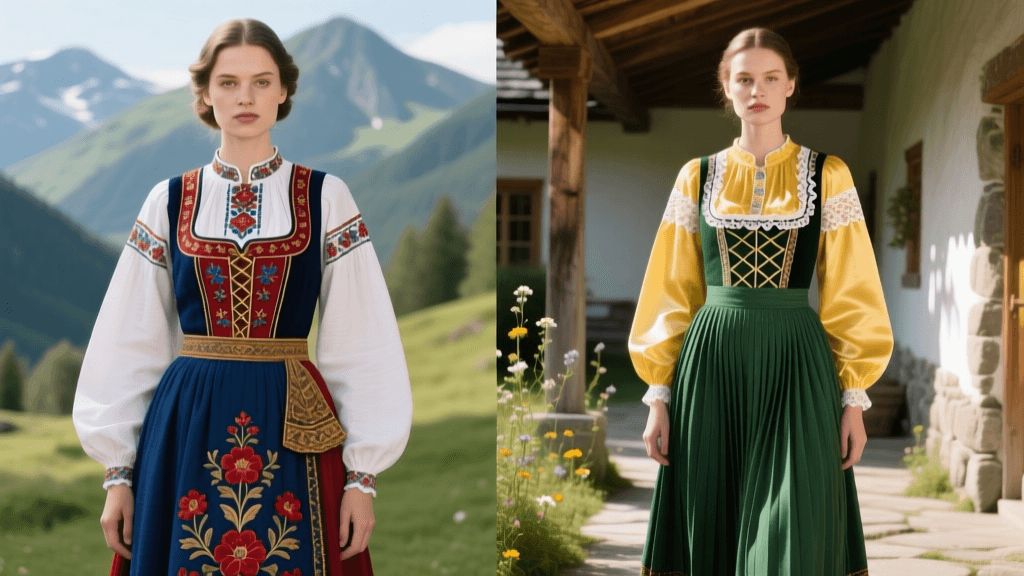
European folk dress is far from a static museum exhibit; it is a living, breathing textile tradition that continues to evolve while fiercely guarding its regional roots. As we navigate the fashion landscape of 2026, the 'slow fashion' movement has propelled a massive resurgence in authentic, handcrafted regional garments. Two of the most iconic and meticulously preserved traditions in Europe are Norway’s Hardanger bunad and Bavaria’s Miesbacher Tracht (dirndl). While both serve as powerful markers of cultural identity, their construction, economic footprint, and cultural applications differ vastly.
For collectors, cultural historians, and those seeking to invest in authentic European heritage garments, understanding the nuances between these two regional powerhouses is essential. This guide breaks down the textile anatomy, 2026 market pricing, and sourcing realities of the Hardanger bunad and the Miesbacher dirndl.
The Hardanger Bunad: Norway’s Textile Masterpiece
The Hardangerbunad originates from the Hardanger region in western Norway and holds a special place in Norwegian history. Often referred to as the 'national bunad,' it was one of the first folk dresses to be revived during the National Romantic period in the early 20th century. According to the Norsk institutt for bunad og folkedrakt (Norwegian Institute of Bunad and Folk Costumes), the Hardanger design remains one of the most strictly regulated and historically accurate garments in the country.
Anatomy and Textiles
The traditional Hardanger bunad for women is a study in high-contrast elegance and painstaking needlework. The core components include:
- The Stakk (Skirt): Woven from heavy, premium black wool, featuring deep, structured pleats that provide a striking silhouette.
- The Liv (Bodice): Typically made of black wool or silk damask, heavily embroidered with vibrant silk threads in floral and geometric motifs.
- Hardangersøm (Embroidery): The defining feature is the intricate white-on-white cross-stitch and drawn-thread work adorning the linen apron, cuffs, and collar.
- Bunadsølv (Silverwork): No bunad is complete without its silver. The Hardanger set includes an oxidized silver belt, elaborate brooches, and a crown-like headpiece (brudekrone) reserved for brides.
2026 Market Pricing and Tailoring
Authentic bunads are not bought off the rack; they are commissioned. As of 2026, the cost of a complete, custom-tailored Hardanger bunad, including the requisite silverwork, ranges from 45,000 to 65,000 NOK (approximately $4,200 to $6,100 USD). Due to a shortage of master embroiderers and silversmiths, the waitlist for a fully handmade Hardanger bunad in 2026 frequently exceeds 14 to 18 months.
The Miesbacher Tracht: Bavaria’s Living Heritage
While the world often associates the dirndl with Oktoberfest, true Bavarian Tracht is deeply regional. The Miesbacher Tracht, originating from the Miesbach district in Upper Bavaria, is widely considered the gold standard of Bavarian folk dress. The Bayerischer Trachtenverband (Bavarian Folk Dress Association) actively works to preserve the strict sartorial codes that separate authentic Miesbacher Tracht from mass-produced festival costumes.
Anatomy and Textiles
The Miesbacher dirndl is characterized by its refined materials, structured tailoring, and specific color palettes that denote marital status and regional pride. Key elements include:
- The Rock (Skirt): Unlike shorter festival dirndls, an authentic Miesbacher skirt falls below the knee, often crafted from fine wool or heavy silk faille in deep hues like forest green, navy, or burgundy.
- The Mieder (Bodice): Heavily structured and often featuring intricate chain-stitch embroidery (Kettenstickerei). It is laced at the front with silk cords or fastened with ornate silver hooks.
- The Schürze (Apron): Made of silk or fine cotton, the apron is tied in a specific bow. The placement of the bow is a strict cultural code: left indicates single, right means married or taken, center signifies a virgin (or young unmarried woman), and back indicates a widow or a working waitress.
- Accessories: A silk neckerchief, a velvet choker with a silver coin pendant, and a structured velvet hat (Miesbacher Hut) for formal occasions.
2026 Market Pricing and Tailoring
The market for authentic Miesbacher Tracht has seen a surge in demand among younger generations seeking sustainable, heirloom-quality garments. In 2026, a bespoke Miesbacher dirndl from a recognized Upper Bavarian tailor costs between €1,400 and €3,200. High-end heritage brands in Munich also offer premium ready-to-wear lines that respect traditional cuts, starting around €800, though bespoke remains the preference for weddings and formal Trachtenverein (folk dress club) events.
Comparative Analysis: Hardanger vs. Miesbach (2026)
To understand how these two regional garments stack up against one another in terms of investment, construction, and cultural application, refer to the comparison table below.
| Feature | Hardanger Bunad (Norway) | Miesbacher Tracht (Bavaria) |
|---|---|---|
| Primary Materials | Black wool, white linen, silk embroidery | Silk faille, fine wool, velvet, cotton |
| 2026 Bespoke Cost | $4,200 - $6,100 USD | $1,500 - $3,500 USD |
| Tailoring Lead Time | 14 - 18 months | 4 - 8 months |
| Metalwork Focus | Oxidized silver belts, crowns, brooches | Silver hooks, coin pendants, hat pins |
| Cultural Regulation | Extremely strict (Bunad Council) | Moderate (Regional Tracht clubs) |
| Primary Occasions | Constitution Day (May 17), weddings, baptisms | Oktoberfest, weddings, church holidays, folk dances |
Sourcing Authentic Pieces in 2026
The rise of e-commerce has made it easier than ever to purchase European folk dress, but it has also flooded the market with inaccurate, synthetic 'costumes.' For those looking to invest in authentic pieces in 2026, provenance is everything.
Sourcing the Hardanger Bunad
The Kulturhistorisk Museum (Museum of Cultural History) in Oslo frequently hosts exhibitions and provides resources on historical textile preservation, emphasizing the importance of buying from certified local artisans. To commission a Hardanger bunad, you must work with an approved bunad-tilvirker (bunad manufacturer). Many buyers travel to the Hardanger region to take measurements in person, ensuring the wool pleats and linen embroidery align perfectly with their family's specific parish variations.
Sourcing the Miesbacher Tracht
For the Miesbacher dirndl, avoid the tourist traps in central Munich. Instead, seek out heritage ateliers in Upper Bavaria or established Munich houses like Angermaier or Lodenfrey, which maintain dedicated bespoke Tracht departments. When buying vintage Miesbacher pieces from the mid-20th century, always inspect the silk bodice for shattering (a common issue with older weighted silks) and ensure the silver hooks bear traditional hallmarks.
Care, Storage, and Heirloom Preservation
Both the bunad and the dirndl are designed to be passed down through generations, but their distinct materials require specific care protocols in 2026's changing climate.
- Wool Care: The heavy wool of the Hardanger skirt and Miesbacher bodice is highly susceptible to moth damage. Store garments in breathable cotton garment bags with natural cedar blocks. Never use plastic, which traps moisture and promotes mildew.
- Silver Maintenance: Norwegian bunadsølv is often intentionally oxidized to highlight the intricate filigree. Do not use harsh chemical dips, which will strip the dark patina from the crevices. Instead, use a soft jeweler's cloth to gently polish only the raised surfaces.
- Silk and Linen: The white linen aprons of the Hardanger bunad should be hand-washed in lukewarm water with a pH-neutral detergent and ironed while damp to achieve the crisp finish required for the drawn-thread work. Miesbacher silk aprons must be dry-cleaned by specialists familiar with structured traditional garments.
Conclusion
Whether you are drawn to the stark, silver-adorned elegance of the Norwegian Hardanger bunad or the vibrant, silk-laced charm of the Bavarian Miesbacher dirndl, both garments represent a profound commitment to cultural continuity. In 2026, investing in these regional folk dresses is more than a sartorial choice; it is an act of preserving European textile history, supporting master artisans, and participating in a living tradition that refuses to be relegated to the past.