Sardinian Orbace Wool & Pibiones Heritage Brands 2026 Guide
The Renaissance of Sardinian Folk Dress in 2026
As the global fashion industry pivots toward sustainability and historical authenticity, the island of Sardinia—an autonomous region of Italy—possesses one of the most complex and fiercely preserved textile traditions in all of Europe. Unlike the mass-produced garments that dominate contemporary retail, Sardinian folk dress, known locally as abito tradizionale, is a living archive of Mediterranean history, social status, and artisanal mastery. As we move through 2026, the European slow-fashion renaissance has brought unprecedented international attention to these regional garments. Discerning collectors, cultural historians, and heritage-fashion enthusiasts are increasingly seeking out authentic Sardinian textiles, specifically the rugged Orbace wool and the intricate, raised-thread Pibiones weaving technique. This comprehensive guide explores the heritage brands, artisanal cooperatives, and practical sourcing methods for acquiring genuine Sardinian folk garments in today's market.
Understanding Orbace: The Backbone of Sardinian Menswear
Orbace is a coarse, handwoven wool fabric that has historically served as the foundation for traditional Sardinian menswear, most notably the ragas (a pleated, kilt-like skirt worn over trousers) and heavy winter cloaks. The wool is sourced from the indigenous Sarda sheep, a breed renowned for its rich, lanolin-heavy fleece that provides natural water resistance. In 2026, authentic Orbace is still woven on traditional wooden looms in villages across the Gennargentu mountain range. The process involves washing the raw wool with natural ash and river water, spinning it by hand, and weaving it into a dense, durable cloth. According to cultural preservation data from Sardegna Cultura, the regional heritage portal, fewer than forty master weavers still practice the traditional Orbace looming technique at a commercial scale, making genuine pieces highly sought after by heritage collectors.
The Art of Pibiones: Raised-Thread Elegance
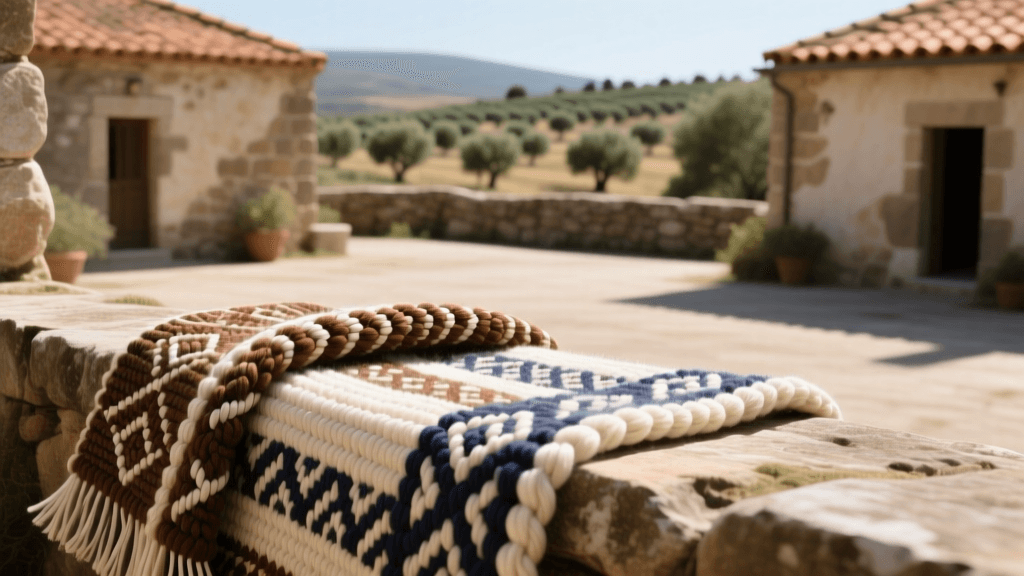
While Orbace represents the rugged, utilitarian side of Sardinian dress, Pibiones (meaning 'grains' or 'seeds' in the Sardinian dialect) represents its decorative pinnacle. This intricate weaving technique involves wrapping the weft thread around a long, smooth rod placed across the warp, creating a raised, three-dimensional geometric pattern on the fabric's surface. Once the row is complete, the rod is removed, leaving a distinct, textured 'grain' that stands out against the flat background. Pibiones is predominantly used for women's ceremonial shawls, aprons, and bed coverlets. The village of Samugheo is universally recognized as the epicenter of Pibiones weaving. In 2026, a master weaver in Samugheo may spend upwards of eighty hours completing a single ceremonial shawl, utilizing naturally dyed cotton or fine wool threads to create complex motifs that often encode ancestral symbols of fertility, protection, and regional identity.
Anatomy of the Traditional Sardinian Wardrobe
To invest in Sardinian heritage garments, one must understand the core components of the regional wardrobe, which varies dramatically from the Barbagia highlands to the coastal plains. The women's ensemble typically features a heavily embroidered linen blouse (sa camisa), a tightly fitted, richly brocaded bodice (su corpettu), and a layered skirt paired with a meticulously woven Pibiones apron (sa faldita). The headwear, often a finely pleated veil or a vibrant silk scarf, signifies marital status and village origin. For men, the wardrobe is anchored by the aforementioned Orbace ragas, worn over white linen trousers, complemented by a short, double-breasted velvet waistcoat and the iconic berritta, a long, tubular black wool cap. The Italian National Tourist Board frequently highlights these distinct regional variations as a cornerstone of Italy's intangible cultural heritage, noting that a trained eye can identify a wearer's exact village of origin simply by the color of their bodice trim or the knot of their apron.
The 2026 Resurgence of Botanical Dyes
A defining characteristic of the 2026 heritage textile market is the strict return to botanical and mineral dyes, abandoning the synthetic aniline dyes that proliferated in the late 20th century. Contemporary artisanal cooperatives are reviving ancient dye recipes to achieve the deep, saturated colors required for authentic folk dress. Madder root (rubia peregrina) is cultivated to produce vibrant crimsons and deep terracottas, while walnut husks (juglans regia) yield rich, colorfast browns essential for men's waistcoats and cloaks. Saffron, though expensive, is still utilized in the Sanluri region to achieve brilliant, luminous yellows for bridal veils. This commitment to natural dyeing not only ensures historical accuracy but also aligns with modern ecological standards, making these garments highly appealing to environmentally conscious collectors.
Top Heritage Brands and Artisanal Cooperatives
Sourcing authentic Sardinian garments requires bypassing commercial souvenir shops and connecting directly with heritage brands and weaving cooperatives. Below is a curated comparison of premier artisanal sources operating in 2026, detailing their specialties, current pricing, and typical commission lead times.
| Heritage Brand / Cooperative | Primary Specialty | 2026 Price Range (EUR) | Commission Lead Time |
|---|---|---|---|
| Tessitura Mariantonia Urru | Ceremonial Pibiones shawls, natural dyes | €650 - €1,400 | 4 - 6 Months |
| Artigianato Sardo Network | Orbace wool menswear, traditional ragas | €300 - €850 | 2 - 4 Months |
| Sulis Artisan Weavers | Everyday linen/cotton blends, aprons | €180 - €450 | 1 - 2 Months |
| Barbagia Tailoring Guild | Bespoke velvet waistcoats, berritta caps | €400 - €900 | 3 - 5 Months |
When engaging with these cooperatives, it is crucial to understand that you are commissioning a piece of living history. The extended lead times reflect the meticulous, unhurried pace of hand-weaving and hand-embroidery, ensuring that every stitch meets the exacting standards of Sardinian tradition.
Practical Sourcing and Measurement Guide
Ordering a bespoke Sardinian garment from abroad in 2026 requires precise communication and an understanding of traditional tailoring metrics. Unlike modern ready-to-wear sizing, heritage tailors rely on exact bodily measurements taken in centimeters. For a women's corpettu (bodice), you must provide the exact circumference of the ribcage just below the bust, the natural waist, and the shoulder-to-waist drop. For the men's ragas, the tailor requires the waist measurement and the desired drop length, traditionally ending just above the knee to allow for ease of movement during folk dances like the ballu tundu. Shipping logistics have improved significantly; most heritage brands now utilize insured, climate-controlled courier services for international dispatch, with typical shipping costs from Sardinia to North America or Asia ranging between €45 and €90. Always request a certificate of authenticity, which reputable cooperatives provide, detailing the weaver's name, the village of origin, and the specific materials used.
Caring for Handwoven Orbace and Pibiones Textiles
Preserving these investment pieces requires specialized care. Orbace wool, rich in natural lanolin, is inherently dirt-resistant and should rarely be washed. Instead, air the garment outdoors in a shaded, well-ventilated area and use a soft-bristled brush to remove surface dust. If deep cleaning is absolutely necessary, it must be dry-cleaned by a specialist familiar with heritage textiles, as standard chemical solvents can strip the lanolin and cause the coarse fibers to become brittle. Pibiones textiles, particularly those featuring delicate cotton or silk weft threads, should be stored flat rather than hung, as the weight of the raised grains can distort the warp over time. Wrap the textiles in acid-free tissue paper and store them in cedar-lined chests to protect against moisture and textile pests. By adhering to these preservation methods, collectors can ensure their Sardinian garments remain pristine for generations.
Conclusion: Investing in European Textile Heritage
The revival of Sardinian folk dress in 2026 is more than a fleeting fashion trend; it is a vital cultural lifeline that supports rural economies and preserves ancient artisanal knowledge. Whether you are acquiring a heavy Orbace cloak for its unparalleled durability or commissioning a Pibiones shawl as a wearable work of art, you are participating in the safeguarding of European heritage. By sourcing directly from dedicated artisanal cooperatives and respecting the time-honored techniques of the weavers, collectors and enthusiasts alike can build a wardrobe that is not only historically significant but deeply resonant with the enduring spirit of the Mediterranean.