Norwegian Bunad Guide 2026: Regional Styles & Costs
The Enduring Legacy of the Norwegian Bunad in 2026
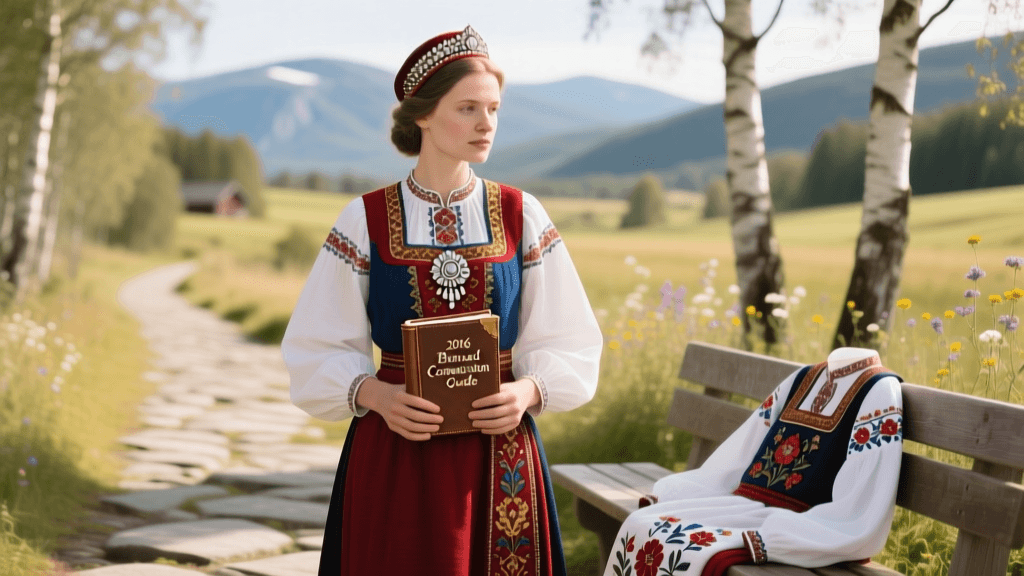
As we approach Constitution Day (Syttende Mai) in 2026, the Norwegian Bunad remains one of the most vibrant and meticulously preserved traditional folk dress systems in Europe. Unlike many European folk costumes that are relegated to museum displays or tourist performances, the Bunad is a living, breathing garment worn by over 80% of Norwegian women and a growing percentage of men during national holidays, weddings, and milestone celebrations. The year 2026 has seen a remarkable resurgence in interest regarding regional authenticity, driven by a new generation of artisans dedicated to historical textile preservation.
However, acquiring a genuine Bunad is not as simple as purchasing a costume off the rack. It is a profound investment in heritage, requiring an understanding of regional variations, strict adherence to historical tailoring, and the acquisition of specific sterling silver jewelry. This comprehensive guide will walk you through the distinct regional styles, the current 2026 economic landscape of Bunad production, and the precise measurements required to commission your own piece of Norwegian history.
Understanding Regional Bunad Variations
Norway’s rugged geography historically isolated its valleys, leading to highly distinct textile traditions. Today, there are over 450 documented Bunad variations, each tied to a specific geographic region or municipality. When selecting a Bunad, tradition dictates that you choose a design connected to your family’s ancestral home, your place of birth, or your current long-term residence.
The Hardangerbunad
Often referred to as the 'first Bunad,' the Hardangerbunad originates from the Hardanger fjord region in Vestland county. It was heavily promoted during the Norwegian romantic nationalism movement of the early 20th century. The women’s dress is characterized by a black wool skirt and bodice, paired with a white linen apron featuring intricate cross-stitch embroidery in vibrant reds, yellows, and blues. The smocking (smørg) on the apron waistband is a hallmark of this region. In 2026, the Hardangerbunad remains one of the most popular and widely recognized styles, though master embroiderers are increasingly scarce, pushing commission wait times to nearly two years.
The Telemarksbunad
Telemark county is famous for its rich artistic heritage, particularly rosemaling (rose painting). The Telemarksbunad translates this painted floral aesthetic into textile embroidery. The Eastern Telemark variation features a dark blue or black wool base with dramatic, sprawling floral embroidery in silk threads. The bodice is often heavily structured, and the accompanying headpieces (skaut) for married women are complex, woven marvels of white linen and lace.
The Gudbrandsdal Bunad
Hailing from the inland valleys of Eastern Norway, the Gudbrandsdal Bunad is renowned for its opulent use of materials. The embroidery here is not just stitched; it is heavily padded and often incorporates glass beads and silk ribbons to create a three-dimensional floral effect. The wool used is exceptionally dense to withstand the harsh inland winters, and the color palette leans heavily on deep blacks, rich burgundies, and forest greens.
The Economics of Authentic Bunads in 2026
Commissioning a Bunad is a significant financial undertaking. The Norsk Institutt for Bunad og Folkedrakt (NBF) strictly regulates what can officially be classified as a Bunad, ensuring that materials, patterns, and construction methods adhere to historical precedents. This commitment to authenticity means that mass production is impossible; every garment is handmade by skilled artisans.
In 2026, inflation and the rising cost of raw materials—particularly high-grade European wool and imported silk embroidery threads—have increased the baseline costs. Furthermore, the silver required for the accompanying jewelry has seen market fluctuations that directly impact the final price.
| Region | Primary Fabric | Signature Embroidery Technique | 2026 Avg. Base Cost (NOK) | Est. Commission Wait Time |
|---|---|---|---|---|
| Hardanger | Black Wool, Linen | Cross-stitch, Smocking | 38,000 - 45,000 | 18 - 24 Months |
| Telemark (East) | Dark Blue/Black Wool | Rosemaling-inspired Silk Stitch | 42,000 - 50,000 | 12 - 18 Months |
| Gudbrandsdal | Heavy Black Wool | Padded Wool Beadwork, Silk | 48,000 - 58,000 | 14 - 20 Months |
| Setesdal | Black Wool, White Wool | Minimalist geometric, Silver clasps | 35,000 - 40,000 | 10 - 14 Months |
Note: Base costs do not include the mandatory sterling silver jewelry (sølv), which typically adds an additional 15,000 to 35,000 NOK depending on the complexity and weight of the pieces.
Essential Silver (Sølv) and Accessories
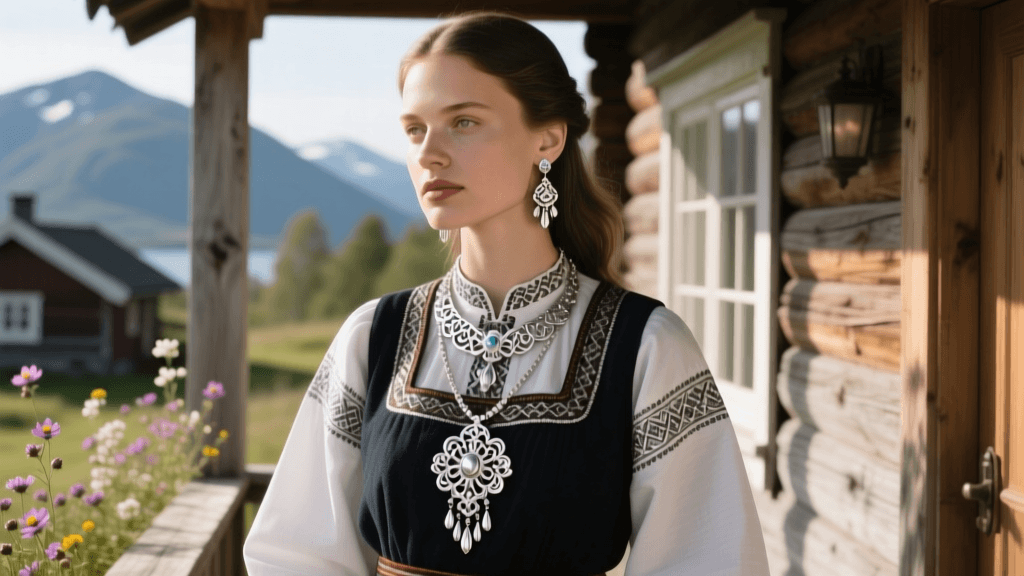
A Bunad is considered incomplete without its designated silver jewelry. Historically, silver was a way for farming families to store wealth in a wearable format. Today, the silver pieces are meticulously crafted to match specific regional designs. According to guidelines from Norges Husflidslag, authentic Bunad silver must be crafted in 925 sterling silver, and many artisans are now returning to traditional oxidization techniques to give the silver an antique, historically accurate patina.
- Sølje (Neck Brooch): The centerpiece of the Bunad. In regions like Hardanger, the sølje is a large, intricate disc featuring dangling silver spoons or charms that catch the light and produce a gentle chiming sound.
- Bryststølkje (Chest Jewelry): A chain or clasp system that secures the front of the bodice. In Telemark, this often features elaborate filigree work shaped like blooming roses.
- Livstøler (Waist Clasps): Used to fasten the bodice or skirt at the waist. These are often heavy, cast silver pieces featuring motifs from local church woodcarvings.
- Beltestøl (Belt Buckle): Essential for Bunads that feature a woven or leather belt, such as the male Bunads from the western fjords.
The 2026 'Bunad Police' Phenomenon: In recent years, online forums and social media groups dedicated to Bunad authenticity have grown exponentially. Dubbed the 'Bunadspolitiet' (Bunad Police), these communities rigorously debate the historical accuracy of hem lengths, thread colors, and silver placements. While they can seem intimidating to newcomers, their underlying goal is the preservation of intangible cultural heritage against the encroachment of cheap, mass-produced 'fantasy' costumes sold by fast-fashion retailers.
Precise Sizing and Measurement Guide
Because Bunads are tailored to fit the individual perfectly and are designed to last a lifetime, the measurement process is far more rigorous than standard retail clothing sizing. Most local Husflid (handicraft) shops will require an in-person fitting, but if you are commissioning a piece remotely or preparing for your initial consultation, you must gather the following measurements with the help of a professional tailor.
- Bust (Brystvidde): Measure around the fullest part of the chest, ensuring the tape measure is level across the shoulder blades. Wear the specific undergarments you plan to wear with the Bunad, as traditional linen shifts alter the posture and bust line.
- Waist (Midjevidde): Measure the natural waistline, which is typically the narrowest part of the torso, located just above the navel and below the rib cage. Do not pull the tape tight; the Bodice requires a firm but breathable fit to allow for movement during traditional folk dancing.
- Hips (Hoftevidde): Measure around the fullest part of the hips and buttocks. This is crucial for the drape of the heavy wool skirt, which is heavily pleated at the back and sides to create a distinct bell shape.
- Skirt Length (Skjørtelengde): Measure from the natural waistline down to the desired hemline. For women, the traditional rule of thumb is that the hem should fall exactly at the ankle bone (malleolus) when wearing flat traditional leather shoes. In 2026, the strict adherence to ankle-length hems has been reinforced by heritage committees to prevent modern 'tea-length' alterations.
- Back Length (Rygglengde): Measured from the prominent bone at the base of the neck (C7 vertebra) down to the natural waist. This ensures the bodice sits correctly on the shoulders without gaping.
Caring for Your Folk Dress
A genuine Bunad is an heirloom meant to be passed down through generations. Proper maintenance is critical, especially given the investment required. Never dry-clean a Bunad. The harsh chemicals used in modern dry cleaning will strip the natural lanolin from the wool, causing it to become brittle and fade the vibrant silk embroidery threads.
Instead, rely on the natural properties of wool. After wearing your Bunad, hang it outside on a dry, breezy day to air out. Wool is naturally antimicrobial and odor-resistant. For localized stains, use a damp cloth with a mild, pH-neutral wool soap, dabbing gently without rubbing. When storing your Bunad for the year, wrap it in unbleached, acid-free cotton or linen. Never store it in plastic garment bags, as these trap moisture and invite moth infestations. Include natural cedar blocks or dried lavender sachets in your storage chest to deter pests, and inspect the silver jewelry every six months, polishing it gently with a specialized silver cloth to maintain its historical luster.
By understanding the deep regional roots, respecting the artisan craftsmanship, and committing to proper care, your Bunad will remain a stunning, authentic representation of European folk dress for decades to come.