Norwegian Bunad Silver and Headwear: 2026 Buyer Guide
The 2026 Renaissance of Norwegian Folk Accessories
As we navigate the cultural landscape of 2026, the Norwegian bunad (folk costume) remains one of Europe's most vibrant and meticulously preserved textile traditions. While the hand-embroidered wool garments often steal the spotlight, it is the accompanying accessories—specifically the intricate silver jewelry known as sølje and the highly codified regional headwear—that truly complete the ensemble. Whether you are preparing for Syttende Mai (Norwegian Constitution Day) celebrations, attending a summer wedding, or simply investing in heritage European folk dress, understanding the nuances of these accessories is critical.
In 2026, the market for authentic Norwegian folk accessories has seen a significant shift. A renewed global interest in slow fashion and ancestral craftsmanship has driven demand for hand-forged silver and historically accurate textile headwear. According to the Norwegian Institute of Bunad and Folk Costume, adherence to strict regional guidelines remains paramount, meaning that mixing and matching silver or headwear from different valleys is still considered a major faux pas. This guide will walk you through the anatomy of traditional Norwegian silver, decode the complex rules of regional headwear, and provide a comprehensive 2026 pricing and authentication framework.
The Anatomy of Traditional Norwegian Sølje (Silver Jewelry)
Historically, silver in Norwegian folk culture was more than mere decoration; it was a display of familial wealth and a talisman against malevolent spirits. The sølje suite for a traditional women's bunad typically consists of three to five distinct pieces, each with a specific placement and symbolic meaning.
The Brystknapp (Chest Brooch)
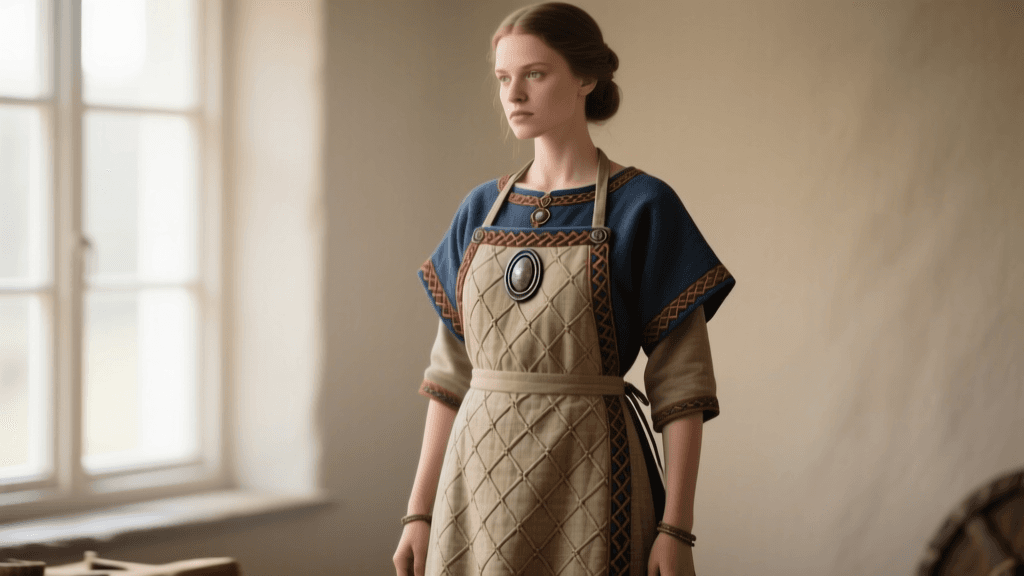
The brystknapp is the centerpiece of the bunad's silver suite. Worn at the collar of the linen shirt, it is typically a large, round, or shield-shaped brooch featuring dangling elements. In 2026, master silversmiths continue to forge these using traditional techniques. The most iconic design is the Kulesølje (ball brooch), featuring oxidized silver spheres and spoon-like dangles. In regions like Telemark, the brystknapp can measure up to 75 millimeters in diameter and weigh over 80 grams, making it a substantial investment piece.
The Halssølje (Neck Brooch)
Worn lower on the chest, the halssølje is often slightly smaller than the chest brooch but equally intricate. In the Hardanger region, the Slangesølje (snake brooch) is highly prized, featuring interlocking silver loops that mimic snake scales—a motif dating back to the Viking Age, symbolizing eternity and protection. Modern 2026 reproductions maintain the exact 925 sterling silver purity required by regional bunad councils.
Cufflinks and Belt Buckles
For men and women alike, silver cufflinks (knapper) and belt buckles (beltespenne) anchor the outfit. Men's bunad silver tends to be heavier, less ornate, and devoid of dangling elements, often featuring cast brass or solid silver buttons engraved with regional flora. The Norsk Folkemuseum archives highlight how 18th-century belt buckles from the Setesdal valley were often forged from repurposed European coins, a tradition that influences the heavy, geometric buckle designs still produced by authorized artisans today.
Regional Headwear: Skaut, Hodeplagg, and Kystlue
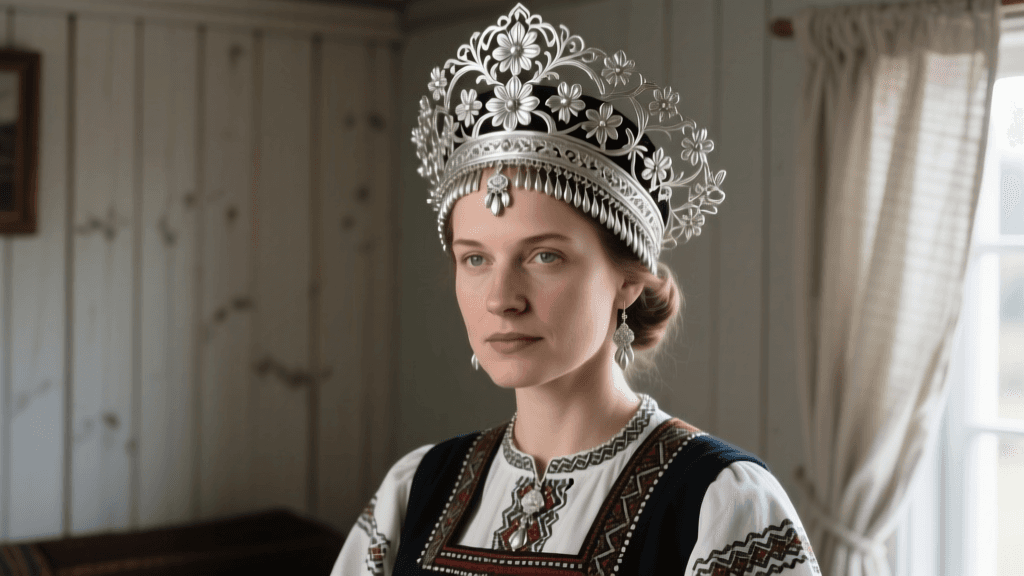
Headwear in Norwegian folk dress is strictly dictated by marital status, age, and geographic origin. The construction of these pieces requires specialized knowledge in textile folding, starching, and silk ribbon application.
The Skaut (Married Women's Headwear)
The skaut is the traditional headpiece for married women, characterized by its bright white color and structural rigidity. In the Hardanger district, the skaut is heavily starched and folded into a distinct, winged silhouette that frames the face. The pleating process is a highly guarded local craft; in 2026, only a handful of certified artisans in the Vestland county offer professional skaut folding services for the festival season. The base fabric is typically a high-thread-count bleached linen, adorned with silk ribbons that indicate the wearer's specific parish.
The Ungjenteskaut and Lin (Young Women and Veils)
Unmarried women and young girls traditionally wear a ungjenteskaut or a simple crown of silver and silk. In regions like Sunnmøre, brides wear a spectacular lin (veil) over a woven crown, cascading down the back in intricate pleats. Sourcing authentic silk ribbons for these headpieces has become a focal point for the Norges Husflidslag (The Norwegian Association for Crafts), which recently secured supply chains for historically accurate, naturally dyed silk threads to ensure 2026 productions match 19th-century museum specimens.
The Kystlue (Coastal Bonnet)
In the northern and coastal regions, the elaborate white linens are replaced by the kystlue, a tailored bonnet made from dark wool, velvet, or silk, often embroidered with metallic threads. Designed to withstand harsh maritime winds, the kystlue is practical yet deeply symbolic, featuring regional variations in the shape of the brim and the placement of silver brooches used to pin the scarf underneath.
2026 Market Pricing and Authentication Guide
Investing in authentic Norwegian bunad accessories requires a significant financial commitment. Due to the rising spot price of silver and a shortage of certified traditional silversmiths, the cost of hand-forged sølje has increased by approximately 14% entering 2026. Below is a comparative pricing table to help buyers navigate the current market.
| Accessory Item | Material & Origin | 2026 Avg. Price (NOK) | 2026 Avg. Price (USD) |
|---|---|---|---|
| Brystknapp (Chest Brooch) | 925 Sterling, Hand-forged | 4,500 - 9,500 | $420 - $890 |
| Halssølje (Neck Brooch) | 925 Sterling, Cast/Forged | 3,200 - 6,800 | $300 - $635 |
| Hardanger Skaut (Headwear) | 100% Linen & Silk Ribbon | 4,500 - 8,000 | $420 - $750 |
| Setesdal Cufflinks (Pair) | Silver & Brass Alloy | 1,800 - 2,900 | $170 - $270 |
| Silver Belt Buckle | 925 Sterling, Engraved | 5,500 - 12,000 | $515 - $1,125 |
How to Authenticate Heritage Silver
When purchasing vintage or newly forged sølje in 2026, always look for the official Norwegian hallmarks. Authentic pieces will bear a maker's mark (the silversmith's initials), a town mark (such as 'O' for Oslo or 'B' for Bergen), and the silver standard mark (a crowned lion holding an axe for 925 sterling, or the number 830 for older antique pieces). Beware of mass-produced imports; authentic Norwegian silver has a distinct weight and depth of oxidation that lightweight, stamped overseas replicas cannot replicate.
Caring for Heritage Silver and Textile Headwear
Proper maintenance is essential to preserve the historical integrity and financial value of your bunad accessories. The care routines for silver and textiles are vastly different and require specific attention.
Silver Maintenance
- Avoid Chemical Dips: Never use harsh liquid silver dips on sølje. These chemicals strip the intentional oxidation (the dark patina in the crevices) that gives the jewelry its three-dimensional contrast.
- Polishing Technique: Use a high-quality, treated silver polishing cloth. Gently rub only the raised, shiny surfaces of the brooches and buttons.
- Storage: Store silver in anti-tarnish flannel bags. In 2026, many collectors use silica gel packets wrapped in acid-free tissue inside their storage boxes to control humidity, which is the primary catalyst for aggressive tarnishing.
Headwear and Textile Preservation
- Starch and Shape: The structural integrity of a skaut relies on traditional potato or wheat starch. After wearing, the headpiece must be carefully hand-washed, re-starched, and ironed using specialized wooden molds to maintain the precise regional pleats.
- Silk Ribbon Care: The silk ribbons adorning the headwear are highly susceptible to UV fading and water spotting. Keep your headwear in a dark, climate-controlled environment when not in use.
- Handling: Always handle white linen headwear with clean, dry hands, or wear cotton archival gloves. The natural oils from your skin can cause permanent yellowing on bright white heritage linens over time.
Conclusion: Investing in Living History
Acquiring authentic Norwegian bunad silver and headwear in 2026 is an investment in living European history. These accessories are not mere costumes; they are wearable archives of regional identity, mythological belief, and unparalleled artisanal skill. By understanding the specific requirements of your regional bunad, verifying hallmarks, and committing to proper archival care, you ensure that these magnificent pieces of silver and silk will continue to be passed down through generations. Whether you are sourcing a newly forged brystknapp from a master smith in Voss or carefully folding a linen skaut for a summer wedding, you are actively participating in the preservation of Europe's most enduring folk dress traditions.