Viking Smokkr Apron Dress Reconstruction & Tailoring 2026
The 2026 Resurgence of Archaeological Accuracy
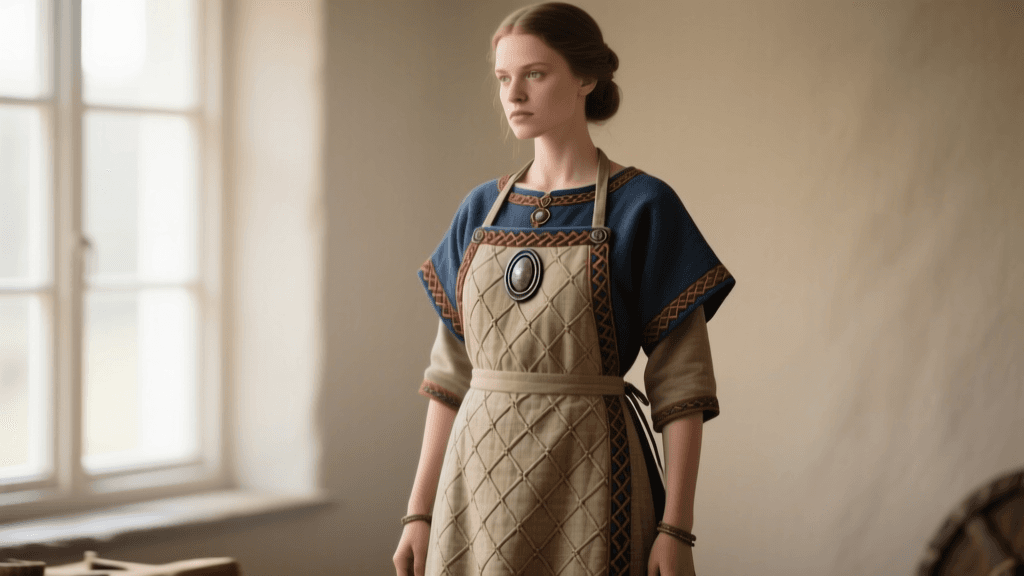
The landscape of historical reenactment and traditional garment revival has shifted dramatically in 2026. Enthusiasts, textile artists, and historians are moving away from the stylized, fantasy-driven "Viking" costumes of the past decade, embracing instead a strict adherence to archaeological evidence. At the center of this movement is the smokkr, commonly known as the Viking apron dress. Worn by women across Scandinavia and Viking settlements from the 8th to the 11th centuries, the smokkr is a masterclass in functional, zero-waste tailoring and intricate textile artistry.
Reconstructing a smokkr today requires more than just sewing skills; it demands an understanding of historical weaving, natural dye chemistry, and period-accurate seam finishes. This comprehensive guide details the exact methodologies, material specifications, and tailoring techniques required to create an authentic Viking apron dress in 2026, ensuring your garment is both historically defensible and beautifully crafted.
Archaeological Foundations: Hedeby and Køge
To build an accurate smokkr, we must look to the surviving textile fragments. Because wool degrades over time, complete garments are virtually nonexistent. However, the harbor finds at Hedeby (modern-day Germany) and the grave finds at Køge (Denmark) have provided invaluable data. According to the National Museum of Denmark, the Køge grave contained remarkably preserved fragments of a diamond twill wool dress suspended from a pair of oval tortoise brooches, alongside linen undergarments and silk trimmings.
These finds confirm that the smokkr was not a simple wrapped tube, as early 20th-century theories suggested, but a complex, tailored garment featuring rectangular front and back panels, side gores for mobility, and elaborate tablet-woven trims. In 2026, the consensus among textile archaeologists favors the "panel and gore" construction model, which conserves fabric and allows for the graceful drape seen in contemporary museum reconstructions.
Material Selection: Sourcing Authentic Diamond Twill
The most iconic fabric associated with the high-status Viking smokkr is the 2/2 diamond twill wool. This weave creates a subtle, repeating diamond pattern that catches the light beautifully and provides excellent structural stability. In 2026, heritage breed sheep wools, such as Spælsau or Old Norse sheep, are highly sought after for their dual-coated fleece, which can be spun to replicate the slightly hairy, weather-resistant yarns of the Viking Age.
Color is equally critical. While the myth of the drab, muddy Viking persists, archaeological evidence shows a vibrant palette achieved through natural dyes. Woad (Isatis tinctoria) was used for blues, madder (Rubia tinctorum) for deep reds, and weld (Reseda luteola) for bright yellows. When sourcing fabric for your 2026 reconstruction, prioritize hand-dyed, naturally mordanted wools over synthetic commercial alternatives.
2026 Supplier Standards and Weave Specifications
When commissioning or purchasing fabric for your smokkr, use the following specifications to ensure historical accuracy and structural integrity:
| Component | Material | Specification | Estimated 2026 Cost |
|---|---|---|---|
| Main Body | 2/2 Diamond Twill Wool | 12-14 threads/cm, Z-spun/S-plied, natural dye | $180 - $260 per yard |
| Trim / Bands | Tablet Woven Wool/Silk | 20-30 tablets, geometric or beast motif pattern | $90 - $150 per meter |
| Sewing Thread | Worsted Wool or Silk | Z-spun, 2-ply, matched to fabric dye lot | $25 - $45 per spool |
| Fasteners | Cast Bronze or Iron | Oval brooches (Urnes or Borre style), loop pins | $140 - $320 per pair |
Step-by-Step Tailoring and Construction
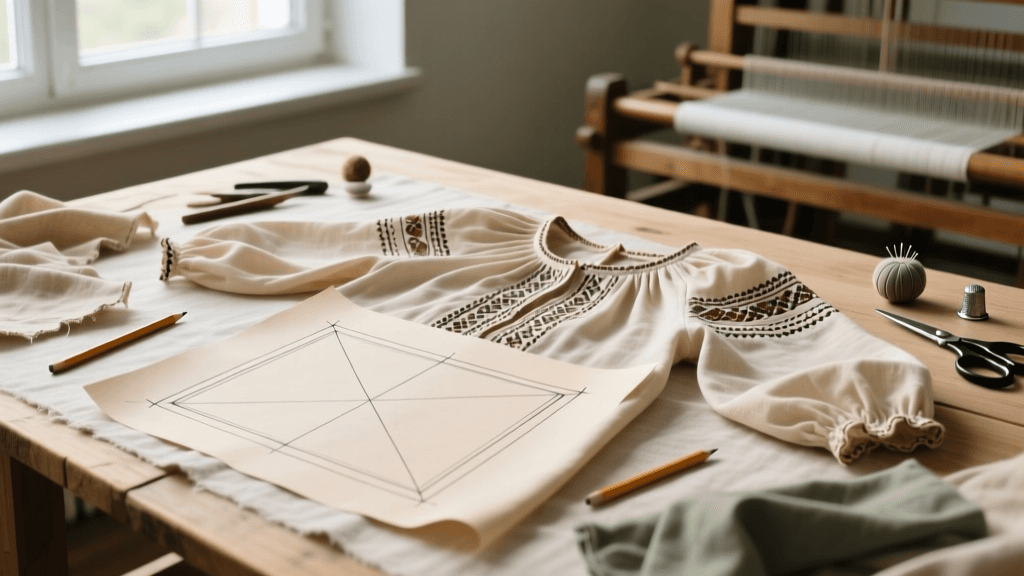
Constructing the smokkr requires a departure from modern pattern drafting. Viking Age tailoring was dictated by the width of the warp-weighted loom, typically producing fabric between 50 and 70 centimeters wide. Garments were constructed using straight lines, rectangles, and triangles to minimize waste.
Cutting the Panels and Gores
For a modern wearer, the front and back panels should be cut as rectangles. The width of these panels is generally determined by the distance between the apexes of the shoulders, usually around 35 to 45 centimeters. The length should run from the top of the chest (just above the bust) down to the mid-calf or ankle, depending on the wearer's status and the practical requirements of their daily tasks.
To allow for walking and movement, triangular gores are inserted into the sides. Cut two large right-angled triangles from your diamond twill. The straight grain of the fabric should run down the center of the gore to ensure the diamond pattern aligns symmetrically and the fabric drapes without twisting. The hypotenuse of the triangle will be sewn to the side seams of the front and back panels.
Seam Finishes and Historical Stitches
Modern sewing machines and sergers have no place in a high-accuracy 2026 reconstruction. All seams must be hand-sewn using period-appropriate stitches. According to research archived by the Textile Research Centre Leiden, the most common stitches found in Viking Age textiles include the running stitch, backstitch, and various overcasting techniques to prevent fraying.
- Running Stitch: Used for the primary seam assembly. Keep your stitches small and even, approximately 3 to 4 millimeters in length, with a 2-millimeter gap between them.
- Felled Seams: To enclose raw edges and add strength, fold the seam allowances together and whip-stitch them flat against the inside of the garment. This creates a clean, durable interior that resists fraying and feels comfortable against the linen underdress.
- Overcasting: For edges that cannot be folded, such as the hem or the top edge of the smokkr, use a tight overcast stitch with a finer, tightly spun wool thread to lock the weave in place.
Tablet Weaving and Trimmings
No high-status smokkr is complete without tablet-woven trim. Tablet weaving (or card weaving) was the premier method for creating strong, decorative bands used to reinforce the top edges of the apron dress and adorn the hems. In 2026, the availability of 3D-printed and laser-cut wooden or bone tablets has made this ancient craft more accessible than ever, though traditionalists still prefer hand-carved wood or antler.
For the top edge of the smokkr, a band woven with 20 to 30 tablets provides the necessary structural rigidity to support the weight of the bronze oval brooches and bead swags. Patterns can be derived from the Oseberg ship burial carvings or the Mammen style. Use a combination of naturally dyed wool and, if budget permits, spun silk for the weft to add a subtle, historical sheen to the geometric motifs. The band should be sewn directly over the top raw edge of the front and back panels, wrapping around to the inside and being whip-stitched down, effectively binding the edge.
Accessories: Oval Brooches and Bead Assemblages
The smokkr is fundamentally defined by its suspension system. The garment is held up by loops of wool or linen fabric that pass through the pins of a pair of oval "tortoise" brooches resting on the collarbones. When casting or purchasing brooches in 2026, look for artisans who use the lost-wax casting method and finish the bronze with traditional polishing or chemical patination rather than modern clear coats.
The space between the brooches was historically used to display wealth through bead assemblages. Data compiled by the Jorvik Viking Trust from the Coppergate excavations reveals that Viking women wore intricate swags of glass, amber, and jet beads. For an authentic look, avoid perfectly uniform, modern machine-made glass beads. Instead, source lamp-wound glass beads that feature slight asymmetries, trapped air bubbles, and historical color palettes, such as deep cobalt, opaque yellow, and reticello patterns. String the beads on a sturdy linen cord or a loop of tablet-woven silk, and drape them between the brooch pins.
Conclusion: Wearing History in the Modern Era
Reconstructing a Viking smokkr in 2026 is a profound exercise in experimental archaeology and traditional craftsmanship. By respecting the constraints of the warp-weighted loom, utilizing natural dyes, and mastering historical hand-stitching techniques, you create more than just a costume; you forge a tangible link to the women of the Viking Age. Whether worn for historical interpretation, cultural festivals, or personal appreciation of textile heritage, an accurately tailored apron dress stands as a testament to the enduring ingenuity and aesthetic brilliance of early European folk dress.